Donate Bitcoin

Donate Paypal


PeakOil is You

PeakOil is You

Trader's Corner 2007

Discussions about the economic and financial ramifications of PEAK OIL

Where will WTI crude be on DEC 31st 2007?

Poll ended at Thu 19 Apr 2007, 04:20:21

under $50 per barrel
5
No votes
around $55
0
0%
around $60
5
No votes
around $65
12
No votes
around $70
11
No votes
around $75
28
No votes
 
Total votes : 61

Re: Trader's Corner 2007

Unread postby cube » Fri 21 Dec 2007, 19:51:32

$this->bbcode_second_pass_quote('Daryl', 'U')S public (government debt) -the traditional big bad national debt figure - is estimated at about $5 trillion or around 65% of GDP. This figure has averaged about 40% of GDP since WW2. It is the 35th worst percentage worldwide among governments. Japan's public debt, for example, is 177% of GDP, France's is 66% of GDP and UK's is 43%. I got most of these figures from the CIA World Fact Book and the most recent Federal Reserve Flow of Funds Report.
$5 trillion debt is low balling it there Daryl, but I'll agree with the 65% of GDP figure. same source CIA World Fact Book USA now ranked 26...we're moving up the list!

Anyways I'd like to state that not all debts are created equal. Much depends on what the debt is for. For example getting into debt to create a national highway system has benefits. Freeways make it easier to transport goods and services so there's a potential for a positive economic result.

However getting into debt to fight a losing WAR is a bad investment. :-D

--------
BTW I would prefer a balanced budget (much to the chagrin of Keynesian economic cheerleaders) but that can be saved for another thread.
cube
Intermediate Crude
Intermediate Crude
 
Posts: 3909
Joined: Sat 12 Mar 2005, 04:00:00

Re: Trader's Corner 2007

Unread postby Daryl » Fri 21 Dec 2007, 20:13:43

,
User avatar
Daryl
Tar Sands
Tar Sands
 
Posts: 927
Joined: Mon 10 Oct 2005, 03:00:00

Re: Trader's Corner 2007

Unread postby mekrob » Fri 21 Dec 2007, 23:12:47

$this->bbcode_second_pass_quote('', 'F')or example, it is rarely pointed out that the published personal savings rate in the US is very misleading. In fact US household net worth has been rising steadily for quite a long time and last year reached a (even in percentage terms) staggering $29.1 trillion, a figure that doesn't even include home equity, but does include all mortgage liabilities.


I'm probably going to be laughed at for saying this (especially the first five words), but...

In my Econ 101 class, my professor noted that savings rates fail to include education as a form of saving and is instead usually labeled under consumption. He considers it, fairly rightfully so I imagine, a form of savings because of the intellectual and mental investment in the students and their futures.

Now, I don't think it'd be fair to say that all tuitions paid are a form of investment. Any degree at Bob Jones University should be considered an investment towards the future; being an idiot isn't really an economically productive occupation. Certain degrees at major universities such as communication couldn't be included either as they are mostly taken up by jocks and kids looking for easy access to parties.

Aside from an engineering, sciences, or, yes, economics major at a university or college, investment into books should also be included. Mind you, they should be intellectual books and periodicals: textbooks, analysis, reports, academic journals, etc.

I guess because each one has to be taken on a nearly individual basis and there are hundreds of degrees and millions of books and periodicals, it's simply not practical to do a comprehensive savings rate analysis of the US.

Then again, he blew off any assertion that we're headed towards bad times in the future due to our massive debt (and I imagine he has no clue about PO), so he's clearly fallible.

$this->bbcode_second_pass_quote('', 'I') think maybe sometimes we need to lean against a natural tendency we humans have toward pessimism


It's a bit of a defense mechanism, I guess. If you're pessimistic, and then things go poorly, then you've already prepared yourself mentally and hopefully in real life through reducing your lifestyle or whatever. But if things go well, then you've made out tremendously.

On the flip side, if you're optimistic constantly, and then you get what you want, well, you're still a bit disappointed. Humans are a species about surprise and always doing better. Perception is Reality, right? So if you've thought in your mind that something is going to happen and it does, then nothing has really changed.

Now if the situation goes awry, then you're really screwed mentally.

I'd rather be prepared mentally for anything bad on the horizon. If PO or whatever comes crashes towards me, I'd love to look at it and go "Meh." and hit the snooze. I don't like freaking out over anything.
----
I really like this thread. Never been here before until I talked to Bill. Much better than those racism threads.
I want to put out the fires of Hell, and burn down the rewards of Paradise. They block the way to God. I do not want to worship from fear of punishment or for the promise of reward, but simply for the love of God. - Rabia
mekrob
Expert
Expert
 
Posts: 2408
Joined: Fri 09 Dec 2005, 04:00:00

Re: Trader's Corner 2007

Unread postby LoneSnark » Sat 22 Dec 2007, 00:17:23

$this->bbcode_second_pass_quote('', 'I')f you're pessimistic, and then things go poorly, then you've already prepared yourself mentally and hopefully in real life through reducing your lifestyle or whatever. But if things go well, then you've made out tremendously.

I could refer you to the ending of the recent Stephen King movie "The Mist".
To be more specific, a pessimistic society will refrain from investing in the future by expanding capital, labor, and skill sets, since any investment that is not survivalist becomes worthless if things go awry. In a sufficiently complex economy, pessimistic expectations can often become self fulfilling.

For example, if everyone comes to believe there will not be enough gasoline then everyone will rush to the gas station and fill up their storage tanks in an effort to hoard. If the government interferes with either price controls or price gouging regulations then hoarding induced shortages will spread, leaving no choice but to introduce rationing faced with widespread economic dislocation without any real supply disruption.
User avatar
LoneSnark
Tar Sands
Tar Sands
 
Posts: 514
Joined: Thu 15 Nov 2007, 04:00:00
Re: Trader's Corner 2007

Unread postby mekrob » Sat 22 Dec 2007, 00:42:15

$this->bbcode_second_pass_quote('', 'T')o be more specific, a pessimistic society will refrain from investing in the future by expanding capital, labor, and skill sets, since any investment that is not survivalist becomes worthless if things go awry. In a sufficiently complex economy, pessimistic expectations can often become self fulfilling.


True. I don't exactly mean pessimistic, but more like cautionary. Of course you don't want to set your views too low. I take a very cautionary approach and it's greatly enabled and enhanced me. If you feel like you're "only" going to get say a C (since I'm in school, so we'll use that) in a class, but it's actually a B, then you'll naturally feel better and more optimistic about the next semester. Setting a standard of F would be ridiculous and setting yourself up for failure and that'd be the uber-pessimistic side that you describe

It should be noted that there are differences about pessimism and relationships between what one is being pessimistic about and something that is affected due to that pessimism.

Being pessimistic about one thing will lead you to develop strategies for something else. Take Global Warming. For the investment community, they don't really know the science behind it and thus have to guess. So if they become pessimistic about it and start to invest in stuff like alternative energy and so forth to combat it and global warming doesn't occur, then all you've done is adapted to a new paradigm that will have gotten you off of a previous paradigm that was unsustainable and thus, prone to crashes and major cycles.

Pessimism spin-off, I guess, is what you'd call it. Pessimism about a particular situation. Not the entire system or world. One can be cautionary about a certain aspect of the economy or whatever but then that will spur on new investment and development in something else that could combat or alleviate any problems from the first aspect such as the global warming/peak oil and alternative energy situation described above. The investors are pessimistic about GW/PO, not the world and thus will continue to spur on new development elsewhere.

$this->bbcode_second_pass_quote('', 'F')or example, if everyone comes to believe there will not be enough gasoline then everyone will rush to the gas station and fill up their storage tanks in an effort to hoard. If the government interferes with either price controls or price gouging regulations then hoarding induced shortages will spread, leaving no choice but to introduce rationing faced with widespread economic dislocation without any real supply disruption.


But if I'm pessimistic about gasoline and fearful of shortages prior to any shortages having the likely chance to occur, and then I adapt myself to a new paradigm that relies less or not at all on gasoline and become comfortable and efficient within that new paradigm (say biking to work). Shortage occurs? Doesn't affect me (as much). Like always, there must be a lag depending upon the conditions.
I want to put out the fires of Hell, and burn down the rewards of Paradise. They block the way to God. I do not want to worship from fear of punishment or for the promise of reward, but simply for the love of God. - Rabia
mekrob
Expert
Expert
 
Posts: 2408
Joined: Fri 09 Dec 2005, 04:00:00
Top

Re: Trader's Corner 2007

Unread postby peakoilcar » Sat 22 Dec 2007, 02:55:06

Interesting thought, I would tend to agree with you
User avatar
peakoilcar
Wood
Wood
 
Posts: 2
Joined: Sat 22 Dec 2007, 04:00:00

Re: Trader's Corner 2007

Unread postby MrBill » Sat 22 Dec 2007, 07:16:28

Daryl wrote:
$this->bbcode_second_pass_quote('', 'M')any of the statistics being bandied about wouldn't be quite so alarming if they were presented in terms of percentage of GDP, rather than billions of this and trillions of that. Also, even then some numbers are frequently taken out of context. For example, private household debt was recently reported around $13 trillion, which is 140% of GDP. As a percentage of GDP, this has doubled since WW2. But this figure includes mortgage debt, so what it is really telling you is that not much has changed since WW2 except that a much larger percentage of people own homes - not such a bad thing really. Is it better to be a nation of renters, like Germany and Japan? They have much lower pct of household debt to GDP ratios - and that's why. Over $10 trillion of US household debt is mortgage debt. The non-mortgage US household debt is less than 30 pct of GDP. US public (government debt) -the traditional big bad national debt figure - is estimated at about $5 trillion or around 65% of GDP. This figure has averaged about 40% of GDP since WW2. It is the 35th worst percentage worldwide among governments. Japan's public debt, for example, is 177% of GDP, France's is 66% of GDP and UK's is 43%. I got most of these figures from the CIA World Fact Book and the most recent Federal Reserve Flow of Funds Report.


Thanks Daryl and everyone else for your comments! Very much appreciated.

Daryl, I agree 100% with your statement, if I may paraphrase it, that we should not look at 'a' number in isolation because it may be out of context or overlook another offsetting trend. Like wealth accumulation in the form of positive housing equity in relation to personal debt levels that also include mortgage debt. Clearly they are directly related to one another, so should be compared with one another. A net positive is good, but it may still hide the asymmetrical nature that those with positive equity might not be the same that own the debt!

However, I am reading a book right now called The Volatility Machine, Emerging Markets and the Threat of Financial Collapse. It is a few years old, but written after the Tequila, Asian and Russian crises, so its lessons are fresh enough. Michael Pettis is a bond trader, and basically the premise of the book is that it is earnings volatility, or the structure of a country's capital structure and balance of payments, that makes it vulnerable to external events and not vice versa.

In other words it is not the usual suspects - BIC Syndrome [sup]TM[/sup] of bureacracy, incompetence and corruption - plus economic mismanagement that get these developing countries into financial trouble per se - but they certainly do not help - but vulnerability to failure by imbalances between assets & liabilities, and export earnings and foreign debt, that suddenly and unpredictably swing due to external events.

This logically makes sense if you look at sovereign accounts through the lens of corporate finance. Cash flow is king. And the goal of the treasury department is to minimize gaps between assets & liabilities be they interest rate gaps, foreign currency gaps or time ladder gaps. Shocks are managed by limiting the net exposure to capital markets like, for example, not relying too heavily on one source of funding, but instead drawing on many sources for their funding needs. But corporations are probably better at spotting and managing these risks than are governments.

So the problem with the USA - if there is one as you correctly ask - is that individuals, and federal, state and municipal governments, may have priced everything to perfection living up to the very limit of their collective means. And when that happens the system is very vulnerable to even a minor shock. Much more so to a major one like the current global credit crunch.

Plus the world's financial architecture is changing in very measurable ways through the mechanism of massive wealth transfers from consuming nations to the nations that export energy, metals and commodities to name just a few.

I had a very illuminating dinner last night with the CEO of a major European bank that is responsible for the entire ME region. Actually, he is a good friend of mine. He feels very strongly that official estimates of the wealth under management of these governments is grossly understated. And their investment patterns are not benign.

The publicly announced deals only form a very small portion of the wall of money that is being invested here, there and everywhere. Cyprus, for example, is being systematically bought up in chunks of individual deals each worth hundreds of millions of dollars each. Egypt is another country that is of interest for these ME investors.

More I cannot say, but it puts to bed any notions that capital flows from developed nations to lesser developed nations as those capital flows are increasingly from wealthy nations, not necessarily developed ones, into other countries both developed and undeveloped. Kind of like it is outdated to say, 'they work and we think' when talking about Chindia and other Asian countries. Increasingly 'they out work and out think us' so it is not something to panic over, but it is also not an emerging trend to ignore.

So slowly getting into debt may not be catastrophic for the USA today, but as I said those trillion dollar cumulative deficits do eventually add up to some serious money, and then if the flow of capital changes suddenly the volatility of the US capital structure and balance of payments mismatch is exposed to external shocks. At least that is my take on how the world may be changing due to resource scarcity and a change in the balance of power in the capital markets.
The organized state is a wonderful invention whereby everyone can live at someone else's expense.
User avatar
MrBill
Expert
Expert
 
Posts: 5630
Joined: Thu 15 Sep 2005, 03:00:00
Location: Eurasia
Top

Re: Trader's Corner 2007

Unread postby Daryl » Sat 22 Dec 2007, 11:21:21

Here are some more examples of the problem presented in what I think is a more balanced perspective than we usually hear from the sensationally oriented financial media. I'll use numbers from the CIA World fact book for 2006, so we know we are comparing apples to apples. Sorry if I made a few errors, I calculated on this on the back of a napkin.


GDP (trillions of USD)

US 13.0
Japan 4.2
Germany 2.6
UK 1.9
France 1.9


Current Account (pct of GDP)

US -6.0
Japan +4.0
Germany +5.6
UK -4.5
France -1.2


Trade Deficit (pct of GDP)

US -6.0
Japan +2.5
Germany +7.5
UK -8.0
France -2.0


We can certainly see from these numbers that the US , England and France would prefer to be in the position of Germany and Japan, but then again, world trade is very complex and we really can't expect all these numbers to even out perfectly every year. It is a free market.

For all the bashing the US takes, their external trade/ca position doesn't look a whole lot different from that of France or the UK. I don't recall ever reading negative press about these two countries regarding their external trade positions. Maybe because the gross numbers aren't as sensational? For the US, I don't think it is reasonable to predict much more than a very bad recession in the case of an external shock. Perhaps unemployment might even double - bringing it almost up to average EU levels.

The US - the world's largest exporter, by the way - has been importing relatively more goods for quite a while. This is not entirely due to a "genetic defect" on the part of the American consumer. Consider the following factors:

1) As by far the wealthiest country in the world, in terms of the largest number of potential consumers with very high incomes, American businesses have had less incentive to pro-actively seek out foreign markets for their goods relative to most of the trading counterparties. For most foreign businesses, on the other hand, the US market has been an obsessive Holy Grail for more than half a century now. Indeed most of our major trading partners started out from such a low baseline in 1945, their economies to some extent have completely evolved and developed with the US consumer as a customer. Talk about a structural surplus/deficit! Especially between US and Japan/Germany....and now China, of course.

2) Nonetheless, energy accounts for a very large percentage of the US import problem. While Americans are relatively wasteful users of energy, that is not the only factor ie the economy is 4 to 5 times as large as it's closest peers and the economy is spread out over a larger geographic area, thus making transportation more expensive relative to other countries.

3) both US and foreign corporations have used free trade to aggressively arbitrage global wage price differentials, producing goods in low wage/regulatory/currency environments and undermining domestic producers in the US via low pricing. This trend has accelerated since the 1980's with the opening up of China.

All in all, I think the US is hanging in there pretty good. I'm giving them a B+ on my report card.
User avatar
Daryl
Tar Sands
Tar Sands
 
Posts: 927
Joined: Mon 10 Oct 2005, 03:00:00

Re: Trader's Corner 2007

Unread postby LoneSnark » Sat 22 Dec 2007, 11:41:15

$this->bbcode_second_pass_quote('', 'T')rue. I don't exactly mean pessimistic, but more like cautionary. Of course you don't want to set your views too low. I take a very cautionary approach and it's greatly enabled and enhanced me.

I disagree. If you expect to make a C in a class, then working on a project just long enough to make a D is rational behavior because it is unlikely to affect your final grade. But, if you expect to make an A, then getting a D will guarantee you a grade loss to B.

This extends to society as a whole. As I said, if everyone is pessimistic then everyone made the same bad decision to invest in canned food and shotguns. But, as you said, if everyone is optimistic then all of societies resources were dumped into equally irrational future goods. What a well functioning society needs is diversity: some people were pessimistic and invested in enough food to get through a rough winter, while others were optimistic and invested their efforts in technological and economic progress.

What we need are millions of views of the future and thus millions of experiments, it is the only way to ensure enough people guessed right in any given future for us to survive. This is because guessing wrong usually gets you nothing but death and starvation, but one person guessing right can feed thousands. As such, bring on your pessimists, but try not to overly influence my optimists. At least, that is my philosophy on the matter.
User avatar
LoneSnark
Tar Sands
Tar Sands
 
Posts: 514
Joined: Thu 15 Nov 2007, 04:00:00
Top

Re: Trader's Corner 2007

Unread postby Daryl » Sat 22 Dec 2007, 15:12:20

$this->bbcode_second_pass_quote('MrBill', 'D')

I had a very illuminating dinner last night with the CEO of a major European bank that is responsible for the entire ME region. Actually, he is a good friend of mine. He feels very strongly that official estimates of the wealth under management of these governments is grossly understated. And their investment patterns are not benign.

The publicly announced deals only form a very small portion of the wall of money that is being invested here, there and everywhere. Cyprus, for example, is being systematically bought up in chunks of individual deals each worth hundreds of millions of dollars each. Egypt is another country that is of interest for these ME investors.

More I cannot say, but it puts to bed any notions that capital flows from developed nations to lesser developed nations as those capital flows are increasingly from wealthy nations, not necessarily developed ones, into other countries both developed and undeveloped. Kind of like it is outdated to say, 'they work and we think' when talking about Chindia and other Asian countries. Increasingly 'they out work and out think us' so it is not something to panic over, but it is also not an emerging trend to ignore.


I don't find any of these trends alarming. The "West" probably reached its pinnacle of power over the developing world around 1900 - and the US its height of power in 1945. It's hard to imagine the West and the US getting more dominant than they were at those times. It was inevitable that those being dominated would become less dominated - indeed, it is a good thing, not just in moral terms, but in terms of long term stability. There are alot of evidences out there that the more equal distribution of power across the globe actually makes the entire system more robust. For example, when consumer spending slows in the US, relatively more factory workers get laid off in China, thus cushioning the volatility of the business cycle in the US.

The likelihood is that the payment imbalances will get sorted out over time without catastrophe, or that they may in fact be sustainable - they certainly have been for decades now. I get the feeling from reading Brad Setzer's blog (http://www.rgemonitor.com/blog/setser) that the more you try to figure out what's really going on there, the less you understand.
User avatar
Daryl
Tar Sands
Tar Sands
 
Posts: 927
Joined: Mon 10 Oct 2005, 03:00:00
Top

Re: Trader's Corner 2007

Unread postby mekrob » Sat 22 Dec 2007, 19:39:09

$this->bbcode_second_pass_quote('', 'A')s I said, if everyone is pessimistic then everyone made the same bad decision to invest in canned food and shotguns.


And as I've said, I'm not talking about the entire system but just a single aspect of it. Being pessimistic to the point of only buying shotgun shells and canned food is doing it over and beyond, but a middle ground can be reached when looking at certain aspects of the system such as oil or gas supply which is but one cog in the industrial economy.

One can be pessimistic about one thing and not so about another, like I've shown and am a living example with regards to the oil situation. I've gotten myself off of oil as much as possible and it's paid off greatly in terms of my finances and health. This is because I was pessimistic about the oil situation yet optimistic about an alternative (walking). Had there not been optimism elsewhere in the equation, then it would have amounted to what you talk about, but I'm not talking about pessimism exclusively.

You act like there can't be a combination of the two yet many people on this board are examples of that. There are those that have gotten off of oil through walking and biking like me. Then there are those that are pessimistic about the availability of jobs in the cities. You would seem to assume that they'd just shoot themselves in the head, but instead they took the optimistic approach and went to the rural parts of the US and started to farm for themselves or got back into school to learn a new trade that will benefit them either way (whether PO lives up to the hype or not).

Another thing that you've misread in my posts is the micro- and macro. I've constantly talked about single individuals or singular groups, yet you refer to society as a whole as being pessimistic and thus self-fulling, which can often be the case.

$this->bbcode_second_pass_quote('', 'I') disagree. If you expect to make a C in a class, then working on a project just long enough to make a D is rational behavior because it is unlikely to affect your final grade.


That thinking has completely gone against what I've been doing my entire life and what I've seen many other students and friends do. In a hard class, shoot for a decent score in the middle range. Gain confidence. Then shoot for a higher score. Gain more confidence and repeat the process throughout the semester. I've seen it work in action plenty of times. It's much more of a psychological issue so it varies from person to person, but it's false to assume that it doesn't occur within a sizable portion of society.
I want to put out the fires of Hell, and burn down the rewards of Paradise. They block the way to God. I do not want to worship from fear of punishment or for the promise of reward, but simply for the love of God. - Rabia
mekrob
Expert
Expert
 
Posts: 2408
Joined: Fri 09 Dec 2005, 04:00:00
Top

Re: Trader's Corner 2007

Unread postby Daryl » Sun 23 Dec 2007, 22:46:59

Here's another statistic that one hears bandied about quite a bit - The US has only 5% of the world's population, but consumes 25% of the world's oil. This is true, but it's interesting to consider it from another view statistically ie that US GDP is 20% of of World GDP. Here are the statistics for some other major developed countries. Sorry for the difficult to read format, but these message boards don't seem to allow tables.


US 25% of world oil consumption 20% of world GDP
Canada 2.6 % of world oil consumption 1.8% of world GDP

Germany 3 pct of world oil consumption 4% of world GDP
Japan 5.8 pct of world oil consumption 6.5% of world GDP
UK 2.1 pct of world oil consumption 3 % of world GDP

The most obvious item to note here that suddenly the US doesn't look nearly so greedy and wasteful as they do when comparing their percentage of oil usage to their percentage of world population. In fact, on a percentage basis, US oil usage looks pretty much in line with that of other developed industrialized countries. Interesting though, that only the US and Canada have a greater percentage oil consumption relative to their percentage of world GDP. Could this have something to do with the fact than they are both very large countries with widely dispersed populations and therefore require relatively more oil for their transportation systems? Also, given the hue and cry about poor gas mileage and the lack of public transit in the US, one would expect more of a discrepancy with Europe and Japan. Anyone have any thoughts?
User avatar
Daryl
Tar Sands
Tar Sands
 
Posts: 927
Joined: Mon 10 Oct 2005, 03:00:00

Re: Trader's Corner 2007

Unread postby cube » Sun 23 Dec 2007, 23:37:31

$this->bbcode_second_pass_quote('Daryl', '.')..
US 25% of world oil consumption 20% of world GDP
Canada 2.6 % of world oil consumption 1.8% of world GDP

Germany 3 pct of world oil consumption 4% of world GDP
Japan 5.8 pct of world oil consumption 6.5% of world GDP
UK 2.1 pct of world oil consumption 3 % of world GDP

The most obvious item to note here that suddenly the US doesn't look nearly so greedy and wasteful as they do when comparing their percentage of oil usage to their percentage of world population.
To quote a line from a movie: "Greed is good" :-D
There have been many fierce debates on this forum as to the relationship between energy and the economy. In particular is it possible to maintain the economy with diminishing energy supply? (save that for another thread)

another statistic: South Korea
2.60% of world oil consumption 1.36% of world GDP
Why such a high rate of oil consumption? It's not car ownership that's for sure. In fact South Korea has a low car ownership rate relative to it's income compared to other nations. It has the 11th largest economy in the world but is ranked 40th in car ownership. I'm guessing the high oil demand must come from the fact that South Korea is world renown for being very heavy into manufacturing.

some more: China
7.87% of world oil consumption 3.83% of world GDP
China has a slightly more "energy inefficient" economy and the reason for this is because of its "low-end" manufacturing as opposed to South Korea's "high-end" manufacturing.
cube
Intermediate Crude
Intermediate Crude
 
Posts: 3909
Joined: Sat 12 Mar 2005, 04:00:00
Top

Re: Trader's Corner 2007

Unread postby MrBill » Mon 24 Dec 2007, 04:11:26

Daryl wrote:
$this->bbcode_second_pass_quote('', 'T')he US - the world's largest exporter, by the way - has been importing relatively more goods for quite a while. This is not entirely due to a "genetic defect" on the part of the American consumer. Consider the following factors:


Hello Daryl, thanks for the comments. No time to go through them all at the moment. However, the US is the world's largest manufacturer, but the honor of largest exporter goes to Germany, two years in a row. Thanks.

The 'genetic defect' comment was a joke. But it refers to consumers that consistantly live up to and beyond their means despite high absolute incomes and relatively low tax burdens. It is almost as if they paint themselves into a tight corner on purpose?

This may reflect their optimism (a good thing), but it also exposes them to external shocks (a bad thing) in terms of having the cash flow to deal with their current financial situation. As I tried to explain with The Volatility Machine.

It really does not matter how the US stacks up against other countries, and whether it has been fairly or unfairly singled out for blame by the Press or its trading partners. That is irrelevant as far as I am concerned. I am worried about a hole in the balance sheet from a sudden shift in sentiment from capital markets. 98-percent of American taxpayers do not have the option of liquidating their assets at current market value and relocating to another country. So they are stuck in a burning house, so to speak, if it comes to a financial crisis.

And secondly, if the USA is having a Japan Moment [sup]TM[/sup] then it can look forward to many years of low, slow, no growth even if it does adopt a ZIRP, which would be very inflationary in the current global environment of strong energy and commodity prices.

I am not trying to be sensationalist, but I worry more about what can go wrong than about a continuation of recent past trends into the immediate future.

That is not always the best trading strategy. I seem to have missed the Santa Claus Rally in the S&P Energy Index (GSPE) that now looks like a break-out to the topside. This helps my core position, but I am still overweight cash, and the third week in November offered a good chance to buy.

I was planning on buying into a weaker market headed into year-end in expectation of a rally in Q1'08, but now it looks as though my plans have been frustrated. My error in judgement. At least a strong close to the year improves the window dressing on our company accounts even if I would sooner be right than look good! ; - )
The organized state is a wonderful invention whereby everyone can live at someone else's expense.
User avatar
MrBill
Expert
Expert
 
Posts: 5630
Joined: Thu 15 Sep 2005, 03:00:00
Location: Eurasia
Top

Re: Trader's Corner 2007

Unread postby Daryl » Mon 24 Dec 2007, 12:15:59

$this->bbcode_second_pass_quote('cube', ' ')
another statistic: South Korea
2.60% of world oil consumption 1.36% of world GDP
Why such a high rate of oil consumption? It's not car ownership that's for sure. In fact South Korea has a low car ownership rate relative to it's income compared to other nations. It has the 11th largest economy in the world but is ranked 40th in car ownership. I'm guessing the high oil demand must come from the fact that South Korea is world renown for being very heavy into manufacturing.

some more: China
7.87% of world oil consumption 3.83% of world GDP
China has a slightly more "energy inefficient" economy and the reason for this is because of its "low-end" manufacturing as opposed to South Korea's "high-end" manufacturing.


Good points. Yes it would seem the US inefficiency is weighted toward car use, since on a percentage basis, it has become a much more service oriented economy. Still the geography is a factor. The general point of last posts is just that there is sometimes a negative bias toward the US in the presentation of a lot of these isssues.

I tried to look as some of the developing countries but got confused by the large discrepancy between GDP as measured by PPP and as measured by official exchange rate. Maybe someone can explain to me the difference. Not sure I really care that much though. Not an economist.....
User avatar
Daryl
Tar Sands
Tar Sands
 
Posts: 927
Joined: Mon 10 Oct 2005, 03:00:00
Top

Re: Trader's Corner 2007

Unread postby Daryl » Mon 24 Dec 2007, 15:20:34

$this->bbcode_second_pass_quote('MrBill', ' ')

It really does not matter how the US stacks up against other countries, and whether it has been fairly or unfairly singled out for blame by the Press or its trading partners. That is irrelevant as far as I am concerned. I am worried about a hole in the balance sheet from a sudden shift in sentiment from capital markets. 98-percent of American taxpayers do not have the option of liquidating their assets at current market value and relocating to another country. So they are stuck in a burning house, so to speak, if it comes to a financial crisis.


I agree. I was just getting off topic, not arguing. Was having some fun looking into the stats a little from a different perspective. Got a couple more coming probably. Yes, Germany just squeezed by the US in value of exports. Of course, in a more balanced world, the US should have 5 times Germany's exports, given that USD GDP is 5 times larger. I think one thing these numbers underline is something many people don't realize about the US economy - ie how large it is. One state alone - California - has a GDP of $1.7 trillion, almost equal to the economies of the UK and France.

It would be interesting to see a breakdown of Germany's exports by country. I believe their biggest trading partner is France. I wonder what California's "foreign" trade balance would look like if you included the domestic US states they share a contiguous land border with. Again, my point is that, like the energy problem, some of these issues are fundamentally structural and aren't going to be changed by policies or behavior.
User avatar
Daryl
Tar Sands
Tar Sands
 
Posts: 927
Joined: Mon 10 Oct 2005, 03:00:00
Top

Re: Trader's Corner 2007

Unread postby sparky » Mon 24 Dec 2007, 20:47:05

.

To Daryl

could the higher energy consumption ratio be related to a higher level of investment in equipment and facilities ???

some kind of basic cost of getting up the infrastructures ??

inversely a decrease in energy consumption could see under-investment in infrastructures and facilities

( just guessing )


.
User avatar
sparky
Intermediate Crude
Intermediate Crude
 
Posts: 3587
Joined: Mon 09 Apr 2007, 03:00:00
Location: Sydney , OZ

Re: Trader's Corner 2007

Unread postby MrBill » Tue 25 Dec 2007, 06:35:24

Daryl wrote:
$this->bbcode_second_pass_quote('', 'I') tried to look as some of the developing countries but got confused by the large discrepancy between GDP as measured by PPP and as measured by official exchange rate. Maybe someone can explain to me the difference. Not sure I really care that much though. Not an economist.....


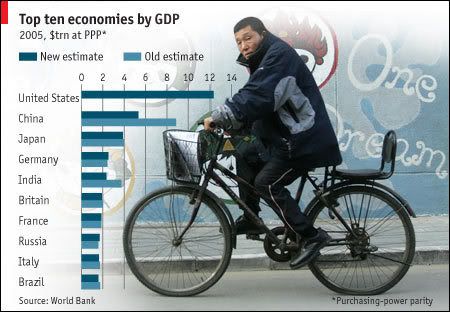
Daryl, purchasing power parity (PPP) is interesting, but it really limited when comparing rich and poor countries because of the difference between tradable and non-tradable goods. Basically, it says that one dollar goes farther in Peking than Preoria, but big deal? A dollar goes farther in Smallville than in Metropolis, too.

Image

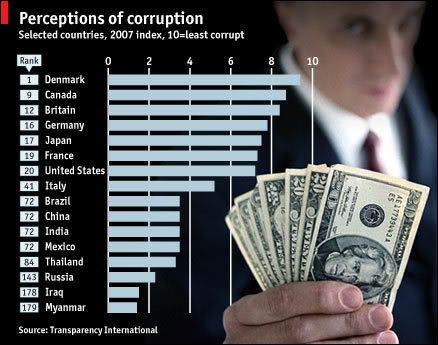
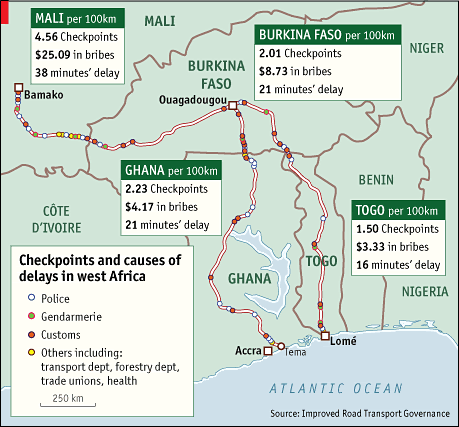
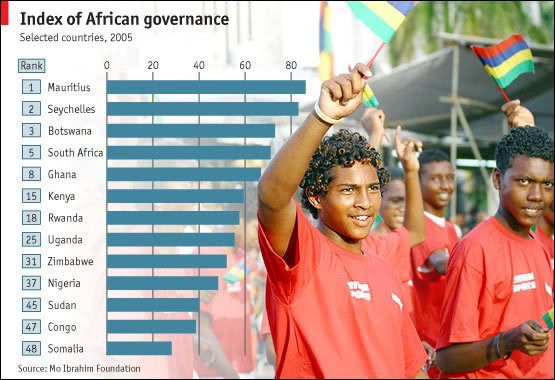
But, for example, it is very hard to export houses, and comparing rents in one country to another is misleading because you cannot easily substitute one for the other. Yes, you can offshore production or service functions to another country, but then you have to accept the trade-off in costs versus labor productivity, and other costs of doing business, including poor infrastucture and BIC syndrome [sup]TM[/sup] - bureacracy, incompetence and corruption.

Image

The Big Mac Index is not very precise, but it is still useful.
$this->bbcode_second_pass_quote('', 'M')ost currencies are trading a long way from that yardstick. China's currency is the cheapest. A Big Mac in China costs 11 yuan, equivalent to just $1.45 at today's exchange rate, which means China's currency is undervalued by 58%. But before China's critics start warming up for a fight, they should bear in mind that PPP points to where currencies ought to go in the long run. The price of a burger depends heavily on local inputs such as rent and wages, which are not easily arbitraged across borders and tend to be lower in poorer countries. For this reason PPP is a better guide to currency misalignments between countries at a similar stage of development.

Source: Food for thought about exchange-rate controversies

Also, you cannot monetize PPP. The absolute size of the economy does matter when competing for scarce resources in an open auction like a free market.

Image

That China can successfully compete with the USA that is larger than it is in many ways due to the fact that their workers are paid a lot less because they are paid low wages in renminbi while their exports are priced in US dollars or euros. Then the PBoC sterilized those export receipts. In essence expropriating them by printing yuan to buy foreign currency. I guess the USA would also have large external reserves if they expropriated all the US exporters' earnings and printed-up scrip for domestic use. And exporters could then pay their workers in this scrip.


Image

However, size cuts both ways. The US current account deficit - trade deficit + budget deficit + balance of payments - may 'only' be 5.5% of GDP, smaller than say Spain with 9.3% or Greece with 13.1% C/A deficits, but it is still large enough to consume two-thirds of the world's remaining current account surplus. That is large in absolute size.

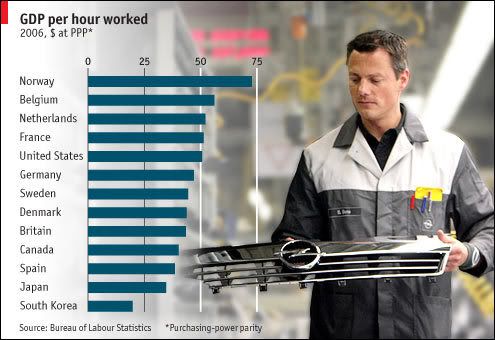
But within in single currency zone of Europe, for example, PPP is very important when it comes to labor productivity. After France and Italy devalued the franc and lira respectively before joining the ERM in 1999 Germany's labor costs as measured in productivity was 110 on a base scale of 100 versus France and Italy that were around 90. Now 8-years later the roles have absolutely reversed. Labor productivity in Germany is now 90 while France is 110 and Italy is 130.

Image

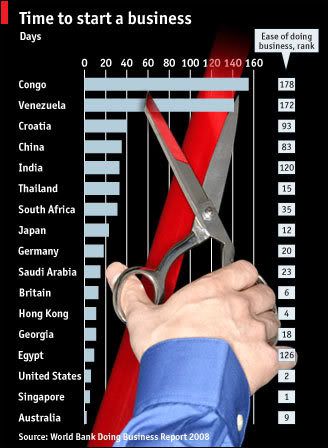
Who do you think the strong euro is hurting the most? The Club Med countries absolutely failed to use the gift of the common currency and lower eurozone interest rates to get their labor costs under control and improve productivity. Now cheap Asian imports are displacing their exports, especially in textiles and luxury goods that can be easily imitated or copied. Germany (and Switzerland) have been less effected due to the mix of their exports that includes high tech capital goods to the faster growing Asian market and luxury automobiles to the ME. Plus German companies have re-located some production to CEE countries where costs are lower.

It is no wonder that Sarkozy and other EU Presidents are complaining loudy about the strength of the euro and Polish plumbers! It is killing jobs at home. But those jobs were lost due their poor record at reforming their economies, and political structures, and not caused by a strong euro that keep inflation down and makes critical imports of inputs such as energy, metals and commodities cheaper.


Image

Economics matters even if you're not an economist! ; - )

UPDATE: on transportation choices


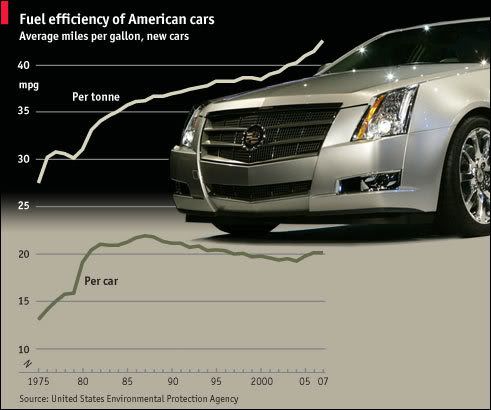
Actually, a large country like the USA with the third largest population in the world (300 million), and large cities of 500.000 or more, should favor a mix of rail for long-distance shipping and public transit in the cities. Also, the USA has access to the Atlantic, Pacific and the Gulf of Mexico, plus the Mississippi and various smaller river and canal systems.

Image


The triumph of the automobile, and long-distance trucking, is a failure in US public policy. In Canada and other countries as well. Russia is also a large country, but they overwhelming developed - perhaps for political reasons - their rail system outside of Moscow-St. Petersberg. Western Europe out of necessity developed denser cities that favored public transportation, although there is still too much reliance on the car there as well. Especially, as big box stores are allowed to sprout on the outskirts of major population areas that are not serviced by public transport.

Image

The car is simply more convenient and many people prefer it. The government gives the people what they want by subsidizing road infrastructure. But it is still poor public policy! Go figure, eh? ; - )

p.s. I found every chart except the one I wanted. Still, I hope they are useful. Merry Christmas everyone! Yes, I am in the office. It is not a holiday in Russia! ; - )
The organized state is a wonderful invention whereby everyone can live at someone else's expense.
User avatar
MrBill
Expert
Expert
 
Posts: 5630
Joined: Thu 15 Sep 2005, 03:00:00
Location: Eurasia
Top

Re: Trader's Corner 2007

Unread postby MrBill » Tue 25 Dec 2007, 07:27:25

$this->bbcode_second_pass_quote('sparky', '.')

To Daryl

could the higher energy consumption ratio be related to a higher level of investment in equipment and facilities ???

some kind of basic cost of getting up the infrastructures ??

inversely a decrease in energy consumption could see under-investment in infrastructures and facilities

( just guessing )


.


I would argue the opposite. I would see a large upfront in a rail network or ports and shipping, for example, as decreasing energy use in the long-run. Especially, relative to GDP.

I would correlate higher energy use with over-reliance on the automobile versus public transport, and long-distance trucking versus rail or water.

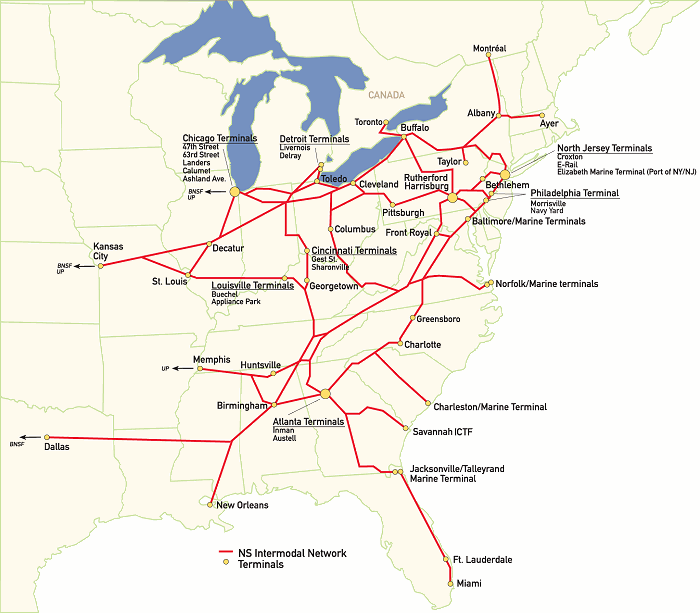
According to the Norfolk Soutern Railway they can move a ton of frieght 400 miles on a gallon of diesel. Intermodal transport by water and rail is more efficient than the Interstate highway system.

Image

It is easier to build roads than railways or ports. But then they require more energy - petroleum and cars - over their useful economic life. Plus the roads in particular have to be maintained. A hidden cost paid for by taxpayers as opposed to users in many cases.

And as many here have argued one of the problems of peak oil depletion is the upfront costs and use of energy to put that alternative infrastructure into place, where it does not exist, to replace our over-reliance on the automobile.
The organized state is a wonderful invention whereby everyone can live at someone else's expense.
User avatar
MrBill
Expert
Expert
 
Posts: 5630
Joined: Thu 15 Sep 2005, 03:00:00
Location: Eurasia
Top

Re: Trader's Corner 2007

Unread postby sparky » Wed 26 Dec 2007, 08:52:56

.

Then , what could account for a worst energy ratio ?

Maybe " hard "manufacturing doesn't generate as much GDP as a fully developed financial sector ?

.
User avatar
sparky
Intermediate Crude
Intermediate Crude
 
Posts: 3587
Joined: Mon 09 Apr 2007, 03:00:00
Location: Sydney , OZ

PreviousNext

Return to Economics & Finance

Who is online

Users browsing this forum: No registered users and 1 guest

cron