http://www.wcnc.com/video/index.html?nvid=242961&shu=1
16 year old Honda Civic gets some (cheap looking and costing) body work and ramps up the mpg by reducing wind drag. Covered up the wheel wells and bottom, as well as making the tail end more pointy.
Of course it looks butt fugly, but that's why car manufacturers are sacrificing efficiency for good looks.



PeakOil is You
"Super gas man" doubles the MPG of his car
"Super gas man" doubles the MPG of his car
 by ccricers » Wed 21 May 2008, 10:42:13
-

ccricers - Wood

- Posts: 36
- Joined: Sun 27 May 2007, 03:00:00
Re: "Super gas man" doubles the MPG of his car
by Syeer » Wed 21 May 2008, 13:44:57
That could certainly be a fairly decent looking car if the work had been done a little bit more professionally.
-

Syeer - Wood
- Posts: 34
- Joined: Tue 23 May 2006, 03:00:00
- Location: Kingston, TN
Re: "Super gas man" doubles the MPG of his car
by TreeFarmer » Wed 21 May 2008, 13:56:00
Well, there is a huge savings in US oil consumption. While I would have thought it would increase MPG I never would have thought it would double MPG. With that said I would like some more information like how fast he is driving when he gets 70 MPG.
Other things to consider are that the honda may not have been that areodynamic to begin with and there is no way that thing passes any 5 mph, no damage done, crash test. Even if it does not though car companies could sitll adopt some of the technology and just make replaceable tail and nose cones.
I wonder what that would do for my 2001 Ford Windstar Minivan that gets 22 MPG on the highway, would it get me to 35? 35 would be awesome.
TF
Other things to consider are that the honda may not have been that areodynamic to begin with and there is no way that thing passes any 5 mph, no damage done, crash test. Even if it does not though car companies could sitll adopt some of the technology and just make replaceable tail and nose cones.
I wonder what that would do for my 2001 Ford Windstar Minivan that gets 22 MPG on the highway, would it get me to 35? 35 would be awesome.
TF
-
TreeFarmer - Tar Sands

- Posts: 609
- Joined: Tue 26 Jun 2007, 03:00:00
Re: "Super gas man" doubles the MPG of his car
by smallpoxgirl » Wed 21 May 2008, 14:11:48
Could be a burgeoning new backyard industry. Not hard to imagine businesses that mod your car that way once gas gets to $6 a gallon.
"We were standing on the edges
Of a thousand burning bridges
Sifting through the ashes every day
What we thought would never end
Now is nothing more than a memory
The way things were before
I lost my way" - OCMS
Of a thousand burning bridges
Sifting through the ashes every day
What we thought would never end
Now is nothing more than a memory
The way things were before
I lost my way" - OCMS
-

smallpoxgirl - Expert

- Posts: 7258
- Joined: Mon 08 Nov 2004, 04:00:00
Re: "Super gas man" doubles the MPG of his car
by bkwillia » Wed 21 May 2008, 14:43:14
Any car/van/truck could get 100% better mpg with similar body work and a light touch on the pedal. Coasting with the engine off on hills or when approaching an intersection is almost as good as having a hybrid.
-
bkwillia - Peat
- Posts: 68
- Joined: Mon 20 Aug 2007, 03:00:00
Re: "Super gas man" doubles the MPG of his car
by BigTex » Wed 21 May 2008, 15:25:28
Keeping the tire pressure right, air filter clean, using the lightest weight oil recommended, keeping heavy stuff you don't use out of the vehicle, strictly limiting idle time and accelerating VERY gently can make a BIG difference.

-

BigTex - Intermediate Crude

- Posts: 3858
- Joined: Thu 03 Aug 2006, 03:00:00
- Location: Graceland
Re: "Super gas man" doubles the MPG of his car
by kokoda » Wed 21 May 2008, 16:38:59
The car is only ugly because of the standard of workmanship.
It makes you wonder just what a professional designer could do starting from scratch.
If you could optimise the shape even more, reduce the weight and marry it with a super fuel efficient engine, perhaps even electric, then imagine what sort of economy you could get.
It makes you wonder just what a professional designer could do starting from scratch.
If you could optimise the shape even more, reduce the weight and marry it with a super fuel efficient engine, perhaps even electric, then imagine what sort of economy you could get.
-
kokoda - Coal
- Posts: 440
- Joined: Thu 24 Aug 2006, 03:00:00
Re: "Super gas man" doubles the MPG of his car
by Electric_Economy_2025 » Thu 22 May 2008, 00:18:55
This type of car mod/design also shows everyone here what a EV that was design right could do in terms of MPC. If and EV gets 100 MPC now and you do this type of design then WOW you now have a EV that gets 200MPC.
This just goes to show everyone how the auto manufactures are just full of shit and always have been when it comes to EV's that can get great MPC, produce them and people will buy them.
The Telsa gets 250MPC put these type of mods on it and now you have a Tesla that gets 500MPC
This just goes to show everyone how the auto manufactures are just full of shit and always have been when it comes to EV's that can get great MPC, produce them and people will buy them.
The Telsa gets 250MPC put these type of mods on it and now you have a Tesla that gets 500MPC
-
Electric_Economy_2025 - Peat
- Posts: 91
- Joined: Tue 01 Apr 2008, 03:00:00
Re: "Super gas man" doubles the MPG of his car
by yesplease » Thu 22 May 2008, 02:52:44
$this->bbcode_second_pass_quote('TreeFarmer', 'W')ell, there is a huge savings in US oil consumption. While I would have thought it would increase MPG I never would have thought it would double MPG. With that said I would like some more information like how fast he is driving when he gets 70 MPG.
$this->bbcode_second_pass_quote('basjoos', 'W')ind noise is much reduced from stock. Approximate mileage on a flat road at 85F, 95mpg at 30 to 65mph, 85mpg at 70mph, 65mpg at 80mph, 50mpg at 90mph.Welcome to the future. Er... Back to the future? Clearly, it's quite hard for the present day auto industry in America with their average of ~17mpg to emulate a DIY'er from nearly a century ago. Think about that next time Bob Lutz at GM whines about how much money it would take to improve vehicle mileage.

$this->bbcode_second_pass_quote('Professor Membrane', ' ')Not now son, I'm making ... TOAST!
-

yesplease - Intermediate Crude
- Posts: 3765
- Joined: Tue 03 Oct 2006, 03:00:00
Re: "Super gas man" doubles the MPG of his car
by Electric_Economy_2025 » Thu 22 May 2008, 20:14:15
I wonder what those design mods would do for a prius
-
Electric_Economy_2025 - Peat
- Posts: 91
- Joined: Tue 01 Apr 2008, 03:00:00
Re: "Super gas man" doubles the MPG of his car
by The_Toecutter » Thu 22 May 2008, 23:14:02
$this->bbcode_second_pass_quote('kokoda', 'T')he car is only ugly because of the standard of workmanship.
It makes you wonder just what a professional designer could do starting from scratch.
If you could optimise the shape even more, reduce the weight and marry it with a super fuel efficient engine, perhaps even electric, then imagine what sort of economy you could get.
It makes you wonder just what a professional designer could do starting from scratch.
If you could optimise the shape even more, reduce the weight and marry it with a super fuel efficient engine, perhaps even electric, then imagine what sort of economy you could get.
An example of a few midsize and full size cars through history:
1921 Rumpler, .27 drag coefficient

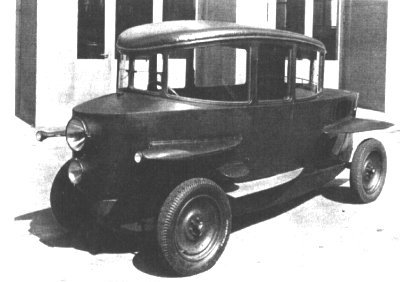
1935 Tatra T77a, .21 drag coefficient



1954 Alfa Romeo BAT7, .19 drag coefficient



1953 Hotchkiss Gegoire, .25 drag coefficient



1984 Chevrolet Citation IV, .18 drag coefficient
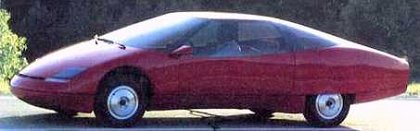
1985 Ford Probe V, .137 drag coefficient


1998 Dodge Intrepid ESX2, .19 drag coefficient


2000 Ford Prodigy, .20 drag coefficient


2000 GM Precept, .16 drag coefficient


For comparison, the new Toyota Prius is the most aerodynamic car any mainstream automaker will sell in the US. It has a 0.26 Cd. The 1921 Rumpler was getting close to that...
I can give you many, many more from this, and fuel economy/performance figures if you're interested(I've compiled a list of over 80 highly efficient cars from the distant past to presentlisting engine type, Cd, weight, fuel economy, performance specs, ect. I've showed a partial list to yesplease months ago). The automakers were building 60+ mpg prototypes since the 1970s that worked, looked normal for the cars of their era, and typically had no performance penalty. The 1983 Volvo LCP 2000 did 0-60 mph in 11 seconds, got 86 mpg highway on diesel, topped over 110 mph, could seat 4 adults, was a small station wagon, in volume production would have incurred no cost penalty to the consumer according to Volvo themselves...
We could have been doing this without any sacrifice on part of the consumer.
Cutting the Cd of cars from about 0.32-.34 average in the U.S. today down to 0.16-0.18 would allow a 180 horsepower 3L V6 midsize car weighing 3,400 lbs to go from vabout 27 mpg combined to 45 mpg, just by cutting the drag alone. This doesn't include reductions in frontal area(from reduced size), doesn't include reduced weight, doesn't include reduced horsepoiwer or reduced engine displacement, doesn't include newly available engine technologies such as hybrid drives or clean diesels...
Through aerodynamics alone, we could have 40+ mpg highway 7L V8 musclecars. It takes about $400 million for the major automakers to design a car from scratch and build all of the production facilities and get a car crash/emissions/ect. tested and mass produced. $5 million more in wind tunnel testing along with designing the cars for efficiency(instead of telling engineers not to go below a certain drag coefficient) would go a LONG way. Halving the drag coefficient would yield about a 40% gain overall, possibly more with the right design.
Would the aerospace industry not have a monopoly on carbon fibre, the aerospace grade stuff needed for cars would drop to $10/lb, giving it no cost penalty over steel. This would reduce the weight of todays cars by 600-800 lbs, giving an increase in fuel economy of about 25% in the city and 5-10% on the highway.
BUT, load reduction(lowering aero drag, rolling resistance, ect.) also means less wear and tear on parts, and less money flowing from Joe Sixpack to the auto monopolies. So, in the 1970s, when Joe Sixpack wanted fuel efficiency, Detroit decided to punish J6P with anemic, cramped econoboxes. Take a normal 27 mpg midsize car with a 3L Otto cycle V6 that does 0-60 mph in 9 seconds, remove the V6, replace with a 25 horsepower 3 cylinder Otto cycle engine, and fuel economy will only increase to about 35 mpg or so, while 0-60 time will now be measurable in minutes and even with no governor, top speed about 75 mph, 70-ish if you use air conditioning. The automakers could have kept the V8s in the 1970s, addressed weight and drag, and made some very good cars. But, that would have meant less money per vehicle sold, and especdially with the oil industry and auto industry investing in each other, even if profits in the auto sector increased from vitalizing sales, the profits lost in the oil sector would be far greater., Therefore, they won't do it. Oilies have too much control.
I could give you the equations to model a car's fuel economy if you are interested. They would be accurate within about 5%. You could use these to design your own concepts. Basjoos' civic is probably around a 0.16 Cd. An aeronautical engineer named Phil Knox also has an aeromodded Honda CRX that gets 90 mpg highway at 70 mph.
Once I find a garage down here in Texas where I can mod my Ford Contour, it will be getting ~45 mpg highway. Stock, it gets about 27 mpg highway according to the EPA and I measured 28 mpg at 70 mph driving to Texas. It has a 2.5L 170 horsepower V6 doing 0-60 mph in 7.7 secs, stock. Then I will add a supercharger to it, get ~300 horsepower, and still get 40+ mpg on the highway with this mod, and an insane top speed if I ever decide to adjust the gearing too.
The unnecessary felling of a tree, perhaps the old growth of centuries, seems to me a crime little short of murder. ~Thomas Jefferson
-

The_Toecutter - Intermediate Crude
- Posts: 2142
- Joined: Sat 18 Jun 2005, 03:00:00



 Since
Since 
