PeakOil is You
Loremo [car / toy] - 157mpg
Re: Loremo - 157mpg
 by Sleepybag » Sun 26 Feb 2006, 18:05:37
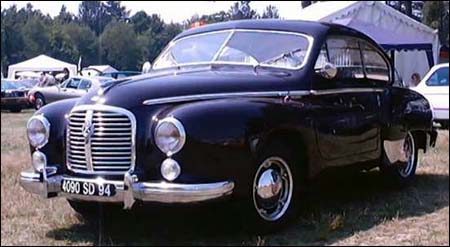
The Citroen 2CV was launched in 1948. It had a mileage of 56 miles per gallon. It was a popular car is Europe for decades.
-

Sleepybag - Peat

- Posts: 63
- Joined: Mon 17 Oct 2005, 03:00:00
- Location: The Netherlands
Re: Loremo - 157mpg
by dukey » Sun 26 Feb 2006, 18:15:45
i am very dubious of those claims
im not even sure a 50cc moped does 157 miles per gallon let alone a car ! There doesn't look anything revolutionary in there to make it get such a high mpg. Maybe if they told us under what conditions it was tested it would be more believable. Like down a 157 mile hill for example
im not even sure a 50cc moped does 157 miles per gallon let alone a car ! There doesn't look anything revolutionary in there to make it get such a high mpg. Maybe if they told us under what conditions it was tested it would be more believable. Like down a 157 mile hill for example
-

dukey - Intermediate Crude

- Posts: 2248
- Joined: Sun 20 Feb 2005, 04:00:00
Re: Loremo - 157mpg
by Daculling » Sun 26 Feb 2006, 20:00:22
$this->bbcode_second_pass_quote('Coolman', 'L')ess than 10% of the population owns a car. May I suggest a bicycle or walking if you really want to save the future for your children. You sure will be in the in crowd. Why people hang on to the stressfulness of driving is beyond me.
Like said before, I'll say it again.
I would bike to work if I didn't feel it was a significant risk to my life. Oh, and I've to told my government this and guess what. They don't care.
- Daculling
- Heavy Crude

- Posts: 1228
- Joined: Tue 12 Apr 2005, 03:00:00
Re: Loremo - 157mpg
by J-Rod » Sun 26 Feb 2006, 20:46:36
I brought this up with my wife, and the first thing she said is "How can that be safe?" I told her that they have built it to conform with safety standards. She says "Against a 3 ton SUV?" I guess she has a point. Even though we'd all be better off with a fleet of light safe efficient cars, the fact is we have a fleet of heavy beasts, and no one wants to be the one in a light car in a collision with a tank. 
Reality is agreed perception. Unfortunately there is also a reality imposed by nature.
http://thisis.peakdoom.com - For all your doom needs!
http://thisis.peakdoom.com - For all your doom needs!
-

J-Rod - Lignite
- Posts: 375
- Joined: Tue 17 May 2005, 03:00:00
- Location: Northeast Ohio
Re: Loremo - 157mpg
by The_Toecutter » Sun 26 Feb 2006, 21:51:05
$this->bbcode_second_pass_quote('', 'J')-Rod, TC is the resident automotive engineering genius.
Hardly. What I write is mostly common sense. I'm merely a student.
Cut the horsepower requirement in half to travel a certain speed, and you'll need approxamately half the fuel per unit of distance travelled.
$this->bbcode_second_pass_quote('', 'I')f I were wealthy I'd write him a blank check for whatever labs, personnel, and equipment he wanted.
I don't think I'd be competent enough to handle that, at least not now. I do know individuals who are, however.
$this->bbcode_second_pass_quote('', 'T')C, practical question. Have you ever thought of doing a business startup? For example start by building retrofitted gliders, and then reinvest into complete vehicle design including original chassis/bodies.
Yes. I've considered building cars from the ground up. The only problem, there is no chance in hell I'd ever get the tens of millions of dollars to meet America's crash test standards. The auto industry in the 70s lobbied for expensive crash tests which they would jointly develop with the government, and as a result, the small auto makers were left ut of the loop. Cheaper crash tests could have sufficed just as well and performed the same purpose. And the stupid rednecks blame Nader...
$this->bbcode_second_pass_quote('', 'S')eek out investors who are in it for the long term.
As soon as you become profit driven and indebted to shareholders, they will want to maximize profits no matter what. They might request, for instance, dumping the EV and going to a more profitable ICE or hybrid system.
Further, if I were to really want to stick with making EVs, I'd have problems getting investers because they would gravitate to those businesses producing more profitable IC cars.
Thus EV makers like AC Propulsion and CommuterCars don't trade shares publically. Going that route would be a disaster to their committment of getting low-profit EVs on the road for the sake of the consumer and the environment.
Maybe post peak oil, things will change in this regard.
$this->bbcode_second_pass_quote('', 'T')hen see about merging or consolidating with other small-scale firms in the field to create a larger entity. Assume it could be done in such a manner that you would be able to stick with engineering, and the rest of the management team would be engineering-oriented. Does that interest you?
Yes.
But my biggest concern is finishing my own EV first. In the wake of peak oil, at least I'll not need gasoline for transportation. I can worry about the larger scale later when I am able to have an impact on it. As for now, those people who know what they are doing in those small businesses can stick to attempting to sell to the masses. But all it takes is a little oil industry bitching, and it's all over for them...
$this->bbcode_second_pass_quote('', 'A')ll these new cars take loads of oil to manufacture
About 9 barrels per car, from what I've read on this forum and elsewhere. To make 400 million electric cars if we were to hypothetically replace the world's fleet would take 3.6 billion barrels, or about 45 days worth of worldwide oil consumption at 80 mbpd. Since automobile fuel accounts for about 40% of oil consumption, we'd brake even in 113 days from the savings, and from then on out 32 mbpd would be cut from consumption.
Not that having that many cars is feasible, but just for the purpose of illustration, the savings over a gas car in total oil consumed would be enourmous. The amount of oil it takes to make a gas powered car is insignificant compared to what it will consume as fuel.
$this->bbcode_second_pass_quote('', 'T')C, how much does fast charging like that reduce the life of lead-acid batteries? I've done a fair amount of research on batteries for my solar power project, and I know that the life of most batteries is compromised when you start charging above the 5 hour rate or so. What kind of management do they do?