


PeakOil is You
Declining Production in Alaska
Re: Declining Production in Alaska
 by Alaska_geo » Sun 15 Jan 2017, 04:12:55
$this->bbcode_second_pass_quote('Tanada', 'A')ny idea how saline that high pressure water layer is? Also any idea if Alaska allows produced saline water to be used for road spray like Ohio does? .....
I don't have any info on the salinity at this time. I don't believe under Alaska regs that they would be allowed to spray it on the roads. Surprisingly enough, they use very little salt on the roads around here. A DOT guy said when they sand roads they put just enough salt in the sand to keep it from clumping up in the truck.I don't know if it was clear from the article, but the Ahtna exploration in the Copper River Basin is primarily for gas for local consumption. Heating oil costs are extreme in some of those communities, and it gets real cold around there in the winter, even by Alaska standards. Even a very small gas discovery would be worth it to those folks. Up on the North Slope, the community of Barrow is heated by a small gas field discovered way back in the early days.
Likewise, the Doyon exploration in the Nenana Basin could market even a small gas discovery to the Fairbanks local market. They would love to find oil, but for various reasons gas is the most likely scenario in the Nenana Basin. Yukon Flats is a real wild card. Nobody really knows what to expect in the subsurface there. True real deal wildcat country there. Also a very expensive place to explore.
"Toto, I've a feeling we're not in Kansas any more."
-Dorothy, in The Wizard of Oz
-Dorothy, in The Wizard of Oz
- Alaska_geo
- Wood

- Posts: 39
- Joined: Tue 16 Dec 2014, 21:56:22
- Location: Alaska
Re: Declining Production in Alaska
by Plantagenet » Sun 15 Jan 2017, 05:03:07
Has anyone mentioned the huge new oil discovery at Smith Bay, Alaska?
Caelus Energy is now reporting they've found 6-10 billion barrels of oil.
Google "Smith Bay Alaska" for the details.
Cheers!
Caelus Energy is now reporting they've found 6-10 billion barrels of oil.
Google "Smith Bay Alaska" for the details.
Cheers!
Never underestimate the ability of Joe Biden to f#@% things up---Barack Obama
-----------------------------------------------------------
Keep running between the raindrops.
-----------------------------------------------------------
Keep running between the raindrops.
-

Plantagenet - Expert

- Posts: 26765
- Joined: Mon 09 Apr 2007, 03:00:00
- Location: Alaska (its much bigger than Texas).
Re: Declining Production in Alaska
by Alaska_geo » Sun 15 Jan 2017, 22:24:25
$this->bbcode_second_pass_quote('Plantagenet', 'H')as anyone mentioned the huge new oil discovery at Smith Bay, Alaska?
Caelus Energy is now reporting they've found 6-10 billion barrels of oil.
Caelus Energy is now reporting they've found 6-10 billion barrels of oil.
Caelus has made some very big claims. See https://www.adn.com/business-economy/energy/2016/10/04/caelus-claims-world-class-offshore-arctic-oil-discovery-that-could-among-alaskas-biggest/
However, I would hold off on the celebration for a bit. It may work out for them, but they have made some big extrapolations, based on fairly skimpy data. Most importantly, while they have drilled a couple of wells, so far they don't have a single flow test. They recently gave a fairly detailed public presentation. The only data they currently have are logs and some side wall cores from their wells, and seismic. The rocks are very tight, with average porosity around 15%, and average perm around 4 millidarcy. They think the oil is 43 API, but that is based on gas chromatography of extracts from their SWC. They think fracking will help them produce. This is a strat trap, so everything is based on what they see in those 2 wells, together with extent based on seismic signature. The reservoir is in turbidite sands of the Torok Fm, which can sometimes be complex. This discovery is in shallow water offshore in Smith Bay, and there will be some very difficult engineering and environmental issues to overcome.
Keep in mind that a company the size of Caelus does not have either the money nor the in-house engineering expertise to bring this to development. They are obviously looking for partners, preferably one of the larger oil companies like BP or ConocoPhillips to come in as a partner. Hence Caelus has a large incentive to put the best possible spin on the data they have. It certainly could work out to be as big as they think, but they are a long way from demonstrating that. So at this stage a good deal of caution and skepticism is called for.
Upthread someone noted that ConocoPhillips has also announced a discovery. See https://www.adn.com/business-economy/energy/2017/01/13/conocophillips-announces-alaska-discovery-with-daily-production-potential-of-100000-barrels/
I feel a bit more warm and fuzzy about the Conoco discovery. They have actual well test results. It is onshore and somewhat closer to existing infrastructure than the Caelus discovery. It is in topsets of the Nanushuk Fm. And Conoco is a large and well established N Slope producer, and doesn't need to spin it to attract partners.
Stay tuned, as it will be very interesting to see how these discoveries play out.
"Toto, I've a feeling we're not in Kansas any more."
-Dorothy, in The Wizard of Oz
-Dorothy, in The Wizard of Oz
- Alaska_geo
- Wood
- Posts: 39
- Joined: Tue 16 Dec 2014, 21:56:22
- Location: Alaska
Re: Declining Production in Alaska
by Plantagenet » Thu 19 Jan 2017, 17:42:24
One of the most interesting things about the big Caelus discovery on the North Slope is that the State of Alaska owes Caelus Energy hundreds of millions of dollars, because the convoluted Alaska tax code authorizes huge tax credits for companies who explore for oil in Alaska.
Caelus_Smith_Bay_Project_is_a_World_Class_Discovery
The State of Alaska is broke and unlikely to make these payments anytime soon, even though Caelus has done exactly what the tax credit program was designed to encourage, i.e. explore and find more oil in Alaska.
Cheers!

Caelus_Smith_Bay_Project_is_a_World_Class_Discovery
The State of Alaska is broke and unlikely to make these payments anytime soon, even though Caelus has done exactly what the tax credit program was designed to encourage, i.e. explore and find more oil in Alaska.
Cheers!
-
Plantagenet - Expert
- Posts: 26765
- Joined: Mon 09 Apr 2007, 03:00:00
- Location: Alaska (its much bigger than Texas).
Re: Declining Production in Alaska
by Alaska_geo » Sat 21 Jan 2017, 00:58:49
I've been chatting with some friends, who all have significant N Slope experience and have all seen various versions of the Caelus pitch. The general consensus is that Caelus is being wildly optimistic. Maybe it will pan out for them, but most folks familiar with the area and the rocks are very skeptical.
"Toto, I've a feeling we're not in Kansas any more."
-Dorothy, in The Wizard of Oz
-Dorothy, in The Wizard of Oz
- Alaska_geo
- Wood
- Posts: 39
- Joined: Tue 16 Dec 2014, 21:56:22
- Location: Alaska
Re: Declining Production in Alaska
by ROCKMAN » Sat 21 Jan 2017, 01:30:04
Geo - First thought was to see if it was a stock play. And guess what: a private LLC backed by a private equity firm. But then found this:
"Alaska has paid out about $8 billion in tax credits to energy companies through the end of fiscal 2016. The state has footed up to 55 to 65 percent of project development costs, and up to 85 percent of exploration expenses. Hendrix said that once rebates are paid to Caleus Energy, the state will have plowed more money into the Smith Bay project than the company itself. "At what stage do we say, 'You're a company. You're on your own. Go for it?'" he asked."
So essentially just a heavily promoted deal with the state of Alaska being the "mullet". LOL. Which doesn't make the reserve estimate more or less valid. But I suspect whatever they did find will be up for sale soon...if it's worth developing.
"Alaska has paid out about $8 billion in tax credits to energy companies through the end of fiscal 2016. The state has footed up to 55 to 65 percent of project development costs, and up to 85 percent of exploration expenses. Hendrix said that once rebates are paid to Caleus Energy, the state will have plowed more money into the Smith Bay project than the company itself. "At what stage do we say, 'You're a company. You're on your own. Go for it?'" he asked."
So essentially just a heavily promoted deal with the state of Alaska being the "mullet". LOL. Which doesn't make the reserve estimate more or less valid. But I suspect whatever they did find will be up for sale soon...if it's worth developing.
-

ROCKMAN - Expert
- Posts: 11397
- Joined: Tue 27 May 2008, 03:00:00
- Location: TEXAS
Re: Declining Production in Alaska
by Plantagenet » Sat 21 Jan 2017, 14:12:01
Other then the effed up Alaska tax laws, the situation with Caelus isn't unusual or unique to Alaska---this is how the oil biz operates in the US these days. Take the shale plays in the Permian Basin in Texas---these were targeted and explored by small oil companies, some of them private. Now the oil majors are coming in and partnering with the small companies or buying up the assets for themselves
exxon-makes-biggest-bet-yet-permian
Cheers!
exxon-makes-biggest-bet-yet-permian
Cheers!
Never underestimate the ability of Joe Biden to f#@% things up---Barack Obama
-----------------------------------------------------------
Keep running between the raindrops.
-----------------------------------------------------------
Keep running between the raindrops.
-
Plantagenet - Expert
- Posts: 26765
- Joined: Mon 09 Apr 2007, 03:00:00
- Location: Alaska (its much bigger than Texas).
Re: Declining Production in Alaska
by ROCKMAN » Sat 21 Jan 2017, 17:01:46
pstarr - "have just compared never-before-attempted off-shore oil production in the stormy frigid arctic ocean with . . . Mom and Pops'" Believe it not you and I could partner up and drill some wildcats in the offshore Arctic. All it would take is a big fat check book.
With financial support I can put together a geologic, geophysical and engineering with as much (and probably more) experience then Shell Oil had working on its well. Except for upper management the vast majority of the hands doing the actual physical ops are consultants and third party contractors. Hell, I've told you about the $300 million my com!pany spent drilling including deep high pressure wells in Louisiana along wityh some operations out on the water. What I haven't pointed out is that there are just three of us: a geologist, a geophysicist and an engineer. Typically the only company employee that has ever been on all of our wells is moi. My owned doesn't believe in paying folks to sit around the office waiting for a project to pop up: when we need extra horse power we go rent some horses...by the day.
And now that I think of it I spent 6 months drilling horizontal wells in Wyoming for ExxonMobil 10 years ago and never saw one of its employees on location once.
There have been a number of small operators that have taken concessions in the Deep Water off west Africa and found nice oil fields.
So are you ready, partner? Let me know when you get that $100 million raised and I'll start pulling the bodies together.
With financial support I can put together a geologic, geophysical and engineering with as much (and probably more) experience then Shell Oil had working on its well. Except for upper management the vast majority of the hands doing the actual physical ops are consultants and third party contractors. Hell, I've told you about the $300 million my com!pany spent drilling including deep high pressure wells in Louisiana along wityh some operations out on the water. What I haven't pointed out is that there are just three of us: a geologist, a geophysicist and an engineer. Typically the only company employee that has ever been on all of our wells is moi. My owned doesn't believe in paying folks to sit around the office waiting for a project to pop up: when we need extra horse power we go rent some horses...by the day.
And now that I think of it I spent 6 months drilling horizontal wells in Wyoming for ExxonMobil 10 years ago and never saw one of its employees on location once.
There have been a number of small operators that have taken concessions in the Deep Water off west Africa and found nice oil fields.
So are you ready, partner? Let me know when you get that $100 million raised and I'll start pulling the bodies together.
-
ROCKMAN - Expert
- Posts: 11397
- Joined: Tue 27 May 2008, 03:00:00
- Location: TEXAS
Re: Declining Production in Alaska
by rockdoc123 » Sat 21 Jan 2017, 17:30:10
Full blown offshore production hasn't yet happened in the US or Canadian Arctic but it has in both the Norwegian and Russian Barents Sea (albeit not in areas with as long a period of ice cover and better year round routes for egress).
Back in the eighties a Canadian consortium drilled many wells in the Beaufort Sea in shallow water by building temporary islands or using a the Molikpaq which was a bottom founded drilling platform. The Molikpaq had been used for long term production testing on Amaligak but it never did get to full production status due to the issues with getting a pipeline approved south of the Mckenzie delta and the fact that the area is ice bound for half of the year. Plans were in place to look towards six months of tanker traffic from the field (during ice free periods) but the economics required net oil prices well north of $80/bbl. Full time production from Amaligak (very similar water depths to offshore Smith Bay) was not an engineering issue...the technology was there to accomplish it back in the late eighties.
Back in the eighties a Canadian consortium drilled many wells in the Beaufort Sea in shallow water by building temporary islands or using a the Molikpaq which was a bottom founded drilling platform. The Molikpaq had been used for long term production testing on Amaligak but it never did get to full production status due to the issues with getting a pipeline approved south of the Mckenzie delta and the fact that the area is ice bound for half of the year. Plans were in place to look towards six months of tanker traffic from the field (during ice free periods) but the economics required net oil prices well north of $80/bbl. Full time production from Amaligak (very similar water depths to offshore Smith Bay) was not an engineering issue...the technology was there to accomplish it back in the late eighties.
-
rockdoc123 - Expert
- Posts: 7685
- Joined: Mon 16 May 2005, 03:00:00
Re: Declining Production in Alaska
by ROCKMAN » Sat 21 Jan 2017, 21:57:26
So Doc if I slipped you a few hundred $million in a budget do you think you could pull a team of hands togethed that could match anything Shell or XOM could handle? Or maybe even better? LOL.
-
ROCKMAN - Expert
- Posts: 11397
- Joined: Tue 27 May 2008, 03:00:00
- Location: TEXAS
Re: Declining Production in Alaska
by rockdoc123 » Sat 21 Jan 2017, 22:58:07
obviously better, given their raison d'etre is all about gold plating and huge management teams 
I was actually involved in Alaska exploration for a number of years, quite near the place in question and have had a look at the seismic. You can clearly see AVO affect throughout the turbidite section likely indicative of the light oil that was encountered.
The biggest issue in this part of the world is seasonality of access, the need to use ice roads and the huge expenses associated with just abandoning any given well. Can't see that challenge disappearing even when the price rises.
I was actually involved in Alaska exploration for a number of years, quite near the place in question and have had a look at the seismic. You can clearly see AVO affect throughout the turbidite section likely indicative of the light oil that was encountered.
The biggest issue in this part of the world is seasonality of access, the need to use ice roads and the huge expenses associated with just abandoning any given well. Can't see that challenge disappearing even when the price rises.
-
rockdoc123 - Expert
- Posts: 7685
- Joined: Mon 16 May 2005, 03:00:00
Re: Declining Production in Alaska
by ROCKMAN » Sun 22 Jan 2017, 11:32:25
Everyone reading rockdoc's post should understand that every geologist, including the Rockman, has many times, in those few minutes before falling asleep, has had the same thought: if those assholes would just listen to me we could find a lot more oil/NG. LOL. Especially true for those whose careers began with Big Oil.
There are 2 basic realities in the oil patch. One is that many of the folks they make it to high levels of management couldn't find their own ass with 2 hands let alone find oil/NG profitability. Second, nothing will lead to failure faster then a geologist that believes his own bullshit. LOL. We can be like the most zealous religious fanatic because we know absolutely we have the right answer.
There are 2 basic realities in the oil patch. One is that many of the folks they make it to high levels of management couldn't find their own ass with 2 hands let alone find oil/NG profitability. Second, nothing will lead to failure faster then a geologist that believes his own bullshit. LOL. We can be like the most zealous religious fanatic because we know absolutely we have the right answer.
-
ROCKMAN - Expert
- Posts: 11397
- Joined: Tue 27 May 2008, 03:00:00
- Location: TEXAS
Re: Declining Production in Alaska
by Plantagenet » Sun 22 Jan 2017, 13:34:47
$this->bbcode_second_pass_quote('pstarr', '.').. never-before-attempted off-shore oil production in the stormy frigid arctic ocean . . .
How is it that you are so often wrong in what you post? Is it just bad luck or do you have to work at getting things wrong?
There are currently three (3) separate North Slope oilfields producing from shallow offshore waters similar to the situation at Smith Bay. One of the three is actually operated by Caelus Energy---the same company that recently announced the huge oil discovery at Smith Bay.
Offshore oil production in the shallow waters of the Arctic Ocean is typically done from small man-made islands
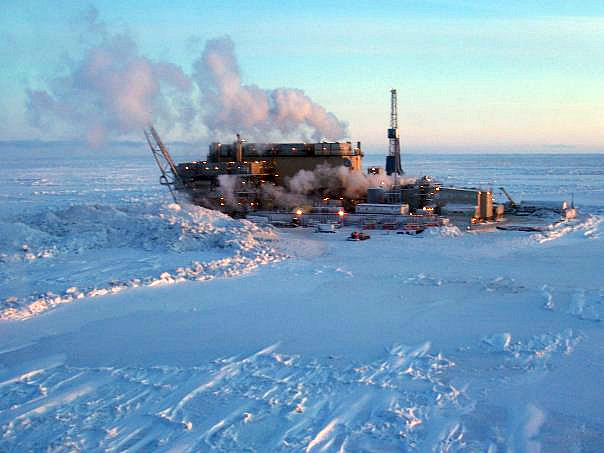 .
.Northstar Island in winter surrounded by sea ice. In summer the Arctic Ocean water in this area is ice-free.
Cheers!
-
Plantagenet - Expert
- Posts: 26765
- Joined: Mon 09 Apr 2007, 03:00:00
- Location: Alaska (its much bigger than Texas).
Re: Declining Production in Alaska
by Tanada » Sun 22 Jan 2017, 14:27:03
Are you serious? At a peak rate of over 68,000/bbl/d that well way more than paid for itself having peaked right when prices were in a steep rise. Even if it is down 90 percent from peak today it will still be pumping 6800/bbl/d! Heck at 1 percent of peak it would be pumping 687*50 = $34,350.00/day gross cash or $12,537,750.00/year gross cash income.
Do you ever do eighth grade math derived from the insane things you post Pete? I mean seriously, I would be terribly embarrassed if I made such a foolhardy statement as earning millions of dollars a year being a bad idea.
Do you ever do eighth grade math derived from the insane things you post Pete? I mean seriously, I would be terribly embarrassed if I made such a foolhardy statement as earning millions of dollars a year being a bad idea.
$this->bbcode_second_pass_quote('Alfred Tennyson', 'W')e are not now that strength which in old days
Moved earth and heaven, that which we are, we are;
One equal temper of heroic hearts,
Made weak by time and fate, but strong in will
To strive, to seek, to find, and not to yield.
Moved earth and heaven, that which we are, we are;
One equal temper of heroic hearts,
Made weak by time and fate, but strong in will
To strive, to seek, to find, and not to yield.
- Tanada
- Site Admin

- Posts: 17094
- Joined: Thu 28 Apr 2005, 03:00:00
- Location: South West shore Lake Erie, OH, USA
