

PeakOil is You
Peak Oil: The Big Fizzle
Re: Peak Oil: The Big Fizzle
 by Aaron » Tue 11 Dec 2007, 13:34:36
The problem is, of course, that not only is economics bankrupt, but it has always been nothing more than politics in disguise... economics is a form of brain damage.
Hazel Henderson
Hazel Henderson
-

Aaron - Resting in Peace
- Posts: 5998
- Joined: Thu 15 Apr 2004, 03:00:00
- Location: Houston
Re: Peak Oil: The Big Fizzle
by Narz » Tue 11 Dec 2007, 13:55:51
$this->bbcode_second_pass_quote('Aaron', '[')img]http://www.peakoil.com/images/forumicons/forum_troll.jpg[/img]
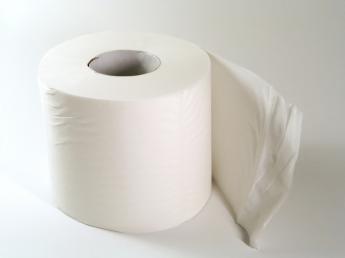
I haven't noticed a significant increase in the cost of toilet paper.
“Seek simplicity but distrust it”
-

Narz - Intermediate Crude

- Posts: 2360
- Joined: Sat 25 Nov 2006, 04:00:00
- Location: the belly of the beast (New Jersey)
Re: Peak Oil: The Big Fizzle
by Narz » Tue 11 Dec 2007, 13:57:26
Besides, if it ever gets too expensive people will simply coordinate their shittin' & shower times a bit more carefully. 
“Seek simplicity but distrust it”
-
Narz - Intermediate Crude
- Posts: 2360
- Joined: Sat 25 Nov 2006, 04:00:00
- Location: the belly of the beast (New Jersey)
Re: Peak Oil: The Big Fizzle
by TonyPrep » Tue 11 Dec 2007, 14:19:02
$this->bbcode_second_pass_quote('Dezakin', 't')he tar sands which can support more than 5 mbpd
From the estimates I've seen, 5 mbpd is optimistic. This seems reasonable, given that the best deposits are already being mined. As the deposits become poorer, it will take more effort and energy to simply produce as much oil as now. The net energy will also decrease. So it seems wishful thinking that tar sands will ever provide more than a tiny fraction of what conventional is now. I think Canadian tar sands is at little more than 1 mbpd, now.-

TonyPrep - Intermediate Crude
- Posts: 2842
- Joined: Sun 25 Sep 2005, 03:00:00
- Location: Waiuku, New Zealand
Re: Peak Oil: The Big Fizzle
by killJOY » Tue 11 Dec 2007, 16:04:13
$this->bbcode_second_pass_quote('', '[')b]One elderly man who called Midcoast Maine Community Action told receptionist Candy Downs that he was keeping warm by staying under the covers of a bed and running a hair dryer.
"It's sad. It makes me want to cry," she said.
"It's sad. It makes me want to cry," she said.
GLOAT, JD. GLOAT!
Peak oil = comet Kohoutek.
-

killJOY - Intermediate Crude
- Posts: 2220
- Joined: Mon 21 Feb 2005, 04:00:00
- Location: ^NNE^
Re: Peak Oil: The Big Fizzle
by Concerned » Tue 11 Dec 2007, 16:14:09
$this->bbcode_second_pass_quote('killJOY', '')$this->bbcode_second_pass_quote('', '[')b]One elderly man who called Midcoast Maine Community Action told receptionist Candy Downs that he was keeping warm by staying under the covers of a bed and running a hair dryer.
"It's sad. It makes me want to cry," she said.
"It's sad. It makes me want to cry," she said.
GLOAT, JD. GLOAT!
Who cares JD does not use blankets and a hair dryer to keep warm in winter. All good. Where is this crisis you guys were talking about?
"Once the game is over, the king and the pawn go back in the same box."
-Italian Proverb
-Italian Proverb
-

Concerned - Heavy Crude

- Posts: 1571
- Joined: Thu 23 Sep 2004, 03:00:00