


PeakOil is You
Wholefoods. Major betrayal
72 posts
• Page 3 of 4 • 1, 2, 3, 4
Re: Wholefoods. Major betrayal
 by Quinny » Sun 13 Mar 2011, 05:28:15
I understand Sca's point that we shouldn't throw out the baby with the bathwater, but IMO GM is primarily about big business controlling food production and should be opposed.
Live, Love, Learn, Leave Legacy.....oh and have a Laugh while you're doing it!
-

Quinny - Intermediate Crude

- Posts: 3337
- Joined: Thu 03 Jul 2008, 03:00:00
Re: Wholefoods. Major betrayal
by pedalling_faster » Tue 03 May 2011, 09:41:01
all of a sudden, food with an expired date code before the BP oil spill is beginning to look real good. the goal there being to obtain Corexit-free food.
getting back to Monsanto's toxic food - there are still a lot of farmers who use non-GMO products. i just bought 45 pounds of white wheat and 45 pounds of pinto beans from one of them.
test samples from both batches sprouted. the pinto beans sprouted faster than any plant i've ever seen - less than 12 hours.
getting back to Monsanto's toxic food - there are still a lot of farmers who use non-GMO products. i just bought 45 pounds of white wheat and 45 pounds of pinto beans from one of them.
test samples from both batches sprouted. the pinto beans sprouted faster than any plant i've ever seen - less than 12 hours.
http://www.LASIK-Flap.com/ ~ Health Warning about LASIK Eye Surgery
-

pedalling_faster - Permanently Banned
- Posts: 1399
- Joined: Sat 10 Dec 2005, 04:00:00
Re: Wholefoods. Major betrayal
by ian807 » Tue 03 May 2011, 12:47:48
$this->bbcode_second_pass_quote('mos6507', 'I')'d rather we genetically engineer ourselves so we can live on photosynthesis, like Swamp Thing.
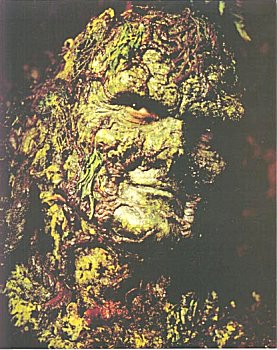
That's my version of the singularity for you. Fat chance.
That's my version of the singularity for you. Fat chance.
Swamp thing never evolved. Neither did animals that used photosynthesis. The energy budget doesn't work. Plants, whether corn or algae, are simply inefficient solar collectors (http://en.wikipedia.org/wiki/Photosynthetic_efficiency They ballbark in at about 11 percent.). Two dimensional skin doesn't have enough energy gathering area to feed a 3 dimensional energy hungry metabolism. That's why cows have to eat all the time. They have to concentrate energy to survive.
This is also why the algae thing won't work long term. At 11% efficiency, there's not enough energy to matter. You'd do better with almost any other system.
-
ian807 - Tar Sands

- Posts: 899
- Joined: Mon 03 Nov 2008, 04:00:00
Re: Wholefoods. Major betrayal
by SilverSlippers77 » Mon 09 May 2011, 15:25:27
I'm kinda new here but I figured I would try and throw my 2-cents in on this GMO v. not debate. GMOs are a powerful technology that can easily be mismanaged. We ought to remain cautious about them, I think an outright ban on them is a bad idea as well as an outright green light for all of them. Can they solve our problems of hunger? Likely not right now as the higher yields they are producing are mostly not going to feed people but to feedlots, ethanol,ect. A lot of the problems they are being made to fix are problems that could have been fixed with better practices in the first place - its like we haven't learned the lesson of the Irish Potato Famine.
A few issues I have with the our monoculture-based culture
Issue 1: Most livestock companies especially the really big ones are all located within a fairly tight geographic area of each other, this causes some areas to have really high concentrations of available manures as fertilizer and some areas to have virtually none. The areas where there are high amounts of such large heavily concentrated animal farms will have excesses of manures and will often apply it to fields not as a fertilizer but as a disposal mechanism. So they will apply too much. You can over apply organic fertilizers and cause quite a bit environmental damage - its just that it takes more to over apply with organic fertilizer v. artificial. Manures in and of themselves often have issues for being applied as a fertilizer to an organic certified field because they can contain all sorts of things that were in the animal feed (I'm not exactly sure why these things are in feed - I'm soil science major not animal science - but feed companies do tend to overload animal feeds with lots of things that just get excreted), things like excess copper, antibiotics, various other things that the animal couldn't digest. Also manures typically have an off balance Phosphorus-Nitrogen ratio (also typically due to their feed - it often contains excess Phosphorus because they have trouble digesting in whatever form its in). In short the animal operations need to be much less concentrated and need to think about how what they feed to the animal can end up in the soil.
Issue 2: Price motivations can often cause really bad rotation cycles - high corn prices due to a combination of demand from; feedlot beef, HF Corn Syrup, and ethanol production caused many producers to stop doing a soybean rotation. This causes a need for much more chemical fertilizer and pesticide. The soybeans were providing N and were helping to break pest cycles. We could produce more food with less environmental damage if producers based what to plant on sustainability and long-term health of their field.
I hope that wasn't too long or tedious - I've done quite a bit of work in some of my classes about the first issue.
A few issues I have with the our monoculture-based culture
Issue 1: Most livestock companies especially the really big ones are all located within a fairly tight geographic area of each other, this causes some areas to have really high concentrations of available manures as fertilizer and some areas to have virtually none. The areas where there are high amounts of such large heavily concentrated animal farms will have excesses of manures and will often apply it to fields not as a fertilizer but as a disposal mechanism. So they will apply too much. You can over apply organic fertilizers and cause quite a bit environmental damage - its just that it takes more to over apply with organic fertilizer v. artificial. Manures in and of themselves often have issues for being applied as a fertilizer to an organic certified field because they can contain all sorts of things that were in the animal feed (I'm not exactly sure why these things are in feed - I'm soil science major not animal science - but feed companies do tend to overload animal feeds with lots of things that just get excreted), things like excess copper, antibiotics, various other things that the animal couldn't digest. Also manures typically have an off balance Phosphorus-Nitrogen ratio (also typically due to their feed - it often contains excess Phosphorus because they have trouble digesting in whatever form its in). In short the animal operations need to be much less concentrated and need to think about how what they feed to the animal can end up in the soil.
Issue 2: Price motivations can often cause really bad rotation cycles - high corn prices due to a combination of demand from; feedlot beef, HF Corn Syrup, and ethanol production caused many producers to stop doing a soybean rotation. This causes a need for much more chemical fertilizer and pesticide. The soybeans were providing N and were helping to break pest cycles. We could produce more food with less environmental damage if producers based what to plant on sustainability and long-term health of their field.
I hope that wasn't too long or tedious - I've done quite a bit of work in some of my classes about the first issue.
-

SilverSlippers77 - Wood

- Posts: 5
- Joined: Sun 08 May 2011, 15:45:35
Re: Wholefoods. Major betrayal
by Pops » Tue 10 May 2011, 08:48:24
There is one GM crop I really like, it's the e Coli bacteria modified to produce human insulin!
Monsanto is a perfect example of how technology outpaces regulation. But aside from that, gm crops - roundup ready types especially but also the bT traits, conserve soil and eliminate the use of pesticides and herbicides proven to be deadly - proven.
There are a lot of things I'd rather see but unfortunately they aren't gonna happen. My hope is GM use gets us over the population hump without widespread starvation and with a little topsoil left.
We could eliminate them today and just get it over with I guess.
Monsanto is a perfect example of how technology outpaces regulation. But aside from that, gm crops - roundup ready types especially but also the bT traits, conserve soil and eliminate the use of pesticides and herbicides proven to be deadly - proven.
There are a lot of things I'd rather see but unfortunately they aren't gonna happen. My hope is GM use gets us over the population hump without widespread starvation and with a little topsoil left.
We could eliminate them today and just get it over with I guess.
The legitimate object of government, is to do for a community of people, whatever they need to have done, but can not do, at all, or can not, so well do, for themselves -- in their separate, and individual capacities.
-- Abraham Lincoln, Fragment on Government (July 1, 1854)
-- Abraham Lincoln, Fragment on Government (July 1, 1854)
-

Pops - Elite

- Posts: 19746
- Joined: Sat 03 Apr 2004, 04:00:00
- Location: QuikSac for a 6-Pac
Re: Wholefoods. Major betrayal
by DomusAlbion » Tue 10 May 2011, 11:14:57
$this->bbcode_second_pass_quote('Pops', 'T')here are a lot of things I'd rather see but unfortunately they aren't gonna happen. My hope is GM use gets us over the population hump without widespread starvation and with a little topsoil left.
We could eliminate them today and just get it over with I guess.
We could eliminate them today and just get it over with I guess.
I think it's time to start with the "get it over" phase. No overt action needed, just let nature take its course. Just limit the "We are the World" moments and understand that we are in overshoot and let things unwind. It's Nature's way.
"Modern Agriculture is the use of land to convert petroleum into food."
-- Albert Bartlett
"It will be a dark time. But for those who survive, I suspect it will be rather exciting."
-- James Lovelock
-- Albert Bartlett
"It will be a dark time. But for those who survive, I suspect it will be rather exciting."
-- James Lovelock
-

DomusAlbion - Expert
- Posts: 1979
- Joined: Wed 08 Dec 2004, 04:00:00
- Location: Beyond the Pale
Re: Wholefoods. Major betrayal
by Pops » Tue 10 May 2011, 11:34:07
$this->bbcode_second_pass_quote('DomusAlbion', 'I')t's Nature's way.
Man you have a talent for branding!

The legitimate object of government, is to do for a community of people, whatever they need to have done, but can not do, at all, or can not, so well do, for themselves -- in their separate, and individual capacities.
-- Abraham Lincoln, Fragment on Government (July 1, 1854)
-- Abraham Lincoln, Fragment on Government (July 1, 1854)
-
Pops - Elite
- Posts: 19746
- Joined: Sat 03 Apr 2004, 04:00:00
- Location: QuikSac for a 6-Pac
Re: Wholefoods. Major betrayal
by Expatriot » Tue 10 May 2011, 15:37:14
GMOs aren't the problem.
Problem is central control of the food supply.
Most people are far too ignorant about the biology involved to even understand what a GMO is.
Don't fear non-native protein.
Fear Monsanto controlling your ability to grow what you want.
Problem is central control of the food supply.
Most people are far too ignorant about the biology involved to even understand what a GMO is.
Don't fear non-native protein.
Fear Monsanto controlling your ability to grow what you want.
-

Expatriot - Lignite
- Posts: 370
- Joined: Wed 21 Jul 2010, 11:57:52
Re: Wholefoods. Major betrayal
by AgentR11 » Tue 10 May 2011, 15:57:14
$this->bbcode_second_pass_quote('Expatriot', 'F')ear Monsanto controlling your ability to grow what you want.
I kinda go back and forth on the Monsanto taking over the World issue. I dislike and distrust some of what they do; but I understand, from a market & accounting point of view why they behave as they do. On the one side, I don't think they really care one way or another whether local producers plant seed X or seed Y; but they also have an obligation to defend their intellectual property, in so much that if Bob plants corn containing Monsanto's IP and then sells it, they really need to try to get their share of the funds. Where it gets blurry, is if Bob plants heirloom X, and saves seed from the open field for next year; that seed may have been cross pollinated with Y containing Monsanto's IP. No real fault of Monsanto, or Bob, but it creates a situation that Monsanto must pursue, at least if Bob is gonna sell the product of his field. You could argue that the IP captured in the cross pollination would produce sufficient bonus to cover the royalty charge from Monsanto, but thats a hard sell to make to Bob.
Monsanto could ease off royalty hunting, but then, why would anyone bother to pay Monsanto if they can just get their IP for free?
Bob could grow his seed stock in a greenhouse, or buy heirloom seed each year from a seed producer; but how is that all that different than just paying Monsanto for the higher producing GM seed to begin with?
Hard nut to crack really.
Same with the terminator gene; if you are a company that knows such a thing can be made, and think its unethical and unacceptable to your corporate guidelines; then the only recourse you can take is to invent the thing itself and patent it. So, to an outside observer, it looks the same, "Corporation creates terminator gene"; but that creation can be on the one hand, to do a malicious takeover of crops; or it can be to prevent a believed-evil corporate competitor from doing that very thing.
Yes we are, as we are,
And so shall we remain,
Until the end.
And so shall we remain,
Until the end.
- AgentR11
- Light Sweet Crude

- Posts: 6589
- Joined: Tue 22 Mar 2011, 09:15:51
- Location: East Texas


