PeakOil is You
THE International Energy Agency (IEA) Thread pt 4
Re: IEA : new monthly world total oils production record
 by Lore » Fri 01 Jun 2012, 11:00:40
If people reverted to doing things the old way in mass, you'd find many only able to visit their local WalMart once a month. Which would make it pretty uncertain a WalMart would even be there. Over 7 billion people may find it hard to exist.
The things that will destroy America are prosperity-at-any-price, peace-at-any-price, safety-first instead of duty-first, the love of soft living, and the get-rich-quick theory of life.
... Theodore Roosevelt
... Theodore Roosevelt
-

Lore - Fission

- Posts: 9021
- Joined: Fri 26 Aug 2005, 03:00:00
- Location: Fear Of A Blank Planet
Re: IEA : new monthly world total oils production record
by meemoe_uk » Fri 01 Jun 2012, 13:12:02
$this->bbcode_second_pass_quote('', 'Y')ou make my point better than I do: today's population can't support itself without cheap energy.
I didn't make that point. But assuming there's some truth in it, I think this arguement is logical...
0.5 cents for 1 man hours work is cheap energy.
- Therefore todays population can support itself.
Also 5 cents for 1 man hours work is cheap energy
- therefore todays population could support itself even if oil was 10x more expensive.
So by your own argument, we are fine for a long time.
Personally I don't think your right, I think todays society could support itself even with relatively expensive energy. Like oil at 50cents for a man hours work, or even $1.
-

meemoe_uk - Tar Sands

- Posts: 948
- Joined: Tue 22 May 2007, 03:00:00
Re: IEA : new monthly world total oils production record
by sparky » Fri 01 Jun 2012, 23:30:44
.
Oil at 1$ man hour would put us on the back of horses for the well off and on bicycle for the rest
government budget would be halved at least
farming would see a ten fold increase in badly paid farm hands
public servants and tertiary workers would see their numbers halve
work compulsion would be implemented by a shrinking of doles and social programs
domestic servants would make a big comeback
Oil at 1$ man hour would put us on the back of horses for the well off and on bicycle for the rest
government budget would be halved at least
farming would see a ten fold increase in badly paid farm hands
public servants and tertiary workers would see their numbers halve
work compulsion would be implemented by a shrinking of doles and social programs
domestic servants would make a big comeback
-

sparky - Intermediate Crude

- Posts: 3587
- Joined: Mon 09 Apr 2007, 03:00:00
- Location: Sydney , OZ
Re: IEA : new monthly world total oils production record
by meemoe_uk » Sat 02 Jun 2012, 14:28:18
Hi Sparky,
On 8th November 2005 JD wrote an article covering what happens in the low energy society that comes 50 or so years after 'the peak of oil party'.
It's Japan. Japan uses much less fossil fuel than othere 1st world country, and less energy generally.
Is the result misery and poverty?
No quite the opposite. Japan has for decades been ranked in the top 5 and often the best in the world for good living, per Capita earning, long living, nice clean environment, plenty of jobs.
Everyone rides round on bikes.
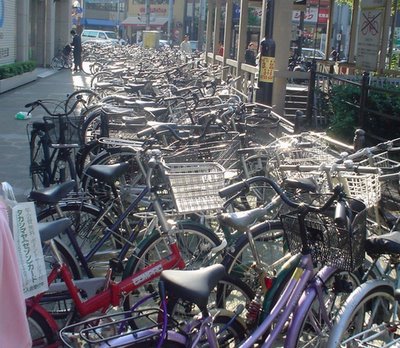
A low energy society is fine. Shouldn't suprise anyone, as most of today's western societies spends trillions on luxuries. We have so much 'surplus' people have lost their sense of how extremely rich in energy we are.
No peaker ever reads history or old articles because they are trapped by the old trick the hype of the 'now' where every day's new scare and hype headline makes them drop their past only think of the hype of the present. So they won't touch something from November 2005.
On 8th November 2005 JD wrote an article covering what happens in the low energy society that comes 50 or so years after 'the peak of oil party'.
It's Japan. Japan uses much less fossil fuel than othere 1st world country, and less energy generally.
Is the result misery and poverty?
No quite the opposite. Japan has for decades been ranked in the top 5 and often the best in the world for good living, per Capita earning, long living, nice clean environment, plenty of jobs.
Everyone rides round on bikes.
A low energy society is fine. Shouldn't suprise anyone, as most of today's western societies spends trillions on luxuries. We have so much 'surplus' people have lost their sense of how extremely rich in energy we are.
No peaker ever reads history or old articles because they are trapped by the old trick the hype of the 'now' where every day's new scare and hype headline makes them drop their past only think of the hype of the present. So they won't touch something from November 2005.
-
meemoe_uk - Tar Sands
- Posts: 948
- Joined: Tue 22 May 2007, 03:00:00
Re: IEA : new monthly world total oils production record
by sparky » Sat 02 Jun 2012, 20:26:33
.
Japan like Europe and the U.S. got rid of a lot of manufacturing offshore
it's great for the mother companies , they keep the Research and development ,
the financial structure ,the merchandizing ....Etc
all the energy intensive , socially troublesome manufacturing process is send far away
energy costs are now hidden in the containers unloaded at the docks
Japan like Europe and the U.S. got rid of a lot of manufacturing offshore
it's great for the mother companies , they keep the Research and development ,
the financial structure ,the merchandizing ....Etc
all the energy intensive , socially troublesome manufacturing process is send far away
energy costs are now hidden in the containers unloaded at the docks
-
sparky - Intermediate Crude
- Posts: 3587
- Joined: Mon 09 Apr 2007, 03:00:00
- Location: Sydney , OZ
Re: IEA : new monthly world total oils production record
by sparky » Sat 02 Jun 2012, 20:27:59
$this->bbcode_second_pass_quote('sparky', '.')
Japan like Europe and the U.S. got rid of a lot of manufacturing offshore
it's great for the mother companies , they keep the Research and development ,
the financial structure ,the merchandizing ....Etc
all the energy intensive , socially troublesome manufacturing process is send far away
energy costs are now hidden in the containers unloaded at the docks
Japan like Europe and the U.S. got rid of a lot of manufacturing offshore
it's great for the mother companies , they keep the Research and development ,
the financial structure ,the merchandizing ....Etc
all the energy intensive , socially troublesome manufacturing process is send far away
energy costs are now hidden in the containers unloaded at the docks
Even those nice bicycles are probably imported
-
sparky - Intermediate Crude
- Posts: 3587
- Joined: Mon 09 Apr 2007, 03:00:00
- Location: Sydney , OZ
Re: IEA : new monthly world total oils production record
by dorlomin » Sat 02 Jun 2012, 20:43:37
Metal bashing is low paid but takes energy. Metal bashing industries are in the low paid but increasingly fossil fuel consuming countries.
-

dorlomin - Light Sweet Crude

- Posts: 5193
- Joined: Sun 05 Aug 2007, 03:00:00
Re: IEA : new monthly world total oils production record
by meemoe_uk » Sun 03 Jun 2012, 04:46:59
$this->bbcode_second_pass_quote('sparky', 'J')apan like Europe and the U.S. got rid of a lot of manufacturing offshore
it's great for the mother companies , they keep the Research and development ,
the financial structure ,the merchandizing ....Etc
all the energy intensive , socially troublesome manufacturing process is send far away
energy costs are now hidden in the containers unloaded at the docks
it's great for the mother companies , they keep the Research and development ,
the financial structure ,the merchandizing ....Etc
all the energy intensive , socially troublesome manufacturing process is send far away
energy costs are now hidden in the containers unloaded at the docks
By that logic Japan should have hit an energy consumption high around 1995 when its manufacturing was still 94% domestic, but it didn't. Now it's down to 80% while its energy consumption has plateaued.
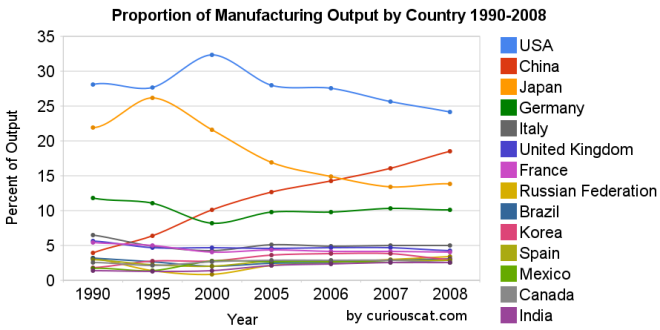


It's curious that Japan's average energy use per capita is actually about the same for western European countries. Both Europe and Japan get by with about half the energy per capita of the USA.
So the question becomes : So why was JD so interested in expounding Japan as some sort of unique example of an energy efficiency economy when several countries in Europe are seemingly just as energy efficient?
The answer negates one of your assumptions. Unlike the USA and most of Western Europe, Japan retains most of its domestic manufacturing, and its the manufacturing industry that consumes most of the energy. The Japanese citizens get relatively little of their country's annual energy. In the US and western Europe its other other way round. The citizens get the energy, while manufacturing doesn't need it because it's mostly offshore.
Japan retains about 80% of its domestic maufacturing. For the USA it's down to around 30%.
Countries don't tend to decomission power plants as soon as a manufacturing plant goes offshore. Instead the citizen's get the energy. It's only now in the West, 15 years after the bulk of manufacturing has been offshored to china and india that efforts are made by the powers that be to shut down energy production - cue the creation of the AGW religion.
Last edited by meemoe_uk on Sun 03 Jun 2012, 04:57:16, edited 2 times in total.
-
meemoe_uk - Tar Sands
- Posts: 948
- Joined: Tue 22 May 2007, 03:00:00
Re: IEA : new monthly world total oils production record
by dolanbaker » Sun 03 Jun 2012, 04:55:20
$this->bbcode_second_pass_quote('sparky', '.')
Japan like Europe and the U.S. got rid of a lot of manufacturing offshore
it's great for the mother companies , they keep the Research and development ,
the financial structure ,the merchandizing ....Etc
all the energy intensive , socially troublesome manufacturing process is send far away
energy costs are now hidden in the containers unloaded at the docks
Japan like Europe and the U.S. got rid of a lot of manufacturing offshore
it's great for the mother companies , they keep the Research and development ,
the financial structure ,the merchandizing ....Etc
all the energy intensive , socially troublesome manufacturing process is send far away
energy costs are now hidden in the containers unloaded at the docks
Chinese R&D has been advancing in leaps and bounds in recent years, it won't be long before Chinese products are 100% designed and made in china, rather than just components used in US/EU designed products.
When they start on the financial structure, then people will really wake up!
Religion is regarded by the common people as true, by the wise as false, and by rulers as useful.:Anonymous
Our whole economy is based on planned obsolescence.
Hungrymoggy "I am now predicting that Europe will NUKE ITSELF sometime in the first week of January"
Our whole economy is based on planned obsolescence.
Hungrymoggy "I am now predicting that Europe will NUKE ITSELF sometime in the first week of January"
-

dolanbaker - Intermediate Crude
- Posts: 3855
- Joined: Wed 14 Apr 2010, 10:38:47
- Location: Éire