And speaking of GS, below is the "What If" page of the 2011 Oil Price Challenge which included GS, the EIA, and JohnRM:
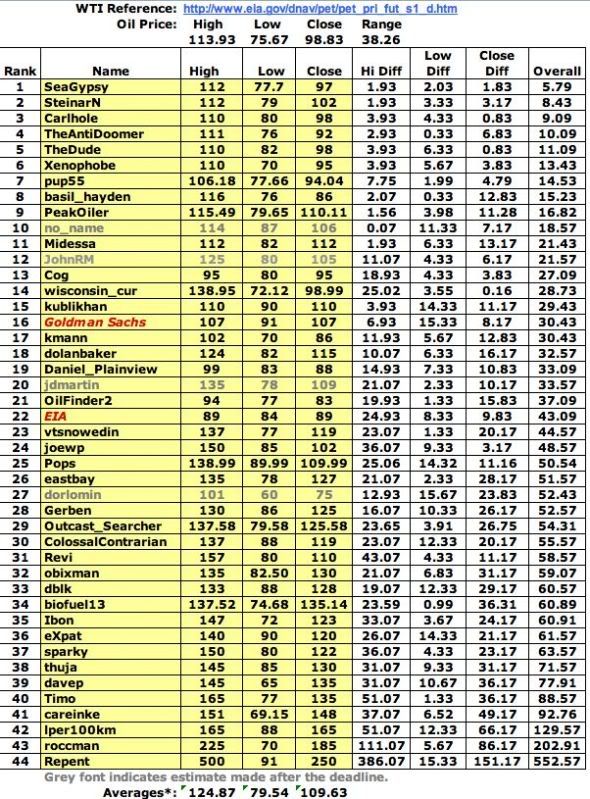
GS ended up at #16 out of 44 players.



PeakOil is You
 by PeakOiler » Mon 09 Jan 2012, 20:38:12


by Cog » Mon 09 Jan 2012, 21:16:22


by JohnRM » Tue 10 Jan 2012, 05:55:49


by Quinny » Tue 10 Jan 2012, 07:35:33

by SeaGypsy » Tue 10 Jan 2012, 08:02:13


by PeakOiler » Tue 10 Jan 2012, 20:00:27

by SeaGypsy » Wed 11 Jan 2012, 07:32:01
by Revi » Wed 11 Jan 2012, 09:37:42


by SeaGypsy » Wed 11 Jan 2012, 10:01:15
by Pops » Wed 11 Jan 2012, 10:24:50


by SeaGypsy » Wed 11 Jan 2012, 10:30:10
by Revi » Wed 11 Jan 2012, 12:03:45
by Pops » Wed 11 Jan 2012, 12:28:09
by PeakOiler » Wed 11 Jan 2012, 20:29:31
by Cog » Thu 12 Jan 2012, 18:58:11

by Beery » Fri 13 Jan 2012, 14:59:33
by rshizzle » Fri 13 Jan 2012, 15:03:34
by lper100km » Fri 13 Jan 2012, 17:19:32

by jdmartin » Thu 19 Jan 2012, 13:42:07


by careinke » Thu 19 Jan 2012, 15:03:48

Users browsing this forum: No registered users and 5 guests