first response back to my questions to friends included an article...press teleghram of Long Beach
$this->bbcode_second_pass_quote('', 'P')redictions just weeks ago of a late-summer surge in cargo volumes at the nation's seaports appear to have been overly optimistic, with economists now cautioning the U.S. is poised for its biggest dropoff in international trade in at least a decade.



PeakOil is You
Drastic Reduction In Global Shipping
Re: Drastic Reduction In Global Shipping
 by the48thronin » Mon 11 Aug 2008, 16:30:31
and
$this->bbcode_second_pass_quote('', 'W')hile researchers earlier believed import volumes - often used as a barometer of the economy's general health - would experience a modest 1.5 to 2 percent jump for the year, they're now predicting drops of 4 percent or more.
and
$this->bbcode_second_pass_quote('', 'T')he gloomy reports are a marked departure from predictions made by Global Insight and partner firm National Retail Federation as late as April, when container volumes were forecast to increase 1.5 to 2 percent for the year.
At the time, it was believed volumes would pick up around June or July and continue through October - typically the peak shipping month as retailers stock up on holiday goods.
Instead, container counts in the twin ports of Long Beach and Los Angeles, the nation's largest, are down nearly 8 percent for the year - continuing a yearlong slide reflected at other major American trade gateways.
In June alone, container volumes in Long Beach-Los Angeles plummeted 12.1 percent from the year prior, the largest such drop in at least two decades.
Revenue from shipping leases declined $6.6 million at the Port of Long Beach during the first nine months of the fiscal year, causing some alarm among port authorities. There are not yet plans for cutbacks, however.
and
$this->bbcode_second_pass_quote('', '"')The slump has been deeper than we thought, and we're heading for the biggest decline in imports in the 20 years we have numbers for," said Art Wong, a Port of Long Beach spokesman. "This is a huge, huge drop that we're looking at, and nobody seems to know when it will turn around."
Combined, Southern California ports handle more than 40percent of the nation's seaborne trade - including the bulk of America's trade with Asia.
also
$this->bbcode_second_pass_quote('', 'C')ontainerized exports remain the one bright spot, with nearly two years of double-digit increases continuing through July.
But much of that growth has been buoyed by a weak U.S. dollar, which has made American products more affordable overseas. If the dollar rebounds, exports can be expected to slide, Bingham said.
Malthusian Riders Member!
Courtesy and Courage Sincerity and Self-control Honor and Loyalty a Code to Live By!
What do the miners do when the canary dies? EVACUATE THE MINE not argue about the color of it's feathers or buy a parrot instead.
Where is my pitchfork and torch? I need them for a visit to the castle!
Courtesy and Courage Sincerity and Self-control Honor and Loyalty a Code to Live By!
What do the miners do when the canary dies? EVACUATE THE MINE not argue about the color of it's feathers or buy a parrot instead.
Where is my pitchfork and torch? I need them for a visit to the castle!
-

the48thronin - Tar Sands

- Posts: 871
- Joined: Fri 30 May 2008, 03:00:00
- Location: On the highway, or the water somewhere!


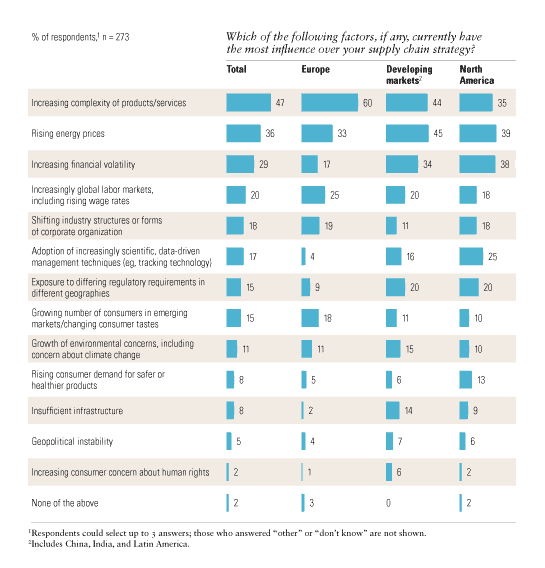
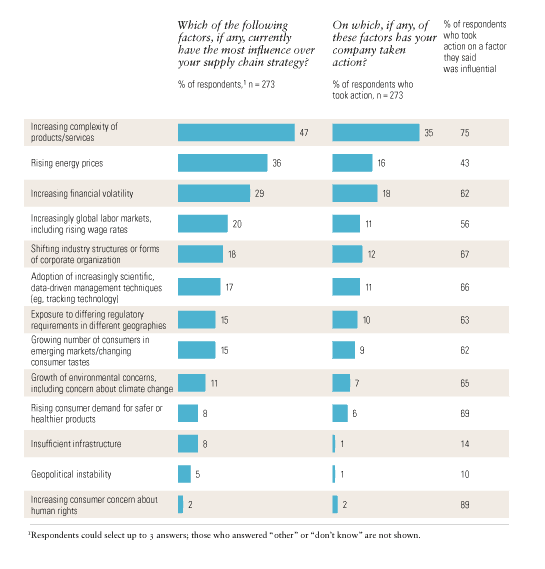
 $this->bbcode_second_pass_quote('', 'D')espite the importance respondents place on these trends, relatively few say that their companies are acting on them. For example, only 35 and 16 percent of the executives say that their companies have acted in response to the increasing complexity of products and services and to rising energy prices, respectively (Exhibit 3).