Donate Bitcoin

Donate Paypal


PeakOil is You

PeakOil is You

Copying Whales, 20% more efficient windmills?

Discussions of conventional and alternative energy production technologies.

Copying Whales, 20% more efficient windmills?

Postby steam_cannon » Thu 06 Mar 2008, 12:26:47

$this->bbcode_second_pass_quote('', '[')img]http://i30.tinypic.com/mm39mx.jpg[/img]

Mimicking the bumps on humpback-whale fins could lead to
more efficient wind turbines.

Marine scientists have long suspected that humpback whales'
incredible agility comes from the bumps on the leading edges of
their flippers. Now Harvard University researchers have come up
with a mathematical model that helps explain this hydrodynamic
edge. The work gives theoretical weight to a growing body of
empirical evidence that similar bumps could lead to more-stable
airplane designs, submarines with greater agility, and turbine
blades that can capture more energy from the wind and water.

...the turbines generate the same amount of power at 10 miles per
hour that conventional turbines generate at 17 miles per hour. The
tubercles effectively channel the air flow across the blades and
create swirling vortices that enhance lift.

...WhalePower has also shown in demonstrations that
tubercle-lined blades on industrial ceiling fans can operate 20
percent more efficiently than conventional blades can, and they do
a better job at circulating air flow in a building.

Whale-Inspired Windmills
http://www.technologyreview.com/Energy/20379/
http://peswiki.com/index.php/Directory:WhalePower_Corp

I've been following this technology and it's recent developments
look promising. It looks this will have a whale of an influence on the
wind turbine industry and aviation...

Thoughts?
User avatar
steam_cannon
Expert
Expert
 
Posts: 2859
Joined: Thu 28 Dec 2006, 04:00:00
Location: MA

Re: Copying Whales, 20% more efficient windmills?

Postby NTBKtrader » Thu 06 Mar 2008, 12:45:23

pretty cool
User avatar
NTBKtrader
Tar Sands
Tar Sands
 
Posts: 600
Joined: Tue 19 Oct 2004, 03:00:00

Re: Copying Whales, 20% more efficient windmills?

Postby steam_cannon » Thu 06 Mar 2008, 13:25:28

Yeah it looks cool! :-D

Also I think it could have a big influence on where wind power is
considered viable...
Image
http://www.brynmawr.edu/geology/206/tomich.htm
User avatar
steam_cannon
Expert
Expert
 
Posts: 2859
Joined: Thu 28 Dec 2006, 04:00:00
Location: MA

Re: Copying Whales, 20% more efficient windmills?

Postby Tanada » Thu 06 Mar 2008, 14:01:26

Imagine the electricy consumed by just the ceiling and box fans used in the USA on a warm summer night. Now subtract 20% power draw from those applications.

That has to be a BIG number. Now take all the propellor driven aircraft and propellor driven boats. Reduce their energy consumption 20%.

Even if you never build a single wind turbine this is going to have HUGE implications for moving fluids with blades, or moving blades through fluids depending on the application.
$this->bbcode_second_pass_quote('Alfred Tennyson', 'W')e are not now that strength which in old days
Moved earth and heaven, that which we are, we are;
One equal temper of heroic hearts,
Made weak by time and fate, but strong in will
To strive, to seek, to find, and not to yield.
Tanada
Site Admin
Site Admin
 
Posts: 17094
Joined: Thu 28 Apr 2005, 03:00:00
Location: South West shore Lake Erie, OH, USA

Re: Copying Whales, 20% more efficient windmills?

Postby TheDude » Thu 06 Mar 2008, 14:57:06

$this->bbcode_second_pass_quote('steam_cannon', '
')I've been following this technology and it's recent developments
look promising. It looks this will have a whale of an influence on the
wind turbine industry and aviation...

Thoughts?


Yeah, I hate puns! :lol:

It gets better, the president of WhalePower is Dr. Frank E. Fish - sic!

How many turbines are there in the world? You see the 74 GW installed capacity figure everywhere. Retrofitting would be awfully pricy but they say they're getting dynamite results:

$this->bbcode_second_pass_quote('', 'D')etailed results are confidential at this time but the performance was outstanding and the overall conclusions are straightforward: Tubercles work. In fact, they work better than even WhalePower insiders could have hoped.

* They dramatically enhance power at low wind speeds
* The blades operate more quietly than any previous blades
* With no stalling at the tip, tip chatter appears to be totally eliminated
* Performance in real world conditions appears to be more stable and responsive than any turbine in history. When a gust blows through, they accellerate, virtually instantaneously with no noise or other signs of instability.


WhalePower.com

Might be just the ticket for economizing micro wind.

Wondering if this has been tried before I found another article, with, God, another pun in the title: Science News for Kids: Feature: Are Propellers Fin-ished? Mostly about ship propellers.

$this->bbcode_second_pass_quote('', 'A')t the Massachusetts Institute of Technology, researchers are working on a new propulsion system for ships that mimics a penguin's flippers. Their artificial wooden flippers move a boat forward or backward by generating high-energy rings of spinning water. Other flipper movements steer the craft right, left, up, or down.

The MIT team is now testing how various flipper movements affect a boat's motion, doing experiments in giant basins of water.

The scientists envision using a pair of flippers in place of a propeller to move a boat along. More futuristic vessels could have as many as 50 flapping flippers, each one moving independently.
Cogito, ergo non satis bibivi
And let me tell you something: I dig your work.
User avatar
TheDude
Expert
Expert
 
Posts: 4896
Joined: Thu 06 Apr 2006, 03:00:00
Location: 3 miles NW of Champoeg, Republic of Cascadia
Top

Re: Copying Whales, 20% more efficient windmills?

Postby steam_cannon » Thu 06 Mar 2008, 18:24:56

That's no Whale! :lol:

Image Image

$this->bbcode_second_pass_quote('TheDude', 'W')ondering if this has been tried before I found another article, with,
God, another pun in the title:
Science News for Kids: Feature: Are Propellers Fin-ished? Mostly about ship propellers...
I came across that one sometime back. I was thinking about a toy boat
with a flipper drive, instead of a propeller. Then I was thinking
about how that might make a good trawling motor that didn't
scare fish so much or cut up swimmers. So I did a search and
found some of the work done in this area. It's interesting stuff...

A little off topic, but here's another cool sea vehicle:
$this->bbcode_second_pass_quote('', '[')img]http://i26.tinypic.com/ou9shu.jpg[/img]

The new thermal glider draws its energy for propulsion from the
differences in temperature—thermal stratification—between warm
surface waters and colder, deeper layers of the ocean. The heat
content of the ocean warms wax-filled tubes inside the engine. The
expansion of the warming wax converts heat to mechanical energy,
which is stored and used to push oil from a bladder inside the
vehicle’s hull to one outside, changing its buoyancy. Cooling of the
wax at depth completes the cycle.

http://news.bbc.co.uk/2/hi/technology/7234544.stm
I expect that navy subs will be using fippers next and there will be
glider missile drones patrolling the seas if things keep rolling
along
. Perhaps drug cartels will get into using drones too...
Anyway, it's the next logical step for these technologies.
User avatar
steam_cannon
Expert
Expert
 
Posts: 2859
Joined: Thu 28 Dec 2006, 04:00:00
Location: MA
Top

Re: Copying Whales, 20% more efficient windmills?

Postby The_Toecutter » Fri 07 Mar 2008, 03:54:39

This was a very interesting article. I wonder what proportions each of the little groves have relative to each other and the size of the blade itself? How about tip-speed ratio?

I'd like to be able to replicate them for a DIY wind turbine project.


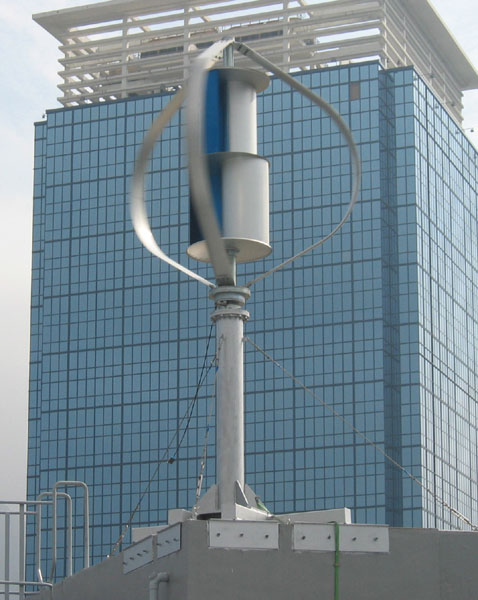
I wonder if certain types of creatures in the oceans could show us a similar possible advancement to exploit in regard to the lesser used vertical axis wind turbines(which are usually better at producing more power at low aspeeds than horizontal axis turbines, BUT never approach the efficiency of a modern 3-blade design)?
The unnecessary felling of a tree, perhaps the old growth of centuries, seems to me a crime little short of murder. ~Thomas Jefferson
User avatar
The_Toecutter
Intermediate Crude
Intermediate Crude
 
Posts: 2142
Joined: Sat 18 Jun 2005, 03:00:00

Re: Copying Whales, 20% more efficient windmills?

Postby Tanada » Fri 07 Mar 2008, 08:25:37

$this->bbcode_second_pass_quote('The_Toecutter', 'T')his was a very interesting article. I wonder what proportions each of the little groves have relative to each other and the size of the blade itself? How about tip-speed ratio?

I'd like to be able to replicate them for a DIY wind turbine project.


I wonder if certain types of creatures in the oceans could show us a similar possible advancement to exploit in regard to the lesser used vertical axis wind turbines(which are usually better at producing more power at low aspeeds than horizontal axis turbines, BUT never approach the efficiency of a modern 3-blade design)?


From counting the lead edge bumps in various pictures of different applications I get 25-30 tubercle's per unti leangth. I don't know if that is a hard an fast rule, or just how it worked for these but if I can scrape up the resources (well I know I can't so why plan it?) I would like to test it. What I would like to do is take two ceiling fans which are identicle, probably 4 blade models for economical reasons, leave one factory standard and see what its power draw is while running at each setting. Take the other fan and glue thirty lag bolts on the edge of the blade so that the round end hooks on the edge. Then test the modified fan to see what its power draw is with the bolts in place. It would take more energy to get up to speed because the bolts, even 1" size, are going to add a lot of weight, but once up to speed inertia means the mass will stay at speed and if the bolts make it more efficient it will make up the energy needed to start.

Anyone willing to try out this test?
$this->bbcode_second_pass_quote('Alfred Tennyson', 'W')e are not now that strength which in old days
Moved earth and heaven, that which we are, we are;
One equal temper of heroic hearts,
Made weak by time and fate, but strong in will
To strive, to seek, to find, and not to yield.
Tanada
Site Admin
Site Admin
 
Posts: 17094
Joined: Thu 28 Apr 2005, 03:00:00
Location: South West shore Lake Erie, OH, USA
Top

Re: Copying Whales, 20% more efficient windmills?

Postby steam_cannon » Fri 07 Mar 2008, 10:29:44

$this->bbcode_second_pass_quote('Tanada', 'F')rom counting the lead edge bumps in various pictures of different
applications I get 25-30 tubercle's per unti leangth. I don't know if
that is a hard an fast rule, or just how it worked for these but if I
can scrape up the resources (well I know I can't so why plan it?) I
would like to test it. What I would like to do is take two ceiling
fans which are identical, probably 4 blade models for economical
reasons, leave one factory standard and see what its power draw
is while running at each setting. Take the other fan and glue
thirty lag bolts on the edge of the blade so that the round end
hooks on the edge. Then test the modified fan to see what its
power draw is with the bolts in place. It would take more energy to
get up to speed because the bolts, even 1" size, are going to add a
lot of weight, but once up to speed inertia means the mass will stay
at speed and if the bolts make it more efficient it will make up the
energy needed to start.

Anyone willing to try out this test?
I'm not sure the power draw will be any different since if the design
works it will be moving more air at the same power. With a fan you
would have to measure wind speed from the fan. But you could also
put some long tissuepaper streamers on poles and take pictures of
the deflection. If one blade is moving 10% more air, it should be
measurable even by crude methods. And comparing two small
windturbines would be easy to test by measuring the power output.

Also I was thinking silicone or rubber would be a better material to
mold bumps. And with silicone being lighter, it would be harder to
upset the balance of the fan and easier to make corrections.

Here are a few easy methods a person could use for modeling:

* With just a tube of silicone... You might be able to do it by just
measuring and marking lines with a ruler. Then laying down a bead
of silicone and use a spatula to smooth it out. Whale flippers are
natural and don't need to be supremely accurate, so I figure as long
as it's smooth and you get the balance right it should give some results.

* Another way to test this would be to take small glue sticks from the
store and cut them in half (the hard part). Then cut down the ends
so when it wraps around the blade it is smooth. Then use a lighter
to stick it down.

* Also a glue gun could be used for laying down
bumps rather quickly.

* Another thing regarding silicone, molding with silicone is not too
difficult, with a little planning you could premold the add ons for
each blade so they would all be identical. For example, you could
use a long tray of "salt and sand" or thick plaster of Paris. Push the
fanblade edge (or a board or similar dimentions) into the tray about
1/4 of an inch depth and wiggle it so it's just a little wider. Poke in a
bump pattern with a pen or something. Dry your mold then spray
your mold with clear coat or lacquer paint so it soaks in. Then once
it's dry, yspray some cooking spray on your mold and clean out
extra with a paper towel or rag. Then put down a bead of silicon
and pull it out when it's dry. Then repeat and stick the molded
pieces onto your fan blades. One thing to remember though, unless
you are using a paper mold and a raised heat curing oven, your mold
needs to be less then 1/2 inch deep to dry in a reasonable time.

* Lay down measured strips of thick foam tape onto your fan blade in
premeasured locations. Then if you want that to be more
permanent, use rubber tool coating paint to make a smooth
permanent finish. It comes in several colors.
Image
Image

* Epoxy putty works pretty well with fan blades, I used it to repair
a metal fan blade a while back and adjust the blades balance.
"Wearing gloves", it could be mixed, cut and molded fairly quickly
and accurately. Then sand or use lacquer paint or rubber compound
for a smooth finish.
Image
User avatar
steam_cannon
Expert
Expert
 
Posts: 2859
Joined: Thu 28 Dec 2006, 04:00:00
Location: MA
Top

Re: Copying Whales, 20% more efficient windmills?

Postby WisJim » Fri 07 Mar 2008, 11:20:00

It looks like this technology has been around for a few years (the patent is from 2002)--and the "recent press" linked in their website is from May 2007. I wonder why no one in the wind energy industry has mentioned this? It has been found that airfoils best suited for propellors designed to move air are not the best airfoils for wind generator blades. I also think that the cost of adding these "bumps" or "tubercles" to blades would add a lot to the cost of the machines, and give more places for dirt, dust, and ice to collect on the blades. A lot of blades for machines are pultruded and this new technology would be difficult to adapt to that method of manufacture.

However, I would like to see some tests and comparisons of machines using these ideas.
User avatar
WisJim
Expert
Expert
 
Posts: 1286
Joined: Mon 03 Jan 2005, 04:00:00
Location: western Wisconsin

Re: Copying Whales, 20% more efficient windmills?

Postby JRP3 » Sat 08 Mar 2008, 11:09:26

$this->bbcode_second_pass_quote('The_Toecutter', '
')I wonder if certain types of creatures in the oceans could show us a similar possible advancement to exploit in regard to the lesser used vertical axis wind turbines(which are usually better at producing more power at low aspeeds than horizontal axis turbines, BUT never approach the efficiency of a modern 3-blade design)?


I always thought the vertical axis turbines were less efficient in low winds since they can't even self start? Isn't one side of the turbine always turning into the wind, trying to stall it?
User avatar
JRP3
Tar Sands
Tar Sands
 
Posts: 768
Joined: Mon 23 Oct 2006, 03:00:00
Top

Re: Copying Whales, 20% more efficient windmills?

Postby JRP3 » Sat 08 Mar 2008, 11:14:13

For modeling the Tubercles it might be easier to remove material than add it, maybe cutout scallops on the edge of the blade? If the blade were thick enough you could sculpt it in 3 dimensions to better resemble the real thing. Maybe make some foam blades?
User avatar
JRP3
Tar Sands
Tar Sands
 
Posts: 768
Joined: Mon 23 Oct 2006, 03:00:00

Re: Copying Whales, 20% more efficient windmills?

Postby steam_cannon » Sat 08 Mar 2008, 13:06:29

$this->bbcode_second_pass_quote('JRP3', 'I') always thought the vertical axis turbines were less efficient in low
winds since they can't even self start? Isn't one side of the turbine
always turning into the wind, trying to stall it?

Some vertical axis turbines cannot self start and some do. The
Savonius type rotors self start and are high torqe in low winds.
They are perhaps the easiest to build type of wind turbine and
They are often used as self starters for Darrieus vertical turbines
that do not self start...

Image
Image

http://re.emsd.gov.hk/english/wind/smal ... d_vawt.jpg
http://www.babilim.co.uk/blog/jpg/aus_w ... n_roof.jpg
http://www.zephyrpower.com/images/thumb/savonius.jpg
http://www.solener.com/savonius2.jpg

http://www.oswego.edu/nova/facts/wind/wind.html
http://www.esru.strath.ac.uk/EandE/Web_ ... o/wind.htm
http://blog.makezine.com/archive/2006/0 ... d_tur.html
User avatar
steam_cannon
Expert
Expert
 
Posts: 2859
Joined: Thu 28 Dec 2006, 04:00:00
Location: MA
Top

Re: Copying Whales, 20% more efficient windmills?

Postby Tanada » Sat 08 Mar 2008, 18:01:51

I had to work this morning so I was mentally unchallenged and started thinking about this revolution in fluid dynamics from Whalepower.com.

I started listing in my head all the things in my house that use fluids that are pumped or moved mechanically by fan blades.

Water, natural gas to feed my furnace, condensed coolant pump for my refridgerator coils, cooling fan for my fridge, cooling fan for my microwave, cooling fan for this computer, heat transfer fan for my central heat pump inside, blower fan for my furnace/heat pump, condensate pump for my central heat pump, heat exchanger fan outside for my central heat pump, box fan used to circulate air in my basement, dehumidifier fan and coolant pump in my dehumidifier in my basement, cooling fan for my second computer in the basement.

The Water and Natural Gas pumps are provided by the utility companies externally so if I discount both of them that leaves 12 fans and/or coolant pumps I operate regularly, some of them nearly constantly. If this technology were applied across the board over the next five years as appliances get replaced just how much of a savings are we talking about?

Another thing that occured to me, Desalination is expensive because of the cost of the high presure pumps energy consumption. If this cuts energy costs 10% that makes Desalination cost competitive with shipping water across the mountains to California from the Colorado watershed.
$this->bbcode_second_pass_quote('Alfred Tennyson', 'W')e are not now that strength which in old days
Moved earth and heaven, that which we are, we are;
One equal temper of heroic hearts,
Made weak by time and fate, but strong in will
To strive, to seek, to find, and not to yield.
Tanada
Site Admin
Site Admin
 
Posts: 17094
Joined: Thu 28 Apr 2005, 03:00:00
Location: South West shore Lake Erie, OH, USA
Top

Re: Copying Whales, 20% more efficient windmills?

Postby steam_cannon » Sat 08 Mar 2008, 18:57:47

$this->bbcode_second_pass_quote('Tanada', 'A')nother thing that occured to me, Desalination is expensive
because of the cost of the high presure pumps energy consumption.
If this cuts energy costs 10% that makes Desalination cost
competitive with shipping water across the mountains to California
from the Colorado watershed.
Yeah, little things can make a big difference.

Image

$this->bbcode_second_pass_quote('', '[')b]Easyjet introduces Ecojet: a green (though noisy) solution

Image

The campaigns against noise pollution and climate change are
about to face a conflict of interests, with a new proposal from
Easyjet: the airline plans to cut carbon emissions by up to 50% by
switching to a fleet of noisier but cleaner propeller-powered jets.

http://www.hippyshopper.com/2007/06/eas ... trodu.html
With higher energy prices and a technology like this reducing
prop noise, we might see a big shift back to propellers.

The past
Image

The present
Image

The future?
Image
User avatar
steam_cannon
Expert
Expert
 
Posts: 2859
Joined: Thu 28 Dec 2006, 04:00:00
Location: MA
Top

Re: Copying Whales, 20% more efficient windmills?

Postby Tanada » Sun 09 Mar 2008, 11:43:20

Props vs Jet propulsion is mostly a matter of how fast you need to go. They can easily make jet engines small enough for Censa size private aircraft, but because those planes are mostly used for small hops from place to place where air traffic is as big a factor in travle time as is speed they usually have propellors which are more fuel efficient at slower speeds. If the take off and landing cycle costs you 30 minutes and the plane is a prop job and takes 60 minutes to travle do you really gain anything by switching to a jet and making the trip in 40 minutes instead? 20 minutes of your time is a small investment compared to the expense of a private jet. Now if you are going halfway across the continent the added time does make a difference, at the end of WW II the USAAF made the first transcontinental flights in a little over nine hours. You can make the same trip today in a jet in five, if you go non-stop. Then again if My airline offers you the ticket for half price but takes twice as long would I be able to get the low cost travler market? (Just as an example, I don't have an airline to test the theory with!)

Another question, if this technology works for leading edges of wings, which some of the science indicates, how much cheaper will flying become? Or rather, how much more fuel cost increase will the airlines be able to withstand?
$this->bbcode_second_pass_quote('Alfred Tennyson', 'W')e are not now that strength which in old days
Moved earth and heaven, that which we are, we are;
One equal temper of heroic hearts,
Made weak by time and fate, but strong in will
To strive, to seek, to find, and not to yield.
Tanada
Site Admin
Site Admin
 
Posts: 17094
Joined: Thu 28 Apr 2005, 03:00:00
Location: South West shore Lake Erie, OH, USA
Top

Re: Copying Whales, 20% more efficient windmills?

Postby steam_cannon » Sun 09 Mar 2008, 11:52:17

$this->bbcode_second_pass_quote('Tanada', 'A')nother question, if this technology works for leading edges of wings,
which some of the science indicates, how much cheaper will flying
become? Or rather, how much more fuel cost increase will the airlines
be able to withstand?
Also I'm curious whether this has applications for jet engines and steam turbines. If it's applible to
steam turbines it could have a major impact on conventional power generation.
User avatar
steam_cannon
Expert
Expert
 
Posts: 2859
Joined: Thu 28 Dec 2006, 04:00:00
Location: MA
Top

Re: Copying Whales, 20% more efficient windmills?

Postby Tanada » Sun 09 Mar 2008, 12:34:32

$this->bbcode_second_pass_quote('steam_cannon', '')$this->bbcode_second_pass_quote('Tanada', 'A')nother question, if this technology works for leading edges of wings,
which some of the science indicates, how much cheaper will flying
become? Or rather, how much more fuel cost increase will the airlines
be able to withstand?
Also I'm curious whether this has applications for jet engines and steam turbines. If it's applible to
steam turbines it could have a major impact on conventional power generation.


Combine a jet turbine that is 20% more efficient with a wing that is 20% more efficient and your energy costs for flying just got cut [{100*.8}*.8]=64, a 36% gain in efficiency or equivelent reduction in costs. IF IT WORKS.

Like I said somewhere or other, if this works it will revolutionize fluid dynamics for everything we pump or displace. Thematically any aircraft displaces airflow.

I want to see tests on a bow and arrow, put these bumps down the sides of the arrowhead, does it fly further and faster? If the theory is correct then the answer will be yes. That also means the addition of a small set of tubercles around the wind shroud at the top of space launch vehicles, Surface to air, air to air, air to surface missiles for military applications will all get a big energy boost for any in the air portion of their flight. That means you can use a smaller size rocket to carry the same payload be it a defensive or offensive weapon.

Hell if THAT works you could put a ring of them around the nose cone of an aircraft and reduce drag on the fuselage.

Crap this really will change everything IF IT WORKS! Everything I learned about fluid-dynamics will be obsolete. Well not obsolete exactly, but this will add a huge new sub-field of modeling and experimentation.

Does anyone know, do Humpback whales have Tubercles on their snouts?
$this->bbcode_second_pass_quote('Alfred Tennyson', 'W')e are not now that strength which in old days
Moved earth and heaven, that which we are, we are;
One equal temper of heroic hearts,
Made weak by time and fate, but strong in will
To strive, to seek, to find, and not to yield.
Tanada
Site Admin
Site Admin
 
Posts: 17094
Joined: Thu 28 Apr 2005, 03:00:00
Location: South West shore Lake Erie, OH, USA
Top

Re: Copying Whales, 20% more efficient windmills?

Postby JRP3 » Sun 09 Mar 2008, 14:12:46

$this->bbcode_second_pass_quote('Tanada', '
')
Like I said somewhere or other, if this works it will revolutionize fluid dynamics for everything we pump or displace. Thematically any aircraft displaces airflow.


I think you're over estimating the impact on all fronts, but especially in pumping fluids. Many pumps use a flexible impeller inside a housing that counts on sealing to push the fluid. I don't see how breaking that seal with bumps would help anything.
User avatar
JRP3
Tar Sands
Tar Sands
 
Posts: 768
Joined: Mon 23 Oct 2006, 03:00:00
Top

Re: Copying Whales, 20% more efficient windmills?

Postby steam_cannon » Sun 09 Mar 2008, 17:08:49

$this->bbcode_second_pass_quote('Tanada', 'D')oes anyone know, do Humpback whales have Tubercles on their snouts?

Dolphin Tech VS Whale Tech

Image

Those look like Tubercles to me...

However, I also want to add that the main advantage of these bumps
on the flippers anyway, is for evening out stall conditions and
preventing complete stall at steep angles. For windmills this eliminates
shimmy, energy lost to stalls on the blade when the wind changes
direction and causes vibration... I'm not sure the effect this would
have on the head of a missile, but you can see them clearly there on
the head of this humpback whale, along with the dolphin on it's head too... :lol:
User avatar
steam_cannon
Expert
Expert
 
Posts: 2859
Joined: Thu 28 Dec 2006, 04:00:00
Location: MA
Top

Next

Return to Energy Technology

Who is online

Users browsing this forum: No registered users and 1 guest

cron