Donate Bitcoin

Donate Paypal


PeakOil is You

PeakOil is You

History of Fuel Efficiency

How to save energy through both societal and individual actions.

Re: History of Fuel Efficiency

Unread postby davep » Tue 30 Jan 2007, 14:13:21

You're both right. Efficiency has increased, as Monte has stated. However, despite this, the average fuel consumption to get a human from a to b has also increased. These aren't mutually exclusive.
User avatar
davep
Senior Moderator
Senior Moderator
 
Posts: 4579
Joined: Wed 21 Jun 2006, 03:00:00
Location: Europe

Re: History of Fuel Efficiency

Unread postby smallpoxgirl » Tue 30 Jan 2007, 14:40:00

$this->bbcode_second_pass_quote('davep', 'Y')ou're both right. Efficiency has increased, as Monte has stated. However, despite this, the average fuel consumption to get a human from a to b has also increased. These aren't mutually exclusive.

Do you not understand the illogic of that statement?

Efficiency: n. The ratio of the effective or useful output to the total input in any system.

The total useful output of a passenger vehicle is number of people times number of miles transported. The input is gallons of gasoline.

$this->bbcode_second_pass_quote('', 'J')ust as miles per gallon is used to measure fuel efficiency, the overall energy efficiency of our nation’s transportation system is measured by the ratio of activity (total miles traveled by all passengers and all tons of freight) to consumption (total Btu of energy consumed)
Bureau of transportation statistics
"We were standing on the edges
Of a thousand burning bridges
Sifting through the ashes every day
What we thought would never end
Now is nothing more than a memory
The way things were before
I lost my way" - OCMS
User avatar
smallpoxgirl
Expert
Expert
 
Posts: 7258
Joined: Mon 08 Nov 2004, 04:00:00

Re: History of Fuel Efficiency

Unread postby davep » Tue 30 Jan 2007, 15:16:34

$this->bbcode_second_pass_quote('smallpoxgirl', 'E')fficiency: n. The ratio of the effective or useful output to the total input in any system.

The total useful output of a passenger vehicle is number of people times number of miles transported. The input is gallons of gasoline.


Relax...

What is useful output? If you're talking in basic physical terms, pushing a big SUV around is more efficient than a Model-T if it requires less energy per unit mass for the SUV. However, if you're talking about getting an individual from a to b, the converse is true.

So, as i said, it all depends on what "output" you're talking about. There's nothing illogical in my assertion.

Edit: as it's your thread, I guess you were referring to overall efficiency from a to b. You've brought up an interesting point. However, as somebody stated up-thread, cars in Europe tend to be far smaller and more efficient (in your terms) than those in America. So, it's the individuals' choice to drive inefficient cars. Others are available.
User avatar
davep
Senior Moderator
Senior Moderator
 
Posts: 4579
Joined: Wed 21 Jun 2006, 03:00:00
Location: Europe

Re: History of Fuel Efficiency

Unread postby fletch961 » Tue 30 Jan 2007, 15:43:12

$this->bbcode_second_pass_quote('', 'T')hen you didn't read her early arguments in this thread. She was arguing that overall vehicle efficiency has not improved over the Model T.

That's just not true.


I read her arguments and understood them quite well thank you. Now if you will go back and read my post you may just realize that there are two accepted definitions of the term "fuel efficiency" that can be contradictory. If you will further read my post, perhaps even with an open mind, you may even notice that I agree that the definition you are using is the better one. That said, it doesn't make SPG's use of the phrase any less accepted.

Alas, go back to arguing semantics if you must.
User avatar
fletch961
Peat
Peat
 
Posts: 93
Joined: Sun 05 Jun 2005, 03:00:00

Re: History of Fuel Efficiency

Unread postby smallpoxgirl » Tue 30 Jan 2007, 15:44:04

$this->bbcode_second_pass_quote('davep', 'R')elax...


Sorry if I'm a little touchy. I started with a very simple, commonly excepted definition of transportation efficiency on page one of this thread. Monte has spent pages of posts trying to subvert the thread and redefine transportation efficiency. The definition of efficiency, of course, depends on what your definition of "useful" is. The use of transportation is to carry people and goods from one location to another. The useful output of a transportation system, thus is the BTS definition above. Number of people transported and amount of goods transported divided by amount of fuel consumed. The energy consumed in moving the vehicle itself is wasted overhead. If you are a car dealer, then moving empty cars from one location to another may be a transportation goal (Say moving them from the factory to your dealership.) For the end user, the purpose of a car is to move kids, groceries, yourself, etc from place to place.
"We were standing on the edges
Of a thousand burning bridges
Sifting through the ashes every day
What we thought would never end
Now is nothing more than a memory
The way things were before
I lost my way" - OCMS
User avatar
smallpoxgirl
Expert
Expert
 
Posts: 7258
Joined: Mon 08 Nov 2004, 04:00:00
Top

Re: History of Fuel Efficiency

Unread postby drew » Tue 30 Jan 2007, 19:36:10

$this->bbcode_second_pass_quote('smallpoxgirl', '.')

Efficiency of the Ford Model T: 25 to 30 mpg. link
Average Fuel Efficiency of Cars sold in 2006: 21 mpg. link

Clearly what we've been told about newer cars being more efficient is bogus. Increasing fuel usage despite increasing vehicle efficiency is often stated as a validation of Jevon's paradox. This statistic makes me wonder if we're drawing wrong conclusions.


Smallpox girl, the original sin has been quoted above for your reference. That it is yours is not contested.

The issue Monte and I have with the statement is that it is factually in error.

The statement should have read:

'Average Fuel Efficiency of personal vehicles sold in 2006: 21 mpg'

for what you are claiming to be true.

That original statement is the crux of your disagreement with us I hope.

(aside from thinking we're assholes!)

'Cars' in the above context is a misnomer since it is a blanket statment including minivans, vans, pickup trucks, suvs, and of course cars.

As Monte, and I vehemently argued every vehicle mentioned has had a significant gain in efficiency compared to older versions.

Hey, you live in America, the land of free choice. The marketers figured out that people want to drive gas guzzling pigs-so be it!!!

Did you know that your government, and Canada's changed the laws years ago so that suvs would be moved from light truck status to car status?

Up here minivans and suvs run car plates, and full size vans and pickups run truck plates.

Apparently this was done in order to penalize Japanese imports and to favour your domestic industry.

20 or 30 years ago 90 % of the pop. drove cars. Only hillbillies and farmers drove 4x4s and pickups.

Now these vehicles make up near 50% of the market.

They are gas guzzlers compared to a car (car-exclusive of any other vehicle type)

Hence the drop in national numbers.

Drew
User avatar
drew
Tar Sands
Tar Sands
 
Posts: 953
Joined: Thu 22 Jul 2004, 03:00:00
Location: canada
Top

Re: History of Fuel Efficiency

Unread postby MonteQuest » Tue 30 Jan 2007, 21:17:10

$this->bbcode_second_pass_quote('smallpoxgirl', 'M')onte you keep repeating the same irrelevant argument over and over page after page. Who do you think you're convincing?


Certainly not you. Those that have a firm grasp of auto efficiency and the laws that govern it don't have to be convinced of anything. It's common sense.

Like I said before, what's your beef?

That cars today, on average, don't get better mileage than a Model T?

Of course they don't. Why would they? They aren't even the same vehicle.

$this->bbcode_second_pass_quote('', 'I')n August, the CBS television affiliate in the San Francisco area reported on this story. They got information from Ford headquarters that said that the original Model T got 13 miles per gallon in the city and 21 MPG on the highway. Assuming a 50/50 mix of city and highway driving, that would be an average of 17 MPG. It turns out this is the same combined average MPG of a current Ford Explorer (14 city, 20 highway.)

Of course you can’t really compare the Model T and the Explorer — the Explorer is well over a ton heavier than the Model T and it is much more comfortable and safer.


$this->bbcode_second_pass_quote('', 'A') Ford Motor spokeswoman from Dearborn told CBS 5 that there are many reasons why the Explorer doesn’t get better mileage than the old Model T, including the fact that the Explorer weighs 3000 pounds more.


Earliest engines inefficient, using 2-5 times as much gas

$this->bbcode_second_pass_quote('', 'T')he earliest cars were called horseless carriages, because that is what they looked like. They were quite light, and the engines were of low power, between one and three horsepower, about like the horses they replaced. These engines were slow-running compared to a modern engine - one chug per telephone pole was the saying. In size, they were similar to modern engines which produce perhaps fifty to a hundred horsepower.


The engines were inefficient and consumed between twice and five times as much fuel in an hour per horsepower produced as a modern engine. Speeds, weights and powers were low, but the drive train (between the engine and the wheels) was also very inefficient (something like half or less the efficiency of a modern drive train), so the total fuel consumed in laboratory tests for the Chicago Times-Herald newspaper in 1895 ranged between 8 and 20 miles per gallon, depending on the car. Professionally organized trials done about five years later in England produced best figures in the 36-40 mpg range.

By 1910 (just ten years later), many cars were getting 10 to 12 miles per gallon because the engines had ten times the power, the cars perhaps four times the weight and speeds had doubled or tripled. The engines were still generally very inefficient. A few lighter cars with less power were able to achieve 20-30 mpg. The Model T, for example, got slightly more than 30 mpg.


Link

Let me put this another way...just what would this fuel efficient vehicle you envision we should have built look like?

Will it weight 1200 lbs?

Will it have a 4cyl 20 HP motor?

A ten gallon fuel tank?

Power steering?

Air conditioning?

Seat Belt and air bags?

Please tells us, or are all of these factors "irrelevant"?

Are you trying to say that we should be getting better mileage even with the increase in vehicle weight, safety features, and other amenities that rob fuel mileage? The technology is there, we just don't apply it?

Utter nonsense. Why does the NAS says the only way to increase fuel economy is to reduce size and vehicle weight. There are no "suppressed" 200 mpg carburetors out there waiting to be bolted on.
A Saudi saying, "My father rode a camel. I drive a car. My son flies a jet-plane. His son will ride a camel."
User avatar
MonteQuest
Expert
Expert
 
Posts: 16593
Joined: Mon 06 Sep 2004, 03:00:00
Location: Westboro, MO
Top

Re: History of Fuel Efficiency

Unread postby MonteQuest » Tue 30 Jan 2007, 21:56:46

$this->bbcode_second_pass_quote('davep', 'W')hat is useful output? If you're talking in basic physical terms, pushing a big SUV around is more efficient than a Model-T if it requires less energy per unit mass for the SUV. However, if you're talking about getting an individual from a to b, the converse is true.


Exactly. Like I asked, what will this "The Peoples Car" look like that gets us from A to B?

We already made one called the VW Bug, weighed 1698 lbs, 53 HP, topspeed of 82, and got 30 to 40 mpg.

Then there was the Mini and the Citroen DS.
A Saudi saying, "My father rode a camel. I drive a car. My son flies a jet-plane. His son will ride a camel."
User avatar
MonteQuest
Expert
Expert
 
Posts: 16593
Joined: Mon 06 Sep 2004, 03:00:00
Location: Westboro, MO
Top

Re: History of Fuel Efficiency

Unread postby nocar » Wed 31 Jan 2007, 08:47:03

hello,

You are argueing about efficiency definitions for fuel consumption.

May I suggest yet another definition: fuel efficiency of daily life. Take 1920. or 1950 or 1970 as a starting point. How much more (or less?) fuel needs to be spend for daily life tasks for the average person (or household)?

For shopping groceries for one year's consumption

For going to work or school

For visiting kin

For recreation

I believe (I am very certain in fact) that these efficiencies have decreased - simply because we are travelling increasing distances for just about everything. But then, perhaps we should take quality into acount?

Do we get better grocery quality today? (we certainly have more brands and product types - perhaps we really get more enjoyment from our meals today?)

Do we have better, more interesting work and school experiences?

Do we have better kin relations?

Do we have higher quality recreation (that we enjoy more? or that restores us better?)

I do not have the answers - what are your experiences? If we are considering the aspect of task quality, can we conceive of something like 'fuel efficiency of daily life satisfaction'? We do our daily tasks to obtain satisfaction or different sorts, don't we?

And while thinking of satisfaction - all the fancy new things in modern cars that make things more efficient according to Monte's definition - do they make us enjoy our daily car trips more? (probably per unit of time - but how about per trip? A short daily task trip might be more enjoyable than a long task trip, other things being equal?)

nocar
nocar
Tar Sands
Tar Sands
 
Posts: 810
Joined: Fri 05 Nov 2004, 04:00:00

Re: History of Fuel Efficiency

Unread postby smallpoxgirl » Wed 31 Jan 2007, 11:00:14

$this->bbcode_second_pass_quote('drew', ''')Cars' in the above context is a misnomer since it is a blanket statment including minivans, vans, pickup trucks, suvs, and of course cars.


Ok fine. I can accept that.
"We were standing on the edges
Of a thousand burning bridges
Sifting through the ashes every day
What we thought would never end
Now is nothing more than a memory
The way things were before
I lost my way" - OCMS
User avatar
smallpoxgirl
Expert
Expert
 
Posts: 7258
Joined: Mon 08 Nov 2004, 04:00:00
Top

Re: History of Fuel Efficiency

Unread postby smallpoxgirl » Wed 31 Jan 2007, 11:21:03

$this->bbcode_second_pass_quote('MonteQuest', 'L')ike I said before, what's your beef?


My beef is that you keep trying to derail this thread with lengthy soliloquys about engine efficiency. An engine is one part of a passenger vehicle (better Drew?). The engine part, I already agreed three pages ago has gotten more efficient. The passenger vehicle, contains many other parts. Those other parts such as a heavier body, have conspired to make the vehicle less efficient than the Model T.

$this->bbcode_second_pass_quote('', 'U')tter nonsense. Why does the NAS says the only way to increase fuel economy is to reduce size and vehicle weight. There are no "suppressed" 200 mpg carburetors out there waiting to be bolted on.

Monte, you haven't read what I've posted. You are posting page after page trying desperately to disprove something I never argued.

What I am saying is that we have not designed cars for efficiency. We have designed them for power, size, comfort, safety, and a whole lot of other things, but we haven't designed them for efficiency. I am not talking about 200 mpg carburetors. I'm talking about over weight vehicles with too many gadgets. That's it.

People's car? I think that would be the literal translation of Volkswagen. I think in a society where petroleum was more realistically valued, cars would look a lot more like they do in Europe and a lot less like they do in the US. Smaller, lighter, less accessories. Which is to say, more efficient than a model T.
"We were standing on the edges
Of a thousand burning bridges
Sifting through the ashes every day
What we thought would never end
Now is nothing more than a memory
The way things were before
I lost my way" - OCMS
User avatar
smallpoxgirl
Expert
Expert
 
Posts: 7258
Joined: Mon 08 Nov 2004, 04:00:00
Top

Re: History of Fuel Efficiency

Unread postby MonteQuest » Wed 31 Jan 2007, 13:00:52

$this->bbcode_second_pass_quote('smallpoxgirl', '')$this->bbcode_second_pass_quote('MonteQuest', 'L')ike I said before, what's your beef?


My beef is that you keep trying to derail this thread with lengthy soliloquys about engine efficiency. An engine is one part of a passenger vehicle (better Drew?). The engine part, I already agreed three pages ago has gotten more efficient. The passenger vehicle, contains many other parts. Those other parts such as a heavier body, have conspired to make the vehicle less efficient than the Model T.


No, I have not. As I have replied earlier.

$this->bbcode_second_pass_quote('MonteQuest', '')$this->bbcode_second_pass_quote('lper100km', 'W')hy are you harping on engine efficiency when the topic is overall average unit fuel consumption for distance travelled?


I'm not, and haven't. Overall vehicle efficiency has improved over the years, not just with regard to engines. We have better and lighter materials, better tolerances, better tires, better aerodynamics, better fuel, better lubricants, better bearings, better drivetrains, etc.


$this->bbcode_second_pass_quote('', 'W')hat I am saying is that we have not designed cars for efficiency. We have designed them for power, size, comfort, safety, and a whole lot of other things, but we haven't designed them for efficiency. I am not talking about 200 mpg carburetors. I'm talking about over weight vehicles with too many gadgets. That's it.

Nonsense. Every car built is designed for better effciency. We chose , on average, to not buy the most efficient ones, which are lighter and have less amenities. And when we do, we don't drive them at speeds that optimise their fuel efficiency.

It'a not about design. It is about customer buying and driving habits.

The Volkswagen Bug was designed for efficiency, was it not?
A Saudi saying, "My father rode a camel. I drive a car. My son flies a jet-plane. His son will ride a camel."
User avatar
MonteQuest
Expert
Expert
 
Posts: 16593
Joined: Mon 06 Sep 2004, 03:00:00
Location: Westboro, MO
Top

Re: History of Fuel Efficiency

Unread postby Aimrehtopyh » Thu 01 Feb 2007, 01:13:35

$this->bbcode_second_pass_quote('MonteQuest', 'T')he Volkswagen Bug was designed for efficiency, was it not?


I'm sure that fuel efficiency was a major design goal because Hitler knew germany had no oil within her borders, but I also remember something about him demanding that it be capable of cruising at a high rate of speed. Something like 60-100 MPH, he didn't build the autobahn just for military purposes. Design simplicity for the sake of mechanical reliability was also a big deal.

Dictators and advertisers alike will tell you that people in general are clueless and will respond well to being told what they need.

Customer buying and driving habits have been well controlled by the auto industry since forever. Every sense of civic duty, responsibility or community mindedness has been amputated by protracted marketeering and political maneuvering.

Have you ever tried to sell something based on how logical, practical and efficient the item is? Let me tell you, that's a good way to die poor. Sales are driven by lust, emotion and brain chemistry not logic.
"He who makes no mistakes isn't trying hard enough" Genghis Khan
"Everyone here is bribed not to kill each other." foodnotlawns
Coinflation.com
User avatar
Aimrehtopyh
Lignite
Lignite
 
Posts: 375
Joined: Sat 18 Feb 2006, 04:00:00
Location: Minnesota, U.S.A.
Top

Re: History of Fuel Efficiency

Unread postby MonteQuest » Thu 01 Feb 2007, 01:51:57

Wikipedia says 25 to 30 mpg, but a Model T FAQ site I found says:

$this->bbcode_second_pass_quote('', 'H')ow many miles to the gallon does a Model T get?

Model T engines are not terribly efficient compared to modern ones. While our measurements are perhaps less than completely scientific, experience indicates that our Ts get about 12-14 miles per US gallon, depending on the countryside.Your mileage may vary.


$this->bbcode_second_pass_quote('', 'A')bout Us
The Frontenac Motor Company is a private collection of early Ford Model T automobiles and other brass-era motorcars.We have been collecting and restoring early brass era cars since 1997 and traditionally, our interest has primarily been focused on Model T Fords (years 1909 to 1914).


http://www.modelt.ca/faq-fs.html

Would they know better than Wiki what the real mileage is?

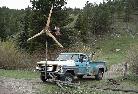
Most likely. And Wiki speaks of the default configuration which is with the top down and no windshield. Like this:

Image
A Saudi saying, "My father rode a camel. I drive a car. My son flies a jet-plane. His son will ride a camel."
User avatar
MonteQuest
Expert
Expert
 
Posts: 16593
Joined: Mon 06 Sep 2004, 03:00:00
Location: Westboro, MO
Top

Re: History of Fuel Efficiency

Unread postby yesplease » Tue 13 Mar 2007, 23:42:48

$this->bbcode_second_pass_quote('Aimrehtopyh', 'C')ustomer buying and driving habits have been well controlled by the auto industry since forever. Every sense of civic duty, responsibility or community mindedness has been amputated by protracted marketeering and political maneuvering.


I think you forgot about the best solution yet. Don't build them. Then claim there's no demand for them, just don't say why. At GM, there's no demand for fuel efficient cars, because GM doesn't build fuel efficient cars, because there's no demand... etc. Doesn't it work well? Of course, a foreign manufacturer can introduce an efficient vehicle, but not before an American company does. Because as nice as sales may be, they aren't worth another round of tariffs and the possibility of expulsion from America's market.
User avatar
yesplease
Intermediate Crude
Intermediate Crude
 
Posts: 3765
Joined: Tue 03 Oct 2006, 03:00:00
Top

Previous

Return to Conservation & Efficiency

Who is online

Users browsing this forum: No registered users and 0 guests

cron