
So it was rational to close factories here where the product could be bought for less overseas, where cheap labor was. The consumers were happy too because they could have more appliances in their homes for the same cost. No more was an electric drill and saw the preserve of carpenters, we could all buy a cheap Taiwanese one. It was a marriage made in heaven, but a marriage doomed to end in dramas. Turn back the clock? If you want to pay $500 for a battery drill. But a bigger issue cited is the labor itself. How many millennials would be willing to do 9-to-5 in a noisy dirty factory, where they actually had to use their muscles. No room for upward mobility there either, you might make foreman one day but that's a crap job that doesn't pay a lot more than the floor workers get. Manufacturing is a humble job, you are a cog in a machine, nothing more. It got people off the farm and guaranteed them a weekly wage, that was it.
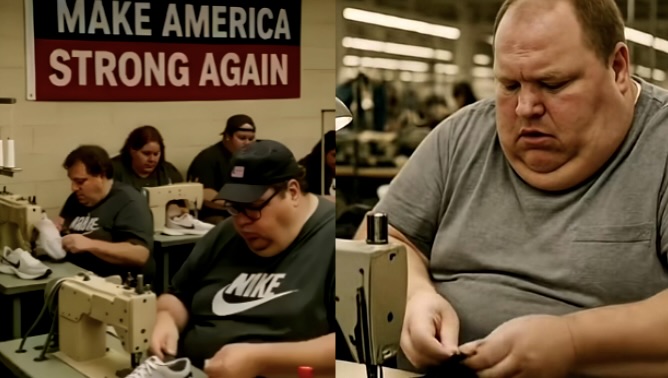
Can The Work Ethic Make A Return?
$this->bbcode_second_pass_quote('', '
')I’m as excited as anyone about the prospect of a return of American manufacturing. But there are huge barriers, among which is the profitability metrics of accounting. Will it make sense from an economic point of view? Without that piece in place, political wishes and national determination will not be enough.
The United States has outsourced vast amounts of its once-mighty manufacturing power to China, Mexico, and elsewhere. It seemed mutually beneficial for decades until we took note of how strange it all is that America should have so few industries it can call its own... There are other issues besides, among which is something more fundamental: the American work ethic. This is a cultural problem emerging from decades of easy money and a loss of enterprising drive.
Tim Cook of Apple has made clear that the real reason iPhones and other Apple products are made in China rather than the United States is not wages. It is technical skill and precision. These products require extreme discipline, knowledge, and deep experience. The number of workers who can do this in China is large; in the United States it is tiny.
I think about all the “white collar” workers I’ve known who would blow a mental gasket if ever asked to do anything remotely this complicated. Forget assembling an iPhone. They couldn’t possibly shop for five households simultaneously, bag the groceries, and deliver them.

 That's rich. But the Chinese are going there for one simple reason no doubt, cheaper labor.







 Are cars cheaper now? Are houses? Is food?