$this->bbcode_second_pass_quote('ralfy', 'T')he world needs cheap oil and not just more oil, and what's offered via unconventional production and what remains of conventional involve higher depletion rates and/or more refining required.
In addition, oil has to be cheaper each time in order to deal with increasing demand for energy and material resources per person coupled with the effects of diminishing returns, i.e., more oil needed each time to get more oil that's deeper and/or requires more refining.
Plus the same applies to minerals.



PeakOil is You
What Peak Oil Could Look Like
Re: What Peak Oil Could Look Like
 by theluckycountry » Sat 06 Jul 2024, 08:49:08
Exactly. Cheap oil, and cheap minerals. There is still oceans of conventional oil out there, we are after all only at the halfway point. Russian reserves are Huge and then there is Venezuela.
$this->bbcode_second_pass_quote('', 'V')enezuela had the world's largest proven crude oil reserves in 2023 with approximately 303 billion barrels (Figure 5), accounting for approximately 17% of global reserves
But that oil is currently off-line so to speak due to sanctions. They tried to do what Saudi Arabia did, kick out the colonialists, but it didn't work the same way. Personally I think this is simply deliberate rationing by the West. That oil is being kept in reserve, like a lot of Australian oil was left untapped decades ago.
We actually don't need more oil, that's the cornucopian solution, what we need is a lot less consumers and as we see all across the globe nations are curtailing their usage as general austerity/poverty takes hold. The world's population is ever growing but consumption is declining I would argue. Look at the US itself, the biggest consumer still?
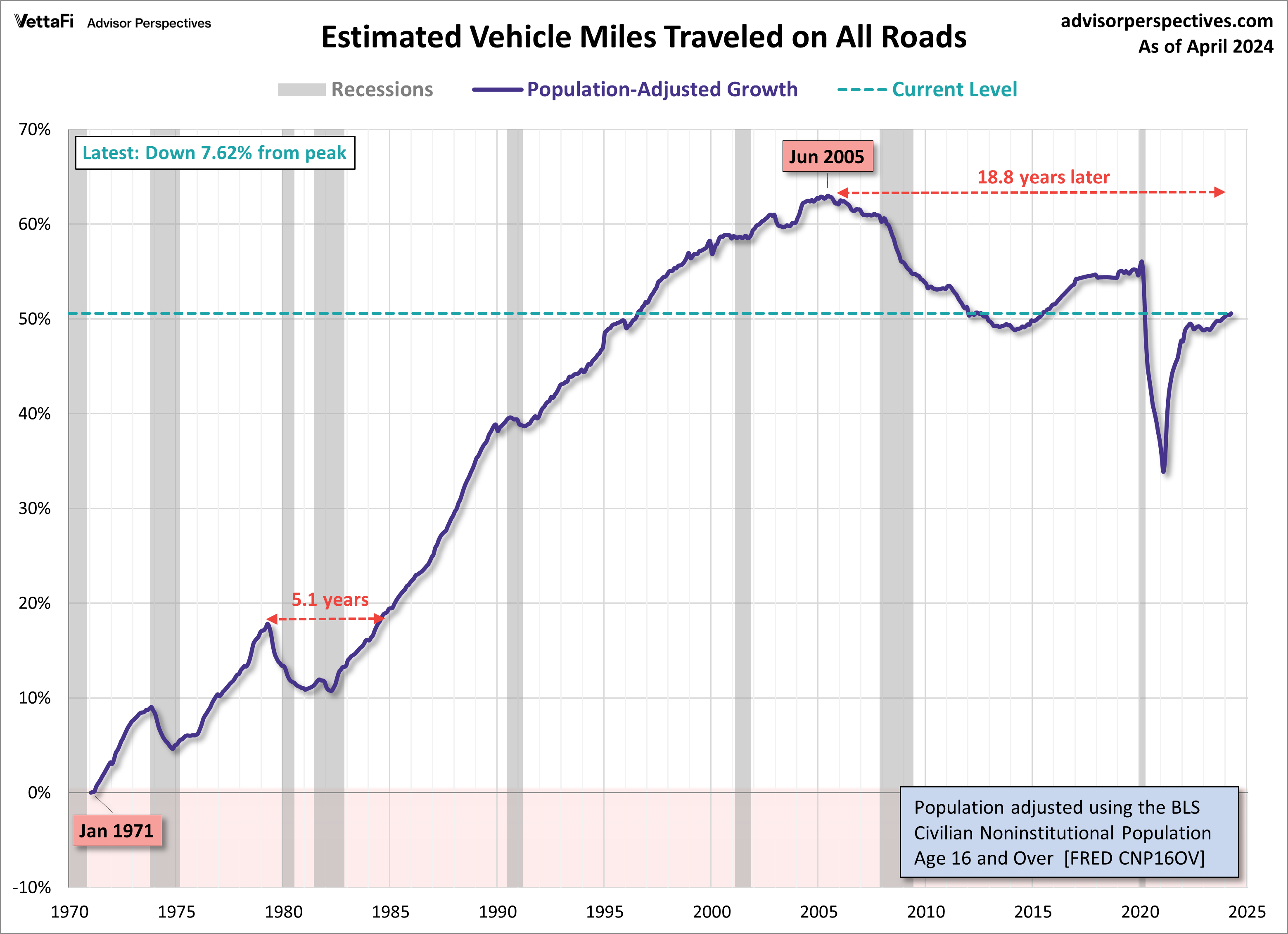
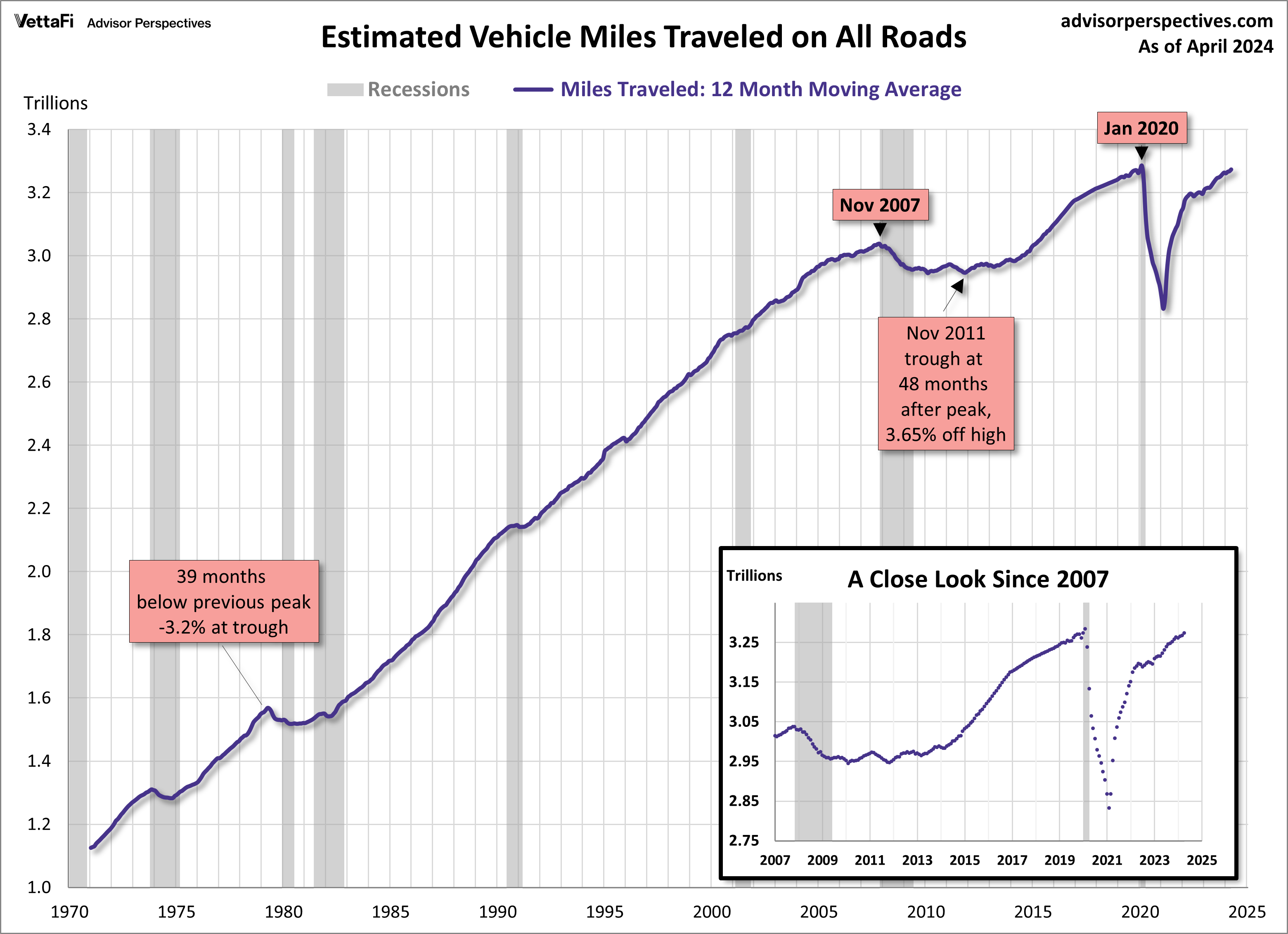
A current chart (miles driven) running from 1970 to today, adjusted for population growth. The second chart is without the adjustment but still shows a decline.
https://www.advisorperspectives.com/ima ... ddccb2.png
https://www.advisorperspectives.com/ima ... 697e48.png
The Webpage itself (America's driving habits) https://www.advisorperspectives.com/dsh ... april-2024
The turning point was June 2005. That was 'peak driving' so to speak and it declined sharply after that, then recovered a bit late in the decade only to be hammered by the covid lockdown measures. Currently it's back to 1995 levels, just what you would expect as we go down the other side of the bell curve of oil availability. It's why I believe Covid was a total scam! It was engineered (the response) to drastically reduce oil consumption across the globe and break people from the habit of driving frivolously. And it worked!
So now all we need is to keep up the impoverishment of the people to keep up with the curve, but that's all to much fine tuning, so just collapse the global economy in a debt crisis and you're there, years ahead of the curve in fact. It's the logical solution if you can stop thinking like a self-entitled believer in the democratic system, a system where supposedly people have a say in how their life is managed.
This is where the claims of conspiracy theories get put forward, people use that word like their governments do, to silence opposing views. But all the pieces of the puzzle fit neatly into the concept that the World's oil supply and consumption is not some random market based mechanism but is in fact being managed at the highest levels of authority on the Planet. And why not? It is the basis of life on the planet now, 5 Billion people wouldn't exist if we didn't use these fossil fuels in the food and medical industries.
It needs to be managed, I can see the logic in that. And it's easily done too when you have control of the banks, the capital flows on the Planet. You want to reduce consumption by 5%? Increase interest rates by 5% and the people will curtail driving in favor of paying their mortgages and streaming services. But interest rates are only one lever, you have pandemic responses now, Increases in registration costs etc. Of course we are just talking about cars so far, how about long haul trucks and ships? They need oil too, and then Electricity and the decline of Gas supplies. It all has to be managed in lockstep, especially the oil fractions. There is no point in curtailing Gasoline usage faster than Diesel when it still flows out of the refineries in the same proportion as the Diesel does. Both have to decline together, along with road asphalt and ship fuel etc.
Go back and look at the charts, they say it all.
Why are young people driving less? Evidence points to economics, not preferences
https://www.brookings.edu/articles/why- ... eferences/
We're 17 years past the peak now and the 3rd World is going hungry and dark. We'll be next, we're well on the way in fact.
- theluckycountry
- Light Sweet Crude

- Posts: 5254
- Joined: Tue 20 Jul 2021, 18:08:48
- Location: Australia
Re: What Peak Oil Could Look Like
by jato0072 » Sat 06 Jul 2024, 16:30:58
$this->bbcode_second_pass_quote('', 'W')hat Peak Oil Could Look Like
Shame oil and fossil fuel use under the false narrative of "climate change emergency" so the USA can consume the lion's share. Other countries will be weakened and the GAE can continue for many more decades.
"On a long enough time line, the survival rate for everyone drops to zero."
-

jato0072 - Lignite

- Posts: 335
- Joined: Wed 04 Aug 2021, 16:47:30
- Location: NV
Re: What Peak Oil Could Look Like
by theluckycountry » Mon 08 Jul 2024, 19:34:16
$this->bbcode_second_pass_quote('jato0072', '')$this->bbcode_second_pass_quote('', 'W')hat Peak Oil Could Look Like
Shame oil and fossil fuel use under the false narrative of "climate change emergency" so the USA can consume the lion's share. Other countries will be weakened and the GAE can continue for many more decades.
Yes, but at an ever decreasing scale I assume. The poverty in america is... Oh, Sorry! I see what you mean by GAE, that doesn't apply to the people and nation as a whole, but to the fatcat politicians; the rich pharmaceutical owners and their paid for medical industry mouthpieces like Fauchi. For the Wall street insiders and Banking elites, for the major drug dealers and all the Generals retiring from service onto the boards of Boeing and Raytheon. For the overpaid sports stars and actors and rappers, for the top level youtube influencers, in other words, for all the parasites that add nothing to the wealth of the nation. Parasites, sucking the life out of their host like a tick infestation.

We're 17 years past the peak now and the 3rd World is going hungry and dark. We'll be next, we're well on the way in fact.
- theluckycountry
- Light Sweet Crude
- Posts: 5254
- Joined: Tue 20 Jul 2021, 18:08:48
- Location: Australia




![[smilie=icon_confused.gif]](https://udev.peakoil.com/forums/images/smilies/icon_confused.gif "icon_confused")


:quality(70)/cloudfront-us-east-1.images.arcpublishing.com/archetype/SKTQY3554RARJNZJHVBT227IE4.jpg)