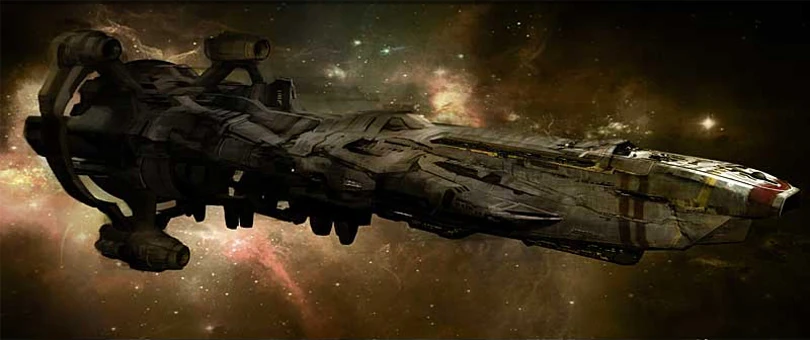

$this->bbcode_second_pass_quote('', '[')img]https://www.universetoday.com/wp-content/uploads/2017/05/KIC_8462852__VI-11vtouj.png[/img]
... Previously, ideas ranged from transiting comets and a consumed planet to alien megastructures. But with the latest studies to be produced on the subject, the light curve of the star has been respectively attributed to the presence of a debris disk and Trojan asteroids in the system and a ring system in the outer Solar System.
The first study, titled “KIC 8462852: Will the Trojans return in 2021?“, was written by a team from the University of Valencia, the Institute of Physics of Cantabria (IFCA) and the Astrophysical Institute of Andalusia (IAA). The paper was recently submitted to the Monthly Notices of the Royal Astronomical Society, and presents the argument that the dimming of Tabby’s Star can be explained by the presence of stable debris.
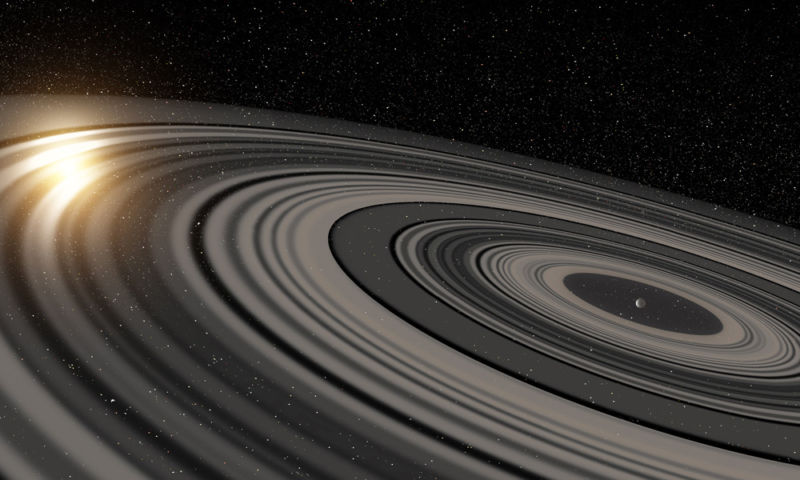
Led by Fernando J. Ballesteros, the team used data obtained by the Kepler mission to create a model of the system that could account for all the dips in brightness. These include the up to 20% drop that was observed in 2015 and the non-periodic repetitions and asymmetric dips that followed. From this, they determined that a ringed body and Trojan asteroids that share its orbit could explain the first large dip and the subsequent period of dips.
This explanation not only offers an entirely natural account of what could be causing the star to dim, but also offers a prediction that (if true) would confirm their theory. As they state in their paper:
$this->bbcode_second_pass_quote('', '[')i] “Whereas most of the scenarios that have already been discussed by other authors invoke the presence of astronomical objects that have never been directly observed, from the comet clouds in Boyajian et al. (2016) to the Dyson sphere in Wright et al. (2016), our model requires the presence of relatively familiar objects, namely a large planet with orbiting rings and a cloud of Trojan asteroids. Moreover, our model allows us to make a definite prediction: the leading Trojan cloud should induce a new period of irregularities in the light curve approximately in 2021.”











 -
-