Donate Bitcoin

Donate Paypal


PeakOil is You

PeakOil is You

Antibiotic resistance: World on cusp of 'post-antibiotic era

Discussions related to the physiological and psychological effects of peak oil on our members and future generations.

Re: Antibiotic resistance: World on cusp of 'post-antibiotic

Unread postby dissident » Wed 10 Aug 2016, 18:52:59

$this->bbcode_second_pass_quote('Tanada', '')$this->bbcode_second_pass_quote('Kylon', 'H')as anybody heard about bacteriophages? Basically viruses that infect and eat bacteria.

If safe ones could be developed, then they'd provide a cheap means of antibiotics as one application to the appropriate bacteria would rapidly proliferate and infect all of the bacteria of that type until that bacteria were dead.

They also could, in theory, mutate and evolve faster than bacteria due to greater numbers and a shorter life cycle. This in turn would make resistance to bacteriophages less likely to happen.

The downside is the bacteriophages, if not properly developed and screened so that they can't/won't infect humans might become another source of pandemic.

Just something to think about.


Ever hear of the cancer virus? It is a proven fact that occasionally for short periods of time a particular virus strain will develop that favors cancer cells as its host, preventing the cancer cell from reproducing itself and on occasion killing it. The problem with engineering a virus to target a particular cell like a certain bacteria or a certain cancer is, the genetics of the target vary from generation to generation. When the virus evolves to attack the new variation it might also attack the healthy human cells as well, which makes the risk awfully high.


We would need to develop biotech of some scifi level where we can engineer viruses that follow our instructions completely, i.e. there is no free reproduction path where they could mutate and attack non-designated targets. So basically we would create molecular robots and not just tinker with natural lieforms that evolved to survive. Until then, these sorts of suggestions are almost insane since our microscopic slaves will leave the reservation and create nightmares for us.
dissident
Expert
Expert
 
Posts: 6458
Joined: Sat 08 Apr 2006, 03:00:00

Superbugs are coming- how much does it matter?

Unread postby C8 » Mon 19 Sep 2016, 22:18:39

One of the things I like to keep an eye on is the wonderful microscopic world of bacteria & viruses. These guys have been beaten pretty badly in the last 50 years by modern medicine but the tide may be turning. Superbugs are more frequently emerging that can't be stopped by any antibiotic. The number of superbugs was small at first but is growing at a rapid rate now so that we are now only 2-4 years away from a real sea change in hospitals. I have quoted from some articles below for those who want to read more.

So how much does this matter? Humans have successfully lived with bacteria for thousands of years with only rare cases that lead to societal breakdown. More people going to suffer and die but do the coming superbugs really threaten civilization? I cannot see how they could, but I feel that some of you may have some insight into things I may not be considering in my calculations. I am not well versed in how dependent our food supply is on antibiotics.

How much does the coming of superbugs matter?

$this->bbcode_second_pass_quote('', 'F')or the first time, researchers have found a person in the United States carrying bacteria resistant to antibiotics of last resort, an alarming development that the top U.S. public health official says could mean “the end of the road” for antibiotics.

The antibiotic-resistant strain was found last month in the urine of a 49-year-old Pennsylvania woman. Defense Department researchers determined that she carried a strain of E. coli resistant to the antibiotic colistin, according to a study published Thursday in Antimicrobial Agents and Chemotherapy, a publication of the American Society for Microbiology. The authors wrote that the discovery “heralds the emergence of a truly pan-drug resistant bacteria.”

Colistin is the antibiotic of last resort for particularly dangerous types of superbugs, including a family of bacteria known as CRE, which health officials have dubbed “nightmare bacteria.” In some instances, these superbugs kill up to 50 percent of patients who become infected. The Centers for Disease Control and Prevention has called CRE among the country’s most urgent public health threats.

Health officials said the case in Pennsylvania, by itself, is not cause for panic. The strain found in the woman is still treatable with other antibiotics. But researchers worry that its colistin-resistance gene, known as mcr-1, could spread to other bacteria that can already evade other antibiotics.

[Superbug known as ‘phantom menace’ on the rise in U.S.]

It’s the first time this colistin-resistant strain has been found in a person in the United States. In November, public health officials worldwide reacted with alarm when Chinese and British researchers reported finding the colistin-resistant strain in pigs and raw pork and in a small number of people in China. The deadly strain was later discovered in Europe and elsewhere.

Bacteria develop antibiotic resistance in two ways. Many acquire mutations in their own genomes that allow them to withstand antibiotics, although that ability can’t be shared with pathogens outside their own family.

Other bacteria rely on a shortcut: They get infected with something called a plasmid, a small piece of DNA, carrying a gene for antibiotic resistance. That makes resistance genes more dangerous because plasmids can make copies of themselves and transfer the genes they carry to other bugs within the same family as well as jump to other families of bacteria, which can then “catch” the resistance directly without having to develop it through evolution.
https://www.washingtonpost.com/news/to- ... d-the-u-s/


also- superbugs are healthier!

$this->bbcode_second_pass_quote('', 'A')ntibiotic-resistant bacteria may be tougher superbugs than previously thought: Not only are these bacteria harder to treat, they appear to be "fitter" in general, meaning they survive better in the host and cause more deadly infections, a new study suggests.
http://www.livescience.com/51635-antibi ... eadly.html


Here are more links to varying angles on the story- read the title in the links

http://www.theweek.co.uk/antibiotics/51 ... ar-by-2050

http://www.alternet.org/food/how-factor ... -superbugs

http://www.npr.org/2016/09/18/494487297 ... l-assembly

and strangely
http://yournewswire.com/study-shows-mon ... esistance/

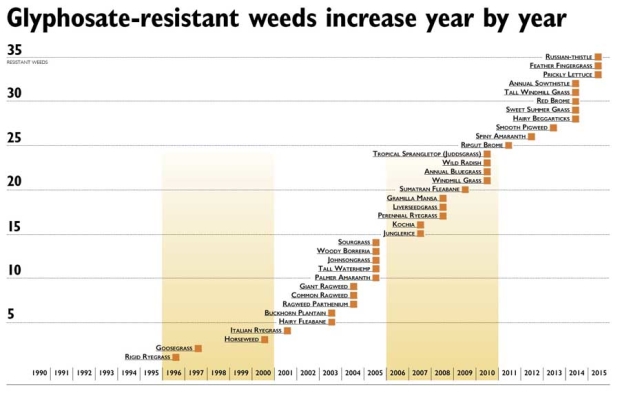
Roundup is itself being defeated gradually by superweeds
Image
http://www.goodfruit.com/herbicide-resistance/
User avatar
C8
Heavy Crude
Heavy Crude
 
Posts: 1074
Joined: Sun 14 Apr 2013, 09:02:48

Re: Superbugs are coming- how much does it matter?

Unread postby KaiserJeep » Mon 19 Sep 2016, 23:03:17

Let me speak as a superbug survivor. Last year I went to my Doctor and was hospitalized immediately with a GI tract bleed that proved to be caused by my stomach lining being eroded by some of my prescriptions. They told me I had digested a third of my blood supply, which weakened me greatly. On the third day of my hospital stay I was diagnosed with an antibiotic-resistant form of pneumonia which I most probably contracted in the hospital itself - because they identified the exact strain from the first culture, which leads me to believe that they were quite familiar with it. I was treated immediately with a cocktail of two powerful infused Tier 4 antibiotics in my IV drip. The fever broke in less than 24 hours. They told me that had I been subjected to the normal Tier 1/2/3 progression of antibiotics prior to that, I would have died in my weakened condition.

The experience was not bad overall - a hospital is a terrible place to be, full of sick and dying people. However, these people were good at their jobs, they cared about their patients, and I had really good PPO insurance, they were free to help me without a prior approval cycle for the treatments. On the flip side, I was exposed to the bug while being treated for another condition, probably because I was admitted to the facility through an emergency room full of feverish coughing people.

I tend to think that with superbugs as with most medical problems, it all depends on the quality of care available to you. Here in Silicon Valley, we have excellent doctors, current medical technology (including the DNA sequencing of pneumonia bacteria in a matter of hours), and well equipped hospitals that are 1/4-1/2 vacant at most times, absent the drug-resistant pneumonia epidemic they were dealing with that week.

In a place where they send samples to a distant lab facility, then wait for equipment or medicine or patient transport before treatment commences, the results will be far different. Again, 1st World advantage, 3rd World sucks hind teat and dies.
KaiserJeep 2.0, Neural Subnode 0010 0000 0001 0110 - 1001 0011 0011, Tertiary Adjunct to Unimatrix 0000 0000 0001

Resistance is Futile, YOU will be Assimilated.

Warning: Messages timestamped before April 1, 2016, 06:00 PST were posted by the unmodified human KaiserJeep 1.0
KaiserJeep
Light Sweet Crude
Light Sweet Crude
 
Posts: 6094
Joined: Tue 06 Aug 2013, 17:16:32
Location: Wisconsin's Dreamland

Re: Antibiotic resistance: World on cusp of 'post-antibiotic

Unread postby onlooker » Thu 22 Sep 2016, 20:14:42

Interesting first hand experience Kaiser. Glad you are okay. I think your experience is not atypical. This thread is really us here documenting this ongoing battle of germs with people. For my money I am with the germs. In rich countries we continue to treat generously many conditions with antibiotics which in the long run makes for people with weakened people with weakened immune systems and conversely facilitates the creation these Super bugs. That is all happening in first world countries. Of course in poor countries they have their own huge health problems.
"We are mortal beings doomed to die
User avatar
onlooker
Fission
Fission
 
Posts: 10957
Joined: Sun 10 Nov 2013, 13:49:04
Location: NY, USA

Re: Antibiotic resistance: World on cusp of 'post-antibiotic

Unread postby vox_mundi » Fri 23 Sep 2016, 10:30:11

Gonorrhea is more dangerous than ever as resistance to antibiotics grows

$this->bbcode_second_pass_quote('', 'U').S. health officials have identified a cluster of gonorrhea infections that show sharply increased resistance to the last effective treatment available for the country's second most commonly reported infectious disease.

The findings from a cluster of Hawaii cases, presented Wednesday at a conference on prevention of sexually transmitted diseases, represent the first cluster of cases in the United States that have shown such decreased susceptibility to the double-antibiotic combination used when other drugs have failed. If the bacteria continue to develop resistance, that end-of-the-line therapy ultimately will fail, and an estimated 800,000 Americans a year could face untreatable gonorrhea and the serious health problems it causes, health officials said.

CDC warned this summer that evidence of gonorrhea's diminished vulnerability to one of the last-resort drugs, azithromycin, was emerging nationwide. But it said the other antibiotic, ceftriaxone, was still effective.

That's why the latest findings are so distressing for health officials. It means current treatment options are in jeopardy, said Gail Bolan, director of CDC's division of STD prevention. "What's unique about this cluster now identified in Hawaii is that these strains, we've really never seen before," she said.
“There are three classes of people: those who see. Those who see when they are shown. Those who do not see.” ― Leonardo da Vinci

Insensible before the wave so soon released by callous fate. Affected most, they understand the least, and understanding, when it comes, invariably arrives too late.
User avatar
vox_mundi
Intermediate Crude
Intermediate Crude
 
Posts: 3939
Joined: Wed 27 Sep 2006, 03:00:00
Top

Re: Antibiotic resistance: World on cusp of 'post-antibiotic

Unread postby KaiserJeep » Fri 23 Sep 2016, 13:57:13

This report is but one data point in a broad field of study, which includes all strains of drug-resistant organisms (broadly divided into bacteria. viruses, and fungal infections) and all medicines. Antibiotics are one class of drugs effective against bacteria alone. Antimicrobials are another class of drugs effective against bacteria, and most antimicrobials in use today are considered "broad spectrum", effective against a wide range of disease bacteria.

When it comes to disease, don't forget that you as a human being are a mass of human cells (about 50%) and beneficial bacteria/viruses/fungi (the other 50%). Up until recently, the relative organism count was popularly considered 10-to-1 ration of "other" versus "human", but recent studies establish that in different human strains living in different areas on different foods, the beneficial organisms are in fact about 50% +/- 20%.

Modern medicines are being tweaked and classified by computer software which does things that are beyond the capability of individual physicians, or even talented staffs of physicians at University Medical Centers on the "bleeding edge" of medical science. The computer can sequence the DNA of disease organisms within hours, and can also tell from a variety of sample tissues via laboratory tests whether the condition you are experiencing is due to a newly introduced infectious agent (such as the antibiotic resistant strain of bacteria I was treated for last year, described in prior messages) or is caused by the die-off of one of your beneficial organisms (typically the result of a large dose of anti-microbial or antibiotics in the case of bacteria, antiviral drugs (because viruses don't respond to antibiotics), or anti-fungal agents.

Then a treatment regimen is tailored for you based on a patient-specific drug cocktail (also today largely as a result of sophisticated computer software) which either kills the new infection or boosts the suppressed population of your beneficial organisms in your particular human body.

Patients who have access to really prime medical care such as I have described meet the following criteria.

Firstly, they qualify for extremely costly medical tests in well-equipped laboratories. That typically means that they are perceived as adding value to a large corporation and therefore they have an excellent healthcare plan. This typically means that they either are one of the "elites" in our society (politicians and corporate executives have such medical plans, worker bees do not) or they have been willing to pay for proper PPO insurance coverage versus HMO care or Medicare/Medicaid or Obamacare. (Yes, I am aware that I am using terms which have broad, even controversial and evolving definitions.)

Secondly, they are living in a large urban environment which has medical facilities on the bleeding edge of technology. We are talking about sophisticated laboratory technology which involves rapid, CNC (Computer Numeric Controls) processing of sample tissues and immediate analyses of the test results via an extensive online database of symptoms/causes/treatments. These machines must be in the hospital itself, as many of the samples must be analyzed within minutes. In some cases, the tests I was given last year while hospitalized involved large bulky machines wheeled around on carts (which are generically referred to as "Bioanalyzers"), plugged into the Ethernet port on my high tech hospital bed, and plugged into the IV "port" (they used the same word) in my arm.

Thirdly, they are at or near a bleeding edge laboratory that can synthesise tailored medicine for their disease and their human body in it's present condition. These patient-specific medicines are often identified as EAPs (Expanded Access Programs) or IMs (Investigational Medicines) which terms are necessary to remove the need to comply with prohibitive FDA or AMA or "other" government and NGO standards. YES I signed a waiver for the use of such treatment regimens at my doctor's direction when I was hospitalized, and thankfully NO they were not required. That hospital soaked my insurance card for about $3700/day as things worked out, which would have been 10X greater in the case of an indigent homeless person under Obamacare - except that person would have been excluded by the lack of qualifying insurance and consequently treated once or twice as an outpatient before dying.

Understand that I know a lot more about this stuff now, since I retired and now having both a need and an opportunity to learn about medical technology. Most of you know that I formerly worked at Tandem Computers (fault tolerant OLTP (online transaction processing) computers used in all financial systems everywhere on Earth) and which got swallowed up by Compaq which got swallowed up by HP. The HP retiree resources are actually pretty amazing on the social networking side - I get to pick the brains of ex-Agilent employees now. Agilent Systems is a former product division and now is an independant spinoff of HP, and they manufacture some of the more advanced Bioanalyzers I was just discussing.

Likewise my Doctor is pretty amazing. He's a few years older than me and is the Department Head that manages the ER at that hospital I was discussing. He is a real whiz at using the AI software which greatly enhances the diagnosis and treatment of disease in modern medicine. He explained that he originally did so a couple of decades ago as a means of coping with information overload - he remains a GP which is an anomaly in a world of specialists. But because this 69-year-old man can effectively utilyze medical databases, he is an outstanding physician.

By the way he freely admits his mistake at admitting me through "his" ER in the midst of a drug-resistant pneumonia epidemic. But likewise he is proud of the quality of care available at "his" hospital. He is presently offering me advice at how to select a Medicare provider (and a Medigap policy) and a Primary Care Physician in the area of Wisconsin I will move to. I find that this is but one of the criteria that must be considered when selecting a community for your retirement. But that is yet another story, one still being written.

https://en.wikipedia.org/wiki/Human_microbiota

http://www.eufic.org/article/en/artid/The_role_of_gut_microorganisms_in_human_health/

https://www.britannica.com/science/human-microbiome
Last edited by KaiserJeep on Fri 23 Sep 2016, 14:04:51, edited 1 time in total.
KaiserJeep 2.0, Neural Subnode 0010 0000 0001 0110 - 1001 0011 0011, Tertiary Adjunct to Unimatrix 0000 0000 0001

Resistance is Futile, YOU will be Assimilated.

Warning: Messages timestamped before April 1, 2016, 06:00 PST were posted by the unmodified human KaiserJeep 1.0
KaiserJeep
Light Sweet Crude
Light Sweet Crude
 
Posts: 6094
Joined: Tue 06 Aug 2013, 17:16:32
Location: Wisconsin's Dreamland

Re: Antibiotic resistance: World on cusp of 'post-antibiotic

Unread postby onlooker » Fri 23 Sep 2016, 14:04:45

wow, fascinating stuff Kaiser. Certainly this is indicative of the tremendous advances in medicine especially in the genetics fields. As you pointed out though, the majority will be vulnerable in part precisely because they will not have access to this "state of the art" quality health care.
"We are mortal beings doomed to die
User avatar
onlooker
Fission
Fission
 
Posts: 10957
Joined: Sun 10 Nov 2013, 13:49:04
Location: NY, USA

Re: Antibiotic resistance: World on cusp of 'post-antibiotic

Unread postby KaiserJeep » Fri 23 Sep 2016, 14:23:26

Yep. Most of what we think we know about medicine has been obsoleted by the advances in the last two decades or so. I'm afraid that the kindly old country doctor that one still sees on TV is an obsolete and deadly fool when it comes to modern medicine.

But it is also a two-edged sword. I don't want to live in an urban environment when I retire, I am most comfortable in a rural environment where I can see other humans, off in the distance, but I don't have to hear them or smell them. However I have to be realistic about my chronic medical conditions and the fact that I need to be within say an hour's travel from such advanced medical facilities. Likewise I have to have a PCP who is competent and current in medial AI systems and has instant access to such.

Bottom line: It's not your 20th century medical profession any more.

Also, if one were the type of person fond of conspiracy theories (I think perhaps a few exist at PO.com) then one might note a conspiracy at work here as a result of the collusion of Big Business, Big Insurance, Big Pharma, and the ever popular target Big Government. This theory would say that old, no longer contributing, and less healthy humans are being "retired" from life at advanced rates, versus the active, the employed, and the more affluent members of our society.

I have thought it through, and concluded that this theory is fact. Once again we find that what a politician says about legislation such as Obamacare is very different from the actual net impact of the legislation as passed. It is but the umpteenth corollary to the old "Money talks, and Sh!t walks".

Or in this case, dies.
KaiserJeep 2.0, Neural Subnode 0010 0000 0001 0110 - 1001 0011 0011, Tertiary Adjunct to Unimatrix 0000 0000 0001

Resistance is Futile, YOU will be Assimilated.

Warning: Messages timestamped before April 1, 2016, 06:00 PST were posted by the unmodified human KaiserJeep 1.0
KaiserJeep
Light Sweet Crude
Light Sweet Crude
 
Posts: 6094
Joined: Tue 06 Aug 2013, 17:16:32
Location: Wisconsin's Dreamland

Re: Antibiotic resistance: World on cusp of 'post-antibiotic

Unread postby C8 » Fri 23 Sep 2016, 17:28:17

Here is an article showing the herbicide Roundup may cause antibiotic resistance in bacteria

$this->bbcode_second_pass_quote('', 'S')cientists at the University of Canterbury have released a study that shows that Monsanto’s popular herbicide Roundup causes bacteria to become resistant to antibiotics.

This is the first study of its kind in the world and scientists have suggested the findings could impact how commonly used herbicides may negatively impact on human health.

While other substances such as aspirin have been shown to change bacteria’s tolerance to antibiotics herbicides have never been tested. The team at the University of Canterbury investigated what happens to species of disease-causing bacteria when they are exposed to common herbicides such as Roundup, Kamba and 2,4-D.

“We found that exposure to some very common herbicides can cause bacteria to change their response to antibiotics. They often become antibiotic resistant, but we also saw increased susceptibility or no effect. In most cases, we saw increased resistance even to important clinical antibiotics,” Professor Heinemann says.

http://yournewswire.com/study-shows-mon ... esistance/


We live in a "chemical bath" of pesticides, herbicides, pollution, emissions, antibiotics, drugs, etc.

I am wondering if this could lead to a toxic breeding ground for bacterial super predators.
User avatar
C8
Heavy Crude
Heavy Crude
 
Posts: 1074
Joined: Sun 14 Apr 2013, 09:02:48
Top

Re: Antibiotic resistance: World on cusp of 'post-antibiotic

Unread postby onlooker » Fri 23 Sep 2016, 17:34:52

I am wondering if this could lead to a toxic breeding ground for bacterial super predators.--
It can even if indirectly by creating a huge amount of humans with compromised health and immune systems
"We are mortal beings doomed to die
User avatar
onlooker
Fission
Fission
 
Posts: 10957
Joined: Sun 10 Nov 2013, 13:49:04
Location: NY, USA

Re: Antibiotic resistance: World on cusp of 'post-antibiotic

Unread postby ennui2 » Mon 26 Sep 2016, 19:38:12

A little something to counter the doomerism.

http://www.sciencealert.com/the-science ... resistance

Humanity will not go down without a fight.
"If the oil price crosses above the Etp maximum oil price curve within the next month, I will leave the forum." --SumYunGai (9/21/2016)
User avatar
ennui2
Permanently Banned
 
Posts: 3920
Joined: Tue 20 Sep 2011, 10:37:02
Location: Not on Homeworld

Re: Antibiotic resistance: World on cusp of 'post-antibiotic

Unread postby vox_mundi » Sat 01 Oct 2016, 13:07:49

The Cost of Cheap Drugs? Toxic Indian Lake is 'Superbug Hotspot'

$this->bbcode_second_pass_quote('', '[')img]https://qph.ec.quoracdn.net/main-qimg-38cadbe0558678394fe67dad0f9ac7f7-c?convert_to_webp=true[/img]

HYDERABAD, India - A short drive from the bustling tech hub of Hyderabad, Medak is the heart of India's antibiotics manufacturing business: a district of about 2.5 million that has become one of the world's largest suppliers of cheap drugs to most markets, including the United States.

But community activists, researchers and some drug company employees say the presence of more than 300 drug firms, combined with lax oversight and inadequate water treatment, has left lakes and rivers laced with antibiotics, making this a giant Petri dish for anti-microbial resistance.

"Resistant bacteria are breeding here and will affect the whole world," said Kishan Rao, a doctor and activist who has been working in Patancheru, a Medak industrial zone where many drug manufacturers have bases, for more than two decades.

Drugmakers in Medak, including large Indian firms Dr Reddy's Laboratories Ltd , Aurobindo Pharma Ltd and Hetero Drugs Ltd, and U.S. giant Mylan Inc (of EpiPen fame) , say they comply with local environmental rules and do not discharge effluent into waterways.

National and local government are divided on the scale of the problem.

While the Central Pollution Control Board (PCB) in New Delhi categorizes Medak's Patancheru area as "critically polluted", the state PCB says its own monitoring shows the situation has improved.

The rise of drug-resistant "superbugs" is a growing threat to modern medicine, with the emergence in the past year of infections resistant to even last-resort antibiotics.

In the United States alone, antibiotic-resistant bacteria cause 2 million serious infections and 23,000 deaths annually, according to health officials.

MAJOR EARNER

Patancheru is one of the main pharmaceutical manufacturing hubs in Telangana state, where the sector accounts for around 30 percent of GDP, according to commerce ministry data. Drug exports from state capital Hyderabad are worth around $14 billion annually.

Local doctor Rao pointed to studies by scientists from Sweden's University of Gothenburg that have found very high levels of pharmaceutical pollution in and around Kazhipally lake, along with the presence of antibiotic-resistant genes.

The scientists have been publishing research on pollution in the area for nearly a decade. Their first study, in 2007, said antibiotic concentrations in effluent from a treatment plant used by drug factories were higher than would be expected in the blood of patients undergoing a course of treatment. That effluent was discharged into local lakes and rivers, they said.

"The polluted lakes harbored considerably higher proportions of ciprofloxacin-resistant and sulfamethoxazole-resistant bacteria than did other Indian and Swedish lakes included for comparison," said their latest report, in 2015, referring to the generic names of two widely used antibiotics.

Those findings are disputed by local government officials and industry representatives.

The Hyderabad-based Bulk Drug Manufacturers Association of India (BDMAI) said the state pollution control board had found no antibiotics in its own study of water in Kazhipally lake. The state PCB did not provide a copy of this report, despite several requests from Reuters.

"I have not seen any credible report that says that the drugs are no longer there," Joakim Larsson, a professor of environmental pharmacology at the University of Gothenburg who led the first Swedish study and took part in the others, told Reuters by email.

"There might very well have been improvements, but without data, I do not know."

WATER TREATMENT

Local activists and researchers say the Common Effluent Treatment Plant (CETP) built in Medak in the 1990s was ill-equipped to handle large volumes of pharmaceutical waste.

After protests and court cases brought by local villagers a 20-km (12-mile) pipeline was built to take effluent to another plant near Hyderabad. But activists say that merely diverted the problem - waste sent there, they say, mixes with domestic sewage before the treated effluent is discharged into the Musi river.

A study published this year by researchers from the Indian Institute of Technology, Hyderabad, found very high levels of broad-spectrum antibiotics in the Musi, a tributary of the Krishna, one of India's longest rivers.

Local government officials responsible for the plants did not respond to Reuters' requests for comment.

Nearly a dozen current and former officials from companies producing medicines in Patancheru told Reuters that factory staff from various firms often illegally dump untreated chemical effluent into boreholes inside plants, or even directly into local water bodies at night.

Major manufacturers in the area, including Dr Reddy's and Mylan, said they operated so-called zero liquid discharge (ZLD) technology and processed waste onsite.

"Mylan is not dumping any effluent into the environment, borewells or the CETP," said spokeswoman Nina Devlin.

Dr Reddy's said it recycled water onsite and complied with all environmental regulations.

The same industry officials who spoke to Reuters said the pollution control board rarely checked waste-treatment practices at factories, adding that penalties for breaches were meager.

The Telangana state government did not respond to requests for comment.

"We are aware some companies are releasing more than the allowed effluent, but they are profit-making companies," said state PCB spokesman N. Raveendher. "We do try and take action against the offenders, but we cannot kill the industry also."

Many smaller companies also lacked the funds to install expensive machinery for treating waste, he added.

COURT BATTLES

A series of local court cases have been filed stretching back two decades, accusing drug companies of pollution and local authorities of poor checks. In some cases, companies have been ordered to pay annual compensation to villagers, but many are still grinding through India's tortuous legal system.

Wahab Ahmed, 50, owns five acres of land near the shores of Kazhipally lake, where he grew rice until a decade ago. He says the worsening industrial pollution from several nearby pharmaceutical factories left his land barren.

"We have protested, sued, and done all sorts of things over the years ... that's how some of us are now getting around 1,700 rupees (roughly $20) a year from the companies," he said. "But what can you do with that small sum today?"

More than 200 companies were named as respondents in the case he was referring to, filed by a non-profit organization on behalf of villagers.

While pollution of farmland is a serious problem for villagers who depend on it for their livelihood, the potential incubation of "superbugs" in Medak's waterways has wider implications.

The issue is particularly worrisome in India, where many waterways also contain harmful bacteria from human sewage. The more such bacteria are exposed to antibiotics, the greater the chances they will mutate and render such drugs ineffective against them.

The risk is that resistant bacteria would then infect people and be spread by travel.

So far, most of the focus worldwide on antimicrobial resistance has been on over-use of drugs in human medicine and farming.

"Pollution from antibiotic factories is a third big factor in causing antimicrobial resistance," the chairman of one of the world's largest drugmakers told Reuters. "But it is largely overlooked."


Pollution hits farming, destroys livelihoods

Making a Complete Mockery of Environmental Public Hearings

$this->bbcode_second_pass_quote('', 'H')YDERABAD, India — On 11 April 2005, Bidhan Chandra Singh, our Toxic-Free India campaigner, was first roughed up by goons from the chemical industry and then detained and ruthlessly beaten up by Inspector Narsimlur at Jinnaram police station, in Medak district because of the objections he had raised at a public hearing expressly called to grant post-facto environmental environmental clearances to polluting industries of Patancheru.


Hyderabad lakes most polluted

Image

Image
... and It's All Perfectly Legal
“There are three classes of people: those who see. Those who see when they are shown. Those who do not see.” ― Leonardo da Vinci

Insensible before the wave so soon released by callous fate. Affected most, they understand the least, and understanding, when it comes, invariably arrives too late.
User avatar
vox_mundi
Intermediate Crude
Intermediate Crude
 
Posts: 3939
Joined: Wed 27 Sep 2006, 03:00:00
Top

Re: Antibiotic resistance: World on cusp of 'post-antibiotic

Unread postby Plantagenet » Sat 01 Oct 2016, 13:35:29

$this->bbcode_second_pass_quote('vox_mundi', '
')Image
... and It's All Perfectly Legal


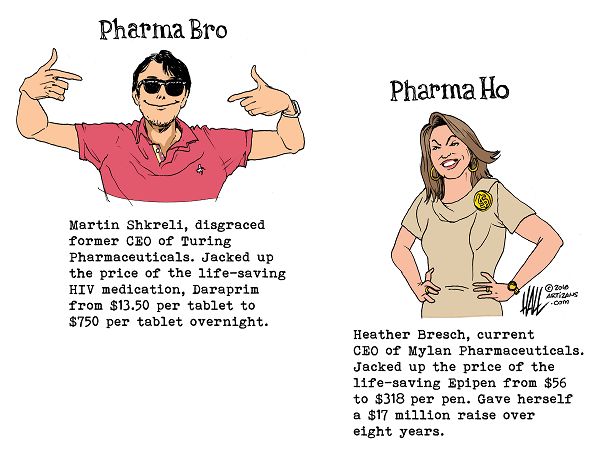
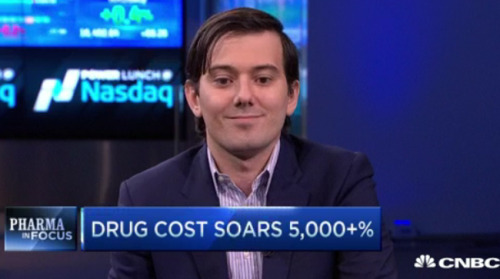
The obama administration made a deal with the pharmaceutical industry in 2009. Big Pharma agreed to not oppose the ACA bill (i.e. Obamacare) if they were left free to increase drug prices. This deal made political sense for the Ds as there are a of ties between the Ds and big Pharma....for instance Martin Shkreli has been a major door to the Ds (although I think that stopped when he was indicted) and the CEO of Mylan is the daughter of a D Senator and a major donor to the Clinton Foundation.

why-prescription-drugs-arent-part-of-obamacare

Cheers!
User avatar
Plantagenet
Expert
Expert
 
Posts: 26765
Joined: Mon 09 Apr 2007, 03:00:00
Location: Alaska (its much bigger than Texas).
Top

Re: Antibiotic resistance: World on cusp of 'post-antibiotic

Unread postby Newfie » Tue 04 Oct 2016, 11:41:59

https://www.google.com/amp/www.latimes. ... ent=safari

I'm pretty sure this is what happened to my Mom. She was in bad shape to begin with having had a stroke. But she went into the hospital with a mild heart attack and died of an infection. IIRC they did. It's the infection on the death cert.

That was over 10 years ago.

$this->bbcode_second_pass_quote('', 'D')r. Yasmeen Shaw, who treated McMullen in the ICU and filled out the death certificate, said she was following directions from health officials by recording the underlying cause of death, which in her opinion was the perforated ulcer.

“Everything that happened to her health is a consequence of the initial condition she came in with,” Shaw said. “Had the patient not have had a perforated ulcer they wouldn’t have been in the hospital in the first place.”
User avatar
Newfie
Forum Moderator
Forum Moderator
 
Posts: 18651
Joined: Thu 15 Nov 2007, 04:00:00
Location: Between Canada and Carribean
Top

Re: Antibiotic resistance: World on cusp of 'post-antibiotic

Unread postby onlooker » Wed 05 Oct 2016, 15:24:39

Yes, those bacteria strains and such in hospitals appear to be among the most virulent existing. So it is truly an adventure thus being admitted to a hospital in probably an already immunity compromised condition
"We are mortal beings doomed to die
User avatar
onlooker
Fission
Fission
 
Posts: 10957
Joined: Sun 10 Nov 2013, 13:49:04
Location: NY, USA

Re: Antibiotic resistance: World on cusp of 'post-antibiotic

Unread postby vox_mundi » Mon 14 Nov 2016, 20:09:07

Dark New Comic Book Explores a World Without Antibiotics

$this->bbcode_second_pass_quote('', ' ')Out on the streets, everyone is wearing a surgical mask. Inside, building walls are papered with political posters: “9 Million Dead a Year. Rationing Is Rational.”

In a hospital, a female surgeon snarls at a male supervisor. “I’m sick of being told how I should treat my patients. First we’re told to cut antibiotic prescriptions by 50 percent. And next the government locks up the antibiotics and controls their use?”

The place is London. The year is 2036. And the story of Surgeon X—a monthly graphic novel written by British filmmaker Sara Kenney and published by U.S.-based Image Comics—is off to a gritty, gory, swear-y start.

Surgeon X, which began publishing in September on paper and online—its second issue is just out—is an intense, dark drama set inside a thought experiment. It takes place in a world where the worst predictions of the rise of resistant bacteria have come true: Antibiotics have run out of usefulness, millions are dying of simple infections, and hospitals have become death traps. A repressive government has cracked down to save the few drugs that remain—and, to decide who gets them, has introduced a “Productivity Contribution Index” that downvotes anyone unhealthy, marginalized, or poor.

At the center of the story is Rosa Scott: young, talented, sick of bureaucrats, and sick at heart over the mysterious death of her mother, a microbiologist who was looking for new antibiotic compounds out in the wild. Working around her distinguished surgeon father and microbiologist twin sister, and recruiting her schizophrenic brother to help, she builds a secret outlaw clinic to save those whom society won’t protect—and, maybe, loses herself in the process.

“I now believe life is a privilege, not a right,” Scott thinks in the first chapter. “As a doctor, this scares the s--- out of me.”
“There are three classes of people: those who see. Those who see when they are shown. Those who do not see.” ― Leonardo da Vinci

Insensible before the wave so soon released by callous fate. Affected most, they understand the least, and understanding, when it comes, invariably arrives too late.
User avatar
vox_mundi
Intermediate Crude
Intermediate Crude
 
Posts: 3939
Joined: Wed 27 Sep 2006, 03:00:00
Top

Re: Antibiotic resistance: World on cusp of 'post-antibiotic

Unread postby Newfie » Mon 28 Nov 2016, 15:00:51

An overview of alternative strategies.

http://www.popsci.com/heres-how-well-fi ... SQAbEBC.16
User avatar
Newfie
Forum Moderator
Forum Moderator
 
Posts: 18651
Joined: Thu 15 Nov 2007, 04:00:00
Location: Between Canada and Carribean

Re: Antibiotic resistance: World on cusp of 'post-antibiotic

Unread postby Shaved Monkey » Mon 28 Nov 2016, 23:57:53

An antiseptic used to treat wounds during World War I that has been out of use for more than 50 years could help fight superbugs and prevent future pandemics, Melbourne researchers have said.

http://www.abc.net.au/news/2016-11-28/a ... gs/8062496

http://www.smh.com.au/technology/sci-te ... swmn7.html

my dad got the worse case of golden staff ever seen in 25 years according to his nurse he has virtually no immune system and is in his late 80s and survived using this
Ready to turn Zombies into WWOOFers
User avatar
Shaved Monkey
Intermediate Crude
Intermediate Crude
 
Posts: 2578
Joined: Wed 30 Mar 2011, 01:43:28

Re: Antibiotic resistance: World on cusp of 'post-antibiotic

Unread postby Tanada » Tue 29 Nov 2016, 09:21:14

$this->bbcode_second_pass_quote('Shaved Monkey', 'A')n antiseptic used to treat wounds during World War I that has been out of use for more than 50 years could help fight superbugs and prevent future pandemics, Melbourne researchers have said.

http://www.abc.net.au/news/2016-11-28/a ... gs/8062496

http://www.smh.com.au/technology/sci-te ... swmn7.html

my dad got the worse case of golden staff ever seen in 25 years according to his nurse he has virtually no immune system and is in his late 80s and survived using this


Fascinating, though not one of the Sulfa drugs this came from the same German research before World War I. Modern American medicine is so totally profit driven that cheap common chemicals barely get a glance if they even get that, everything is based upon the latest greatest most expensive 'progressive' medicine. Another one I pointed out a couple years ago is Bromine, the stuff is all natural and nearly dirt cheap and every doctor used to have it in stock as a 'nerve tonic' to calm people down. Now it is only used in 'backwater' countries and very expensive barbiturates and opiates are used instead.
$this->bbcode_second_pass_quote('Alfred Tennyson', 'W')e are not now that strength which in old days
Moved earth and heaven, that which we are, we are;
One equal temper of heroic hearts,
Made weak by time and fate, but strong in will
To strive, to seek, to find, and not to yield.
Tanada
Site Admin
Site Admin
 
Posts: 17094
Joined: Thu 28 Apr 2005, 03:00:00
Location: South West shore Lake Erie, OH, USA
Top

Re: Antibiotic resistance: World on cusp of 'post-antibiotic

Unread postby onlooker » Tue 29 Nov 2016, 12:36:18

This story may not be clearly related to this topic, but certainly has some connection. http://www.bbc.com/news/science-environment-38095585
Bumper load of new viruses identified-
One has to wonder as we encroach on ever more inaccessible regions such as in near the North and South pole, deep ocean and in ever more lush thick jungle what other viruses lurk there that could potentially prove harmful to mankind. Oh well, one way or the other it seem destined that our huge population numbers will be culled in the not to far off future.
"We are mortal beings doomed to die
User avatar
onlooker
Fission
Fission
 
Posts: 10957
Joined: Sun 10 Nov 2013, 13:49:04
Location: NY, USA

PreviousNext

Return to Medical Issues Forum

Who is online

Users browsing this forum: No registered users and 0 guests

cron