$this->bbcode_second_pass_quote('Subjectivist', '
')
Boo hoo the mega rich internationalists won't make quite as many billions because globalism is falling apart.



PeakOil is You
Global economic future news and discussion
Re: Global economic future news and discussion
 by Plantagenet » Fri 07 Feb 2014, 19:55:33
Yup.
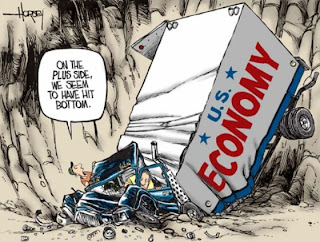
And regular folks are going to become poorer as well. Peak oil is going to really wallop the global economy. We've been in a stagnant economy for five years now, and the future doesn't any better. The latest CBO estimates are the US will still be seeing only 2% GDP growth all the way to 2024..
-

Plantagenet - Expert

- Posts: 26765
- Joined: Mon 09 Apr 2007, 03:00:00
- Location: Alaska (its much bigger than Texas).
Re: Global economic future news and discussion
by Graeme » Sat 08 Feb 2014, 18:53:47
A New Multilateralism for the 21st Century: the Richard Dimbleby Lecture
$this->bbcode_second_pass_quote('', 'G')ood evening. It is a great honor to be invited to deliver this year’s Dimbleby Lecture, and I would like to thank the BBC and the Dimbleby family for so kindly inviting me—and especially David Dimbleby for his warm words of introduction.
This evening, I would like to talk about the future. Before looking ahead, however, I would like to look back—for the clues to the future can often be read from the tea leaves of the past.
I invite you to cast your minds back to the early months of 1914, exactly a century ago. Much of the world had enjoyed long years of peace, and giant leaps in scientific and technological innovation had led to path-breaking advances in living standards and communications. There were few barriers to trade, travel, or the movement of capital. The future was full of potential.
Yet, 1914 was the gateway to thirty years of disaster—marked by two world wars and the Great Depression. It was the year when everything started to go wrong.
What happened?
What happened was that the birth of the modern industrial society brought about massive dislocation. The world was rife with tension—rivalry between nations, upsetting the traditional balance of power, and inequality between the haves and have-nots, whether in the form of colonialism or the sunken prospects of the uneducated working classes.
By 1914, these imbalances had toppled over into outright conflict. In the years to follow, nationalist and ideological thinking led to an unprecedented denigration of human dignity. Technology, instead of uplifting the human spirit, was deployed for destruction and terror. Early attempts at international cooperation, such as the League of Nations, fell flat. By the end of the Second World War, large parts of the world lay in ruins.
I now invite you to consider a second turning point—1944. In the summer of that year, the eminent economist, John Maynard Keynes, and a delegation of British officials, embarked on a fateful journey across the Atlantic. The crossing was risky—the world was still at war and enemy ships still prowled the waters. Keynes himself was in poor health.
But he had an appointment with destiny—and he was not going to miss it.
$this->bbcode_second_pass_quote('', 'G')ood evening. It is a great honor to be invited to deliver this year’s Dimbleby Lecture, and I would like to thank the BBC and the Dimbleby family for so kindly inviting me—and especially David Dimbleby for his warm words of introduction.
This evening, I would like to talk about the future. Before looking ahead, however, I would like to look back—for the clues to the future can often be read from the tea leaves of the past.
I invite you to cast your minds back to the early months of 1914, exactly a century ago. Much of the world had enjoyed long years of peace, and giant leaps in scientific and technological innovation had led to path-breaking advances in living standards and communications. There were few barriers to trade, travel, or the movement of capital. The future was full of potential.
Yet, 1914 was the gateway to thirty years of disaster—marked by two world wars and the Great Depression. It was the year when everything started to go wrong.
What happened?
What happened was that the birth of the modern industrial society brought about massive dislocation. The world was rife with tension—rivalry between nations, upsetting the traditional balance of power, and inequality between the haves and have-nots, whether in the form of colonialism or the sunken prospects of the uneducated working classes.
By 1914, these imbalances had toppled over into outright conflict. In the years to follow, nationalist and ideological thinking led to an unprecedented denigration of human dignity. Technology, instead of uplifting the human spirit, was deployed for destruction and terror. Early attempts at international cooperation, such as the League of Nations, fell flat. By the end of the Second World War, large parts of the world lay in ruins.
I now invite you to consider a second turning point—1944. In the summer of that year, the eminent economist, John Maynard Keynes, and a delegation of British officials, embarked on a fateful journey across the Atlantic. The crossing was risky—the world was still at war and enemy ships still prowled the waters. Keynes himself was in poor health.
But he had an appointment with destiny—and he was not going to miss it.
imf
Human history becomes more and more a race between education and catastrophe. H. G. Wells.
Fatih Birol's motto: leave oil before it leaves us.
Fatih Birol's motto: leave oil before it leaves us.
-

Graeme - Fusion

- Posts: 13258
- Joined: Fri 04 Mar 2005, 04:00:00
- Location: New Zealand
Re: Global economic future news and discussion
by Graeme » Thu 20 Feb 2014, 18:25:44
IMF says reforms could add $2.25tn to global economy by 2018
$this->bbcode_second_pass_quote('', '
')Aggressive reforms could add $2.25tn to the size of the global economy by 2018, the International Monetary Fund has said in a report before G20 finance ministers meet this weekend.
Efforts to rebalance, reform product and labour markets, and boost infrastructure investment could increase global growth by 0.5 percentage points a year and give a significant boost to global living standards, the report says.
The report will be seized upon by Australia, which is chairing the G20, to support its drive for the group of the world’s largest economies to set targets for growth.
The IMF’s analysis shows the potential for boosting growth but calls for a long list of politically difficult reforms. It is not clear whether coordinating reforms at the G20 will make individual countries more likely to carry them out.
For example, the IMF reform scenario assumes that China adopts a fully flexible exchange rate; countries cut service industry regulation and labour protection laws by 20 per cent; while the US, Germany, Brazil, India and Indonesia raise public investment by 0.5 percentage points of total output.
“While most of the gains are attributable to domestic policies, joint action could produce beneficial growth spillovers in the medium to long term,” says the IMF.
“Even more importantly, joint action can also reduce risks of renewed global turmoil both by reducing external imbalances and internal distortions and by strengthening market confidence.”
The IMF calls for a list of reforms to reduce global imbalances, including an improved social safety net in China, measures to boost investment in Germany, and structural reforms to boost competitiveness in France and the UK.
$this->bbcode_second_pass_quote('', '
')Aggressive reforms could add $2.25tn to the size of the global economy by 2018, the International Monetary Fund has said in a report before G20 finance ministers meet this weekend.
Efforts to rebalance, reform product and labour markets, and boost infrastructure investment could increase global growth by 0.5 percentage points a year and give a significant boost to global living standards, the report says.
The report will be seized upon by Australia, which is chairing the G20, to support its drive for the group of the world’s largest economies to set targets for growth.
The IMF’s analysis shows the potential for boosting growth but calls for a long list of politically difficult reforms. It is not clear whether coordinating reforms at the G20 will make individual countries more likely to carry them out.
For example, the IMF reform scenario assumes that China adopts a fully flexible exchange rate; countries cut service industry regulation and labour protection laws by 20 per cent; while the US, Germany, Brazil, India and Indonesia raise public investment by 0.5 percentage points of total output.
“While most of the gains are attributable to domestic policies, joint action could produce beneficial growth spillovers in the medium to long term,” says the IMF.
“Even more importantly, joint action can also reduce risks of renewed global turmoil both by reducing external imbalances and internal distortions and by strengthening market confidence.”
The IMF calls for a list of reforms to reduce global imbalances, including an improved social safety net in China, measures to boost investment in Germany, and structural reforms to boost competitiveness in France and the UK.
FT
Human history becomes more and more a race between education and catastrophe. H. G. Wells.
Fatih Birol's motto: leave oil before it leaves us.
Fatih Birol's motto: leave oil before it leaves us.
-
Graeme - Fusion
- Posts: 13258
- Joined: Fri 04 Mar 2005, 04:00:00
- Location: New Zealand
Re: Global economic future news and discussion
by Graeme » Sat 22 Feb 2014, 18:56:42
Rickards: The China bubble is bursting
$this->bbcode_second_pass_quote('', 'A')mid weaker U.S. growth and volatility in capital markets, China stands out as a beacon in the minds of many investors. It is widely assumed that China will continue to grow at about 7% without interruption and will, in time, surpass the United States as the largest economic power in the world.
This China growth story is one that investors take for granted. But investors are in for a rude awakening when they realize how much of the China story is false and how quickly it may come unraveled.
There is evidence that Chinese growth figures are manipulated by bureaucrats to please the political leadership, but that is not the biggest problem with the growth story. Instead, the composition of growth and its non-sustainability are the Achilles Heel. Economic growth is the sum of consumption, investment, government spending and net exports. Major economies work to achieve a sustainable balance among these elements. For example, too much government spending may result in high burdens of debt or taxes, or too many exports may result in trade wars, and so on. A sustainable mix is what is needed for strong long-term growth.
China’s problem is an over-reliance on investment to the exclusion of consumption. Investment makes up 45% of Chinese gross domestic product compared with about 20% in the U.S. Investment can be sustainable if it results in improvements to productive assets such as ports, roads and other critical infrastructure. China’s problem is that much of its investment is wasted on white elephant projects such as empty cities, monumental train stations, and unused airports.
If reported GDP were adjusted for wasted investment, actual growth in China would be seen to be much lower today. If the costs of massive air pollution and other environmental degradation were also deducted, real growth would be even lower.
A frequently proposed solution to this wasted investment problem is for China to rebalance its economy away from investment toward more consumption as in the United States. But there are enormous obstacles to this. The first is that any reduction in investment would depress Chinese growth immediately while the benefits of increased consumption might only be achieved over long periods of time. The other problem is that Chinese citizens are reluctant consumers because of their need to save for retirement or health care due to the lack of a Chinese social safety net.
Also, Chinese workers are demographically dominated by those in their 40s and 50s who have the highest propensity to save, not spend. China has a shortage of younger people, who are more likely to spend, due to the “one child” policy that began in 1980. Thirty years after taking effect, that policy has depleted China of a large portion of its younger generation. China’s rebalancing effort would have been more effective around 2002 when the demographics were most favorable and before investment ran out of control into full-scale waste. That opportunity has now been lost.
$this->bbcode_second_pass_quote('', 'A')mid weaker U.S. growth and volatility in capital markets, China stands out as a beacon in the minds of many investors. It is widely assumed that China will continue to grow at about 7% without interruption and will, in time, surpass the United States as the largest economic power in the world.
This China growth story is one that investors take for granted. But investors are in for a rude awakening when they realize how much of the China story is false and how quickly it may come unraveled.
There is evidence that Chinese growth figures are manipulated by bureaucrats to please the political leadership, but that is not the biggest problem with the growth story. Instead, the composition of growth and its non-sustainability are the Achilles Heel. Economic growth is the sum of consumption, investment, government spending and net exports. Major economies work to achieve a sustainable balance among these elements. For example, too much government spending may result in high burdens of debt or taxes, or too many exports may result in trade wars, and so on. A sustainable mix is what is needed for strong long-term growth.
China’s problem is an over-reliance on investment to the exclusion of consumption. Investment makes up 45% of Chinese gross domestic product compared with about 20% in the U.S. Investment can be sustainable if it results in improvements to productive assets such as ports, roads and other critical infrastructure. China’s problem is that much of its investment is wasted on white elephant projects such as empty cities, monumental train stations, and unused airports.
If reported GDP were adjusted for wasted investment, actual growth in China would be seen to be much lower today. If the costs of massive air pollution and other environmental degradation were also deducted, real growth would be even lower.
A frequently proposed solution to this wasted investment problem is for China to rebalance its economy away from investment toward more consumption as in the United States. But there are enormous obstacles to this. The first is that any reduction in investment would depress Chinese growth immediately while the benefits of increased consumption might only be achieved over long periods of time. The other problem is that Chinese citizens are reluctant consumers because of their need to save for retirement or health care due to the lack of a Chinese social safety net.
Also, Chinese workers are demographically dominated by those in their 40s and 50s who have the highest propensity to save, not spend. China has a shortage of younger people, who are more likely to spend, due to the “one child” policy that began in 1980. Thirty years after taking effect, that policy has depleted China of a large portion of its younger generation. China’s rebalancing effort would have been more effective around 2002 when the demographics were most favorable and before investment ran out of control into full-scale waste. That opportunity has now been lost.
darientimes
Human history becomes more and more a race between education and catastrophe. H. G. Wells.
Fatih Birol's motto: leave oil before it leaves us.
Fatih Birol's motto: leave oil before it leaves us.
-
Graeme - Fusion
- Posts: 13258
- Joined: Fri 04 Mar 2005, 04:00:00
- Location: New Zealand


