PeakOil is You
Peak oil: Do you want it to occur?
Re: Peak oil: Do you want it to occur?
 by Oil-Finder » Sun 30 Dec 2007, 04:47:50
$this->bbcode_second_pass_quote('thuja', 'U')gh- you win Oil-Finder- we will have oil....forever!
Now you're beginning to see the light.

-

Oil-Finder - Tar Sands

- Posts: 630
- Joined: Tue 11 Dec 2007, 04:00:00
- Location: Seattle
Re: Peak oil: Do you want it to occur?
by thuja » Sun 30 Dec 2007, 04:51:47
LOL- well at least you made me smile
-

thuja - Intermediate Crude

- Posts: 2202
- Joined: Sat 15 Oct 2005, 03:00:00
- Location: Portland, Oregon
Re: Peak oil: Do you want it to occur?
by Oil-Finder » Sun 30 Dec 2007, 05:01:23
Oh, and just because I like to rub it in . . . 
$this->bbcode_second_pass_quote('Oil-Finder', '
')Let's see how doable this is . . .
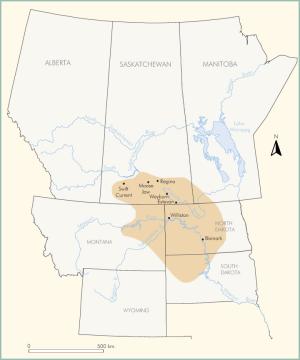
The US side of the Williston Basin, which contains the Bakken formation, encompasses approximately 143,000 square miles.
My research on Bakken well production indicates that, after an initial period of high production lasting a few months to a year, flow rates stabilize at around 150-300 bpd and stay that way for an extremely long time (source, source, and source).
I have read well spacing patterns in the Bakken including 160 acres, 40 acres, and 640 acres (1 square mile). Let's be conservative and go with 1-square-mile spacing.
Let's say that only 1/4 of the square miles in the Williston Basin end up with oil wells on them (sounds reasonable?). That would be 35,750 square miles, and thus, 35,750 wells using our spacing pattern.
Let's assume a low-ish average production rate of 200 bpd per well. With that figure, 35,750 wells would produce 7.15 million barrels/day.
According to this here, the average cost of a well in the Williston Basin is up to $3-$5 million, though I've seen figures as low as $2 million, and even less for some Canadian sources.
Let's go with an average of $4 million each. At that price, 35,750 wells would cost $143 billion total.
Sounds like a lot, doesn't it? But keep in mind that Petrobras expects to spend $50-$100 billion just to develop the 5-8 billion barrels in Tupi. Suddenly the Bakken looks like a bargain.
And before you gasp at the 35,750 wells, keep in mind that Pemex expects to drill 13,500 wells to develop Chicontepec over the next 15 years.
To be sure, developing the Bakken to high production rates could take 10-20 years, but there's nothing un-doable about it. And it would hardly be the first time a large oil formation took a decade or more to fully develop!
$this->bbcode_second_pass_quote('Oil-Finder', '
')Let's see how doable this is . . .
The US side of the Williston Basin, which contains the Bakken formation, encompasses approximately 143,000 square miles.
My research on Bakken well production indicates that, after an initial period of high production lasting a few months to a year, flow rates stabilize at around 150-300 bpd and stay that way for an extremely long time (source, source, and source).
I have read well spacing patterns in the Bakken including 160 acres, 40 acres, and 640 acres (1 square mile). Let's be conservative and go with 1-square-mile spacing.
Let's say that only 1/4 of the square miles in the Williston Basin end up with oil wells on them (sounds reasonable?). That would be 35,750 square miles, and thus, 35,750 wells using our spacing pattern.
Let's assume a low-ish average production rate of 200 bpd per well. With that figure, 35,750 wells would produce 7.15 million barrels/day.
According to this here, the average cost of a well in the Williston Basin is up to $3-$5 million, though I've seen figures as low as $2 million, and even less for some Canadian sources.
Let's go with an average of $4 million each. At that price, 35,750 wells would cost $143 billion total.
Sounds like a lot, doesn't it? But keep in mind that Petrobras expects to spend $50-$100 billion just to develop the 5-8 billion barrels in Tupi. Suddenly the Bakken looks like a bargain.
And before you gasp at the 35,750 wells, keep in mind that Pemex expects to drill 13,500 wells to develop Chicontepec over the next 15 years.
To be sure, developing the Bakken to high production rates could take 10-20 years, but there's nothing un-doable about it. And it would hardly be the first time a large oil formation took a decade or more to fully develop!
Not only have I done this little analysis, we're not talking some junk heavy oil. The stuff in the Bakken is super-duper, high-quality oil, among the best in the world!:
http://nationalcitizens.ca/cgi-bin/news ... 1197295246
^
$this->bbcode_second_pass_quote('', 'T')he Bakken is a geological formation of siltstone and sandstone about 300 metres below the Mississippian formation, where most Saskatchewan light oil production comes from. Bakken wells tend to be highly productive (200 barrels a day or more), producing sweet, light crude oil with 41 degree gravity, basically the highest grade of crude oil you can find anywhere.
So there!
![[smilie=5slick.gif]](https://udev.peakoil.com/forums/images/smilies/5slick.gif "5slick")
-
Oil-Finder - Tar Sands
- Posts: 630
- Joined: Tue 11 Dec 2007, 04:00:00
- Location: Seattle
Re: Peak oil: Do you want it to occur?
by thuja » Sun 30 Dec 2007, 05:12:19
Well done! Hey I'm done with the debate tonight brother...
But just a comment- the arguments you make for how oil production will last...forever..needs to be backed up by petroelum geologists, think tanks and reserach institutes to have much validity here. I tried to point to the most cornucopian of the bunch, CERA, to describe their views. You seem to be meandering past their rosy views to a world that has a ceaseless supply of never ending crude...
No credible person believes that...because the evidence isn't there...
Take it back a notch. We'll still debate you...but we won't think you're a loon...
But just a comment- the arguments you make for how oil production will last...forever..needs to be backed up by petroelum geologists, think tanks and reserach institutes to have much validity here. I tried to point to the most cornucopian of the bunch, CERA, to describe their views. You seem to be meandering past their rosy views to a world that has a ceaseless supply of never ending crude...
No credible person believes that...because the evidence isn't there...
Take it back a notch. We'll still debate you...but we won't think you're a loon...
Last edited by thuja on Sun 30 Dec 2007, 14:52:29, edited 1 time in total.
-
thuja - Intermediate Crude
- Posts: 2202
- Joined: Sat 15 Oct 2005, 03:00:00
- Location: Portland, Oregon
Re: Peak oil: Do you want it to occur?
by Oil-Finder » Sun 30 Dec 2007, 05:26:21
$this->bbcode_second_pass_quote('thuja', 'W')ell done! Hey I'm done with the debate tonight brother...
But just a comment- the arguments you make for how oil production will last...forever..needs to be backed up by petroelum geologists, think tanks and reserach institutes to have much validity here. I tried to point to the most cornucopian of the bunch, CERA, to describe their views. You seem to be meandering past their rosy views to a world that has a ceaseless supply of never ending crude...
No credible person believes that...because the evidence isn't there...
Take it back a notch. We'll still dabate you...but we won't think you're a loon...
But just a comment- the arguments you make for how oil production will last...forever..needs to be backed up by petroelum geologists, think tanks and reserach institutes to have much validity here. I tried to point to the most cornucopian of the bunch, CERA, to describe their views. You seem to be meandering past their rosy views to a world that has a ceaseless supply of never ending crude...
No credible person believes that...because the evidence isn't there...
Take it back a notch. We'll still dabate you...but we won't think you're a loon...
All of the figures I've used come from petroleum geologists, academics, and the like. I'm not making up a single number myself.
-- The 200-500 billion barrel figures for the Bakken come from a series of geologists starting in 1999 and most recently in 2006:
http://www.nd.gov/ndic/ic-press/bakken-form-06.pdf
-- The 7.5 billion barrel figure for Bohai Bay comes from PetroChina's geologists (I assume - same as any other oil discovery):
http://news.mongabay.com/2007/0508-china.html
-- The 100+ billion barrel estimate of Bohai Bay's ultimate reserves comes from an academic at a Chinese university:
http://www.petroleumworld.com/story07051011.htm
-- The 5-8 billion barrels in Tupi comes from Petrobras' geologists (I assume - same as any other oil discovery):
http://www.bloomberg.com/apps/news?pid= ... refer=news
-- And the "conservatively 50 billion barrels" for all of offshore Brazil comes from a former Petrobras official now working as an oil industry consultant. And a larger figure has been touted by the Brazilian government:
http://ipsnews.net/news.asp?idnews=40086
-
Oil-Finder - Tar Sands
- Posts: 630
- Joined: Tue 11 Dec 2007, 04:00:00
- Location: Seattle