
Peak Oil is You

Donate Bitcoins ;-) or Paypal :-)


News from November 2004
China needs a stronger hand to tackle energy woes
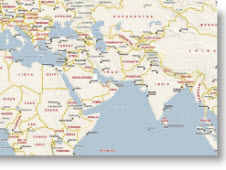
BEIJING, Nov 4 (Reuters) – Poorly staffed and with little expertise, energy regulators are struggling to find the clout to resolve China’s worst power crunch in 20 years, cut surging oil imports and clean up a deteriorating environment.http://www.alertnet.org/thenews/newsdesk/SP98657.htm
Comment: Are we running out of oil (again)?
The scary story that is being amplified now concerns the developing world, notably China and India, where rapid economic growth – and no restrictions on emissions under the Kyoto Protocol – are seen as creating insatiable demands for oil. The story’s premise is that the world will run out of oil faster than we thought…http://www.dailytimes.com.pk/default.asp?page=story_2-11-2004_pg5_19
Oil traders say prices will soar
Oil traders say the re-election of US President George W Bush points to rising oil prices in the months ahead. Traders are concerned US policy in the Middle East and unrest in Nigeria – where unions have vowed to target oil exports – could affect production. http://news.bbc.co.uk/1/hi/business/3981455.stm
Sound Energy Governance: A New Era Of Oil Transparency
Matthew Simmons presentation:
Prognosticating oil supplies
A rather alarming theory about oil supplies — which had been discussed mostly among fringe economists and on quirky Internet Web sites — has recently received much broader attention.
The Mideast ‘bomb’ no one talks about
as the number of people increases, so does internal demand. In a few decades, many OPEC nations in the Middle East will have such large populations that they could end up consuming much or all of the energy they now export, suggests Matthew Simmons, an oil consultant in Houston.
Oil sands costs may rise 35%

Canadian Natural Resources says high prices for steel, fuel and labour could boost the cost of the first phase of its Horizon oil sands project in northern Alberta by nearly 35 per cent — to $6.6-billion.
HM Queen Elizabeth enters Climate Diplomacy
5:54am (UK) Blair Urged to Press U.S. on Climate Change By John Deane, Chief Political Correspondent, PA News Prime Minister Tony Blair will be urged today to push for action on climate change in his first contact with the winner of the US presidential election. Liberal Democrat environment spokesman Norman Baker will underline that message […]
Oil Companies Resist Investment
As oil prices have been hovering near record levels, oil company executives have been running their businesses as if prices will sink .http://www.washingtonpost.com/ac2/wp-dyn/A19777-2004Nov2?language=printer
Summary of Weekly Petroleum Data for the Week Ending October 29, 2004
U.S. crude oil refinery inputs averaged nearly 15.0 million barrels per day
during the week ending October 29, up 75,000 barrels per day from the previous
week’s average. As a result, distillate fuel production increased slightly
compared to the previous week, averaging 3.9 million barrels per day. However,
gasoline production decreased last week, averaging nearly 8.8 million barrels
per day.
Bush Wins US Election
 |
|
|
As of early Wednesday morning it appears clear that George W. Bush has won the US Presidential election is a narrow race.
|
Here We Go Again!
 |
|
|
Nov. 3 (Bloomberg) — The U.S. election system failed to choose a winner on voting day for the second straight presidential contest, raising the possibility that the courts may have to break a deadlock between George W. Bush and challenger John Kerry. |
Oil Futures Up As Traders Watch U.S. Vote
 |
|
|
LONDON – Crude oil futures surged above $51 on Wednesday, then fell back a bit in volatile trading on the oil markets as traders anxiously watched results from the U.S. presidential election. |
Massive attacks halt Iraqi oil flow
Fighters have mounted the biggest attacks yet on Iraq’s oil infrastructure, blowing up three pipelines in the north and hitting exports via Turkey, oil officials say.
A critical view of the Most Important International Energy Agencies
Preface: Conditions of the world’s oil supply have entered into a new phase: increasing demand pressure, worries about the security of supply in important oil producing countries, speculative factors, but particularly, clear indications that limitations on the supply side have caused unexpected and high price increases. >In view of the fact that an increase of […]
Peak oil fringe group gains mainstream attention
according to the so-called peak oil movement, which says that by 2008 humans will have extracted half of the earth’s oil. In other words, we’re using oil faster than we can ever hope to find it.
Nigeria braces for nationwide strike
The Nigeria Labour Congress (NLC) and a coalition of civil society bodies have called on workers to launch an indefinite stoppage from 16 November in protest against rising fuel prices and President Olusegun Obasanjo’s economic reforms.
Its leaders have warned their strike will disrupt key oil exports.
Iraq oil pipelines hit by biggest attacks yet
BAGHDAD – Saboteurs have mounted the biggest attacks yet on Iraq’s oil infrastructure, blowing up four pipelines in the north in 24 hours, and hitting exports via Turkey, oil officials said on Tuesday. The attacks, which were hours apart, sharply reduced crude oil supplies to Iraq’s biggest refinery at Baiji. The government is already struggling […]
Energy bills rise in UK
Powergen customers are facing further price rises
UK energy giant Powergen has said it is to increase its gas and electricity prices once again.
Gas prices for consumers are to rise by 9.6% – the third rise this year – while electricity prices will be increased by 8.9%, the German-owned firm said.
The increase means that gas prices for the company’s six million customers will have jumped by 17.6% during the course of 2004 alone.
Energy Transition and Final Energy Crisis
By 2015, it will be urgent to consider ways and means to reduce world total oil and gas demand on a year-by-year basis. Given the vast scope of such a programme, and the need for the OECD countries to act in the immediate short-term of 2004-2008, the action and goals of a world energy transition programme should be proposed, discussed, decided and start being applied from 2004-2005.
November Newsletter
ASPO Newsletter, no. 47:
UK to pump greenhouse gas under sea

Proposals to store tens of millions of tonnes of carbon dioxide under the seabed are to be unveiled by ministers tomorrow in a dramatic attempt to tackle global warming.
Iran warns of $US100 oil price
Questioned about a possible UN embargo on Tehran’s oil exports, the former parliamentary speaker said: “The big loser will be them, not us.”
“If an oil embargo is slapped on Iran, the price of oil will exceed $US100 per barrel, with a potential to paralyse the West’s economy.”
Oil Down $2, Speculators Bet on Kerry Win
LONDON (Reuters) – Oil prices fell heavily on Monday, taking U.S. crude below $50 on speculation that a U.S. election win for Senator John Kerry could ease the geopolitical friction that helped fuel this year’s record-breaking rally. U.S. light crude fell as low as $49.40 a barrel before retracing by 1745 GMT (1:45 p.m. EST) […]
Oil slumps below $50 a barrel
NEW YORK (CNN/Money) – Oil prices fell below $50 a barrel early Monday as concern about a heating fuel crunch alleviated over the weekend and traders realized that the market may be overbought. http://money.cnn.com/2004/11/01/markets/oil/index.htm?cnn=yesOil slumps below $50 a barrel Easing concerns about heating fuel supplies as refineries come back on line pressure crude. November 1, […]
Growing militarization of our oil dependence
 |
|
|
RISING GASOLINE prices and tight global supplies have given fresh impetus to claims that the world is fast approaching the moment of “peak” oil production, beyond which we can expect declining energy output and economic decline. While there is no doubt that global oil output will attain peak levels, the current rise in prices reflects a more worrisome phenomenon: America’s growing dependence on imported petroleum from unstable and unfriendly countries, entailing an increased risk of supply disruptions and military involvement abroad. |
How Long Will the Oil Age Last?
 |
|
|
Quick, how many years will it be before the world runs out of oil? Don’t know? Join the club. Actually, choose one of several clubs, each of which vehemently disagrees with the others on how much usable crude is left on the earth. The question is far from an academic exercise: This year oil hit a near record-high $40 a barrel, and Royal Dutch/Shell Group downgraded its reserves by 4.5 billion barrels. |
High gas prices may be here to stay
|
“My feeling is this is the beginning of the oil peak and the next administration, whoever it may be, is going to have to deal with this,” said Les Magoon, an oil geologist and scientist emeritus with the U.S. Geological Survey. |
Global Scale Politics
|
“If you knew about Hubbert’s Peak a decade ago – as oilmen Bush and Cheney surely did – perhaps you would regard occupation of Afghanistan and Iraq as an ugly but necessary price to pay in order to secure sufficient time for the U.S. economy to convert?
|
NZ has time to prepare for future oil crisis – Hodgson
 |
|
|
The Government today launched a discussion document on sustainable energy which it said was the starting point for future policy development. Written by the Ministry of Economic Development, it sets out New Zealand’s current situation and considers ways to improve existing sustainable energy sources and develop new ones. Green co-leader Jeanette Fitzsimons welcomed the report but said it lacked a sense of urgency about dealing with future problems and current oil prices. Ms Fitzsimons was particularly concerned about a concept known as “peak oil”. Peak oil describes a scenario where global oil production peaks and due to continuing demand prices escalate to a point where current uses are not sustainable. The Government had accepted forecasts that many experts believed were too optimistic. |
Oil News Categories
Recent Board Topics
Archive
LATEST NEWS HEADLINES
- Why the IEA is Wrong About Peak Oil Demand
- Did we inadvertently speed global warming?

- Venezuela’s Oil Monopoly Eases
- Why Germany is Choosing Natural Gas Over Nuclear Power
- U.S. coal-fired electricity generation decreased in 2022 and 2023
- America Cracks Down on Methane Emissions from Oil and Gas Facilities
- Meet America’s Newest Oil Trader Extraordinaire: Joe Biden
- Is It Time To Refill America’s Strategic Petroleum Reserve?
- Oil prices set to end year 10% lower as demand concerns snap winning streak
- What’s Driving America’s New Oil and Gas Boom?
- China’s peak oil demand bombshell eviscerates Danielle Smith’s energy strategy
Member Comments
- on James Schlesinger on peak oil
- on U.S. coal-fired electricity generation decreased in 2022 and 2023
- on Kunstler: Oh Say Can You See?
- on US Warship, Commercial Ships Under Attack In Red Sea
- on Saudi Arabia’s Oil Strategy Is About More Than Destroying The US Shale Business
- on Things That Make You Go Hmm… Like The Death Of The Petrodollar, And What Comes After
- on New England’s last coal plants to voluntarily shut down
- on Germany’s Merkel Pledges Millions To Save Forests
- on UK: Return to slop bucket as homes face ban on sending food waste to landfill
- on China to Double Oil, Gas Production by 2030
- on New England’s last coal plants to voluntarily shut down
- on New England’s last coal plants to voluntarily shut down
- on New England’s last coal plants to voluntarily shut down
- on New England’s last coal plants to voluntarily shut down
- on New England’s last coal plants to voluntarily shut down
- on New England’s last coal plants to voluntarily shut down
- on New England’s last coal plants to voluntarily shut down
- on New England’s last coal plants to voluntarily shut down
- on New England’s last coal plants to voluntarily shut down
- on Kunstler: Oh Say Can You See?
PO Real Time
No tweets available