
Peak Oil is You

Donate Bitcoins ;-) or Paypal :-)


Page added on December 15, 2014

The Global Bankers’ Coup: Bail-In and the Shadowy Financial Stability Board
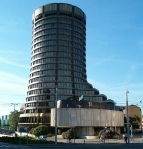

On December 11, 2014, the US House passed a bill repealing the Dodd-Frank requirement that risky derivatives be pushed into big-bank subsidiaries, leaving our deposits and pensions exposed to massive derivatives losses. The bill was vigorously challenged by Senator Elizabeth Warren; but the tide turned when Jamie Dimon, CEO of JPMorganChase, stepped into the ring. Perhaps what prompted his intervention was the unanticipated $40 drop in the price of oil. As financial blogger Michael Snyder points out, that drop could trigger a derivatives payout that could bankrupt the biggest banks. And if the G20’s new “bail-in” rules are formalized, depositors and pensioners could be on the hook.
The new bail-in rules were discussed in my last post here. They are edicts of the Financial Stability Board (FSB), an unelected body of central bankers and finance ministers headquartered in the Bank for International Settlements in Basel, Switzerland. Where did the FSB get these sweeping powers, and is its mandate legally enforceable?
Those questions were addressed in an article I wrote in June 2009, two months after the FSB was formed, titled “Big Brother in Basel: BIS Financial Stability Board Undermines National Sovereignty.” It linked the strange boot shape of the BIS to a line from Orwell’s 1984: “a boot stamping on a human face—forever.” The concerns raised there seem to be materializing, so I’m republishing the bulk of that article here. We need to be paying attention, lest the bail-in juggernaut steamroll over us unchallenged.
The Shadowy Financial Stability Board
Alarm bells went off in April 2009, when the Bank for International Settlements (BIS) was linked to the new Financial Stability Board (FSB) signed onto by the G20 leaders in London. The FSB was an expansion of the older Financial Stability Forum (FSF) set up in 1999 to serve in a merely advisory capacity by the G7 (a group of finance ministers formed from the seven major industrialized nations). The chair of the FSF was the General Manager of the BIS. The new FSB was expanded to include all G20 members (19 nations plus the EU).
Formally called the “Group of Twenty Finance Ministers and Central Bank Governors,” the G20 was, like the G7, originally set up as a forum merely for cooperation and consultation on matters pertaining to the international financial system. What set off alarms was that the new Financial Stability Board had real teeth, imposing “obligations” and “commitments” on its members; and this feat was pulled off without legislative formalities, skirting the usual exacting requirements for treaties. It was all done in hasty response to an “emergency.” Problem-reaction-solution was the slippery slope of coups.
Buried on page 83 of an 89-page Report on Financial Regulatory Reform issued by the US Obama administration was a recommendation that the FSB strengthen and institutionalize its mandate to promote global financial stability. It sounded like a worthy goal, but there was a disturbing lack of detail. What was the FSB’s mandate, what were its expanded powers, and who was in charge? An article in The London Guardian addressed those issues in question and answer format:
Who runs the regulator? The Financial Stability Forum is chaired by Mario Draghi, governor of the Bank of Italy. The secretariat is based at the Bank for International Settlements’ headquarters in Basel, Switzerland.
Draghi was director general of the Italian treasury from 1991 to 2001, where he was responsible for widespread privatization (sell-off of government holdings to private investors). From 2002 to 2006, he was a partner at Goldman Sachs on Wall Street. He was succeeded in 2011 by Mark Carney, who also got his start at Goldman Sachs, working there for 13 years before going on to become Governor of the Bank of Canada in 2008 and Governor of the Bank of England in 2012. In 2011 and 2012, Carney attended the annual meetings of the controversial Bilderberg Group.
What will the new regulator do? The regulator will monitor potential risks to the economy . . . It will cooperate with the IMF, the Washington-based body that monitors countries’ financial health, lending funds if needed.
The IMF is an international banking organization that is also controversial. Joseph Stiglitz, former chief economist for the World Bank, charged it with ensnaring Third World countries in a debt trap from which they could not escape. Debtors unable to pay were bound by “conditionalities” that included a forced sell-off of national assets to private investors in order to service their loans.
What will the regulator oversee? All ‘systemically important’ financial institutions, instruments and markets.
The term “systemically important” was not defined. Would it include such systemically important institutions as national treasuries, and such systemically important markets as gold, oil and food?
How will it work? The body will establish a supervisory college to monitor each of the largest international financial services firms. . . . It will act as a clearing house for information-sharing and contingency planning for the benefit of its members.
“Information-sharing” can mean illegal collusion. Would the information-sharing here include such things as secret agreements among central banks to buy or sell particular currencies, with the concomitant power to support or collapse targeted local economies?
What will the new regulator do about debt and loans? To prevent another debt bubble, the new body will recommend financial companies maintain provisions against credit losses and may impose constraints on borrowing.
What sort of constraints? The Basel Accords, imposed by the Basel Committee on Banking Supervision (also housed at the BIS) had not necessarily worked out well. The first Basel Accord, issued in 1998, had been blamed for inducing a recession in Japan from which that country had yet to recover; and the Second Basel Accord and its associated mark-to-market rule had been blamed for bringing on the 2008 crisis. (For more on this, see The Public Bank Solution.)
The Amorphous 12 International Standards and Codes
Most troubling, perhaps, was this vague parenthetical reference in a press release issued by the BIS, titled “Financial Stability Forum Re-established as the Financial Stability Board”:
As obligations of membership, member countries and territories commit to . . . implement international financial standards (including the 12 key International Standards and Codes) . . . .
This was not just friendly advice from an advisory board. It was a commitment to comply, so you would expect some detailed discussion concerning what those standards entailed. But a search of the major media revealed virtually nothing. The 12 key International Standards and Codes were left undefined and undiscussed. The FSB website listed them, but it was vague. The Standards and Codes covered broad areas that were apparently subject to modification as the overseeing committees saw fit. They included money and financial policy transparency, fiscal policy transparency, data dissemination, insolvency, corporate governance, accounting, auditing, payment and settlement, market integrity, banking supervision, securities regulation, and insurance supervision.
Take “fiscal policy transparency” as an example. The “Code of Good Practices on Fiscal Transparency” was adopted by the IMF Interim Committee in 1998. The “synoptic description” said:
The code contains transparency requirements to provide assurances to the public and to capital markets that a sufficiently complete picture of the structure and finances of government is available so as to allow the soundness of fiscal policy to be reliably assessed.
Members were required to provide a “picture of the structure and finances of government” that was complete enough for an assessment of its “soundness” — but an assessment by whom, and what if a government failed the test? Was an unelected private committee based in the BIS allowed to evaluate the “structure and function” of particular national governments and, if they were determined to have fiscal policies that were not “sound,” to impose “conditionalities” and “austerity measures” of the sort that the IMF was notorious for imposing on Third World countries? Suspicious observers wondered if that was how once-mighty nations were to be brought under the heel of Big Brother at last.
For three centuries, private international banking interests have brought governments in line by blocking them from issuing their own currencies and requiring them to borrow banker-issued “banknotes” instead. Political colonialism is now a thing of the past, but under the new FSB guidelines, nations could still be held in feudalistic subservience to foreign masters.
Consider this scenario: the new FSB rules precipitate a massive global depression due to contraction of the money supply. XYZ country wakes up to the fact that all of this is unnecessary – that it could be creating its own money, freeing itself from the debt trap, rather than borrowing from bankers who create money on computer screens and charge interest for the privilege of borrowing it. But this realization comes too late: the boot descends and XYZ is crushed into line. National sovereignty has been abdicated to a private committee, with no say by the voters.
Marilyn Barnewall, dubbed by Forbes Magazine the “dean of American private banking,” wrote in an April 2009 article titled “What Happened to American Sovereignty at G-20?”:
It seems the world’s bankers have executed a bloodless coup and now represent all of the people in the world. . . . President Obama agreed at the G20 meeting in London to create an international board with authority to intervene in U.S. corporations by dictating executive compensation and approving or disapproving business management decisions. Under the new Financial Stability Board, the United States has only one vote. In other words, the group will be largely controlled by European central bankers. My guess is, they will represent themselves, not you and not me and certainly not America.
The Commitments Mandated by the Financial Stability Board Constitute a Commercial Treaty Requiring a Two-thirds Vote of the Senate
Are these commitments legally binding? Adoption of the FSB was never voted on by the public, either individually or through their legislators. The G20 Summit has been called “a New Bretton Woods,” referring to agreements entered into in 1944 establishing new rules for international trade. But Bretton Woods was put in place by Congressional Executive Agreement, requiring a majority vote of the legislature; and it more properly should have been done by treaty, requiring a two-thirds vote of the Senate, since it was an international agreement binding on the nation.
“Bail-in” is not the law yet, but the G20 governments will be called upon to adopt the FSB’s resolution measures when the proposal is finalized after taking comments in 2015. The authority of the G20 has been challenged, but mainly over whether important countries were left out of the mix. The omitted countries may prove to be the lucky ones, having avoided the FSB’s net.
13 Comments on "The Global Bankers’ Coup: Bail-In and the Shadowy Financial Stability Board"
J-Gav on Mon, 15th Dec 2014 12:47 pm
Yep. Shortly, they’ll be comin’ after not only your 401(k) but also your bank account!
Faced with this near inevitability, a number of sites are proposing that people invest in ‘hard assets,’ like silver and gold …
That supposes people have money to invest, unfortunately not my case. If I did however, I’d be investing in some farmland with a little river running through it (maybe some micro-hydro?) and a fair amount of biomass – woods, hedges, etc. I’ve never tried eating metal, have you?
MSN Fanboy on Mon, 15th Dec 2014 1:30 pm
Exactly J.Gav.
There will be plenty of gold to scavenge.
I mean, dead people.
You only need to prep to survive the initial chaos.
The time for slow collapse is over.
We waved it goodbye in 2008.
Every year BAU maintains its grip = shorter time of collapse into the second dark age lol
And trust me, there will be plenty of bodies… I mean gold.
GregT on Mon, 15th Dec 2014 1:56 pm
If/ when the system resets, watch your investments/ accounts vaporize back into the thin air that they originated from. If one is to have any hope in retaining some of their net worth, convert your paper into tangible assets. Gold will certainly be worth more than pieces of paper with numbers printed on them.
timbuck on Mon, 15th Dec 2014 2:14 pm
they can confiscate gold too
Makati1 on Mon, 15th Dec 2014 6:41 pm
MSN, there will be no gold to scavenge. And gold is the best way to store any EXCESS wealth AFTER you have the other things you will need. Yes, some people actually do have extra money after.
All forms of fiat accounts will be in the hands of the government eventually. Especially the West where debt is highest and economies are shrinking.
I plan on buying a few 1/10 oz. gold coins when I go back to the States in 2015. Just in case. The gold is flowing East and when the SHTF, I bet it will make a difference.
Apneaman on Mon, 15th Dec 2014 7:57 pm
perfect storm
energy, finance and the
end of growth
http://ftalphaville.ft.com/files/2013/01/Perfect-Storm-LR.pdf
MSN Fanboy on Tue, 16th Dec 2014 12:25 am
Makati… You do realize collapse is both East & West???
How will you be safer East?????????????????
Makati1 on Tue, 16th Dec 2014 3:02 am
MSN, collapse is relative. I now live in a country where most do NOT have bank accounts or credit cards or debt. Most do NOT even have electric. Do you think they will even notice a collapse as much as you will in the 1st world?
Our farm neighbors do NOT have electric or even running water. Yet, they have lived there for decades. They farm, build their furniture and other needs out of the local trees. Etc. They manage on less income per year than you likely make in a month. They know how to survive. Do you?
I now live in a different culture than in the US. Here family is still tight and close. Support comes from ALL directions when there is need. And elders are still respected by the youth.
I can live without the things I’ve been indoctrinated to believe I need by Western advertising. I have been stepping down the ladder over the 6+ years I have been here. What are you doing to prepare?
Davy on Tue, 16th Dec 2014 7:10 am
Mak lives in a carrying capacity black hole with 100MIL people in a space the size of Arizona. The country in question is an ecologically destroyed paradise. Mak is delusional and will suffer the consequences. He is proselytizing the death of the west and the ascension into heaven of the east. This is dogma and propaganda of the highest order. It is distortions and unhealthy for the descent debate.
Mak is a rabid dog of a historically failed logic of ad hominem to satisfy his cognitive dissonance of a poor decision. If he were a man he would turn in his passport and renounce his US income. Instead he is a hypocrite of the highest order by taking milk from the mother he hates. How much worse can that be? To suck on the tits of the mother you hate.
If others here think that harsh screw you. He insults and bashes my people on a daily bases in unfair and unbalanced ways. I have a right of self-defense and have chosen to stand up for my people. You could call me a flag waiver except my flag is raised upside down. Piss on you Mak.
Makati1 on Tue, 16th Dec 2014 7:02 pm
“Your people” Davy? Do you mean Americans? I’m an American. I have the freedom to insult America if I want to. It deserves some negative publicity.
I know where I live and it is not the picture you try to paint for the ignorant and non-traveler. Less than 7% of Americans have ever been outside their country. Here over 30% have been to other parts of the world. 10% work there, and the rest travel to broaden their education or for vacations. Americans only broaden the part they sit on.
Davy on Tue, 16th Dec 2014 7:08 pm
Mak, come on you are not an American. You are something very ugly, slimy, slithery, and nasty that America spawned. It is ashame you were not flushed down the stool but at least you move off to another land. The less of your type the better.
GregT on Tue, 16th Dec 2014 7:41 pm
“they can confiscate gold too”
Not as easily as they’ve already been confiscating our paper.
Boat on Tue, 16th Dec 2014 7:51 pm
The Russian ruble drops yet again. Putin is starting to sound like kim jong un, incoherent babbling.
besides the US is so large you could live a lifetime and not check out all the cool places. Why travel outside? I don’t want to have to clean my butt with my left hand.