
Peak Oil is You

Donate Bitcoins ;-) or Paypal :-)


Page added on March 27, 2017

Saudis Thinking Beyond Oil in Asia Courtship
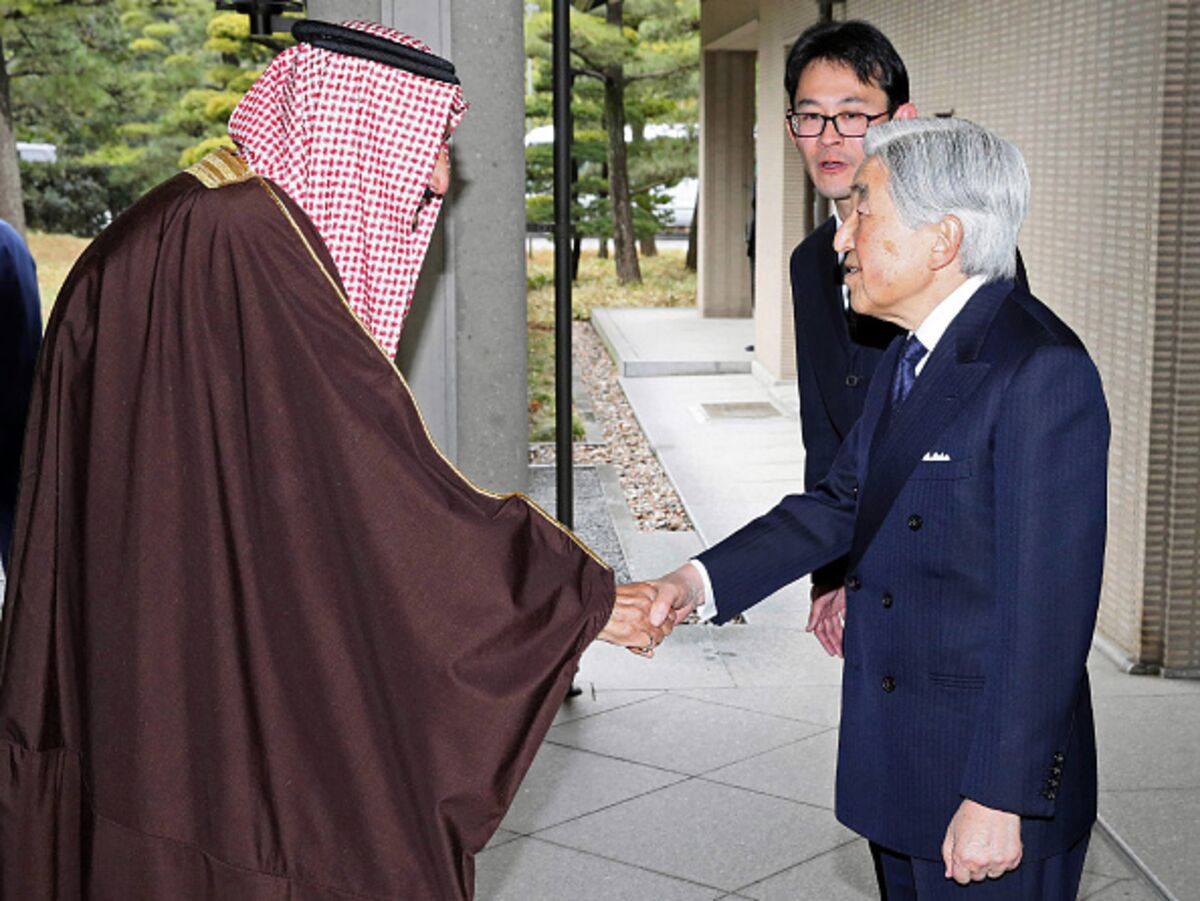
King Salman bin Abdulaziz’s trip to Asia has been characterized as either a routine visit to bolster the already strong trading ties between Saudi Arabia and Asia, an effort to diversify ties away from the U.S. or as a way to attract investments into Saudi Arabia and promote its own. The reality is that it’s a combination of all the above. Yes, oil is an important part of the story, but not the only part.
About two-thirds of Saudi Arabia’s oil exports end up in Asia. The perception in the Middle East is that the U.S. in recent years has de-emphasized the region while initiating a type of rapprochement with Iran. By initiating investment deals with Malaysia, Indonesia, Japan and China, Saudi Arabia is hoping to spark reciprocity and presence in Asia. The partnership between Saudi Arabia and Asia has been gaining in importance over the last decade, and strengthened in 2016 when Asia overtook the European Union to become the largest trading partner with the Gulf Cooperation Council.
Japan imports 83 percent of its oil from the Gulf, with more than a third sourced from Saudi Arabia. Both countries enjoy excellent diplomatic ties that date back to 1938 when Saudi envoys visited the country for the opening of a mosque in Tokyo. The Toyota Land Cruiser is the best-selling and most celebrated SUV in Saudi Arabia, and Toyota Motor was asked again to launch a feasibility study to produce certain vehicles in the nation.
For the Saudis, technology acquisition with high value added content is essential. Besides assembling vehicles which might take long to decide, if the right incentives are put in place, an SME sector in producing spare parts for the global vehicle industry could be a viable alternative.
The visit to Japan was also about getting Saudi Aramco listed on the Tokyo Stock Exchange once it sells shares to the public. Competition from other exchanges such as those in New York, London, Hong Kong and Singapore is fierce for what could be world’s largest ever initial public offering.
China’s role and influence in global markets is a big lure to Saudi Arabia. It is the world’s largest energy consumer and the second-biggest importer of crude, after the U.S. Just like the Japanese, China is driven by its need to secure sources of energy. That gives Saudi Arabia an opportunity to solidify its market presence in Asia amid rising competition from Russia. Although Saudi Arabia now ships more of its oil to China than the U.S., China now buys more of its oil from Russia than Saudi Arabia. While in China, King Salman oversaw the signing of $65 billion of potential deals in everything from energy to manufacturing, and even a theme park. Although some analysts quickly dismissed the amount as little more than an eye-catching headline, it does serve signal a deepening of ties between the two countries.
More importantly, it is the first time specific bilateral targets and institutional channels have been set up for government entities to follow up, which will help in realizing these projects and agreements. Many of these investments will be spread over several years in order not to overburden the balance sheet of the state, especially its reserves, which help maintain the pegged currency. In its latest report, Fitch Ratings reiterated that the government’s balance sheet remains strong relative to “A” and “AA” peers.
It should be noted that China is increasingly thinking about a maritime commercial transport corridor to Europe. Chinese-built port installations are a core strategy, connecting the Indian Ocean, the Red Sea and the Suez Canal, culminating with Greece’s port of Piraeus, which, thanks to its new Chinese owners, is one of Europe’s largest and most efficient. Logistics is a key part of Saudi Arabia’s Vision 2030, with the nation seeking to raise its global logistics ranking to 25 by 2030 from 52 in 2016. More than 10 percent of global maritime trade passes through the Red Sea each year.
Saudi Aramco’s downstream expansion, which refers to the refining of petroleum crude oil, led the way in Indonesia and Malaysia. Unlike with Japan and China, the visit to Indonesia was the first for a Saudi monarch in 47 years. The $6 billion investment between Saudi Aramco and Pertamina was inked to expand an Indonesian oil refinery. In Malaysia, a $7 billion deal was finalized with state-owned Petroalim Nasional to develop an oil refinery and naphtha cracker as well as provide 70 percent of its crude requirements. This is slated as the largest Saudi Aramco investment outside the kingdom.
All this is not to say that Saudi Arabia is ignoring its old allies. As King Salman was visiting China, the deputy Crown Prince, Prince Mohammed bin Salman, went on a short visit to meet U.S. President Donald Trump. Some $200 billion in investments in the next four years were announced in a statement by the White House, focused on energy, industry, infrastructure and technology. For Saudi Arabia, both the U.S. and Asia bring unique cards on the table that would help diversify the kingdom’s economic diplomacy options.
9 Comments on "Saudis Thinking Beyond Oil in Asia Courtship"
Lucifer on Mon, 27th Mar 2017 5:31 pm
All these pretend deals will be useless, because the Arabs will crash and burn in a few years just like everyone else. In fact Saudi Arabia and the rest of the Middle East will become hell on earth before the rest of the world, with the heat and their rapidly growing populations.
If anyone wants to make a deal with me, then i’m open to some offers.
makati1 on Mon, 27th Mar 2017 6:38 pm
It appears that they are making investments in other countries to offset the decline in oil recovery. China is interested as a market for their goods and a safer neighborhood for the new Silk Road. Since the KSA could be selling oil for at least another 10-15 years, it is a win/win deal.
Interesting that the KSA is another old U$ ally moving away from the West and likely, from the dollar. The trend will continue.
Plantagenet on Mon, 27th Mar 2017 6:47 pm
People seem to have missed the last paragraph where the report says KSA committed to make $200 billion in investments in the US.
This is far far larger then any of the KSA investments mentioned in Asia.
Cheers!
Davy on Mon, 27th Mar 2017 6:58 pm
makati conveniently scanned over that tid bit
makati1 on Mon, 27th Mar 2017 7:18 pm
Follow-up:
“The Dollar Dump Begins: “China, Japan, Belgium, Switzerland and Saudi Arabia Have All Become Big Sellers””
http://www.shtfplan.com/headline-news/the-dollar-dump-begins-china-japan-belgium-switzerland-and-saudi-arabia-have-all-become-big-sellers_03272017
The slide is getting slipperier and slipperier….
Anonymous on Mon, 27th Mar 2017 8:07 pm
200 billion were *announced*, of course a retard like plant cant tell the difference between things that actually *have* occurred vs those that might, or might not. Even those that fancy themselves as having ‘exceptional’ reading skills, see what they want to see.
Don’t surprised if that 200 billion ‘investment’, if it ever materializes that is, will likely consist of buying more shitty amerikan weapon systems. So they can continue in their roll as proxies for war plans hatched by washingdum and Tel Aviv.
dooma on Tue, 28th Mar 2017 3:33 am
“Some $200 billion in investments in the next four years were announced in a statement by the White House, focused on energy, industry, infrastructure and technology”
Of course they were. How about some details please? You going to tell me that you believe that everything is “on the table”. Trump promised to “make America great again”.
Talk is cheap.
dooma on Tue, 28th Mar 2017 3:39 am
Here is your 200 billion of POTENTIAL deals
http://www.cnbc.com/2017/03/15/trump-saudi-deputy-prince-discuss-new-economic-deal-white-house.html
Remember: Individual results may vary.
Cloggie on Tue, 28th Mar 2017 6:12 am
Fascinating new map of what is going on militarily in Syria:
http://tinyurl.com/llufr8l
– ISIS looks like it is on the way out, both in Syria and Iraq
– The big winners seem to be the Kurds, who could form the embryo of a Kurdish state. They now have as much Syrian territory as Assad has.
– Turkey hates what the Kurds are doing in Syria; Turkey could fall apart and lose 1/3 of its own territory to the Kurds.
– Assad has all the big cities under control.
– The Iraqi army will likely soon retake Mosul.
– Assad will probably hold on to Palmyra, helped by Russian air support.
– The coming big conflict could become Turks-Kurds, eclipsing the conflict Assad-rebels.
https://www.libertarianinstitute.org/scotthortonshow/32217-patrick-cockburn-ending-syrias-civil-war-assad-still-power/