
Peak Oil is You

Donate Bitcoins ;-) or Paypal :-)


Page added on August 12, 2016

Saudi-Iran Oil Rivalry Heats Up As OPEC Seeks To Stabilize Price
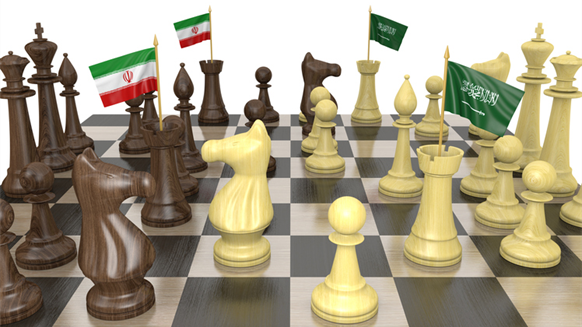
Saudi Arabia and Iran are giving no ground in their market share war, just days after OPEC announced an informal meeting to discuss ways to stabilize falling prices.
Oil’s return to a bear market last week prompted a flurry of words from members of the Organization of Petroleum Exporting Countries. The group’s president Mohammed Al Sada announced plans on Monday to hold an informal meeting in Algiers next month to discuss stabilizing the market, while Venezuelan President Nicolas Maduro said Tuesday he spoke to Saudi Arabia’s king about boosting prices.
The actions of some of the group’s biggest producers, however, were distinctly bearish. Saudi Arabia, the world’s largest crude exporter, boosted oil output to a record 10.67 million barrels a day in July, according to OPEC data published Wednesday. In Iran, production has risen to 3.85 million barrels a day — the highest since 2008 — according to comments from Oil Minister Bijan Namdar Zanganeh reported by the Fars news agency.
“It only gives one signal to the markets, that the Saudis are not here to scale back, especially in the face of Iranians bringing more oil to the market,” Abhishek Deshpande, an analyst at Natixis SA in London, said in a Bloomberg television interview. When OPEC meets in September “I doubt there’s going to be any concrete agreement.”
Summer Surge
Saudi Arabia typically pumps more oil in the summer to meet higher domestic energy demand from air conditioning. The kingdom is also engaged in a battle for market share with rival Iran and has cut prices to its customers in Asia, the biggest market for both exporters. Kuwait on Wednesday also cut its pricing to Asia, widening the discount to the regional benchmark to $2.65 a barrel for September from $1.70 a barrel in August.
Iran is pushing for a longer-term increase in its output following the loosening of international sanctions in January. The nation approved a new model for oil contracts on Aug. 3 and the government hopes foreign companies will invest as much as $50 billion a year in its oil industry. Production will expand to 4.6 million barrels a day in five years, Oil Minister Zanganeh told parliament, according to Fars.
Output Cap
OPEC’s smaller members have driven calls to cap the group’s output after prices began to slump in 2014. President Maduro of Venezuela, the sixth-largest producer in the group, is reaching out to the heads of state of fellow producers Saudi Arabia, Russia, Iran and Qatar to stabilize prices that fell to a four-month low last week.
A similar effort to freeze output in April collapsed after Saudi Arabia demanded that Iran be part of the deal. At the group’s June meeting, another proposal for production targets went nowhere. Iran opposed any limits on its production then and is still seeking to reclaim its pre-sanctions share of OPEC’s total output before joining any freeze, according to an OPEC delegate who asked not to be identified.
OPEC nations aren’t pushing to revive the aborted April proposal, two delegates from the group said last week, and analysts don’t expect any deal to be reached in September.
The interventions from Maduro and Al Sada, who is also Qatar’s energy minister, were prompted by renewed weakness in global oil markets. This market lull may persist as demand slows seasonally and fuel inventories remain abundant, OPEC said in its monthly report Wednesday.
Brent futures traded at $44.26 a barrel on the ICE Futures Europe exchange in London at 5:10 p.m. Wednesday, erasing this week’s increase. The international benchmark fell as low as $41.51 a barrel last week.
“These planned OPEC discussions may be viewed by some as a cheap possibility to try and stabilize the market,” said Eugen Weinberg, head of commodities research at Commerzbank AG in Frankfurt. “It’s more likely to be a way of further destroying the market’s confidence in OPEC, as the organization cries wolf once again.”
5 Comments on "Saudi-Iran Oil Rivalry Heats Up As OPEC Seeks To Stabilize Price"
Plantagenet on Fri, 12th Aug 2016 6:34 pm
With both Iran and Saudi pumping full out, the oil glut has farther to run. US oil production is down about a million bbls/day, dropping from 10 to ca. 9 million bless/day, but its not enough to bring the market back into balance.
Cheers!
GregT on Fri, 12th Aug 2016 7:52 pm
RIGPORN.
Truth Has A Liberal Bias on Fri, 12th Aug 2016 9:48 pm
I’d like to once again thank Plant for pointing out the painfully obvious. Retard.
yoshua on Sat, 13th Aug 2016 10:33 am
So if this planet had 1.7 trillion barrels of conventional crude oil originally that was economically extractable and we now have consumed 1.4 trillion barrels, which leaves us with 300 billion barrels left to burn, or 15 years with todays production of 20 billion barrels of conventional crude oil a year… then this geopolitical theater in the Middle East can only go on for a few more years before the lights are turned off.
joe on Mon, 15th Aug 2016 1:33 am
Opec wont save the oil industry, the reason is because oil is incorrectly used by oilistans. Ever since nationalisation of m.e oil the nations there didnt invest properly, instead of selling to meet market demand (which only came from the west) they used it to industrialise their own countries (or squandered it on gold and show mosques in Saudi Arabias case), sadly they need an ever greater portion of their own drug to keep the lights on. Socialism and no birth control is having its inevitable effect. Oil will choke them to death, to use an image they might understand, oil is God’s weapon against ignorant and sinful nations to exploit their greed and destroy them. They fight each other over religion, this is their first sin, its jealousy is what caused the first murder and this is their undeniable sin against God and God knows them, thats why the world today fills with people that resources cant really support. None of them really love God, if they did they wouldnt offend him by dressing in silk and destroying His planet. Its easier for hypocrites to point fingers rather than examine themselves and define the truth of what is really happening.