
Peak Oil is You

Donate Bitcoins ;-) or Paypal :-)


Page added on May 13, 2015

Saudi claims oil price strategy success
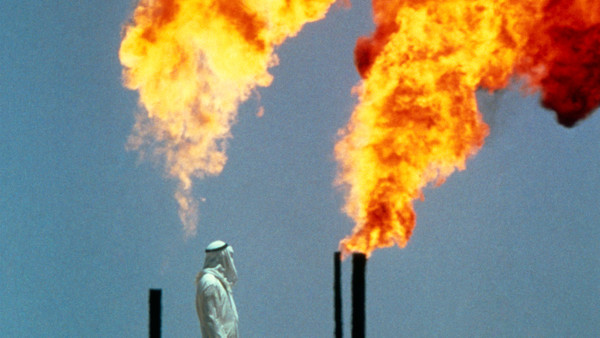
Saudi Arabia says its strategy of squeezing high-cost rivals such as US shale producers is succeeding, as the world’s largest crude exporter seeks to reassert itself as the dominant force in the global oil market.
The kingdom’s production rose to a record high of 10.3m barrels a day in April and there is no sign that it plans to reverse its policy at next month’s meeting of Opec, the producers’ cartel, in Vienna.
“There is no doubt about it, the price fall of the last several months has deterred investors away from expensive oil including US shale, deep offshore and heavy oils,” a Saudi official told the Financial Times in Riyadh, giving a rare insight into the kingdom’s thinking on oil strategy.
The International Energy Agency, the world’s leading energy forecaster, on Wednesday released data backing up the Saudi position. The agency said that with the number of rigs running in the US plunging by 60 per cent in response to lower oil prices, US shale oil production had “buckled” in April, “bringing a multiyear winning streak to an apparent close”.
But the IEA also cautioned that it would be “premature” to suggest that Opec had “won the battle for market share”. It said global crude supply was growing, even from high-cost areas such as Brazil, as well as from other Opec member states such as Iran and Iraq.
However, the Saudi official said he expected the kingdom to maintain its dominance of global energy, despite the growth of alternatives to fossil fuels and competition from rival oil producers within Opec and beyond. “Saudi Arabia wants to extend the age of oil,” he said. “We want oil to continue to be used as a major source of energy and we want to be the major producer of that energy.”
The official was speaking nearly six months after Opec, which is led by Saudi Arabia, took its landmark decision to keep output steady in the face of rising supply from rivals, rather than play its traditional role of cutting production to support prices.
The decision triggered a fresh fall in the oil price, throwing the budgets of the poorest exporter countries into disarray and forcing international energy companies to slash spending, drilling and jobs.
Saudi officials later explained that the policy was designed to put pressure on producers that require a higher oil price to be economic such as US shale drillers and companies operating in Brazil’s offshore fields. These they believed would be the first to collapse in a survival of the fittest as prices plunged.
Expectations are already rising that the market could soon start to tighten by midyear. The IEA said on Wednesday that was one of the reasons for the recent rally in the oil price: having crashed from $115 a barrel last June to almost $45 in January, Brent, the international crude benchmark, is now back up at around $68.
The Saudi official said the price of oil had now “reached a bottom” and it “doesn’t look like it is going back”.
But experts say it is too soon to say whether Saudi Arabia is succeeding in increasing its market share. Data from 2011-14 show that while its share of imports to India and Japan has grown, in China it has lost out to Opec peers Iran and Iraq.
US shale producers would also disagree that Saudi Arabia has succeeded in squeezing them. The US oil industry has slowed down: but EOG Resources, the country’s largest shale oil producer, has forecast a return to “double-digit” production growth if the US benchmark, West Texas Intermediate, rises to $65 per barrel or higher. It is currently trading at around $61.
The Saudi official admitted “increased efficiencies” were likely as US shale and other producers adjusted to lower prices. He also said the impact of the price rebound was still “unknown” and “there is not yet any clarity on the US supply curve and drivers”.
The comments from Riyadh come with the Saudi oil sector facing deep uncertainty in the wake of sweeping changes to the governance of the oil ministry and the state energy company Saudi Aramco by King Salman, who ascended to the throne in January.
Some oil sector observers in Saudi Arabia say that King Salman’s accession increased pressure on veteran oil minister Ali Al Naimi and the advocates of his oil production strategy to reaffirm their position.
15 Comments on "Saudi claims oil price strategy success"
joe on Thu, 14th May 2015 8:39 am
Today’s weather will be foggy. Forecast, outlook good, temperatures rising steady with little chance of rain. Hmm, Obama calls the Saudis to heel with this oil stuff and they won’t go. The US can close the world’s oil supply based on weather or not it delivers Saudis next satalite Intel or next batch of bombs, and the so called king gets to keep his throne another while. Saudi needs the US more than it needs them. The logic is becoming clear. They flooded the market because they knew they would invade yemen and they didn’t want scare the markets. Probably it’s much less to do with market share, than market stability. They expect this war to go on, so they will keep pumping as fast as they can to both pay for it and prevent nations seeking other more predictable supplies. Yemen poses a threat to Saudi not because of Iran, but because in Yemen the ‘Houthi’ movement was mixed sunni and shia. A success like that if copied in the Kingdom would surely spell it’s doom. Now who knows what will happen. Yemeis Probably don’t know what is going to happen. Al qaeda have a base there now, no doubt they will get money take over a base which unfortunately was left full of brand new arms and trucks and rampage all over the place…..
shortonoil on Thu, 14th May 2015 11:02 am
“The kingdom’s production rose to a record high of 10.3m barrels a day in April and there is no sign that it plans to reverse its policy at next month’s meeting of Opec, the producers’ cartel, in Vienna.”
The Kingdom has claimed for years that it had the capacity to produce a sustained 12.5 mb/d. If their intent is to shake out high cost producers, where is it ?
We think that they know that the long term price of oil is down, and it is in their best interest to sell all that they can now, before it gets any lower.
http://www.thehillsgroup.org/depletion2_022.htm
Nothing else makes any sense?
http://www.thehillsgroup.org
nony on Thu, 14th May 2015 11:17 am
Peaked predicted Saudi Arabia would be way down from 2006 numbers of 8 or so. Instead we are plus 10.
GregT on Thu, 14th May 2015 12:41 pm
The faster a finite resource is consumed Nony, the sooner it completely runs out.
It isn’t rocket science.
Davy on Thu, 14th May 2015 12:52 pm
So NOo, corn huskers predicted 12. What is the difference between errors. You are always ready to bash failed peaker predictions but never admit to corn husker’s failed predictions that far outnumber peaker failed predictions.
BobInget on Thu, 14th May 2015 2:26 pm
Sounds to me like The House of Saud just declared victory…
The problem for anyone poking a hornet’s nest is have a get-away-plan in place, BEFORE hitting that nest with a big stick.
To say KSA’s Yemen attacks (they continue)
were ill advised, has to be THE grand understatement. KSA totally fucked up.
There is NO un-ringing that bell.
Do they expect once bombing stops, all is forgiven? No Muslim nationality forgets. Revenge may take a week or a year
but bet your knickers. These guys are still duking out 600 years old disputes.
All the German tanks in the world won’t stop
religious fanatics scheming revenge for lost
comrades, brothers, mothers, factories, schools, hospitals, ports.
Saudi citizens honed asymmetric warfare
on Russians, perfected it on Americans, practiced it on Iraqis, Sudanese and Syrians.
Now, it’s Royal’s turn in the barrel.
Outcast_Searcher on Thu, 14th May 2015 2:29 pm
Shortonoil produces two links to bolster his/her assertion that oil prices are going down long term.
The first is nonsensical. If you completely ignore supply/damand, then you are talking wishful thnking or rainbows instead of micro-economics.
The second says nothing that anyone who subscribes to ANY kind of peak oil related board and does some occasional reading doesn’t already know.
So if getting SOME oil shale to be shut in, in the SHORT term, is your definiton of success (even as oil rises 40% as investors smell how temporary the effect is), then, fine.
However, long term NOTHING has changed on the DEMAND side of the equation. The third world, led by Chindia, continues to create new long term oil customers (drivers) in droves.
Investors can be patient. If no meaningful changes actually occur in the supply/demand equation, it’s all short term noise.
Physics. It’s something that must be reckoned with in the next century. I’m willing to bet that the long term (let’s call that for the next 30 to 50 years) price of oil is more likely UP, given physical and political realtiies.
GregT on Thu, 14th May 2015 2:44 pm
“However, long term NOTHING has changed on the DEMAND side of the equation.”
Nothing? One more reason why the eCONomists are so wrong. They fail to understand how energy drives economic growth.
http://ourfiniteworld.com/2013/01/24/how-high-oil-prices-lead-to-recession/
Davy on Thu, 14th May 2015 3:01 pm
Outcast, you sound very smart so can you explain all the debt creation? If demand is so good why are there all these central bank induced bubbles? Is this good demand or just a big waste of resources IOW mal-investment. Why is China on the brink of 3% or less real growth.
Demand and supply the magic word of the high priests of disaster. I will stay with Short and his physics over the eConomists of doom supply and demand curves.
Nony on Thu, 14th May 2015 4:03 pm
Davy, I admit that cornies did not predict the very significant high prices and short supply of 2006-2014.
(I have actually admitted it before, many many many times. But it just rocks your world to see someone who is not one dimensional.)
Nony on Thu, 14th May 2015 4:10 pm
Did shortonoil predict the price drop before? I am too lazy to order his DEC2013 study, but the graphs seem to emphasize price rise, not drop.
http://www.thehillsgroup.org/depletion2_010.htm
(seems strange to be in nominal vice real dollars also.)
BobInget on Thu, 14th May 2015 4:52 pm
Nony,
One reason oil price predictions are impossible might be because like polished gemstones, there are hundreds of surfaces, (facets) each one reflecting different images.
Folks like shortonoil (and company) think
vertically, excluding a thousand and two
extraneous events, analogous belief systems,
even climate changes in their analysis.
Others believe ‘market forces’ moving commodities priced by the 60 minute hour, regardless of real life.
Traders are constantly second guessing markets.
When a single direct missile strike can change entire courses of history, it’s
clearly best to turn over and over that
gem stone looking carefully for flaws.
Davy on Thu, 14th May 2015 5:07 pm
Bob, there is more to life than economics. There is something called physics and geology. Corns don’t like to talk about science because it does not fit into there contangos and inelastic supply and demand curves.
Short is laying out an underlying law of nature demonstrating geologic depletion. You can have your gemstone but you can’t keep it because it is withering away. So enjoy while it last corn buskers everyday there is less.
shortonoil on Thu, 14th May 2015 5:26 pm
“Did shortonoil predict the price drop before?
We made the projection of a price decline in May 2014, and put this graph up in September. The date is on the second graph of this page:
http://www.thehillsgroup.org/depletion2_022.htm
You knew that already Nony, it has been mentioned here dozens of times. It has been explained ad nausea, over and over again. Why don’t you stop making a complete idiot of yourself by attempting to advance a point that is not defensible. WTI is $59.69, and a third of the world’s producers are losing money on every barrel they produce. That is a situation that is not going to change until they have stop producing, period.
Nony on Thu, 14th May 2015 5:53 pm
So you didn’t see it in DEC 2103? In your big study?