
Peak Oil is You

Donate Bitcoins ;-) or Paypal :-)


Page added on February 22, 2016

Saudi Arabia’s Misguided Oil Strategy
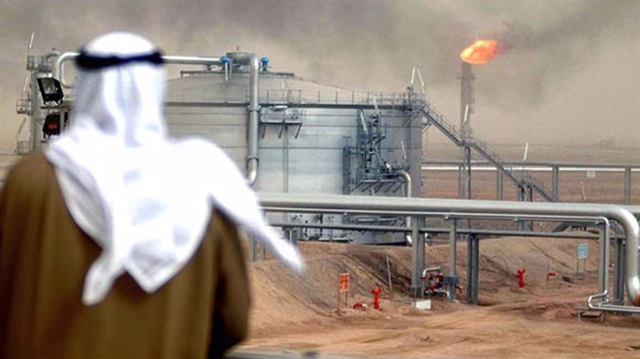
Saudi Arabia has been instrumental in the collapse of crude oil prices by refusing to cut production and prevailing on OPEC to follow suit. This has so far inflicted incalculable damage on the global economy
Saudi Arabia took a huge gamble by flooding the global oil market with crude oil with the intention of defending and enhancing its market share at the expense of its rivals such as Russia, Iran and Iraq and slowing down if not killing US shale oil production. This is a defunct policy which had been tried by former Saudi oil minister Sheikh Ahmad Zaki Yamani in the early 1980s and found wanting.
Saudi Arabia’s misguided oil strategy is already adversely affecting its economy, financial reserves and its currency. Rapid depletion of Saudi foreign exchange funds is rather alarming. During 2015 these funds dropped from $732 billion to $623 billion in less than 12 months. In addition, the Saudi 2016 budget showed a huge deficit of $134 billion. Moreover, intense pressure is growing on the Saudi Riyal for possible devaluation or even floatation.
Dr. Khalid Al Sweilem, former Chief Counsellor and Director General of Investment at the Saudi Arabian Monetary Agency (SAMA) and now a non-resident fellow at Harvard Kennedy School’s Belfer Centre for Science and International Affairs, said that the Saudi government took a huge gamble when it flooded the global oil market with crude oil to push out its rivals like Iran and Russia and enhance its market share. He described the policy of flooding the market with the intention of killing US shale oil production as an empty talk and that it will never succeed saying Saudi Arabia does not have very deep pockets to continue the oil war against others.
Saudi global oil strategy is currently driven by four major objectives. First is defending and enhancing the country’s oil market share. Second is damaging Iran’s economy in its undeclared war on Iran because of its nuclear program and its involvement in Syria. The third objective is pre-empting Iran’s and Iraq’s expected demand for bigger OPEC production quotas and the fourth objective is slowing down, if not killing, US shale oil production.
The first objective is defending and enhancing the country’s market share. Saudi oil minister Mr. Ali Al-Naimi said Saudi Arabia and OPEC were defending their market share. “If they cut their production, the price will go up and the Russians, Brazilians and US shale oil producers will take Saudi and OPEC share.” However, neither Russia nor Brazil nor the United States are in a position to usurp any market share from Saudi Arabia or OPEC. Russia can’t raise its production beyond the current level of 11 million barrels a day (mbd) so it can’t expand its market share at the expense of Saudi Arabia and OPEC. Brazil is struggling even to meet its oil needs whilst US shale oil production is in decline and could hardly increase further, let alone expand its market share.
Saudi financial expert Dr. Khalid Al Sweilem warned that the Saudi Riyal is currently under intense pressure and said there is a real possibility of devaluing the Saudi Riyal or floating it in view of continued decline of crude oil prices and rapid depletion of Saudi financial reserves. He said there is now a dangerous loss of confidence in the Saudi riyal.
The second objective is damaging Iran’s economy. Saudi Arabia has been waging a proxy war against Iran not only because of its nuclear program but also because of its involvement in Syria and the rivalry between them for pre-eminence in the Gulf region and in OPEC. By flooding the oil market, it caused a steep decline in oil prices with the objective of harming Iran’s economy, which is still suffering from the sanctions.
Saudi leaders fear that Iran could seek to mobilize the Shiite minority in Saudi
Arabia to create political turmoil and even, in time of great tension between the two countries, sabotage main oil and gas production assets in the eastern region of Saudi Arabia.
The third objective is pre-empting a demand by Iran and Iraq for bigger production quotas inside OPEC. Even before sanctions are lifted, Iran is already demanding a higher production quota from OPEC. However, it is very unlikely that Saudi Arabia and its allies inside OPEC will agree to that. They will argue that Iran has not managed to achieve its production quota of 4 mbd since 2000 and, therefore, there is no justification for acceding to its demand for a bigger quota.
Then there is Iraq, whose production has now exceeded 4.18 mbd, with exports rising to a record 3.28 mbd. With political stability and continued investments, Iraq is capable of producing 7-8 mbd by 2020/2021, thus emerging as the biggest rival to Saudi Arabia.
A fourth objective of Saudi oil strategy is their intention to slow if not kill US shale oil production altogether. But rather than kill US shale oil, the Saudis have only made it more resilient. The break-even price for US shale oil production is reported to have declined in some of their oil shale plays from $70-$85/barrel to an estimated $60 per barrel now and before long it could even fall to $50.
What could eventually kill US shale oil production is not Saudi Arabia or OPEC, but geology and the rising debt of shale oil producers amounting to $170 bn. Shale oil wells experience much faster decline rates than conventional oil wells, as much as 70%-90% in the first year of production. This means shale oil producers must replace 40%-45% of current production each year just to maintain production. The US will need to drill more than 9,000 wells annually, at a cost of more than $50 billion, to counterbalance production declines.
Still, shale oil is a fact of life. Once oil prices start to rise, shale oil will be back in the market at full strength.
Instead of waging oil wars, Saudi Arabia should deal with the real explosive challenges facing it, such as high levels of unemployment among young Saudis and the need to create at least 3 million new jobs by 2020, in addition to diversification of the economy and elimination of wasteful subsidies. All these issues need relatively high oil prices to finance them.
13 Comments on "Saudi Arabia’s Misguided Oil Strategy"
tita on Mon, 22nd Feb 2016 6:18 pm
Turkish newspaper bashing KSA. And anyway, why would they do what all the others won’t do.
Nony on Mon, 22nd Feb 2016 6:53 pm
Never bet against American ingenuity. Most shale oil is profitable at $20/barrel.
rockman on Mon, 22nd Feb 2016 7:07 pm
tita – Amazing isn’t: so many folks think they are so much smarter then the rulers of the KSA. They don’t hesitate to explain how ignorant the kingdom is to not understand the simplistic stupidity of INTENTIONALLY forcing the price of oil down. You have to wonder if they really believe they think they understand the dynamic better.
And why focus on the KSA and not Russia? Why don’t the talk about the “foolishness” of that country for not cutting its oil production? After all Russia isn’t nearly as dependent as the KSA is on oil export revenue.
Of course neither country can afford to cut production. The oil sellers have never controlled the oil price…just the amount they sell. The oil price today is based upon what the refineries estimate they can sell their products to their customers. And those customers pay only what they can afford. Reducing the amount of oil in the market place isn’t going to create customers that can afford to pay more. What it would do is eliminate the less capable buyers while the more affluent could pay a higher price. But selling less oil at a higher price is no guarantee of producing a large GROSS REVENUE. What matters most to the KSA is it’s total rervehue and not the price it sells oil. Which is exactly why the lower price consumers are willing to pay has forced the kingdom to sell a lot of oil to max its revenue.
rockman on Mon, 22nd Feb 2016 7:16 pm
Of course most shale oil is profitable at $20/bbl. That’s why the play boomed long before 2008 when we knew the oil was there, had the tech to produce it and oil was at the current price. And that’s also why we have over 1600 rigs drilling shales today since the current oil price is 50% higher then the $20/bbl price that “most shale oil is profitable “. LOL.
Nony on Mon, 22nd Feb 2016 7:51 pm
It’s not me, Rock. It’s some peaker yipyap stealing my login. I don’t think most shale is profitable at $20.
[I do think it was profitable at $100. And that is why $$ flowed in from 2010-2014. This in contravention to peakers who thought it was all some conspiracy.]
Nony on Mon, 22nd Feb 2016 7:52 pm
shale gas is interesting case, where you can’t really make the case that we knew all about it and only produce it because of high prices. The Marcellus has outcompeted conventional gas and has caused long term prospects for NG to be low price.
Apneaman on Mon, 22nd Feb 2016 8:35 pm
All hail shale! The cancer monkeys are doing everything they can to speed up their kids and grandkids doom just to maintain a dying system and thus their status for an extra decade. The sooner TSHTF the better. Let the Boomer fucks who are the biggest beneficiaries and most guilty suffer the consequences too.
A large increase in US methane emissions over the past decade inferred from satellite data and surface observations†
http://onlinelibrary.wiley.com/doi/10.1002/2016GL067987/abstract
JuanP on Mon, 22nd Feb 2016 8:45 pm
Skip this one, it is nothing but crap!
JuanP on Tue, 23rd Feb 2016 8:54 am
Cheap oil threatens UK’s North Sea production, https://www.rt.com/business/333355-north-sea-oil-decline/
ghung on Tue, 23rd Feb 2016 9:03 am
British oil industry warns it may collapse
“The future of Britain’s offshore oil industry hangs in the balance as losses mount and investment collapses.
A new report by Oil & Gas UK predicts that 43% of British oil fields in the North Sea will lose money this year if oil prices remain around $30 per barrel.
The trade association expects spending on new oil projects will fall below £1 billion ($1.4 billion) in 2016, compared to £8 billion ($11.3 billion) in a typical year.
“We are an industry at the edge of a chasm,” said Deirdre Michie, CEO of Oil & Gas UK, in a statement…..”
JuanP on Tue, 23rd Feb 2016 9:07 am
OPEC doubts it can live with US shale, https://www.rt.com/business/333334-opec-us-oil-negotiations/
Davy on Tue, 23rd Feb 2016 9:30 am
More bank dirty laundry from exposure to oil patch impairments.
http://www.zerohedge.com/news/2016-02-23/jpmorgan-just-sounded-500-million-alarm-bell-americas-dying-oil-patch
JuanP on Tue, 23rd Feb 2016 10:03 am
North Sea oil investments collapsing, http://www.telegraph.co.uk/business/2016/02/23/north-sea-oil-investment-to-slump-90pc-this-year-as-losses-mount/