
Peak Oil is You

Donate Bitcoins ;-) or Paypal :-)


Page added on August 7, 2013

Peak oil, climate change and pipeline geopolitics driving Syria conflict
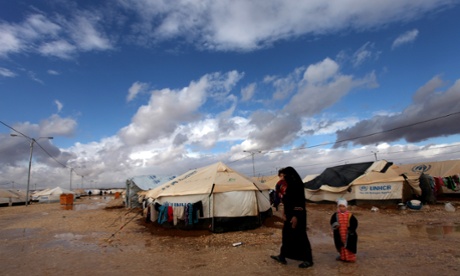
Root-cause environmental and energy factors sparking violence will continue to destabilise Arab world without urgent reforms
The civil war in Syria has been devastating, generating a death toll fast approaching 100,000, while uprooting millions of civilians from their homes.
But as the US and Russia signed an unprecedented accord on Wednesday in search of a political solution to an increasingly intractable conflict, its underlying causes in a fatal convergence of energy, climate and economic factors remain little understood.
The UN high commissioner for human rights has offered a conservative under-estimate of the death toll at about 70,000 people – accompanied by over 1 million Syrian refugees in neighbouring countries and more than 2 million people internally displaced. According to another independent study, about 79% of confirmed victims of violence in Syria have been civilians.
Although opposition fighters have been implicated in tremendous atrocities, international observers universally confirm the vast bulk of the increasingly sectarian violence to be the responsibility of Bashir al-Assad’s regime.
Yet the conflict is fast taking on international dimensions, with unconfirmed allegations that rebel forces might have used chemical weapons following hot on the heels of US-backed Israeli air strikes on Syrian military targets last weekend.
But the US, Israel and other external powers are hardly honest brokers. Behind the facade of humanitarian concern, familiar interests are at stake. Three months ago, Iraq gave the greenlight for the signing of a framework agreement for construction of pipelines to transport natural gas from Iran’s South Pars field – which it shares with Qatar – across Iraq, to Syria.
The Memorandum of Understanding (MoU) for the pipelines was signed in July last year – just as Syria’s civil war was spreading to Damascus and Aleppo – but the negotiations go back further to 2010. The pipeline, which could be extended to Lebanon and Europe, would potentially solidify Iran’s position as a formidable global player.
The Iran-Iraq-Syria pipeline plan is a “direct slap in the face” to Qatar’s plans for a countervailing pipeline running from Qatar’s North field, contiguous with Iran’s South Pars field, through Saudi Arabia, Jordan, Syria and on to Turkey, also with a view to supply European markets.
The difference is that the pipeline would bypass Russia.
Qatar, Saudi Arabia and Turkey have received covert support from Washington in the funneling of arms to the most virulent Islamist elements of the rebel movement, while Russia and Iran have supplied arms to Assad.
Israel also has a direct interest in countering the Iran-brokered pipeline. In 2003, just a month after the commencement of the Iraq War, US and Israeli government sources told The Guardian of plans to “build a pipeline to siphon oil from newly conquered Iraq to Israel” bypassing Syria.
The basis for the plan, known as the Haifa project, goes back to a 1975 MoU signed by then Secretary of State Henry Kissinger, “whereby the US would guarantee Israel’s oil reserves and energy supply in times of crisis.” As late as 2007, US and Israeli government officials were in discussion on costs and contingencies for the Iraq-Israel pipeline project.
Syria’s dash for gas has been spurred by its rapidly declining oil revenues, driven by the peak of its conventional oil production in 1996. Even before the war, the country’s rate of oil production had plummeted by nearly half, from a peak of just under 610,000 barrels per day (bpd) to approximately 385,000 bpd in 2010.
Since the war, production has dropped further still, once again by about half, as the rebels have taken control of key oil producing areas.
Faced with dwindling profits from oil exports and a fiscal deficit, the government was forced to slash fuel subsidies in May 2008 – which at the time consumed 15% of GDP. The price of petrol tripled overnight, fueling pressure on food prices.
The crunch came in the context of an intensifying and increasingly regular drought cycle linked to climate change. Between 2002 and 2008, the country’s total water resources dropped by half through both overuse and waste.
Once self-sufficient in wheat, Syria has become increasingly dependent on increasingly costly grain imports, which rose by 1m tonnes in 2011-12, then rose again by nearly 30% to about 4m in 2012-13. The drought ravaged Syria’s farmlands, led to several crop failures, and drove hundreds of thousands of people from predominantly Sunni rural areas into coastal cities traditionally dominated by the Alawite minority.
The exodus inflamed sectarian tensions rooted in Assad’s longstanding favouritism of his Alawite sect – many members of which are relatives and tribal allies – over the Sunni majority.
Since 2001 in particular, Syrian politics was increasingly repressive even by regional standards, while Assad’s focus on IMF-backed market reform escalated unemployment and inequality. The new economic policies undermined the rural Sunni poor while expanding the regime-linked private sector through a web of corrupt, government-backed joint ventures that empowered the Alawite military elite and a parasitic business aristocracy.
Then from 2010 to 2011, the price of wheat doubled – fueled by a combination of extreme weather events linked to climate change, oil price spikes and intensified speculation on food commodities – impacting on Syrian wheat imports. Assad’s inability to maintain subsidies due to rapidly declining oil revenues worsened the situation.
The food price hikes triggered the protests that evolved into armed rebellion, in response to Assad’s indiscriminate violence against demonstrators. The rural town of Dara’a, hit by five prior years of drought and water scarcity with little relief from the government, was a focal point for the 2011 protests.
The origins of Syria’s ‘war by proxy’ are therefore unmistakeable – the result of converging climate, oil and debt crises within a politically repressive state, the conflict’s future continues to be at the mercy of rival foreign geopolitical interests in dominating the energy corridors of the Middle East and North Africa.
But whoever wins this New Great Game, the Syrian people will end up losing.
As other oil exporters in the region approach production limits, and as climate change continues to wreak havoc in the world’s food basket regions, policy makers should remember that without deep-seated transformation of the region’s political and economic structures, Syria’s plight today may well offer a taste of things to come.
4 Comments on "Peak oil, climate change and pipeline geopolitics driving Syria conflict"
Arthur on Wed, 7th Aug 2013 1:02 pm
Article date May 13, 2013, three weeks before the Egyptian army toppled Morsi.
So an important aspect of the Syrian conflict is, who will be so priviliged to be able to deliver gas from the same Pars gas field to the EU markets: Iran or Qatar or will Russia retain it’s near monopoly?
“But whoever wins this New Great Game, the Syrian people will end up losing.”
That is true and the reason why a majority of the population still backs Assad, because if Assad falls, Syria will fall apart and the remaining parts up for grabs for foreigners, first and foremost Turkey. But that is going to happen anyway in the not too distant future.
Another loser will be the US, that used proxy Qatar as the organizer of the uprising. But Qatar has an agenda of it’s own, apart from income from gas and is in line with the interests of the Muslim Brotherhood. Qatar supported Morsi, Saudi-Arabia did not. Now the US is in a terrible dilemma and has to consider the possibility that the consequences of a possible fall of Assad might be far worse than Assad remaining in power: the Sunni fundamentalist takeover of the entire Middle-East with Turkey in the driver seat. Turkey nominally is the ally of the US but in reality follows it’s own compass and is using the US to further it’s fundamentalist neo-Ottoman imperial agenda. The only real allies the US has in the ME is the House of Saud and the Egyptian army. The Turkish army has already been sidelined by Erdogan. For the moment it looks that in reality the US has already dropped the insurgents, although the US will not admit that yet. The new goal seems to be to splinter Syria, which could very well happen soon, but that vacuum will not continue to exist very long. But the main prize remains Saudi-Arabia, still the 2nd largest oil producer in the world.
bobinget on Wed, 7th Aug 2013 5:06 pm
Arthur, while the article is a bit dated on it’s death toll
numbers, this serves to point to the severity of this Proxy War.
To put this killing business in perspective and relevance to oil supplies, who are the ‘players’
willing to fight to the last Syrian?
Assad’s main backers are Russia and Iran.
Anti government forces are being armed by
Saudi Arabia. I suspect KSA is paying for and delivering
US made armaments to so called rebel forces.
While Jihadists from a dozen nations are joining the fight, soon most of the original rebel forces will have
sickened of fighting, been too severely injured or died.
At that point, AQ inspired insurgent forces will take the lead. (as we see, POTUS canceled his Moscow visit
today) that wasn’t all about Snowden but our upcoming last ditch effort to hold influence in Egypt and Yemen. Of course we will do whatever KSA demands on that front. Consult your atlas if you have a single doubt as to the importance of Yemen.
Almost totally ignored: the US battle to hold on to influence in Yemen. It will be there that we can expect to see a sizable number of US “Boots on the Ground”
Air-Power (drone attacks) alone are only serving to terrify the population and stiffen resolve of testosterone laden AQ inspired fighters.
Assuming Syria drag on like this for another year, AQ will target Yemen, trading on the unpopularity of American drone strikes.
In Egypt, it appears the army is tired of Islamic Brotherhood sit-ins and in the General’s view keeping the economy down. Armies will do what armies always do. How the Islamic/Arab world will react to the upcoming Syrian like slaughter will not be family fair.
Yes I agree with the article posted. Peak oil, climate change has changed everything for the worse.
Arthur on Wed, 7th Aug 2013 7:24 pm
“Almost totally ignored: the US battle to hold on to influence in Yemen.”
Yemen is a failed state and breeding ground for Jihadists. You can’t control a country with drones, most of which make innocent victims. Boots on the ground is an even worse idea. The US army can only successfully be used against other state run armies, like that of Saddam. The US army in the terminology of Bill Lind is a second generation army (like that of the former USSR), that in the long run always loses against fourth generation warfare of insurgents, like the Jihadists. We have seen it in Afghanistan (defeat both USSR and US), Iraq and anywhere else.
http://www.antiwar.com/lind/?articleid=1702
“In Egypt, it appears the army is tired of Islamic Brotherhood sit-ins”
I do not think that the Egyptian army will be all that keen to fly off the handle against it’s own population. Some sort of compromise seems more likely. But the future is for the MB and the Jihadists in the entire Middle-East, there can be not doubt about that. They have the revolutionaries, not the secularists.
“Consult your atlas if you have a single doubt as to the importance of Yemen.”
Yemen controls the entrance to the Red Sea and Suez canal, so yes it is of vital importance who rules there.
“Peak oil, climate change has changed everything for the worse.”
I do not think these are the driving factors, not yet. It is all about politics and religion and control over oil, not so much depletion or climate change.
BillT on Thu, 8th Aug 2013 12:20 am
It’s ALL about money and power … nothing else. The corporate elite are playing their ‘conquer the world’ game and we are the pawns.