
Peak Oil is You

Donate Bitcoins ;-) or Paypal :-)


Page added on March 30, 2011

Obama will say the U.S. must find a way to cut U.S. oil imports by one-third.
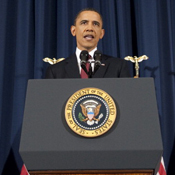
President Barack Obama, under pressure to respond to rising gas prices, will outline Wednesday a series of initiatives to cut the nation’s reliance on foreign oil, including new initiatives to expand oil production, increase the use of natural gas to power vehicles and increase production of ethanol.
Mr. Obama’s latest attempt to take the initiative on energy policy comes as Republicans in Congress are stepping up criticism of the administration for not allowing more oil and gas drilling in the United States. On Tuesday, House Republicans said they would introduce legislation requiring the administration to sell more offshore leases and to issue drilling permits within a set time frame.
The political heat over energy policy is rising in tandem with the price of gasoline and diesel fuels at filling stations, in a ritual that has become familiar in Washington since the oil price shocks of the mid-1970s. “We’ve been having this conversation for nearly four decades now,” Mr. Obama said during a March 11 news conference. “Every few years, gas prices go up; politicians pull out the same old political playbook, and then nothing changes.”
The White House will cast the new effort, a combination of new ideas and previously announced initiatives, as an effort to deal with the nation’s long-term energy challenge, not just the high gas prices of the moment.
Mr. Obama will put forward an overall goal of reducing oil imports by one third over a decade, with half the reduction from decreasing consumption and half from increasing domestic supply, according to two people briefed by the White House.
Driving the debate now is consumer grumbling about gasoline prices that are up nearly 15% on average since Feb. 7, according to the Energy Department. In some parts of the country, including southern California, gasoline prices have hit $4 a gallon — the highest levels since the gas price spike of 2008. Worries over rising prices for gasoline, food and other goods contributed to a sharp drop in consumer confidence in the economic outlook, which had been rebounding since the depths of the recession in 2009, the Thomson Reuters/University of Michigan Surveys of Consumers said in a report last week.
The administration on Tuesday sought to focus attention on oil companies, releasing a report from the Interior Department that said more than two-thirds of the offshore oil leases in the Gulf of Mexico and more than half of onshore leases on federal land are not in use. These leases give companies the right to drill, but are neither producing oil nor under active exploration, the agency said.
“This report shows millions of acres that have already been leased to industry for oil and gas productions sit idle,” Interior Secretary Ken Salazar said in a statement. Mr. Obama also raised the issue of unused leases in his March news conference, and his 2012 budget plan included an extra fee on oil companies that hold idle leases. That proposal would need congressional approval.
The plan being announced Wednesday will include “new and better incentives” to rapidly develop these areas, according to one person who was briefed.
Oil industry representatives say the administration’s complaints about unused leases ignore the reality of the oil exploration business, in which companies scour large areas in order to find the relatively few tracts with oil and gas reserves worth developing.
Republicans also have complained that the administration has dragged its feet in issuing permits for new domestic production since it formally lifted a deepwater drilling embargo in the Gulf after the BP oil spill.
“These bills will directly reverse Obama administration actions that have locked-up America’s vast offshore oil and natural gas resources,” Rep. Doc Hastings (R., Wash.), chairman of the House Natural Resources Committee, said in a statement accompanying the bills Republicans outlined on Tuesday.
As part of its effort to reduce oil demand, the administration plans to propose that the nation break ground on four new bio-fuel refineries to produce ethanol in the next two years, according to two people briefed on the plan. It’s not clear what incentives or financing the administration will propose for the bio-fuel initiative. The administration is also expected to back new subsidies for governments or companies to purchase vehicles that run on natural gas for their fleets, they said.
The administration has previously said it would continue ratcheting up fuel efficiency standards for cars and establish standards for heavy trucks.
Mr. Obama is expected to reiterate a proposal contained in his State of the Union address that the U.S. adopt a clean energy standard that would require that 80% of electricity be generated from clean energy sources by 2035. The administration has defined “clean energy” as nuclear power, natural gas and clean coal, as well as renewable sources such as wind and solar.
One Comment on "Obama will say the U.S. must find a way to cut U.S. oil imports by one-third."
James on Thu, 31st Mar 2011 8:22 am
Oil exploration has found most if not all of the homegrown oil reserves back in 1960. We peaked in oil production in the U.S. in 1970s. So, the only other source of oil we have left is off shore and stripper wells. We all know how the off shore thing went. Just like the incident in Japan, anything could happen that would allow another mishap to occur. Humans just can’t engineer every potential problem out of a system. Murphy’s Law prevails. Natural gas may be good for a decade or so, but it isn’t going to allow us to run our cars like we would with gasoline. Natural gas has to be liquified and store in pressurized tanks. Special dispensing equipment would be required and this means gas stations would have to incur great expenses digging up their underground gasoline and diesel holding tanks due to EPA regulations against unused tanks being left underground. Look for diminishing fueling stations around the neighborhood. Finally, with ethanol we are already experiencing food prices going up due to shortages. With more farmers changing the use of croplands used to grow food over to growing crops for ethanol, this will become problematical. The Opportunity costs will not allow this to happen. You either use land to grow food or you grow crops for ethanol production, you can’t do both on the same acre at the same time. Also, fertilizer is becoming a cost that a lot of farmers are having problems with, along with the costs of pesticides. All of these come from oil.