
Peak Oil is You
Donate Bitcoins ;-) or Paypal :-)


Page added on March 25, 2016

Can developing petrostates learn to live without oil?
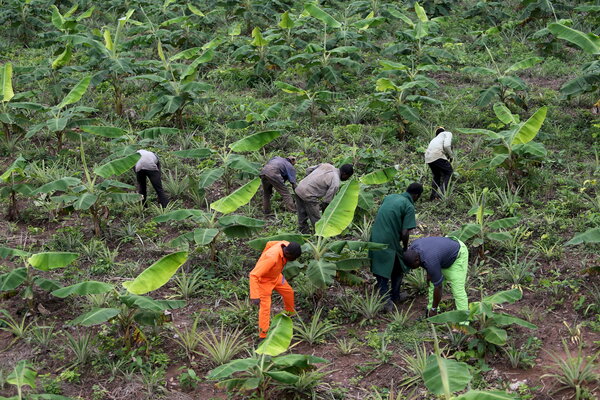
As oil prices have nosedived over the past 14 months, it hasn’t been only petrostates like Saudi Arabia and Russia feeling the crunch. Developing nations like Angola, Azerbaijan, Kazakhstan, and Nigeria are also struggling to balance their budgets as deficits grow and government incomes shrink.
In a bid to survive the slump, governments are experimenting with both austerity measures and fiscal stimulus. But policy maneuvers have their limits. After oil prices fell to $30 per barrel and below, many countries turned to international institutions like the World Bank and African Development Bank in search of emergency loans.
International loans can help close budget gaps temporarily, but relying on international aid and increasing government debt is hardly a sustainable economic solution. If oil prices remain low, countries that depend almost exclusively on oil exports to fund their budgets will be forced to find new ways to diversify their economies and increase revenue streams. What now looks like an economic catastrophe may ultimately prove to be an opportunity for governments to liberalize their economies, experts say.
“Diversification is coming a little bit late, but everyone is talking about diversification now. It’s a political reality,” says Soren Kirk Jensen, associate fellow for the Africa program at Chatham House, an independent policy institute.
Swelling with oil revenue over the years, government leaders had little incentive to focus on economic diversification. The financial crisis of 2008 proved to be a bump in the road, and its effects were short lived for most oil exporters. In 2014, rising US production and slowing Chinese demand sent oil prices plummeting. Cheap petroleum is typically a boon for investment and trade, but this time global economic growth cooled as markets are adapting to a new era of cheap oil. This intensified the need for countries to turn to international lenders for assistance.
Some have found more success than others.
New sources of revenue for Nigeria
Many countries are not asking the International Monetary Fund for loans, despite the fact that the IMF is typically viewed as the lender-of-choice in crisis situations. Instead, they’re turning to the World Bank, the African Development Bank, the Asian Development Bank, and even the Chinese government for help. Most of this can be attributed to the IMF’s strict conditionality, such as requiring that borrowers devalue their currency, observers say.
Nigeria, for example, used a variety of tactics over the last year to stave off the worst impacts of its shrinking budget. Flouting IMF recommendations, the Nigerian government imposed capital controls and used its reserves to shore up its currency, the naira. The government of President Muhammadu Buhari, which has been in office a little under a year, avoided currency devaluation so that imports wouldn’t become too expensive. As a result, foreign exchange reserves are dwindling rapidly, and the country’s rainy day fund is almost entirely depleted.
Instead, Nigeria has turned to the World Bank and African Development Bank, asking the lending institutions for $3.5 billion in loans. The amount will hardly make a dent in the $15 billion deficit the government is expected to have racked up this year.
In the meantime, capital controls continue to stunt Nigeria’s economic growth, the IMF says. If the World Bank approves the $2.5 billion loan Nigeria requested, it’s likely the country will be obligated to devalue its currency anyway, in addition to other structural reforms.
Aside from these short-term reforms, experts say Nigeria has a variety of options it could pursue to make its economy more sustainable and government revenue streams more diverse. Today, the government depends almost entirely on oil exports for its tax revenue and foreign exchange.
Before Nigeria’s government began relying on oil the country was considered the breadbasket of West Africa, says John Campbell, senior fellow for Africa policy at the Council for Foreign Relations and US ambassador to Nigeria from 2004 to 2007.
“Norway or the UK, for example, they took the bonanza of oil revenue and used it to restructure their economies,” Ambassador Campbell points out. “There has been none of that in Nigeria, it’s been a petroleum state since oil became the economic centerpiece back in the 1970s.”
Campbell says Nigeria today is in many ways less developed than it was in the 1960s. The manufacturing sector is smaller, the railway network largely is atrophied, and the agricultural sector has dwindled, he says.
Still, in every crisis there is opportunity.
If Nigeria’s government were to begin taxing some of the country’s other industries, it could help balance the budget, experts say. Nollywood, Nigeria’s booming film industry, produces more movies than any other industry aside from India’s Bollywood. The country’s telecommunications industry, while currently underdeveloped, also shows promise.
“Over time I think there could be a shift in the economy, and there are Nigerian commentators who say the low oil prices are no bad thing, because it will encourage investment – particularly in agriculture or low-skilled manufacturing,” says Campbell.
What’s more, some analysts argue this could be the perfect moment for the government to radically alter its fiscal policy.
“Ironically, low oil prices actually present the government with an opportunity to do something that is generally politically unpopular but would go unnoticed today: Get rid of the fuel subsidy,” says J. Peter Pham, Director of the Atlantic Council’s Africa Center.
It wouldn’t be the first time Nigeria tried such a reform. When the former government of Goodluck Jonathan attempted to abolish the fuel subsidy in 2012, a nationwide strike brought the country to a standstill. Eventually the government acquiesced and began subsidizing fuel prices once more.
Now, however, fuel prices are already below where the subsidy kicks in, rendering fuel subsidies ineffectual. Abolishing the subsidy could help the government save money over the long run and curb corruption, experts say.
“The subsidy consumes a large amount of the federal discretionary budget, and getting rid of it would save them a lot of money in the future, which would help with diversifying,” says Dr. Pham.
“Right now fuel is so well below market prices that it encourages all sorts of corruption where fuel is diverted and sold elsewhere,” Pham adds. “There are even shortages because people are re-exporting the subsidized fuel to make money.”
Dubai on the Caspian begins to bend
Unlike Nigeria, Azerbaijan is one of the few countries that turned to the IMF for assistance. In December 2015, Baku, which relies on oil exports for around 75 percent of its government revenue, also imposed capital controls in a bid to support its sliding currency, which had devalued by around a third. By late January, however, the government decided it was time to look for external support. A request for $4 billion in emergency loans was logged with the IMF and World Bank.
Still, deals with the public lending heavyweights mean the country will have to liberalize its economy substantially. Surprisingly, President Ilham Aliyev, known for exerting influence over almost everything within Azerbaijan’s borders – economic or otherwise – has signaled his willingness to follow instructions. How much he is willing to loosen the reins, however, remains to be seen.
“Azerbaijan is a country that politically has been moving in the wrong direction, and I think the question that the World Bank and IMF are going to be grappling with is both economic conditionality and political conditionality,” says Jeffrey Mankoff, deputy director of the Russia and Eurasia program at the Center for Strategic and International Studies.
“That raises again the question of how far the government is willing to go when it comes to giving up control,” he says.
Observers also question how much the government can push the country’s network of oligarchs to liberalize their holdings and increase transparency before it jeopardizes its base of support. Anti-corruption efforts are bound to be included on the to-do list the IMF and World Bank will place at Azerbaijan’s door in exchange for support, but they will be politically unpopular.
So far, it appears that progress is being made to privatize some of Azerbaijan’s state-owned assets. Switzerland, one of the largest foreign investors in sectors of the economy unrelated to petrol, has been invited in to assist in the privatization process.
What’s more, Azerbaijan, whose human rights record is vehemently criticized, took the world by surprise on March 17 when it pardoned 148 prisoners, including 14 activists considered by the international community to be political prisoners. The pardons are not directly linked to the country’s bid for international loans, but many speculate that the move is connected to the President’s upcoming visit to the United States and his desire to appease the international community during times of economic strife.
Oil giants running out of options
Angola, which relies on oil exports for between 70 to 80 percent of its government revenue and around 95 percent of its foreign exchange, has found itself in an especially tight spot. The country, which exports crude, is sending most of its supplies to China to pay off the estimated $25 billion in debt it’s accumulated.
For Angola’s president of 36 years, Jose Eduardo dos Santos, China was an attractive partner because its loans and investments came without requests to curb corruption or liberalize the economy. Still, the country had to use oil as collateral for Chinese loans, meaning that more and more outputs are flowing to pay back pre-financed deals. Now, the country may be running out of crude to sell.
After its almost three-decades-long civil war came to an end in 2002, Africa’s now third-largest economy changed its fortune by using oil reserves to become one of the world’s fastest growing economies. But many observers criticized the dos Santos regime for monopolizing the country’s oil wealth and sharing it only amongst its cronies.
Most of Angola’s citizens live on less than $2 a day, and the country has one of the world’s lowest Gini coefficients – the World Bank’s measurement for inequality. Critics say dos Santos didn’t diversify the economy because he and his inner circle benefited too much from the status quo.
As a result, data from the United Nations reveal that Angola has the second most concentrated export economy in the world, second only to Iraq. Now the effects of that are being felt.
Last year the government dramatically reduced its budget as inflation continued to climb and the country’s currency fell to an all-time low. This placed a heavy toll on consumers in a country where around 80 percent of goods are imported. Government-imposed austerity measures contributed to a drop in living standards.
But analysts say the crisis could force the government to liberalize the economy, and could potentially lead to a political transformation.
“In Angola, the leadership is very concerned with maintaining political control,” says Pham. “I’m not advocating authoritarianism, but you can liberalize the economy without liberalizing the politics.”
Notwithstanding the current economic crunch, Angola still has the potential to develop other parts of its economy such as the service industry or the tourism and mining sectors, Pham asserts. “When oil was there and providing nice flows, the government kept a pretty strong lock on the economic sector. This is the opportunity to open up.”
And some baby steps are being made in that direction, experts say.
The Central Bank is looking create a workable stock exchange, and Angola successfully entered the bond market late last year. Meanwhile, the country’s first mass-producing steel mill was launched in December, an investment that aims to make economic diversification a reality.
“The financial markets still have quite a bit of confidence in Angola. They are not planning to do another Eurobond in 2016, but probably next year,” says Mr. Kirk Jensen. “Hopefully for Angola, low oil prices will last long enough that [Angola] will start running a more realistic economic policy.”
The country’s relatively young and progressive finance minister could provide a push in the right direction, experts say. What’s more, on March 11 President dos Santos announced that he plans to retire in 2018. No reason was given for his decision, and many express doubts over the veracity of his claim. The president made a similar announcement in 2001 and remains in power 15 years later.
Still, if the 73-year-old leader does step down, it could open a pathway for increased transparency, economic liberalization, and anti-corruption efforts, experts say.
“I think Angola will get out of this,” says Kirk Jensen. “I think they will learn from this very, very deep crisis, but I think they still have to invest a lot in getting the right institutions in place.”
The country may soon enter discussions with the World Bank about a potential loan.
Lessons left to learn
Despite the optimistic tone adopted by many observers, not every country is learning from the oil price crash.
Kazakhstan, for example, is receiving $1 billion each from the World Bank and the Asian Development Bank to deal with its estimated budget deficit of $2.2 billion, Kazakh officials said. Unlike other countries, Astana has made no visible preparations to diversify its economy.
“The long-term plan should be diversification, but I haven’t seen Kazakhstan’s government making the same statements like in Azerbaijan, where they look like they are finally opening their eyes, at least on paper,” says Luca Anceschi, lecturer in Central Asian studies at the University of Glasgow.
“Kazakhstan’s answer to the crisis has been oscillating between austerity and big spending,” Dr. Anceschi continues. “Right now it seems they are going the austerity way, but it also depends on what the loans will do.”
The World Bank did not respond in time for publication to requests for comment.
Similarly, Venezuela’s government is 95 percent dependent on revenues from oil exports. Avoiding conditionality, Caracas has refused to reach out to the World Bank and IMF for support. Like Angola, it received billions in loans from China, but those loans don’t require that Caracas change the course of its economic policy. Inflation, meanwhile, is predicted to reach 720 percent this year, and political crisis is imminent.
Other flailing states like Libya and Iraq have also been hit hard by the oil price downturn.
Although oil prices aren’t expected to remain catastrophically low forever, it’s unlikely they will shoot back up to $100 a barrel anytime soon. What’s more, if world leaders are to succeed in keeping global warming under 2 degrees C above pre-industrial levels, fossil fuel demand should peak by 2020, according to the International Energy Agency. Developing other sources of income may be a good insurance policy if countries are eventually forced to keep their resources in the ground.
Among international observers, consensus is building around the idea that it’s time for oil exporting countries to make bold reforms.
“Now they are dipping their toe in the water,” says Pham. “But they need to jump in.”
27 Comments on "Can developing petrostates learn to live without oil?"
Anonymous on Fri, 25th Mar 2016 4:59 pm
CSM forgot to ask the question about the worlds leading under-developed petrostate of all,
the united snakes.
Can (they) get by w/o oil? I suggest that CSM worry less about how other nations manage their oil resources and more about the how the worlds leading IMPORTER and consumer of oil would do w/o, or with far less than they currently enjoy. That would make for some interesting reading as well.
But a lecture by an americat about places few uSians could find even if you gave them a map, seems a little myopic given the topic.
noobtube on Fri, 25th Mar 2016 5:31 pm
America/Europe still treats Africa like a plantation.
I guess nothing has changed after centuries of American/European invasion.
Will Africans ever realize this and put a stop to it?
Boat on Fri, 25th Mar 2016 6:04 pm
noobtube,
Many pockets in the deep south are still fighting the civil war.
Most companies are invited in for both investment and technical expertise. If Africa was smart they should do it themselves. Quit blaming and become proactive.
noobtube on Fri, 25th Mar 2016 6:24 pm
Well, when all Americans/Europeans know how to do is blame and point fingers at innocent people, it is hard to take anything Americans/Europeans have to say about anything regarding responsibility.
Of course, the goal of the American/European is to IMPOSE DEBTS, not PAY THEIR DEBTS.
makati1 on Fri, 25th Mar 2016 7:05 pm
Yes, Anonymous, America seems to never be included in any topic that might point to it’s failures and negative future. The Us was built on oil and coal, both now declining at an ever increasing pace. It’s suburban lifestyle is history. It’s economy is tanking. It’s government has eroded to the point that it is now turning fascist and will soon have a dictator in name as well as action.
The Arabs may go back to camels, but what can Americans go back to, with their trillions of dollars invested in suburbia? The tens of thousands of square miles of once good farmland now under decaying houses or asphalt? Their poisoned farmland and waterways? Their loss of intelligent, thinking citizens? There is nothing of value left in America.
A few of us are able to see reality and are working to make our lives more secure and to ease the coming pain, but most are oblivious to the coming disasters. So be it.
Pass the popcorn.
Rick Bronson on Fri, 25th Mar 2016 9:40 pm
World bank gives long term loans at lower interest rate for infrastructure projects like construction of Dams, Highways, Schools which will give return over long term while IMF gives loans at higher interest rate to deal with sudden contingency like floods, droughts, wars that could ravage a country’s economy.
So for the oil price drop, the countries have to go with IMF.
When the prices were high, they gave big subsidies to their people to enjoy and they never expected a scenario where the prices will drop.
Anyway its good that many countries like Saudi Arabia, Venezuela, UAE have cut the gasoline / diesel subsidies to save some money. They should also force their utilities to switch from using oil to some other sources like Coal, Natgas, Solar, Wind, etc and instead use that Oil to export and make money. Similarly the kerosene stoves should be replaced with Gas / Ethanol burning stoves which are available in plenty.
Cost of extraction of Oil is increasing steadily as the depth of Oil finds keep rising year by year.
They better keep some oil for the future.
Anonymous on Fri, 25th Mar 2016 10:15 pm
Wrong, the IMF finances ‘infrastructure’ projects, like roads, ports, mines, power, railways etc, whose real purpose is to expedite the transfer of resources from the third world, to the first world. Mostly the american empire, though other western nations benefit to a lesser degree. The ‘return’ is not financial, but resources. Nor is the goal to ‘develop’ the third world in any real way. Very little of the financing the IMF or ‘World’ Bank (US bank actually), has much to do with helping or development, but rather it functions as an arm of uS imperial control and subjugation.
Boat on Fri, 25th Mar 2016 10:25 pm
Rick,
Nat gas is a lot more plentiful and world prices are down. Renewables will gain ground in many areas. Guessing nat gas will be the go to fuel for electricity along with CHP tech the next 5 years.
GregT on Fri, 25th Mar 2016 10:42 pm
“Renewables will gain ground in many areas. Guessing nat gas will be the go to fuel for electricity along with CHP tech the next 5 years.”
There are no such things as “renewables”, and nat gas has been identified as being as bad as, if not worse than, burning coal.
A bridge to nowhere: methane emissions and the greenhouse gas footprint of natural gas
Robert W. Howarth
Department of Ecology & Evolutionary Biology, Cornell University, Ithaca, New York 14853
http://www.eeb.cornell.edu/howarth/publications/Howarth_2014_ESE_methane_emissions.pdf
Boat on Fri, 25th Mar 2016 11:13 pm
Bless your heart you don’t get to determine the names of energy. Arrogant you are.
GregT on Fri, 25th Mar 2016 11:35 pm
The latest, and possibly not the last, non-sensical Boat quote of the day :
“Bless your heart you don’t get to determine the names of energy. Arrogant you are.”
shortonoil on Sat, 26th Mar 2016 6:38 am
“Can developing petrostates learn to live without oil?”
Is a question that begs for an answer when it should be “can any State live without oil”? From our modern perceptive there is no frame of reference from which to judge it. When the world shrinks to a circumference of a few miles from were one was born there will be little notion of “State” remaining. The end of the oil age is a concept we have yet to master!
onlooker on Sat, 26th Mar 2016 6:58 am
No region on Earth right now is living within carrying capacity and what is more has the means to live in a manner consistent solely with solar output and it derivative energy inputs and resources. Thus overpopulation is made possible with extensive food imports as well as other imports like medicines and with the fertilizers and pesticides and modern mechanized agriculture. This signifies that when the Oil age ends so will the ability to Earth to sustain many of the people currently on it. I am sure humanity will try and access whatever coal and Natural Gas it can to thwart die-off. The irony of this is that it will continue to exacerbate climate change the ultimate long term doom scenario.
onlooker on Sat, 26th Mar 2016 7:02 am
Oh and I may add that climate change doom is not to far away apparently as more and more the scientific assessment is that this radical climate change and effects are only decades away not centuries.
http://www.cbsnews.com/news/climate-report-warns-of-killer-storms-rising-seas-in-near-future/
shortonoil on Sat, 26th Mar 2016 10:30 am
“Oh and I may add that climate change doom is not to far away apparently as more and more the scientific assessment is that this radical climate change and effects are only decades away not centuries.”
I wouldn’t worry too much about it; you probably won’t survive the end of the oil age! After that it becomes an SEP (Somebody Else’s Problem).
onlooker on Sat, 26th Mar 2016 10:39 am
Oh short, we doomers are not the worrying types. We probably would not be doomers if we were. Haha.
makati1 on Sat, 26th Mar 2016 8:50 pm
Oh, a few billion humans will survive the end of the petro age. But they will not be in the Western world. Their lives do not revolve around hydrocarbon energy. But then, few in the Western world even know how those billions live today. Or care. How ever, those billions will have the last laugh.
PracticalMaina on Mon, 28th Mar 2016 8:24 am
I do believe I just read the corniest thing Makati has ever said on this forum. A few billion people will survive the end of the petro age? Copy, paste it, save it, I believe we just witnessed history.
Davy on Mon, 28th Mar 2016 8:51 am
PM, makati is ignorant of how food is produced these days. Just ignore his anti-western blather. The worst famines will be in his neighborhood he just chooses to be in denial.
PracticalMaina on Mon, 28th Mar 2016 9:01 am
I think the conventional food production system is the one thing that primarily endangers our food system here in the US Davy. Why is food so expensive right now in a country with cheap oil and abundant farmland. Think Ogillala depletion, Monsanto, factory farms, monocrops, nutritional depleted crap food, chemical inputs cost money and harm the natural cycle. The best food grows deep roots and have rich microorganism systems under them. I had ancestors in Kansas during the dust bowl, I think history will repeat itself.
Davy on Mon, 28th Mar 2016 9:18 am
Pm, I am a farmer so don’t really need a lecture. I have been in both production agricultural and I am now in permaculture. What so many fail to understand is how important industrial agriculture is for all nations. This is an extremely
bad situation but one without a solution other than a die off. Nothing can replace industrial agricultural in scale and in time.
onlooker on Mon, 28th Mar 2016 9:21 am
That is absolutely true Practical. The soil in most of the US is dead from overuse of pesticides and fertilizers. Monocrops also pose a unique hazard in so much as being vulnerable to pests. So yes we have created an almost total artificial food production system. That seems wacko in retrospect. Oh and combine that with lack of forest in the heartland of crop production and we have the potential for even greater soil erosion.
GregT on Mon, 28th Mar 2016 9:56 am
“The soil in most of the US is dead from overuse of pesticides and fertilizers.”
Not only in the US onlooker, but in Canada as well. With a large thanks to NAFTA, big American Ag Corps, such as Monsanto, Cargill, Dupont, and Dow, have permeated Canadian agricultural production. Most soils in North America, for all intents and purposes, are dead. They have become nothing more than sponges used to soak up chemicals derived from fossil fuels.
onlooker on Mon, 28th Mar 2016 10:02 am
Sad right Greg. And then some here decry that we are unpatriotic because we talk against our countries and decision makers. Damn right they are slowly killing us and our descendants.
PracticalMaina on Mon, 28th Mar 2016 11:06 am
Davy, industrial agriculture is more vulnerable to drought and severe weather from climate change. How did America feed Europe during ww2 without monsanto, freedom gardens.
“Nothing can replace industrial agriculture in scale or time” Well it is spring in the US. I have had very successful gardens without prep from the year earlier. (because the land had not been sterilized by chemical farming) End QE, increase minimum wage, make big business pay the thousands of lawsuits they have against them, take the newly unemployed and bring back town and city farms. That could take what, a week if our system was not corrupted to the core.
Onlooker, “I love the place I live but I hate the people in charge”
onlooker on Mon, 28th Mar 2016 11:20 am
Onlooker, “I love the place I live but I hate the people in charge”
Well put Practical.
PracticalMaina on Mon, 28th Mar 2016 12:50 pm
Not mine, but thanks. Immortal technique a rapper, he has a lot of interviews on RT and some of his songs are very thought provoking, others are just dark and messed up. ….http://thefreethoughtproject.com/immortal-technique-discusses-eric-garner-mike-brown-interviews/