
Peak Oil is You

Donate Bitcoins ;-) or Paypal :-)


Page added on May 20, 2014

Applying Brainpower to Address the Global Sustainability Crisis

The world faces an unprecedented global sustainability crisis. It is caused by climate change, the stress on the planet’s ecosystems by developed economies, and the drive for economic growth in the developing world. While some choose to believe that the scientific analyses detailing the threats to our planet are inaccurate, common sense tells me that the world my children are experiencing is different from the one my generation found as we came of age. One simple fact: the planet had 3 billion people in the 1960s; today it has over seven billion. The planet’s population has more than doubled in half a century. It defies logic to maintain that the planet’s resources have been unaffected by growth.
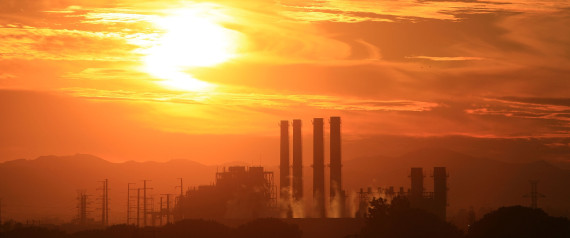
In seeking to protect their self-interest, fossil fuel magnates and other powers of the old economy have tried to use propaganda and political muscle to create their own distorted reality. That is an effort doomed to fail. Fossil fuel extraction damages ecosystems and fossil fuel use causes climate change and pollution. The degree of damage, when it will occur, and what we should do about it are debatable issues. The fact of damaging impacts is just that — fact.
In response to inaction by governments, many environmental advocates argue that we must immediately reduce the use of fossil fuels by banning or taxing them. That too is doomed to fail. While some nations may be capable of implementing rapid command and control reductions in fossil fuel use, energy is too central to modern economic life to expect that all large nations will do so. Unless the reductions are world-wide, they will be ineffective. We need to reduce our addiction to fossil fuels, but energy is too important to our way of life to just go cold turkey. We must replace our addiction to one form of energy with another form. The fossil fuel industry will collapse when reliable, low-cost alternatives are available in the marketplace. Until then, the planet will continue to cook.
The key stresses on the planet’s sustainability — climate, food, water and toxicity — must be better understood and better managed. One of the key goals of Columbia’s Earth Institute is to conduct the research and teach the knowledge required to manage the planet’s economy on a sustainable basis. I believe that the next generation’s leaders will gradually add issues of planetary sustainability to the routine management of organizations, cities and nations. To some degree, this is a simple assertion or article of faith. Fortunately, it is more than that. Public opinion data tells us that younger people are more concerned about a sustainable planet than older people. At Columbia I see that change every day and find that student interest in protecting the planet is on a dramatic upward growth curve. This is happening all over America and all over the world.
This is graduation week at Columbia University, and the campus plaza has been re-set with tents, bleachers, big screen TVs and happy soon-to-be graduates. At mid-week, thousands of students, families, friends, professors and staff will gather in school and university-wide ceremonies and celebrations. I direct two environmental sustainability master’s programs at Columbia, and one of my jobs is to learn how to pronounce the names of my graduates, which I read as they cross the stage to shake hands with deans and receive the cheers of family and friends. It is a joyous time, and a moment to take stock of the hard work and accomplishments of our students.
While universities seem to have an image problem these days, the on-the-ground view I can offer from one university is not likely to make the evening news. It is a world of hard work, struggle and accomplishment. Since I teach in two professional degree programs, I am fortunate to see people who have come to school to develop the skills they need to get ahead. They tend to be focused and ambitious. However, they are not alone in their concern for this planet. All the students I interact with at Columbia and elsewhere talk about environmental issues. When I started working in this field in 1975, environmental policy was a small, fringe issue. Today it is at the center of a global discussion. I think that the challenge of global sustainability is now part of the permanent agenda of concerns that young people have internalized. The people who have come to Columbia to study sustainability are incredibly dedicated and give me reason to hope. Colleagues at many other universities share my sense of hope. Again, it is not just those studying sustainability who care about the planet. Students in public policy, health, law, business, engineering, journalism, and pretty much every professional field I can think of, understand how the world has changed.
As I practice the pronunciation of my students’ names, I take note of their global diversity, and the fact that most are women. I think about the challenges they’ve overcome to obtain their degrees. The School of International and Public Affairs and the Earth Institute offer the MPA in Environmental Science and Policy. This program starts the day after Memorial Day, and requires that students enroll in eighteen graduate points each semester, starting with a summer dominated by environmental science courses designed for future policy makers. These students complete four semesters of graduate study in three semesters. It is a tough, demanding program, but one that is characterized by teamwork, incredible camaraderie and a profound sense of mission. Slightly more than 60 of those students will receive their degrees this week.
The second program I am honored to lead is the Master of Science in Sustainability Management that is offered by the Earth Institute and Columbia’s School of Continuing Education. This is a program designed for part-time students who mainly attend classes in the evening. Almost 70% of these students attend school part-time. In addition to meeting family responsibilities, many commute to their day job before taking the subway to campus for evening courses. After a long day of work and school they make their way home, often arriving after 10 p.m. — just in time to get some rest before repeating the cycle the next day. They do their homework on the train and in whatever stolen moments they can grab.
At the celebrations before and after graduation I meet the families and friends of these graduates and sense their pride and happiness. They are proud of our graduates’ accomplishments, and are typically both happy and relieved that they will finally be able to see them again as normal life resumes. The time, money and sacrifice involved in these courses of study are quite extraordinary. Our students know that to be competitive in today’s brain-based economy they must be life-long learners, and that requires both formal education and constant exposure to new ideas, enhanced skills and emerging technologies. The world they are making their way in is tougher, less certain, and less secure than the one that I found when I left graduate school.
In the next month or so we will see these rites of passage celebrated throughout America. Over the doorway of my old high school in Brooklyn, my mind’s eye will always see James Madison’s words, as true today as ever: “Education is the true foundation of civil liberty.” In the 18th century, Madison asked, how can we participate in democracy if we do not understand the facts, history and values of the modern world? Today, learning is even more essential if we are to understand and come to grips with the crisis of global sustainability. We are going to need to learn and think our way out of the crisis we have created. This will require a detailed knowledge of our planet’s systems that we do not yet posses. It will require ever more sophisticated models of the impacts of human production and consumption.
This means that massive resources must be devoted to earth observation, research and development of sustainability technology and a range of scientific, policy and management education programs. We need to mobilize, on a war-like footing to save the planet and learn to produce enough goods and services to ensure environmentally sustainable economic growth. I do not know if we are capable of managing the planet. I hope we are, because the alternative is slow deterioration of the civilization we have constructed. It’s time to end the partisan bickering over symbolic nonsense and get started on the real work that lies before us.
10 Comments on "Applying Brainpower to Address the Global Sustainability Crisis"
Plantagenet on Tue, 20th May 2014 1:00 pm
There’s a reason why the Columbia school song goes:
“Who owns New York—WE DO!”
HINT: Its all about the money.
J-Gav on Tue, 20th May 2014 2:30 pm
By all means, let’s develop brain-power to the extent possible. But for me, that doesn’t necessarily translate into handing the future of the planet over to academia.
Makati1 on Tue, 20th May 2014 7:03 pm
“…The fossil fuel industry will collapse when reliable, low-cost alternatives are available in the marketplace. …”
BS! The oil industry will collapse when the cost exceeds the consumer’s ability to purchase it’s products. We are fast approaching that point. Billions of barrels of oil will never be recovered.
~~~~~~~~~~~~~~~~~~
“… how can we participate in democracy if we do not understand the facts,…”
Answer: Most don’t want to know the
‘facts’ and the rest are already doing something to make their own future safer. True democracy is being wiped out by the one country that is claiming to be protecting it, the US and it’s lap dog/cannon fodder, NATO.
GregT on Tue, 20th May 2014 11:42 pm
When universities offer degrees in; growing food with manual labour, animal husbandry, managing disease with locally found plants, making your own clothing, and how to migrate to more hospitable landscapes, only then will they be readying our children for the future. In the mean time, they are simply putting our children into massive amounts of debt, and promoting the idea of some semblance of BAU.
“We need to mobilize, on a war-like footing to save the planet and learn to produce enough goods and services to ensure environmentally sustainable economic growth. ”
I rest my case.
Meld on Wed, 21st May 2014 1:37 am
right on GregT, this is why biology will become the number one science of the future. Learning about polyculutres, no till etc. and how to prevent diseases rather than trying to cure them.
“We need to mobilize, on a war-like footing to save the planet and learn to produce enough goods and services to ensure environmentally sustainable economic growth. ”
yep this is a statement of utmost ignorance. It’s a religious statement, a statement of someone who hasn’t even begun to grasp the enormity of the situation or even begun to take step to negate the issues that will face them.
Aire on Wed, 21st May 2014 3:15 am
What do you mean Meld? That statement is so true. First off, we have to be serious about saving the planet ! We don’t have time to mess around and are likely too late to save everyone of us 7 billion but worth trying. When the statement says to produce enough goods to make a sustainable economic growth it means whatever the planet earth can allocate and no more
meld on Wed, 21st May 2014 5:24 am
@ Aire – the word “growth” is a modern quasi religious term that people use as part of an emotionally charged argument to support what they believe to be “better”
The planet is in no danger what so ever, the planet will continue for billions more years with a variety of new species adapting to whatever the environment happens to be.
Let us get this straight, collectivism, and central planning are really fucking bad ideas. The idea of the whole world working together to try to stop what is happening is basically suicide. Intellectuals really know very little about what is happening in the world right now or how to stop it. What is required is grass roots, individuals trying new things in what is called dissensus (lack of agreement).
Personally over the last 12 months I’ve built a community forest garden, built a community orchard, taught the local children about sustainability and continued work on developing my natural farming allotment that has zero fossil fuel inputs. What has everyone else been doing?
Aire on Wed, 21st May 2014 6:44 am
Meld,
I agree with everything you said except not quite with “growth” – the planet does allow growth but in terms of how much solar energy it collects thru our ecosystem. I’m a believer in everything in our lives is possible thru energy. Energy is our God
I think you’re right that we need to do the things you mentioned. But my twist would be if the collective mind or what the article is saying brain power were to start an “war-like” attitude towards saving ourselves and ecosystem we can spare much despair. The human population will go down no matter what but at least if we invest in building (for example – mass production of bicycles or hand-held/animal operated farm equipment) every human could at least have a fighting and dignified chance to try and survive the storm.
I agree though that advanced technology on a large scale will destroy us more – it may be reasonable and sustainable on a little scale tho.
meld on Wed, 21st May 2014 7:31 am
@ Aire – Well that isn’t the type of growth he is talking about here. And yes things on the planet do grow, but then they die and something else grows in it’s place. Things grow, mature, decline and die, from the smallest flower to the universe, those are just some fundamental laws of the universe. Energy is our god but it is also our devil.
Personally I have started a “war-like” attitude towards saving myself and my local community (the planet can look after itself) Sadly nobody else is much interested, but that doesn’t stop me doing it because I know I’m learning new things every day that will help me in the future.
But bikes? I think you went a bit far there, a horse is a far better way for getting around, or just use you feet. We are going to have to localise everything so a bike isn’t going to make much difference in the future. I can walk around my town in an hour.
GregT on Wed, 21st May 2014 12:55 pm
Infinite growth in a finite environment, is not only unsustainable, it is impossible.
Economic growth, requires ever growing supplies of natural ‘resources’, and energy to extract, refine, and manufacture those ‘resources’ into things that we use.
The idea that the natural environment is merely human ‘resources’ put there for our exploitation, is what is destroying that same natural environment.
Environmentally sustainable economic growth, is an oxymoron.