
Peak Oil is You

Donate Bitcoins ;-) or Paypal :-)


Page added on May 19, 2016

An inconvenient truth for the Middle East and a line in the sand
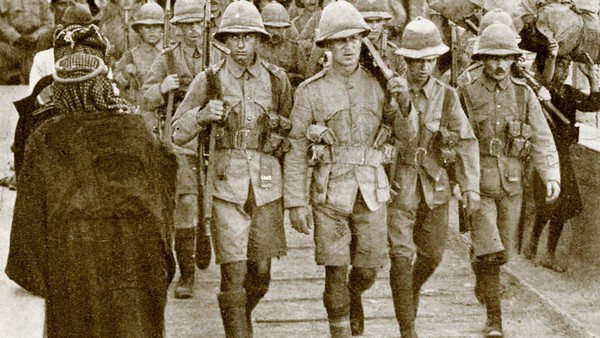
When I was growing up in Lebanon, there were two or three designated culprits for everything that went wrong, whether it was the latest battle in the 1975-1990 civil war, a plunging currency or torrential rains.
One was Henry Kissinger, even when he was no longer involved in American foreign policy. Another was the Central Intelligence Agency, preferred master of all conspiracies. The third was Sykes-Picot, which to a child sounded more like the name of a cheese than the 1916 secret agreement that drew the borders of the modern Middle East in the waning days of the Ottoman Empire.
Mr Kissinger is still closely read today, his words dissected and his arguments discussed. The CIA is still a target of widespread resentment and, quite probably, involved in all sorts of Middle Eastern shenanigans. But as sectarian fires blaze through the nation states of the Arab world, the focus of blame has shifted towards the conservative British politician and the young French diplomat who carved the region into spheres of influence.
This week it is a century since Sir Mark Sykes and François Georges-Picot drew that “line in the sand”. It is, therefore, an opportune time for more fervent debate.
It is an enduring and unfortunate habit in the Arab world to blame outsiders for the ruinous state of the region and to see in every act the sinister hand of foreign conspirators. The alternative — the idea that maybe the Middle East has been ruined by its own people and its leaders — is an inconvenient truth.
Middle East
The Ottoman legacy dies hard in the region

Even devotees of centralised rule concede they may have to give ground to federalism
But it’s not just Arabs who blame Sykes-Picot. Many commentators and politicians from elsewhere look to colonialism and the artificial drawing of national boundaries as the source of the calamitous present. The argument is expedient because of its simplicity, its ability to make the concept of partition more palatable and for sheltering from blame misguided recent policies — the 2003 Iraq war, say, or the lack of action to halt the civil war in Syria.
It is largely thanks to Isis that the debate over Sykes-Picot has resurfaced. The group staged a brilliant stunt when, after capturing swaths of Iraqi and Syrian territory in 2014, its jihadis demolished a sand berm, or barrier, on the border and declared the death of Sykes-Picot. Isis leaders knew the symbolism would elicit attention, if not cheers, even from those who despised the group. Indeed, the act unleashed a torrent of commentary proclaiming the official death of the British-French design. For some, the conclusion was good riddance.
The Middle East is evidently disintegrating. Iraq has been lurching towards de facto partition between Shia, Sunni and Kurdish mini-states; Syria’s civil war has divided communities along ethnic lines; and other states (Lebanon at the top of the list) are shuddering under the burden of millions of Syrian refugees.
But pinning blame for the Middle East cauldron on a plan hatched decades ago is misleading. For all the damage that colonialism has inflicted on the region, the borders are not responsible for the states’ failures to unite the people behind a national project. Many other countries outside the region have artificial boundaries too and, in any case, the broad lines drawn by Sykes and Picot were not dreamt up — often they largely corresponded to Ottoman administrative borders.
When Arab youth rose up in revolt in 2011, their slogan was not “the people want the fall of Sykes-Picot”; it was “the people want the fall of the regime”. If ethnic and religious identity now trumps national attachment in many parts of the Middle East, that is the result of collective disenchantment and insecurity, not a harking back to some fictitious past.
Apart from the Kurds who aspire to an independent state, partition on religious lines is not the people’s ambition. Whether at the birth of the new states or today, as some appear to disintegrate, aspirations remain the same: people want to live in dignity, governed by responsible and accountable governments. In Syria, Iraq or Lebanon, civil society, when it still agitates, rallies against economic mismanagement and a corrupt political class. On this 100th anniversary of Sykes-Picot, it is time to let go of its ghost.
11 Comments on "An inconvenient truth for the Middle East and a line in the sand"
turningpoint on Thu, 19th May 2016 8:28 pm
The simplest explanation for what’s happening in the Middle East and N. Africa is that Malthus is now proving correct on a regional scale. There are just over 80 million people living in Egypt, crammed along the Delta and the Nile river. They live in a desert. Were it not for that river, there’s no way that region could support that many people. Yemen has a serious water problem. Some of these regions do not have those problems but one thing they probably all have in common is a very large unemployment problem. There are too many young people with nothing better to do than cause trouble.
Not that the West didn’t decide to nation build and in the process, destabilize the Middle East, but that’s not the crux of their problem.
I believe more regions will fail through time as the Middle East continues to deteriorate.
If I’m correct, then the West is not the cause of their problems. We did nothing to help and are in fact making matters worse, but we did not cause the mess.
makati1 on Thu, 19th May 2016 9:11 pm
The West set up the situation today. Playing god was and is their game. And, yes, the West is the cause of it. Most specifically, the Us.
Apneaman on Thu, 19th May 2016 9:22 pm
turningpoint, cause?, It’s not a black or white world, but for some reason most of the humans need to interpret it that way. The west has been fucking with those people for access to and control of their resources for a long time. What the fuck do you call drawing all those lines on a map after WWI and making up countries and telling the people this is what you are now, a favor? Many of those people had cultures and traditions going back hundreds and even thousands of years. Whitey just scratches it out with a pen on a map and you think they will forget because it was a hundred years ago? How is the South doing with forgetting Sherman march? All those rednecks see no problem with fighting a war that’s been over since 1865, but the people in the middle east are just a bunch of ungrateful rag heads who don’t understand we the wast was just trying to help modernize them. Our culture and traditions count and theirs don’t.
Put their shoes on and imagine if the Chinese cyber army disabled the US military capabilities (technical possible) the sent their troops in and dived up the US into a bunch of new countries with local puppet dictators and no consideration for what the people who have been living there want.
Perfect example of what the west thinks of them and their traditions.
Destruction of Cultural Heritage
“The US constructed a military base on the site of ancient Babylon. Coalition forces destroyed or badly damaged many historic urban areas and buildings, while thieves have ruined thousands of incomparable, unprotected archeological sites.”
https://www.globalpolicy.org/humanitarian-issues-in-iraq/consequences-of-the-war-and-occupation-of-iraq/destruction-of-iraqs-cultural-heritage.html
FUCK YEAH!
JOHN HERLING on Thu, 19th May 2016 9:49 pm
Much of the intrastate and interstate hostility within and between Muslim Middle Eastern countries is due to the undying hatred between the Sunnis and Shiites of the region. That can’t be blamed on Sykes-Picot or any kind of Western interference. I suggest that if Muslim countries were not “Islamic republics”, but secular democracies with guarantees of religious freedom and separation of mosque and state, there would be a gradual lessening of the sectarian hatred.
Apneaman on Thu, 19th May 2016 10:17 pm
How the Sykes-Picot Agreement Helped Make a Messed-Up Middle East
http://time.com/4341059/sykes-picot-agreement-anniversary/
Christina on Fri, 20th May 2016 3:35 am
Arab is not a country, Arab is not a citizenship, Arab is not a passport, a donkey is not a horse even if they look the and the British is not Irish even if they live on the same Island. This negative stereo type media is wrong hijacking the future of real understanding of modern world, the hate ethnic culture of Middle East is fueled by Oil money and Islamic desire to dominate the world destroying many minorities of the Middle East.
brough on Fri, 20th May 2016 4:54 am
The ‘inconvenient truth’ is the middle east was ruined by oil, which enabled the human population to grow many times over what the land could sustain.
The question is, does western civilisation sit back and watch horrific de-population or do we help? Have we a moral responsabilty to take in now homeless and hungry Arab peoples ? After all they have given us so much with their mineral resources.
Davy on Fri, 20th May 2016 5:22 am
It is intellectual laziness to constantly default to the west being the problem for every region or nation. We know the west is a reason for instability and social disruption globally but it is the nation or region itself that makes its own bed. If that place and people have the right stuff the west interference cannot touch them. Iran is an example. Western influence attempted to disrupt Iran and failed. Iranians are a tough proud people that managed to overcome any outside influence.
The Middles East is a region in overshoot and that is the primary problem. It is a region of too many people in a place that should not have that many people. It is place ruined by oil and religion. The west is there because of oil and many times religion but the same oil and religion has ruined the west. The too many people is now a problem also in the west. The ME is farther into overshoot because it is a region that is a desert. Water is an immediate end game variable. If the economy or energy supplies get disrupted it is game over with so many people because of water and food. Both water and food at the populations the world is at currently require a complex economy and energy intensity.
The west has ruined the world with the development and practice of all the political “isms”. The world is ruined from being a car cultures which is the uncheck application of technology without considering consequences. The west brought us this global death of unchecked development but it likely would have come from the Mideast and or the East eventually because this destructive nature is a common trait of human nature. The west just had the right stuff to deliver it quickly and effectively. Nations have always preyed on other nations and used superior tools and organizations to achieve this. This is just one of the evolutionary dead ends of humans.
We have likely 10 years left before the dead state of oil and or climate change rips our global culture apart. We have an economy that could implode at any time dragging globalism down in an unknown collapse scenario. It is the Mideast that will likely be the first to unravel and with it its oil supply and that will be a peak oil dynamics end game for the global system. Sadly it is just one of the many end game scenarios.
gSgS on Fri, 20th May 2016 7:12 am
@John Herling: ” I suggest that if Muslim countries were not “Islamic republics”, but secular democracies with guarantees of religious freedom and separation of mosque and state…”
Well, and I suggest that if a granny had a different anatomy, she would have been a grandpa. separating a mosque and a state is not possible.
shortonoil on Fri, 20th May 2016 7:33 am
Saudi Arabia is a good example of what is occurring in the ME. It is a chunk of sand with 28 million people that can support maybe 1.5 million. The other 26.5 million are feed from the proceeds of oil. When the oil is gone, and it is rapidly going, 26.5 million are going to either starve to death, or kill each other fighting over the piece of property that can support 1.5 million. The West had absolutely nothing to do with impregnating millions of Arab women. Its greatest crime was probably bringing modern medicine to reduce infant mortality. Its second great crime was building a civilization based on oil, when that oil was mostly found under Arab sands. If the West had simply marched into the Middle East, taken their oil without paying anything for it, they would have been left with their tents and camels, and not have the population situation that they now must face. The dame British and French always had this sense of fair play to their colonials. Did the Nazis have the right idea; if they give you any problem — shoot them?
JN2 on Sat, 21st May 2016 9:25 am
Short, Wiki says KSA 2016 will be 32.2 million.
https://en.wikipedia.org/wiki/List_of_countries_and_dependencies_by_population
“Our oil under their sand” – so inconvenient…