
Peak Oil is You

Donate Bitcoins ;-) or Paypal :-)


Page added on March 24, 2015

US enters undulating crude oil production plateau in 2015
This is a post on the EIA Short Term Energy Outlook March 2015 (STEO).
The following graph shows total US crude production according to EIA statistics until Feb 2015 and then a forecast until Dec 2016. A clear kink in the production curve can be seen in the 2nd quarter of 2015. An increase of production is only expected by the end of 2016 following a recovery of oil prices to a $70 range.
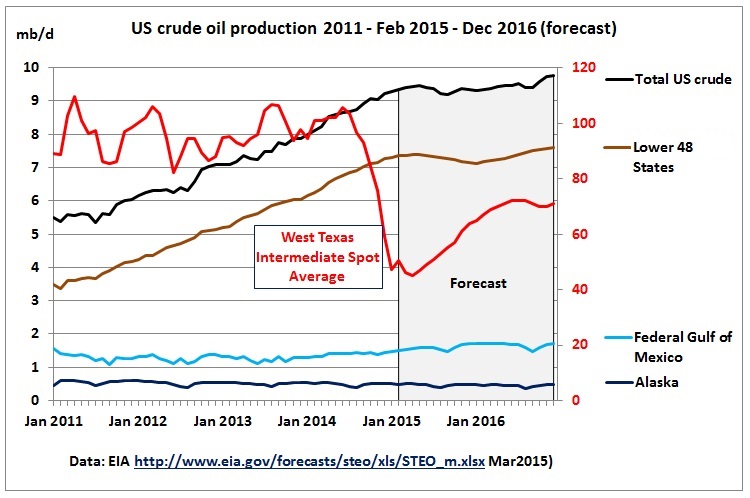
Fig 1 US crude oil production by area Jan 2011 – Feb 2015 and forecast to Dec 2016
All data from here: http://www.eia.gov/forecasts/steo/outlook.cfm
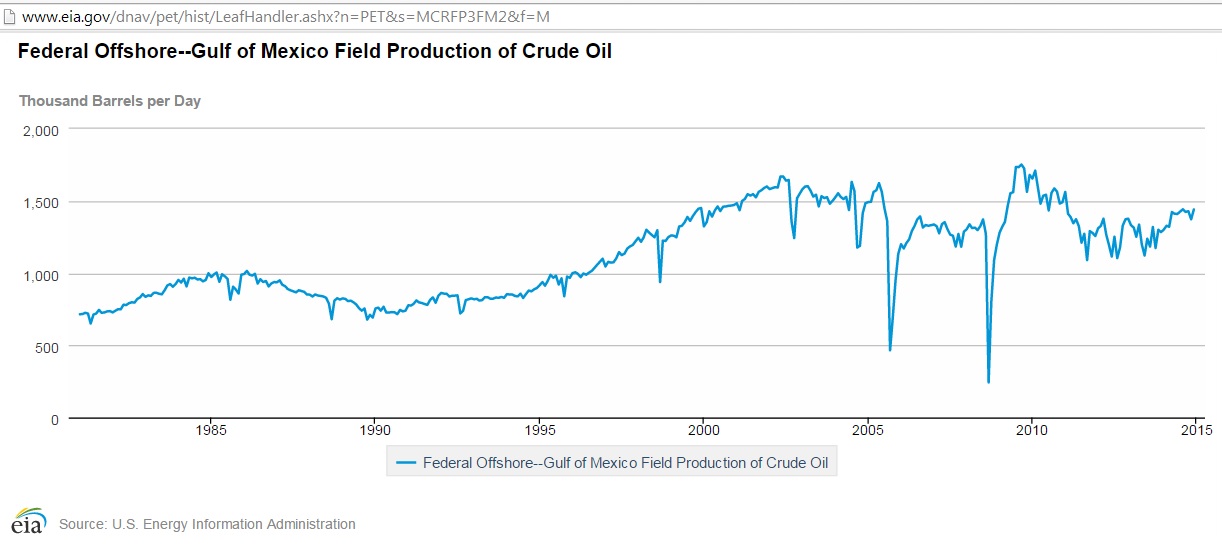
We see a 10 month time delay between the sharp drop in oil prices and the peaking of US crude oil production expected by EIA in May 2015. The main battle is fought in the tight oil fields of the lower 48 States (brown line) because Alaska (dark blue) and the Gulf of Mexico (light blue) are hovering around the 2.1 mb/d mark (see Appendix)
The EIA assumes that oil prices start to increase again by mid 2015 and reach $70 a barrel by April 2016. That would result in tight oil production to pick up again, albeit at a smaller annual growth rate (6% in 2016) than the one experienced when oil prices were around $100 in 2014 (20%).
Now let’s have a look at how EIA’s data and forecasts have changed since oil prices started to drop. First we see that actual (some of it still estimated) Lower 48 production was higher (solid brown line) than anticipated (doted brown line). But due to the peaking the Mar 2015 forecast for end 2015 is lower than the Jul 2014 forecast.
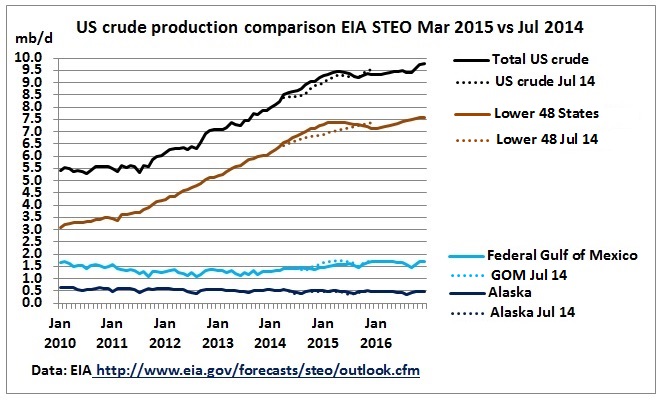
Fig 2: Comparison EIA’s ESTO July 2014 vs March 2015
What is happening under the Lower 48 production curve can be seen in this superimposition of a graph done by the EIA in this post http://www.eia.gov/todayinenergy/detail.cfm?id=19711 and the black curve in Fig 2:
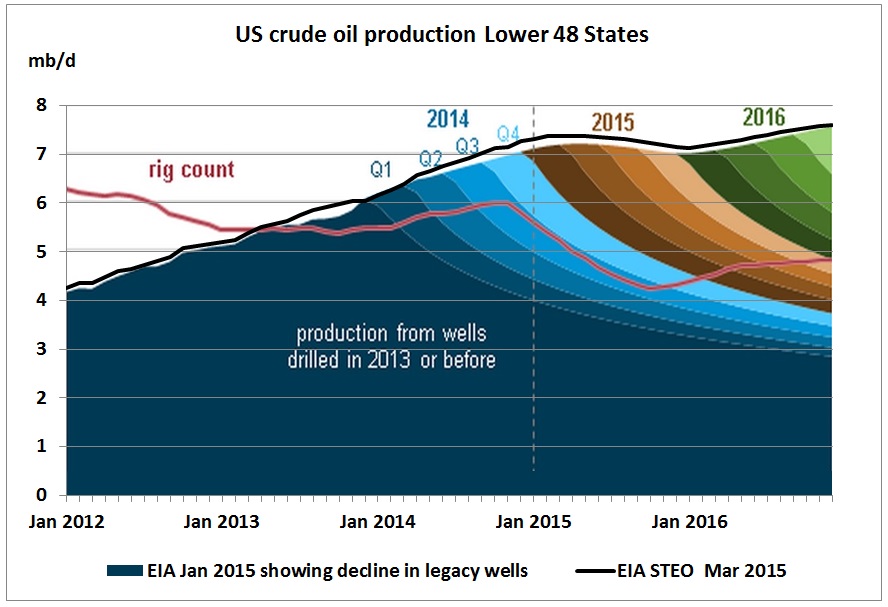
Fig 3: US lower 48 production showing decline in legacy wells (January 2015)
The superimposition shows that the STEO Mar 2015 is slightly higher than the January 2015 graph, but the shape is the same. We see that cumulative declines in existing wells get steeper and steeper. So it will be harder and harder to maintain production, let alone grow it. The question is how high oil prices have to go in order to drive this treadmill. The only thing we know is that in the past $100 oil did it for 3-4 years, but not longer.
The drilling rig count in the above EIA graph peaked in the 4th quarter of 2014. It includes gas rigs. The latest oil rig count is in the following graph, much steeper.
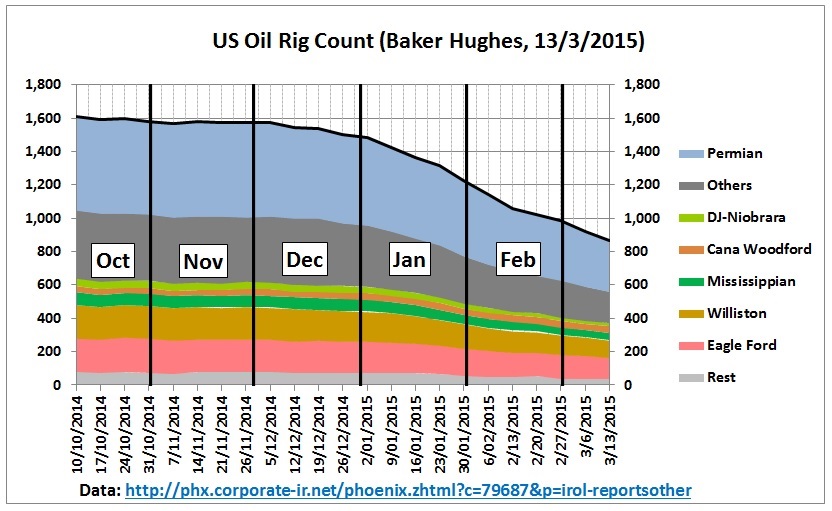
Fig 4: US Oil rig count
This was even presented in the Australian ABC 7 pm news on 17/3/2015
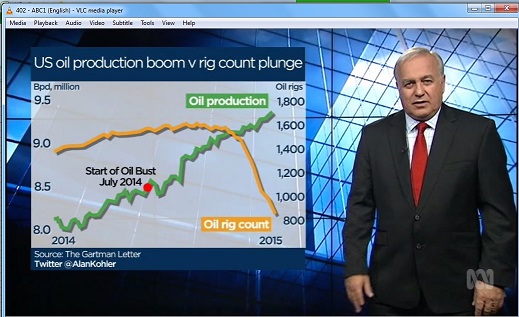
Fig 5: Business presenter A. Kohler found this graph “interesting”, without further explanation
But will journos and TV presenters have time to read this from Art Berman, a US petroleum geologist:
Misleading IEA Statement Sends Oil Prices Lower and The U.S. Rig Count
March 14th 2015
The IEA (International Energy Agency) made the following statement in its Oil Monthly Report yesterday that supposedly sent oil prices lower by $2.41 per barrel for Brent and $2.21 per barrel for WTI:
“Steep drops in the US rig count have been a key driver of the price rebound. Yet US supply so far shows precious little sign of slowing down. Quite to the contrary, it continues to defy expectations. Output estimates for 4Q14 North American supply have been revised upwards by a steep 300 kb/d.”
IEA’s comments on U.S. oil production trends are misleading. When IEA says “oil” they mean “liquids” so their number includes natural gas liquids which add more than 3 million barrels per day on top of U.S. crude oil supply that largely come from natural gas production and not from oil production.
Also, IEA is talking about the 4th quarter of 2014 which is history and was unaffected by rig count declines that did not begin in earnest until mid-December.
Or will ABC TV look at the 9/3/2015 EIA drilling report which shows rampant decline in old shale oil wells (upper panel)
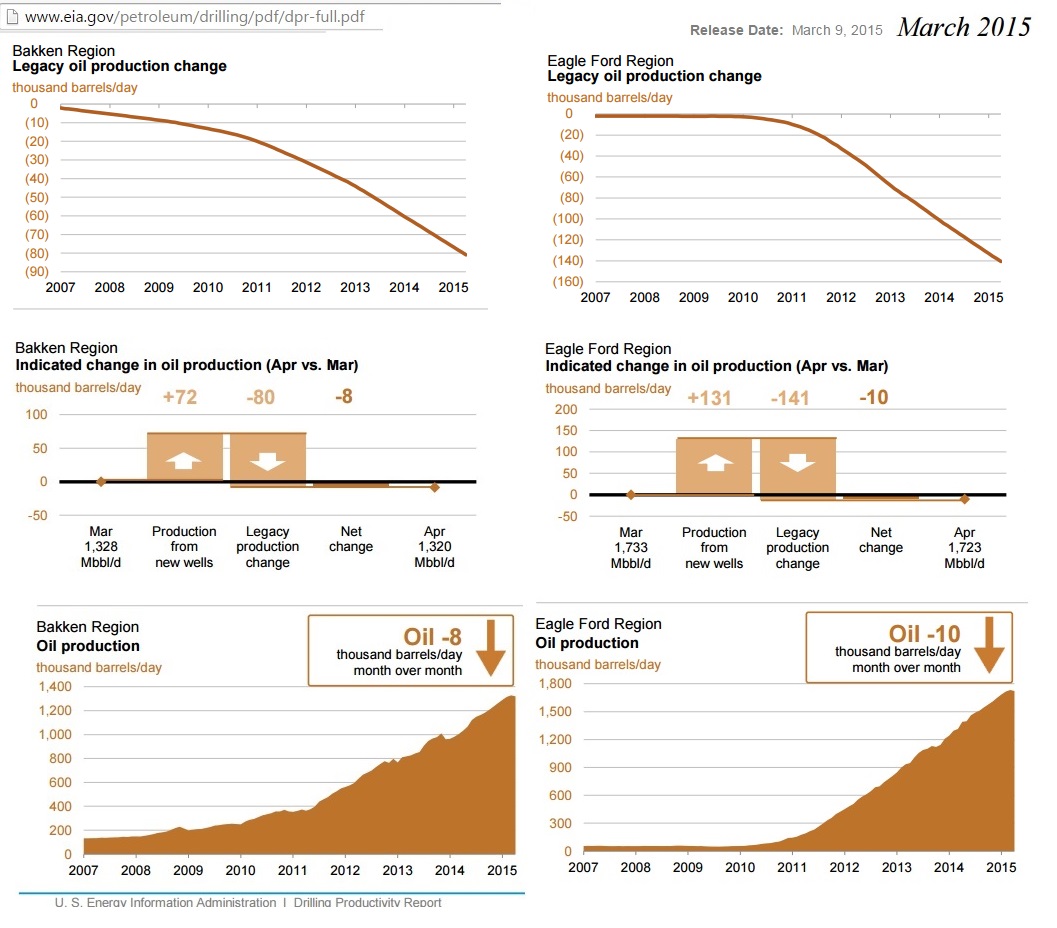
Fig 6: Bakken and Eagle Ford production
The production balance between new wells and legacy wells has turned negative (centre panel), meaning that production is peaking (lower panel).
As an example, let’s put the Bakken balancing trend over time into a graph:
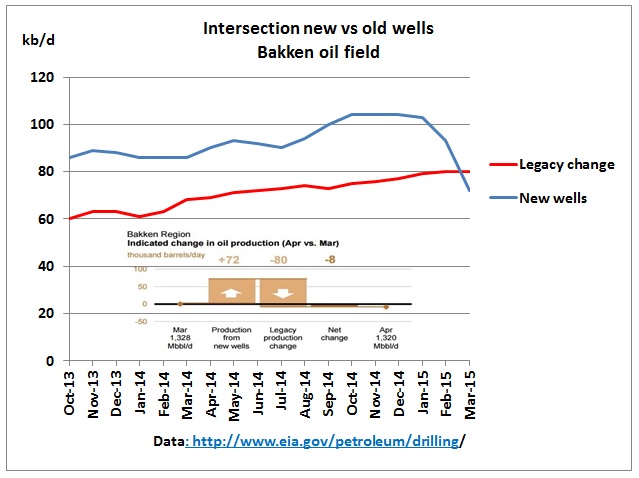
Fig 7: Trendline showing production from new and legacy wells in Bakken
The intersection shows the peak.
To be fair, here is Alan’s website with zillions of interesting graphs:
Including the following, showing the US on the apparent way to energy independence:
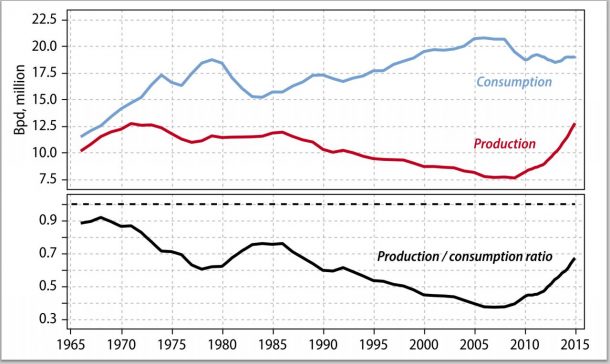
Fig 8 A. Kohler: “The world is awash with oil”
But how will that “awash with oil” story continue? The following graph uses tables 3a and 3b from the above EIA STEO Mar 2015. The steep growth in US crude production – and therefore the world – will be over. Even another increase of US shale oil by end 2016 just brings the world back to where it was in 2014. The only growth will come from US other liquids (not as versatile as crude oil) and Canadian tar sands. And it’s biofuel season in Brazil!
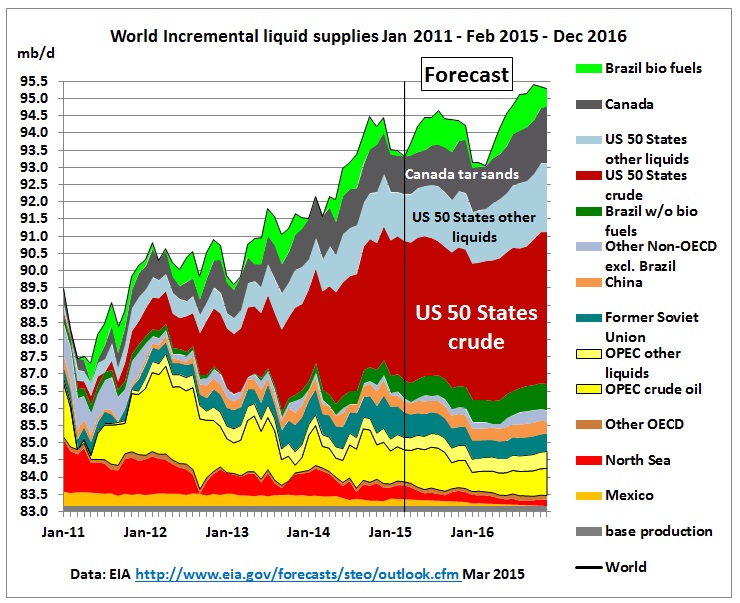
Fig 9: World all liquids production from EIA STEO Mar 2015
No glut of oil outside the US and Canada. (Base production is the sum of the minimum production of all the countries/regions in the legend)
So these are all the liquids the world can muster, including recycled cooking oil used for jet fuels, where Australia is a front runner:
16/4/2012 Fry and Fly – the new era of sustainable aviation
http://crudeoilpeak.info/fry-and-fly-the-new-era-of-sustainable-aviation
http://crudeoilpeak.info/fry-and-fly-the-new-era-of-sustainable-aviation
Conclusion:
Feel-good-outlooks make the TV audience happy, but sleepy. They are in line with what the Australian government is doing: building the oil dependent infrastructure of the 21st century: road tunnels, toll-ways and new airports. But expect some surprises
APPENDIX
Alaska is in long term decline
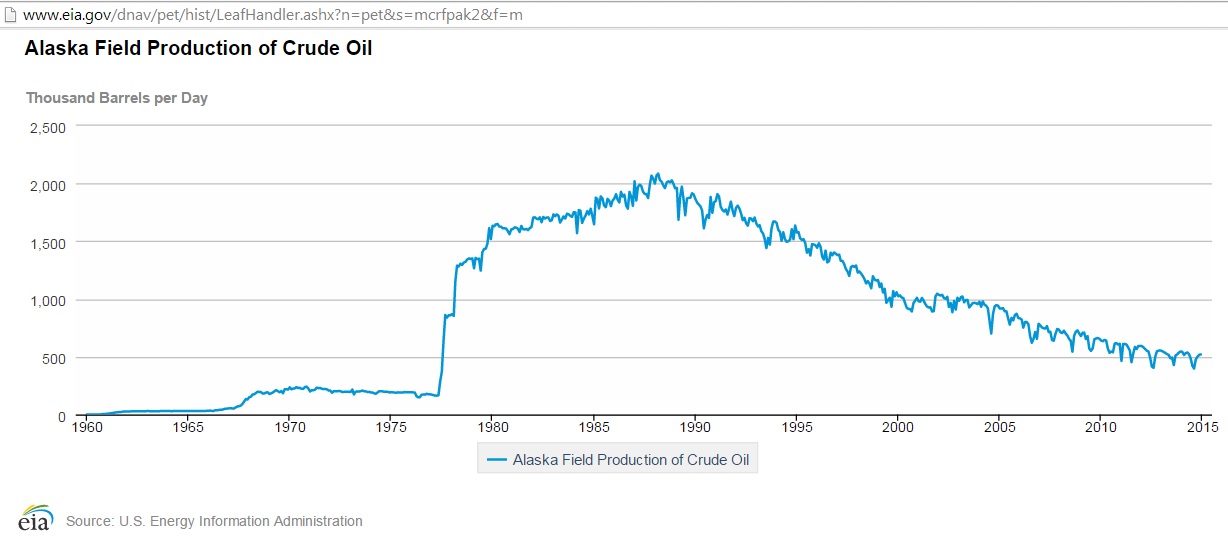
Fig 10: Alaska Crude production
Fig 11: Gulf of Mexico crude production. Deep water oil revolution
GOM production depends on how severe the hurricane seasons are and on possible accidents like the Deep Water Horizon blow out and its consequences for financing and costs of design modifications to drilling and production platforms.
5 Comments on "US enters undulating crude oil production plateau in 2015"
Plantagenet on Tue, 24th Mar 2015 11:12 pm
Why don’t we wait and see what actually happens in 2015 before declaring it to be an “undulating plateau” based on model projections.
Sometimes its best to see what actually happens rather then getting all wee-wee’d up about models and projections.
Beery on Wed, 25th Mar 2015 3:29 am
Did Planty just make a post that doesn’t have the word “glut” in it?
Clearly the shale boom is over.
marmico on Wed, 25th Mar 2015 4:27 am
Berman’s short term base case dated February 17, 2015 of a decline of ~600,000 b/d of U.S. LTO production between January and June 2015 already seems suspect.
Then again, his 2009 long term base case of Marcellus natural gas production being punk widely missed the mark.
Davy on Wed, 25th Mar 2015 7:00 am
Clearly we are in a bumpy plateau and possibly the beginning of the bumpy descent. I say that because we see both economic demand and oil supply stagnating. This appears only as a short term move per a suspect environment of economic reporting. Yet, the fact that supply and demand are both stagnating at the same time at the end of what surely before long will be a business cycle decline is pointing to plateau or descent. You all still believe in business cycles right?
The Fed is so anxious to get rates up above the zero neighborhood for a reason and that is they are naked without any recession fighting tools. We may have a small oil supply excess but it is small and in the context to questionable growth numbers insignificant in expressing some kind oil supply nirvana the corns crow about. We see that there has been enough time to equate a short term trend whether this small excess supply and lower prices are translating into a higher growth trend. Instead we see 24 countries lowering their rates and the Fed unable to raise theirs. I ask you if you can’t raise rates or are cutting rates does that indicate a healthy world economy?
If oil prices cannot move back into the goldilocks range along with economic activity we are going to see supply and demand destruction in some kind of gyration down in a cycle of negative feedbacks of economic destruction. Once in this cycle of destruction with all the other global problems it will be hard for the global economy to break out of that momentum. The inertia may be too great without the central banks having debt and interest rate tools and the oil industry having proper prices for production growth.
The global oil industry is clearly loosing growth tools with prices down and the investment environment negative. In a normal functioning global economy depletion is alone a struggle but put depletion in the context of a stagnating economy with the ME and Russia in geopolitical stress and financial duress. The US production is also stagnating from drilling activity decline. The 3 largest producers are stagnating that is ominous. This clearly points to a minimum of a bumpy plateau with all the ingredients of a bumpy descent in place.
I would say it is likely we have begun the bumpy descent which will be the beginning of the end of BAU. BAU will likely not recover and the natural sustainability process of rebalance of consumption and population will be in motion. Once that process is in motion the positive feedbacks of multiply growing predicaments with economic decline and resource depletion will erase any hope of further growth.
Entropic decay will be the underlying meme. It is now PO and or economic decline as the brick wall for the train wreck clearly written possibility in the short term numbers. It is two or more events that bring jet planes down. It appears at least in the short term we have two in effect.
There is still no indication if this will be a hard or soft landing. Our global economy has never been in this situation and it is far too complex to determine. Yet, a hard landing is very possible with a soft landing being the luck of good decisions and circumstances. We know the decisions are currently poor so maybe the circumstances will turn out positive. Damn it comes down to trusting in the gods. That is not very reassuring when so much is at risk.
rockman on Wed, 25th Mar 2015 8:19 am
Again back to basics: define a “plateau” of anything. Is it a period were the metric varies non more than 5%? 15%? 30%? Obviously there is no correct answer: there is no GPRA (Global Plateau Regulatory Agency) that has set a standard. So subject to one’s definition were have seen numerous “bumpy plateaus” in the last 40 years…or none.
My personal choice is none. We may be on the verge of hitting a plateau but just like PO we will only see solid proof in the rear view mirror many years down the road. From 1929 thru 1979 (50 years) global oil production increased from 4 mmbopd to 62 mmbopd…by 58 million bopd. From 1979 till today ((36 years) it increased from 62 mmbopd to 85 mmbopd (23 mmmbopd).
So the rate of climb to the top of the plateau has certainly decreased in the last 4 decades of so. And we may be at the top of GPO. And the ride down off the plateau might be quicker then the ride up…or slower. All depends on economic growth, geology and politics.
But just as in the case of peak oil dates I don’t think the down slope on the plateau, what ever it is and when it begins, is of much importance. For me what’s still the most important dynamic is the POD. Which is great because I can ignore that debate just as I ignore the date debates. LOL.