
Peak Oil is You

Donate Bitcoins ;-) or Paypal :-)


Page added on October 31, 2012

The Big Deal About U.S. Energy Self-Sufficiency

Mark J. Perry caused a minor sensation on October 22, 2012 when he posted a blog about record-breaking fossil fuel production in the United States. Perry is an economics professor at the University of Michigan at Flint and a visiting scholar at the American Enterprise Institute. His blog is titled as an economics and finance website but a great deal of content is about energy.
In “U.S. fossil fuel production will reach all-time high this year; America’s energy self-sufficiency will be highest since 1990” (http://www.aei-ideas.org/channel/carpe-diem/page/2/), Perry shows a stunning graph of U.S. fossil fuel production (coal, natural gas and crude oil) from 1975 to 2012 (Exhibit 1).
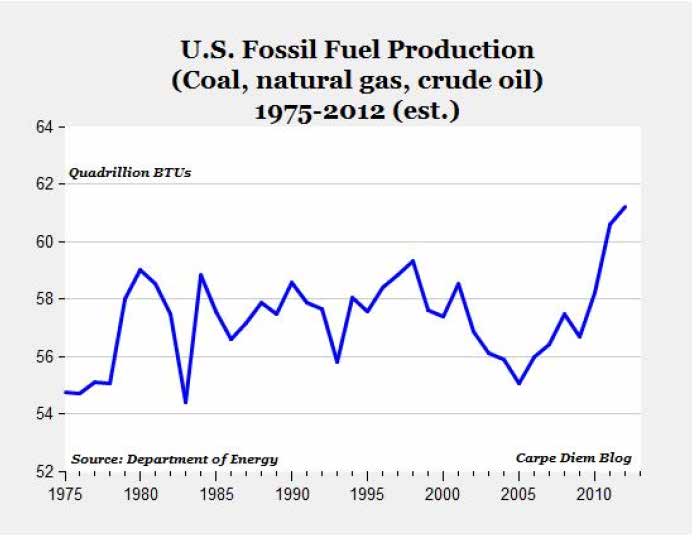
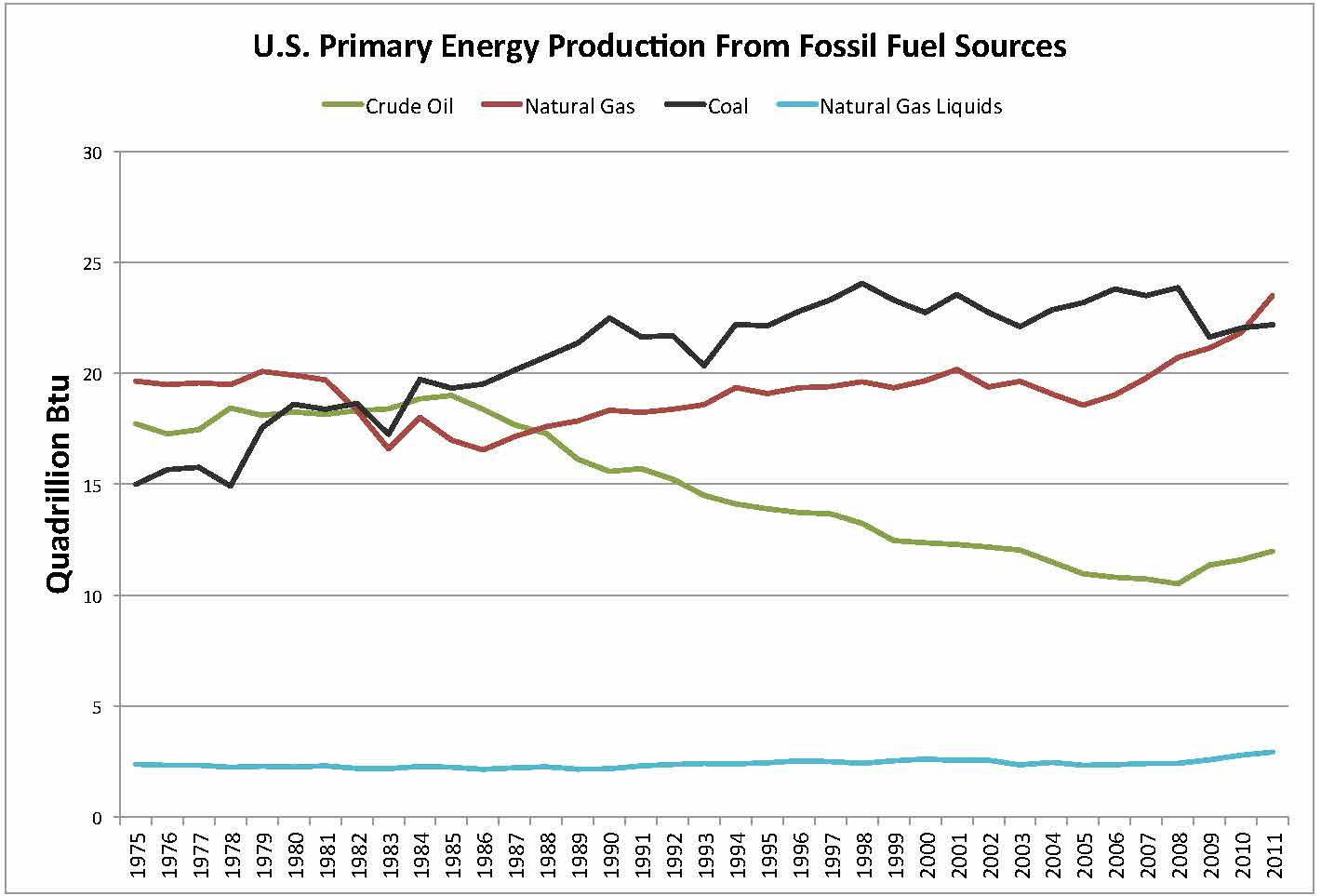
I was able to reproduce his graph using EIA data but I had to include natural gas plant liquids to make it match. When I plotted this data on a more conventional y-axis scale, the enormity of the anomaly shrinks to what it really is, namely an increase in overall fossil fuel production within a narrow range of fluctuation over three-and-a-half decades (Exhibit 2).


Exhibit 4 shows the various components of total fossil fuel energy at a scale appropriate to understanding which sources increased and decreased over the period of the graph.

There is nothing untrue in Perry’s blog but it, unfortunately, contributes to the distorted viewpoint that the U.S. will soon become energy independent and will no longer need to import foreign oil. The U.S. has used more oil than it produces since records were kept in 1920 but became a true net oil importing country after World War II (Exhibit 6).
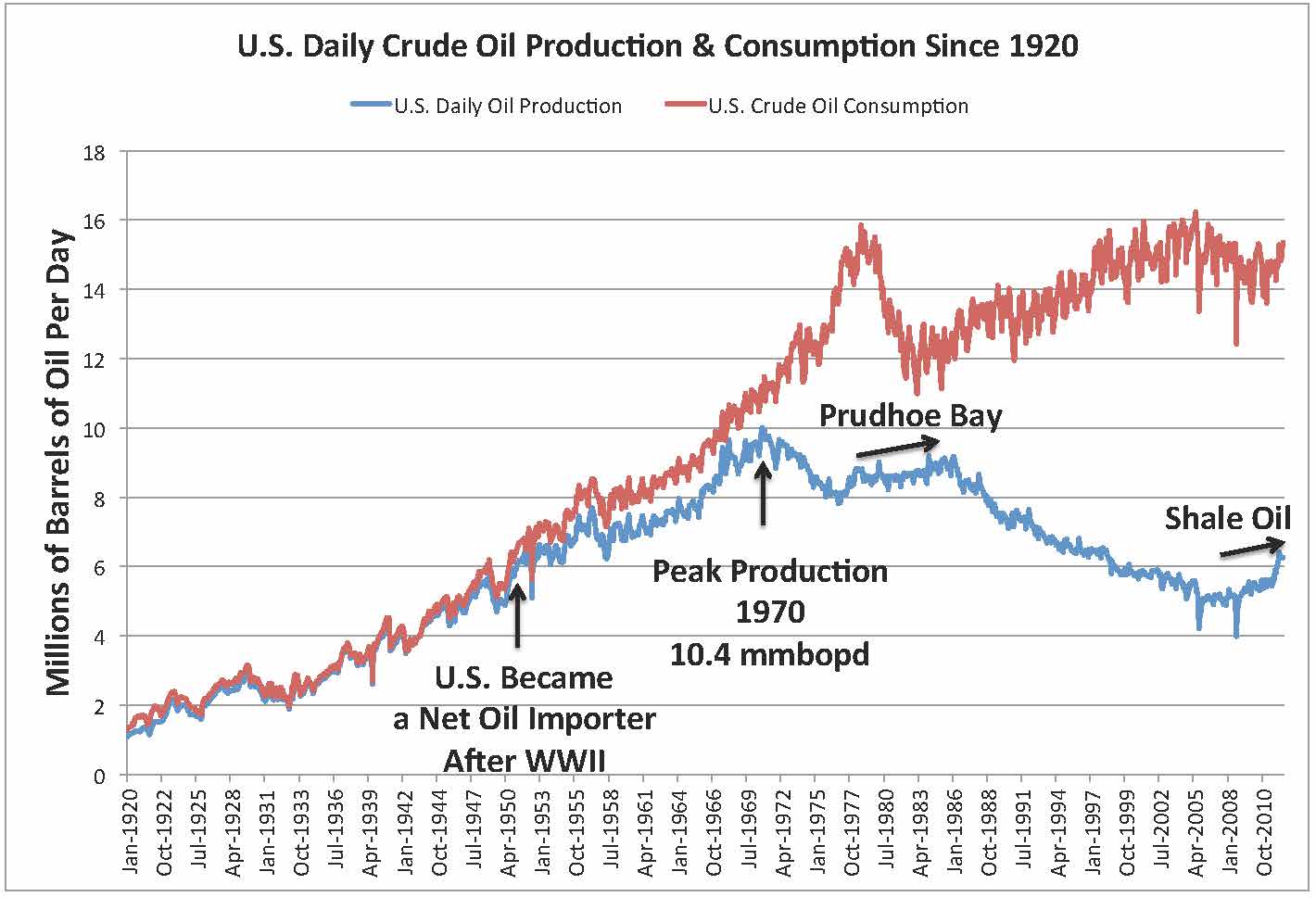
I am encouraged by the slight reversal in U.S. oil production but see no way that we will become oil independent. The star performer in total fossil fuel production is natural gas. While it is true that gas offers the possibility of replacing crude oil refined products as a transport fuel, this will be decades in the future (massive equipment changes and distribution infrastructure) and does not address the near- to medium-term problem of oil imports. Curiously, nowhere in his blog about economics and finance does Perry discuss the cost and profitability of shale gas or shale oil. Rather than write so much about energy, a subject outside of his training and experience, it would be useful if he wrote about the economics of the shale developments that he is so exuberant about. That would be a big deal.
The Big Deal About U.S. Energy Self-Sufficiency
Share | Show without comments | PDF version
Related articles (automatically generated)
- After The Gold Rush: A Perspective on Future U.S. Natural Gas Supply and Price (February 8, 2012)
- Sunday Times Predicts US As Top Oil Producer in 2017 (September 15, 2011)
- Crude Oil and Liquids Capacity Additions: 2011-2015 (April 13, 2011)
- Revisiting the Fake Fire Brigade Part 2: Biomass – A Panacea? (July 24, 2010)
- U.S. Shale Gas: Less Abundance, Higher Cost (August 5, 2011)
2 comments | You must log in to post a comment. If you don’t have an account, create one.
![[-]](http://www.theoildrum.com/images/thread_collapse.gif)
Nice summary, the current media push with the meme “the US is about to get energy independent” is truly amazing (when it is not plain lies as “now the US is a net exporter”), and not only in US media.
About :
” The U.S. has used more oil than it produces since records were kept in 1920 but became a true net oil importing country after World War II ”
What does it truly mean ? And is exhibit 6 correct ?
I thought the US were a major oil exporter in the 1920ies, 30ies, 40ies, for instance :
“U.S. fields accounted for slightly more than 70 percent of world oil production in 1925, around 63 percent in 1941, and over 50 percent in 1950.”
http://www.americanforeignrelations.com/O-W/Oil-Oil-and-world-power.html
In Europe in the 30ies for instance, most oil came from the US I think ?
How come this is not reflected in the graph ?
(but maybe separating data between oil majors production whatever the country and “countries” production for these periods isn’t that easy).
Would be interesting to find this data, seriously doubt exhibit 6 is correct on the 1920 to 40 period.
A graph that I find quite interesting (from wikipedia) :
Especially as a reminder of to which point the US were the first producer and by a lot, in the 60ies, and the quick ramp up of KSA, Iran, former USSR in the 60ies
4 Comments on "The Big Deal About U.S. Energy Self-Sufficiency"
BillT on Wed, 31st Oct 2012 12:44 pm
Last graph says it all. Obviously Mr. Perry knows almost nothing about oil and even less about economics. But then, economics is reading yesterdays tea leaves to predict the future price of tea.
Beery on Wed, 31st Oct 2012 3:35 pm
“Perry is an economics professor at the University of Michigan at Flint and a visiting scholar at the American Enterprise Institute.”
Translation:
“Perry knows nothing about energy or geology and is a paid shill for the energy industry.”
Move along, nothing to see here.
Wm Teco Brannigan on Wed, 31st Oct 2012 4:04 pm
Important trends can be easily obscured or overlooked. That appears to be the case here.
When oil peaked in 2005, societies began to quickly decline. We are now left to pick up the pieces, those of us still alive in the ruins.
Just try to survive.
Welch on Thu, 1st Nov 2012 1:00 am
“We are now left to pick up the pieces, those of us still alive in the ruins.”
Yeah, it’s a real apocalypse out there. lol