
Peak Oil is You
Donate Bitcoins ;-) or Paypal :-)


Page added on May 28, 2020

Shutting Down Oil Wells, a Risky and Expensive Option
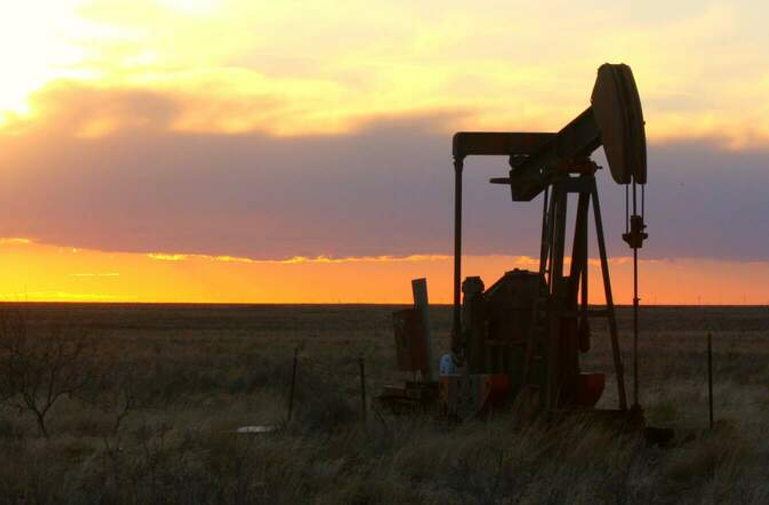
The temporary shutting in of wells is the one thing that oil companies are trying to avoid at all costs. That’s because restarting production is expensive and wells are not guaranteed to return to their flow rate. The doubts are so great that some experts wonder whether the current round of shut downs, far from preserving the resource, won’t accelerate oil depletion instead. Some Russian engineers are even considering burning excess oil, rather than downsizing production.
The COVID-19 crisis resulted in a quick and dramatic drop in demand for oil, estimated to be in the 25 to 30 per cent range in April. Much of this decline is expected to be reversed by the end of the year, but faced with a massive drop in oil prices and a lack of storage tanks, oil companies face a difficult dilemma: should they ride out this unprofitable streak or should they decrease production to cut their losses?
To the lay person, the option to cut production seems obvious. But an oil well is not a tap with a flow that can be adjusted as needed. Either it operates at full capacity or not at all. Valves are installed, but they’re only used during brief maintenance periods or emergency stops. Oil companies know that the decision to shut down for an extended period has three serious consequences:
- reopened wells may never return to their previous production rate
- pumping equipment must be repaired and refitted at great cost
- other facilities, such as refineries and pipelines, cannot be kept in operation without some minimal level of production.
Impact on wells
An oil field is a complex structure, where different grades of oil have settled over time in a porous type of rock such as sandstone. Drilling and pumping releases this mixture of oil and gas. Any cessation of the extraction process may result in the clogging of this porous rock with sediment or paraffin, which means that production may permanently be reduced by half, or even stop completely, when pumping resumes. This loss of productivity does not always occur and it is sometimes possible to repair part of the damage by injecting chemicals into the well. But it’s easy to understand why oil companies would seek to avoid damage to their property and costly remediation work.
In addition to the geological constraints, the shut down process is risky in and of itself. To close a well, a special drilling rig is used to inject a thick mud at the well head to block the flow of oil and gas. This blocks the pores of the rock to a lesser degree, alters the pressure inside the well and inevitably complicates any attempt to resume production. The well itself is also plugged by pouring cement into it.
To restart production, it is necessary to bring a new rig, drill the cement plug, and pump the sludge blocking the well head. The hope is that oil will start to flow again. If this fails, you have to drill a new well, inject chemicals or even perform hydraulic fracturation (fracking). These steps are costly and labour intensive. If all oil companies try to resume operations at the same time, there aren’t enough work teams around to handle the workload. At the end of the last similar crisis, some restoration work had to wait up to two years.
The Alberta oil sands are fraught with comparable challenges. The bitumen is separated from the sand by injecting steam into the ground. The heat and pressure levels must remain constant, otherwise the bitumen may clog in the underground reservoir and in collection pipes. At best, resuming production may require months of work, at worst, shutdown can permanently diminish the throughput of the facility.
Offshore drilling platforms have their own challenges. When pumping ceases, the pressure builds up quickly, causing methane hydrates to form and to clog pipes. Underwater pipelines that transport oil to the coast are particularly at risk. Relaunching production at offshore facilities is so difficult that it is considered to be the very last option for oil companies.
An enormous price tag
Decommissioning a well is expensive. In the case of a high-flow well, simply removing the submersible electronic pump costs about $150,000. For a medium-flow well, the bill is around $75,000. The underground environment is corrosive and a chemical treatment costing $2,000-$5,000 must also be applied to protect equipment that cannot be removed from the well.
Resuming production is also tremendously expensive. Cleaning the well of accumulated water costs anywhere from $10,000 to $20,000. In a high-flow well, repairing the submersible pump costs about $150,000 and replacing it costs double, just for equipment. The bill can reach up to $400,000 or $500,000 when you include labour costs. Even in a low-throughput well, repairing the equipment costs at least $50,000.
The bill for the chemicals used to restore a conventional well that has lost some flow ranges from $50,000 to $100,000. If the hydraulic fracturing of a shale oil well has to be redone, you’ll have to dish out an additional $3-$5 million.
Bear in mind that the fate of thousands of wells is currently at stake. In North Dakota, 6,200 wells are already closed, most of them with moderate flow and dependent on hydraulic fracturing. Given the high restart costs, the bill could reach up to a billion dollars. In Louisiana, nearly 17,000 wells will probably be shut down because of the crisis. In Texas, the numbers are even higher.
The cost is difficult enough to justify for wells with an average throughput. It cannot be justified at all for old wells reaching the end of their life, which often produce less than 10 barrels per day. These wells must continue producing or simply cease operating forever. Since there are so many of them, amounting to almost 11 per cent of US oil production, the loss could be significant for the industry.
Other considerations
Most refineries cannot operate below 60 or 70 per cent of their baseline capacity. A few select ones can go as low as 50 per cent, but no less. If oil production keeps decreasing, some refineries will have to close, temporarily or permanently. Production at US refineries has already fallen by 30 per cent, which means that they’ve already almost reached the shutdown point. The risk is all the greater as the demand for oil in the U.S. has declined from 18 to 5 million barrels per day during the COVID crisis.
Here again, we are talking about equipment which must continue operating as it will fall into disrepair when not in use. For some old and marginally profitable refineries it may therefore be financially impossible to resume operations after a shut down. It is estimated that the United States could permanently lose one to two million barrels per day of refining capacity after the crisis.
Another worrying piece of infrastructure is the Trans-Alaska pipeline. If a throughput of at least 400,000 barrels per day cannot be maintained, the oil flows so slowly that the surrounding permafrost generates a cooling effect. Under these conditions, ice crystals and paraffin are likely to form, which can block the pipes and damage the pumps. Oil production has been declining for years in Alaska and the pipeline is already used at minimum capacity. A moderate drop in production would therefore lead to a pipeline shut down, making any further oil production impossible for lack of transportation. In short, all of Alaska’s oil production could dry up at once.
Decisions, decisions
In this context, it is understandable that oil companies are so reluctant to decrease production, even when they are in debt or bankrupt and even when oil is so cheap that they have to sell below the break even price. Resuming production is expensive and there is a risk of a permanent drop in production on startup, making the investment less attractive. Some Russian producers even say they would prefer burning unsold oil to shutting down wells. In addition, certain land use contracts require oil companies to pump the oil, under penalty of seeing their drilling rights transferred to their competitors!
Some analysts believe that the oil industry will emerge from the crisis in such bad shape that it won’t be able to finance the restart of the closed wells. As no sufficient alternative to oil will be deployed by the time the crisis is over, some are starting to suggest that a partial nationalization of the US oil industry might be in order.
What about peak oil?
When the crisis began, some observers believed that COVID-19 would delay peak oil (or its effects, as some analysts suggest it was reached in October 2018) due to diminishing oil demand. It now seems the opposite could be true and that we could actually be moving closer to peak oil. Some wells will be permanently closed and others will never return to their former production level. In addition, financially unsound oil companies will find it difficult to launch new projects.
We can therefore expect the current glut of oil to give way gradually to an increasing shortage. Gas station pumps are not going to dry up overnight, but prices are likely to rise again and oil might become too scarce and too expensive to fuel significant economic growth. Activists will welcome this fall in fossil fuels production, but we must bear in mind that a low intensity energy crisis could also hamper our ability to carry out an efficient energy transition.
65 Comments on "Shutting Down Oil Wells, a Risky and Expensive Option"
SocialRevolutionComing on Thu, 28th May 2020 9:23 am
PM Justin Trudeau delivers opening remarks at UN event on int’l development financing – May 28, 2020
https://www.youtube.com/watch?v=Gyf1mrhPvhI
Prime Minister Justin Trudeau delivers opening remarks via videoconference as part of the United Nations High-Level Event on Financing for Development in the Era of COVID-19 and Beyond. The event, which examines the possible financial effects of the COVID-19 (coronavirus disease) pandemic on international development efforts, has been co-convened by the United Nations, Canada, and Jamaica.
Their solution (globalist) to peakoil is to implement agenda 2030 or WEF fourth industrial revolution.
https://www.weforum.org/centre-for-the-fourth-industrial-revolution
https://www.weforum.org/covid-action-platform
They will fail is still my opinion. So happy i am old and can die at any moment
Zeke Putnam on Thu, 28th May 2020 9:25 am
But we live in the land of dreams and schemes with the smartest man in the universe at the helm. It will all work out and future will be ever more glorious.
DT on Thu, 28th May 2020 9:54 am
The shut in of wells and crude production points to one thing, that is peak oil. Peak conventional oil happened back in 2004. Peak junk oil has now happened. Crude oil being the underlying energy source of all things industrial, we will and are now witnessing the end of modern multi-national corporate industrial civilization. This is reality at its finest. Good luck to all.
Sock Buster on Thu, 28th May 2020 10:32 am
Zeke Putnam & DT = JuanP
FUCK juanP and his stinky cunt wife.
Sock Buster on Thu, 28th May 2020 10:33 am
SocialRevolutionComing = JuanP
FUCK juanP and his stinky cunt wife.
Pointer on Thu, 28th May 2020 10:34 am
It pissed me off yesterday when the lunatic JuanP took my identity. He is a real loser
More Lunatic Davy ID Fraud on Thu, 28th May 2020 10:40 am
Sock Buster on Thu, 28th May 2020 10:32 am
Sock Buster on Thu, 28th May 2020 10:33 am
Pointer on Thu, 28th May 2020 10:34 am
Asshole alert on Thu, 28th May 2020 10:42 am
More Lunatic JuanP ID Fraud on Thu, 28th May 2020 10:40 am
Sock Buster on Thu, 28th May 2020 10:32 am
Sock Buster on Thu, 28th May 2020 10:33 am
Pointer on Thu, 28th May 2020 10:34 am
Asshole on Thu, 28th May 2020 10:44 am
Davy
DT on Thu, 28th May 2020 11:28 am
I come to this site to talk about peak oil and other related topics. Not sure what to make of all the “sock puppet” back and forth. Is there some kind of reward or gain?
Duncan Idaho on Thu, 28th May 2020 11:46 am
Kansas City Fed: “Tenth District Manufacturing Activity Continued to Decline” in May
https://www.calculatedriskblog.com/2020/05/kansas-city-fed-tenth-district.html
But the Dow is up. Fat Boy economics.
JuanP on Thu, 28th May 2020 11:55 am
Fuck you DT
Duncan Idaho on Thu, 28th May 2020 12:12 pm
AN OUNCE OF DUNNING-KRUGER VACCINE IS WORTH A TON OF HYDROXYCHLOROQUINE?
Duncan Idaho on Thu, 28th May 2020 12:16 pm
Obvious:
https://media.tenor.com/videos/48b804c35cdc3213ea543f99fb7967ba/mp4
I AM THE MOB on Thu, 28th May 2020 12:37 pm
Duncan
Shut the hell up with political garbage. Nobody fucking cares. You aren’t persuading anyone hear about Trump.
WHy don’t you go find a nice coffee shop and get you a big cup of soy and you can catch up with your tranny friends.
printbabyprint on Thu, 28th May 2020 12:54 pm
DT this panel has no administrator so there are a lot of people who are joking around. This is very good site , and from time to time i post here , just to remind people on peak oil
DT on Thu, 28th May 2020 1:19 pm
Thanks print. “there are a lot of people who are joking around.” I do mostly ignore the trash talk. I just thought that I was missing some kind of point people here are trying to make.
More Lunatic Davy ID Fraud on Thu, 28th May 2020 1:26 pm
JuanP on Thu, 28th May 2020 11:55 am
Get a life weirdo on Thu, 28th May 2020 1:39 pm
More Lunatic JuanP ID Fraud said JuanP on Thu, 28th May 2020 11:55 am
Fuck juanPee
More Lunatic Davy ID Fraud on Thu, 28th May 2020 1:55 pm
Get a life weirdo on Thu, 28th May 2020 1:39 pm
More get a life weirdo on Thu, 28th May 2020 2:15 pm
More Lunatic Davy ID Fraud on Thu, 28th May 2020 1:55 pm
Get a life weirdo on Thu, 28th May 2020 1:39 pm
JuanP lies on Thu, 28th May 2020 2:16 pm
Thanks print. “there are a lot of people who are joking around.” I do mostly ignore the trash talk. I just thought that I was missing some kind of point people here are trying to make.
JuanP ID fraud on Thu, 28th May 2020 2:17 pm
printbabyprint said DT this panel has no administrator so there are a…
SocialRevolutionComing on Thu, 28th May 2020 3:07 pm
They are going totally nuts with this COVID hoax.
Toronto park paints physical distancing circles
https://www.youtube.com/watch?v=ZFGcDVYEO-k
Nobody is wearing mask in Canada.
makati1 on Thu, 28th May 2020 5:30 pm
Shut down All of the fraking wells forever.
The US will not need as much oil when things resume a semblance of “normal in a year or so.
The new millions of Amerikans in poverty will not be buying gas or cars or flying to grandma’s for Christmas. They will be lucky if they have a roof over their heads and three meals a day. Wait and see.
Third World Amerika! GO TRUMP!
But then, he could start a real war and the cities of Amerika end up in rubble like Europe after WW2? We shall see.
JuanP on Thu, 28th May 2020 5:44 pm
Please Mak, stop you nonsense. Get over your pain and resentment and try to heal mentally. You are one sick old man.
Duncan Idaho on Thu, 28th May 2020 5:57 pm
There is something truly dark running through our culture. You would be a fool not to be nervous right now.
Duncan Idaho on Thu, 28th May 2020 6:06 pm
Air Force Is Down To One Tired Old Jet To Fly Open Skies Surveillance Flights
https://www.thedrive.com/the-war-zone/33212/air-force-is-down-to-one-tired-old-jet-to-fly-open-skies-surveillance-flights
Duncan Idaho on Thu, 28th May 2020 6:20 pm
“What it says is we’re screwed,” said lead author Torbjörn Törnqvist, a Tulane University geology professor, in an interview. “The tipping point has already happened. We have exceeded the threshold from which there is basically no real way back anymore, and there probably won’t be a way back for a couple of thousand years.”
Got any clues, campers?
Alice Friedemann on Thu, 28th May 2020 6:57 pm
This article reminds me very much of one I published at energyskeptic.com on May 9th (see article for missing pictures and better formatting) here http://energyskeptic.com/2020/will-covid-19-delay-peak-oil/
With global demand having fallen by about 29 million barrels per day from a year ago, it seems like this pandemic might delay peak oil production while the pandemic and consequent depression lasts, since so much less oil is being consumed. On top of that, storage is getting full, so many oil producers are being forced to shut down wells since there’s no demand or place to put it.
Shut down wells may produce less oil after being restarted
Shutting in wells can reduce oil production when restarted, but that doesn’t happen every time. Sometimes you get lucky. More often though, the sub-surface gremlins in the reservoirs are going to get you. The net effect will likely be less oil and gas than there was before.
With prices so low and storage so full, some producers are shutting down wells. But the problem with that is it can have long term consequences, damaging the reservoir so that in the future not all of the oil can be produced (Brower 2020).
In addition to reservoir problems, especially tar sands, conventional and other wells face restart issues with the pipes, valves, separators, pumps, pipelines, older wells, and so many other technical problems that at least about 10-20% plus a loss of ability to reopen marginal projects. Depending how the game is played by the industry, the damage can be twice that, easily, especially in offshore and ultra-deep offshore wells, where methane hydrates will form immediately in seafloor pipelines and plug them. These wells could be 100 times more difficult to restart than a shale well (Patzek 2020).
Operations in the Gulf of Mexico will likely shut last, since the miles of pipelines that carry the oil along the sea floor to processing facilities on shore can clog if shut off for too long.
The issue with many wells is that when they are shut down, all sorts of things can happen. You can get accumulated junk in the bore like water, waxes, and sand, up to the point that it is completely clogged up. Equipment starts to rust. It can be more trouble to start back up than it’s worth (Rapier 2020).
And wells are expensive to restart
Trying to bring a well back can cost a lot of time and money to return it to full or partial production, without remediation a well might return to just half of its previous performance.
Economically it can be cheaper to run a well at a loss rather than shut it down, since as long as the price is greater than zero, it’s bringing in some money, and legally a contract may require drilling the land, so a shut-in could cause the lease to go to a competitor (Domonoske 2020).
The Russians even talk about burning it rather than shut wells down. “Its true that demand is low but this is not a reason to put a lock on the fields: sometimes it is better to pump and (even) burn. Remember how oil production nearly halved in the USSR? It took a decade to restore it back.” (Astakhova 2020).
Wood Mackenzie Ltd estimated potential shut in costs of: $150,000 to pull the electronic submersible pump from a high-flowing well, $75,000 to pull rods from a low-flowing well, and $2,000 to $5,000 for chemical treatment to protect equipment left in the well.
Restart costs can be: $10,000 to $20,000 to repair or “swab” a well filled with too much water, $150,000 to fix a damaged electronic submersible pump, $250 – $300,000 to buy and run a new electronic submersible pump, and $50,000 worker to fix tubing or rods in a low-flow well (Wethe 2020).
North Dakota has already shut down 6,200 wells producing over 400,000 barrels per day. It is estimated that it will cost $25 to $50,000 dollars per well to restart them, or $155 to $310 million (Hampton 2020). And in Louisiana, as many as 16,800 of the 33,650 oil and gas wells could be shut in (Boone 2020, Wethe 2020).
Restart costs are $20 to $40,000 for the thousands of micro-producing wells that only produce 10 barrels a day, 11% of onshore U.S. oil production, that these aren’t likely to shut their production down (Rystad 2020).
Other technical reasons why restarting is hard water getting into the well after it is shut down. That can be the death of oil production. As more and more water is pulled up, less oil can be, so the well becomes uneconomic. Shut-ins affect the pressure below, allowing water to intrude that had been held at bay while pumping. Making matters even more complex is that oil varies in quality at different depths. This can cause emulsions of oil and water to clog up the reservoir, and may well do so in a shut-in well. There are companies who specialize in fixing this, and other technical problems (Messler 2020).
Shale “fracked” oil (Kimani 2020)
Rystad’s head of shale research, Artem Abramov, has estimated that the biggest shale fields–Permian, Eagle Ford, and Bakken–will cut a further 900,000 bpd, 250,000 bpd, and 400,000 bpd, respectively, throughout 2Q20, with shut-ins accounting for a staggering 60% in the early stages.
A well shut-in is considered a drastic action of last resort mainly because it can result in huge or even total loss of production. Today a shut-in field fetches half the price of an identical field with oil still flowing, because it’s hard to determine how much oil can be coaxed out after a lengthy layoff.
Bob Bracket of Bernstein Research pointed out that “Shut-ins are not easy decisions. When production shuts-in, problems arise. Multi-phase well flows begin to separate out, while problematic hydrates, waxes, asphaltenes form which will have serious economic implications,” citing numerous examples of fairly large wells with flows exceeding 1,000 barrels/day that could not be brought back to life after being shut-in.
To shut down a well, a special rig is used to pump heavy “mud” fluid down the hole to stop the flow of oil and gas, penetrating the reservoir. This will make restarting more difficult by potentially causing permanent formation damage, and changing the pressure below. After the mud, a metal plug is cemented into the hole to stop the flow of fluid. Metal pipes and equipment left in the hole may corrode while the well is shut in.
When the well is restarted another rig drills out the cement and heavy mud. With luck, the well will flow again. If not, more solutions are tried, such as well treatment, re-perforation, and re-fracking at great expense, once a crew can be found that is. After the last price collapse crews weren’t available for a year or two.
This is why even heavily indebted shale companies, including bankrupt ones like Whiting Corp, insist on continuing to pump at all costs, and California Resources Corp (CRC), which despite owing $4 billion in 2022 is keeping its wells going with a continuous injection of steam to keep them alive at great cost.
Even shale wells that are pumping oil decline at a rate of 80% over 3 years, and shut-in-wells will add to a dramatic falling off of production.
Tar Sands (Slav 2020)
This is also true of Canadian oil sand production, which uses steam to melt bitumen so it can flow into a well. The temperature and pressure must be maintained for long term production. Stopping the steam can make the reservoir lock up, result in damage leading to a permanent loss of production, and it can take many months of heating to get the tar sands flowing again (Rapier 2020, Wethe 2020).
Refineries need to be at 60 to 70% capacity
U.S. oil refineries are reducing production as demand for gasoline and diesel plummets. But there are engineering limits on how much production can be reduced, at some point the refinery has to shut down entirely once it goes below the 60 to 70% range, though a few large ones along the Gulf coast can operate at less than 50%. Most at risk are small refineries and those that mainly make gasoline. Most refineries have already cut production by 30%, and are close to having to shut down. Since demand is only 5 million barrels per day (bpd) of the 18 bpd refineries produce in the U.S., the longer the pandemic continues, the more plants that will be forced to shut down. After the pandemic, it is possible that 1 to 2 million bpd will be lost permanently since some refineries will not be able to afford to restart (Cunningham 2020, Osborne 2020, Powell 2020, Seba 2020).
Alaskan pipeline freezes up when not enough oil flowing
The Alaskan pipeline requires a throughput of over 400,000 barrels a day or the crude cools down so much that it becomes too thick for pumps to push it through and turns the pipeline into an 800-mile long Popsicle (Waldman 2015). This is because lower volumes cause crude to travel more slowly, losing heat along the way. At low temperatures, ice crystals form that can damage pumping equipment. Carbon molecules combine into paraffin, a waxy residue that, if not cleared out, can gunk up the line “like a big, frozen tube of ChapStick,” said Betsy Haines, Alyeska’s oil-movements director (Nussbaum 2017).
I haven’t been able to find any articles about this being a problem yet. It helps that California refineries cut back on their international purchases but still refine Alaskan and North Dakotan oil. Also Alyeska pipeline has cut crude flow 50,000 barrels per day, down from 500,000 barrels a day, so even more could be cut. And Alaska is also looking for new storage sites, such as Adak island, and the Port of Valdez, where the pipeline ends, has enough storage for two weeks of pipeline oil.
But the slowdown is delaying Alaskan oil projects on the North Slope which will be needed to keep production up enough to prevent the pipeline from freezing in the future.
Knock-on effects
Less oil production at low prices, refinery shut-downs, the high debt of many oil drillers, bankruptcies, the high costs of restarting wells and refineries, layoffs of tens of thousands of oil workers, and lost gas tax revenue (California alone is likely to lose more than $1.3 billion), has the potential to knock back wages and state budgets by billions of dollars. Many speculate that much of the oil industry will have to be nationalized to bring oil production back.
Year Crude oil + lease condensate
2003 69,460
2004 72,595
2005 73,869
2006 73,621
2007 73,331
2008 74,301
2009 73,128
2010 74,894
2011 74,921
2012 76,399
2013 76,475
2014 78,390
2015 80,762
2016 80,848
2017 81,096
2018 82,928
2019 82,253
Table 1. World Peak oil production October 2018. Source: EIA. 2020. International Energy Statistics. Petroleum and other liquids. Data Options. U.S. Energy Information Administration.
Peak oil sooner rather than later?
As Table 1 above shows, global peak crude oil production may have already happened in October of 2018 (Patterson 2019), so no matter how many projects and oil wells are started after the pandemic, oil decline may be greater than production once a recovery begins because of less production from shut in wells and tar sands, and the projects that were halted in 2020 unable to keep up with the decline rate of oil. In a depression, companies will go bankrupt, leaving fewer to start new projects with what little capital is available, mainly extremely expensive offshore and deep-sea that can take ten years to produce oil.
That means global peak oil decline — the downhill side of Hubbert’s curve, may be steeper after the pandemic in a recovery, though the resulting energy shortages are likely to be blamed on covid-19 and the financial system. Even with lower demand due to covid-19, at some point the amount of oil consumed crosses the depletion rate line resulting in energy shortages.
This could be soon, as shown in Figure 1.19 since the natural decline rate of oil goes from 85 mbp/d to about 45 mbp/d by 2025, and the observed decline to roughly 65 mbp/d with a 34 mb/d gap. The drop in demand from covid-19 will soon intersect with the depletion rate due to permanent loss from oil shut-ins, delayed projects, and a crippled financial system that can’t lend billions to oil and gas companies.
Source: International Energy Agency World Energy Outlook 2018
Here’s another chart from IEA 2018 illustrating the same problem. Without new investment, global oil production will be just half of what it is today by 2025 due to an average loss of 6 mb/d a year from oil decline. The IEA estimates a drop of 9 mb/d in 2020 due to covid, others just 6 mb/d, so within one to two years oil shortages may strike.
Since oil is the life-blood of civilization, that may result in nationalization of energy companies, and I hope, fair rationing of oil to agriculture and other essential needs rather than by price (i.e. “A summary of the U.S. standby 1980 oil rationing plan“).
Clearly it is past time for gaining skills for when the Great Simplification begins, such as consuming far less and starting victory gardens. At a national level, we should have already started a Manhattan project to return to organic farming, educating children in schools with farming skills, and hundreds of other actions proposed by postcarbon.org, transition towns, and other peak oil groups.
Ah well, the good thing is that fears of a climate changed hot house earth are not likely, indeed, CO2 ppm is likely to drop soon as fossils decline and what remains is absorbed by land and oceans. Too bad we wasted so much time and energy on “renewables”, which are rebuildable at best, with every single step of their life cycle dependent on finite fossil fuels.
References
Astakhova, A. 2020. Repair, abandon, burn: Russia explores options for historic oil cut. Reuters.
Boone, T. 2020. Half of Louisiana oil, gas wells could be shut in, 70% of industry jobs lost within 90 days, trade group survey shows. The Advocate.
Brower, D., et al. 2020. Oil industry facing historic production shutdown. Financial Times.
Cunningham, N. 2020. Oil refineries face shutdowns as demand collapses. EcoWatch.
Domonoske, C. 2020. Why the world is still pumping so much oil even as demand drops away. National Public Radio.
Hampton, L., et al. 2020. North Dakota regulators weigh financial help for state’s oil producers. Reuters.
Kimani, A. 2020. The Wave Of Shale Well Closures Has Finally Begun. oilprice.com
Messler, D. 2020. The oil wells that will never recover. oilprice.com
Nussbaum, A. 2017. Pipeline built to survive extremes can’t bear slow oil flow. Bloomberg news.
Osborne, J. 2020. Refineries face shutdowns as fuel demand drops. Houston Chronicle.
Patterson, R. 2020. Was 2018 the peak for crude oil production? Oilprice.com
Patzek, T. 2020. Private communication May 1, 2020.
Powell, B. J. 2020. Some of America’s oil refineries may be on brink of shutting. Bloomberg.
Rapier, R. 2020. Private communication May 1, 2020.
Rystad. 2020. American ‘Backyard’ Wells, The Flexible 11% Of The Us Onshore Oil Output, Now Face An Inflexible Choice. Rystad Energy.
Seba, E., et al. 2020. Oil refiners face reckoning as demand plummets. Reuters.
Slav, I. 2020. $0 Oil forces Canada to shut down crude production. Oilprice.com
Waldman, J. 2015. Rust. The longest war. Simon & Schuster.
Wethe, D. 2020. In historic oil shutdown, hard part is picking which well closes. Bloomberg.
makati1 on Thu, 28th May 2020 6:58 pm
Alice needs a shrink in more ways than one. LOL
makati1 on Thu, 28th May 2020 7:00 pm
Duncan, all of the US military equipment is ancient junk. Even the so called “new” stuff doesn’t work. Amerika is truly 3rd world.
makati1 on Thu, 28th May 2020 7:13 pm
Davy, I am one of the few sane, mature, intelligent people still here. That short list does NOT include you.
Like most Amerikans, you don’t like anything that disturbs your dream world of eternal superiority. China is shattering that dream. The US cannot do without China. It would take years, if ever, to become independent of the East. And US prices for everything would double, or more.
Oops! The elite sponsored COVID-19 is wrecking havoc with that dream also! So many dumbed down, brainwashed Amerikans, too stupid to think and hang the people behind it. Everyone wearing their Fear Masks. LMAO!
Not too long ago they were trying to ban masks or clothes that covered the face, and the stupid serfs don’t see the hypocrisy. Well,they deserve the future they are being forced into. The US will eventually make China’s surveillance system seem like nothing and the US economy like that of Bangladesh. 40+ million unemployed and at least 20 million of them never being employed again. Wait and see.
Davy on Thu, 28th May 2020 7:28 pm
Shut up JuanP, I am the administrator here and have been for many years. I have successfully neutered, almost, all of the dumbass extremists that insist on bringing honesty and facts into the discussions. There are still a few holdouts left, like makatoo. But the stupid old man is on deaths door and will be dead any day now. If covid-19 doesn’t get him, a hurricane will.
Or JuanP, the depressed, alcoholic illegal wetback that parties on Miami Beach all day long and collects welfare, and posts 1000s of dirty sock posts on my board. Once he drinks himself to death, or gets deported, then my VICTORY! will be complete.
No matter how many stupid socks you make JuanP, I will be here, waiting for you.
makati1 on Thu, 28th May 2020 7:33 pm
And it begins…”The rioting in Minneapolis last night was so bad that the fires from the burning buildings show up on this morning’s air quality control maps.”
https://www.zerohedge.com/political/rioting-minneapolis-so-bad-fires-show-air-quality-maps
A very hot, as in riotous, Summer coming to Amerika. Pass the hotdogs and marshmallows! LOL
Duncan Idaho on Thu, 28th May 2020 8:37 pm
“The Blue Plague is a serial killer that dates back to the slave patrols of the pre-Civil War South.”
Davy on Thu, 28th May 2020 8:53 pm
I hate juanpeepee so bad it makes my vagina REAL Clammed up. And crusty.
REAL Green on Thu, 28th May 2020 8:58 pm
We need to see the docter Davy.
REAL Bad like…
Duncan Idaho on Thu, 28th May 2020 9:11 pm
Para las Clases Populares del Mundo, Pandemia, Crisis, Todos los Tiempos son de Lucha
http://www.anarkismo.net/article/31869
makati1 on Thu, 28th May 2020 11:06 pm
“…that other aspect of American culture, dealing with problems through denial or deflection, the blaming of others, like China or “old people who were going to die anyway.” For the more advanced, perhaps guilt drives denial but one thing is for certain, America is drowning in a sea of denial, of propaganda and or moral failure.
Two waves or more of COVID 19 might well reduce America’s most vulnerable population, that of the aged in need of and of course deserving care, by up to 25%. Rather than “herd immunity,” a seemingly dead issue with COVID, we have a “herd culling,” which is conservative politics at its purist, the elimination of “high priced useless eaters.””
https://journal-neo.org/2020/05/28/covid-the-war-crime/
“21 citizens of New Zealand died of COVID 19. 4600 Chinese died. Over 100,000 Americans have died and several hundred thousand now infected are slated to die as well and, were one to read newspapers, no one cares.”
Nuff said…
joe on Fri, 29th May 2020 12:44 am
since china likely counted its real number of coronavirs patients and in the US a doctor can give CAUSE OF DEATH based on a disease with a symtom list a big as the New Testament then my guess would be that the US has over inflated its numbers rather than China under reported.
We know this is only slightly worse than the flu, the science says that up 80% of people who get a coronavirus test are asymptomatic and the cdc says the IFR is around 0.26 then any reasonable person can’t but conclude that the danger of this virus has been rather overplayed.
However. The left has been the side which has become synonymous with backing lockdowns, the media have been made to look stupid with their hysteria and now China will be cut off from finacing the globe just at the moment that the EUSSR has to either borrow or lend trillions from the ‘international markets’, twitter stupidly censored Trump and is now a publisher therefore must justify in court all its censorship and Israel is about take over the West Bank. Clinton, Obama, Deepstate may be about to be sued for all their money for watergating Trump.
4d Chess anyone?
Abraham van Helsing on Fri, 29th May 2020 1:15 am
Again, I do not blame the governments for the way they reacted initially to the virus. If people in Wuhan were dropping like flies in the street, you have no choice but to exercise a lock-down. But now, 2-4 months later, we do know much more, we can begin to gradually reopen, keeping a lot of measures in place though, like hygiene and social distancing, no football stadiums, theaters, plane loads of tourists, protect older people, encourage the public to work on the strength of their immune system and slim down.
Even better, this “crisis” can tangentially be used to push through measures that were not possible before. Like curtailing mass tourism, especially flying. No problem to prune back airlines and Airbus/Boeing. Encourage local tourism in your own country. And keep the borders closed for fake “refugees” as we don’t want them to bring in diseases, now do we?
The crisis seems to be under control, now the economic fall-out comes next.
RamzPaul on Minnesota and the breakup of the (not so) United States:
https://www.youtube.com/watch?v=v3B9lPRd3zI
The Anglo-Zionist globalist model of society will be discredited once and for all.
Brexit. The UKSSR is going to be thrown under the bus with a no-deal Brexit. The EU and BoJo are way too divided for a deal. Throw the UK in a tail-spin and wait for a Remainer Keir Starmer government in a couple of years to park the UK (or England rather, as Scotland and Ulster will soon be fully fledged EU-members again) in economic orbit of the EU, without becoming a member ever again.
makati1 on Fri, 29th May 2020 1:17 am
“Far and away, the US is the world’s leading human rights abuser at home and abroad — by its preemptive hot wars, illegal sanctions wars, state terrorism, homeland police state laws, its world’s largest global gulag prison system, along with killings and brutality against Black youths and other people of color by militarized state and local cops.”
https://www.globalresearch.ca/trump-regime-escalates-war-iran-china/5714272
The article goes on to talk about Canada, which has its head so far up the US’ ass, it hasn’t seen sunlight for decades.
north Amerika is going down.
makati1 on Fri, 29th May 2020 1:23 am
Ah but they weren’t “dropping like flies in the street”, Cloggie. All total, about 9,000 out of 11,000,000 died in Wohan. New York City passed that number long ago with about 16,000 deaths so far. Are they “dropping like flies” there also?
You are correct that it is a planned event, not an “accident”.
Time for the West to go down, and this may be the event that does it.
Abraham van Helsing on Fri, 29th May 2020 2:00 am
Ah but they weren’t “dropping like flies in the street”
https://www.theguardian.com/world/2020/jan/31/a-man-lies-dead-in-the-street-the-image-that-captures-the-wuhan-coronavirus-crisis
“A man lies dead in the street: the image that captures the Wuhan coronavirus crisis”
Abraham van Helsing on Fri, 29th May 2020 2:02 am
Well, at least the media pushed that idea:
https://www.thesun.co.uk/news/10808633/coronavirus-wuhan-zombieland/
Turned out to be exagerated:
https://apnews.com/afs:Content:8509320385
Abraham van Helsing on Fri, 29th May 2020 2:38 am
Donald Trump threatens to open fire on looters in Minneapolis:
“Donald Trump threatens to ‘assume control’ of Minneapolis and warns ‘when the looting starts, the shooting starts’ amid fears police station stormed by rioters could explode as George Floyd protests erupt across the U.S.”
https://www.dailymail.co.uk/news/article-8367883/Minneapolis-declares-state-emergency-protests-George-Floyds-death-spread-US.html
Nice excuse for whitey to initiate the Great Escape from ZOG-zombie-land. Bring it on.
Cosher News Network calls the looting “George Floyd protests”:
https://edition.cnn.com/us/live-news/george-floyd-protest-updates-05-28-20/index.html
“George Floyd protests spread nationwide”
We taught them how to eat with knife and fork, sh*t on a pot and some can even read and write, our job is now over. Let them wipe their own *rses. Perhaps we (hopefully) can even skip WW3 and go straight to CW2-devolution-secession and turn America into just another South-America/Europa: a huge continent, consisting of a patch-work of independent nations, separated by fenced borders and the white ones strongly tied to Europe-PBM.
Abraham van Helsing on Fri, 29th May 2020 2:57 am
“China Derangement Syndrome: Notes From The Edge Of The Narrative Matrix”
By Caitlin Johnstone
https://www.lewrockwell.com/2020/05/no_author/china-derangement-syndrome-notes-from-the-edge-of-the-narrative-matrix/
Caitlin Johnstone, an Australian free-thinking blogger is right on many things:
– neocon empire is up to no good
– ecocide is a real threat
– Hollywood is brain poison
– cold wars are not innocent; it is like playing Russian roulette, with no real hit happening as of YET
– we should NOT break with China
Yet she is wrong on China:
– China is an Orwellian, totalitarian state that has the potential to replace the US and take over the entire world. Like the USSR of former fame, China needs to be contained, not destroyed, demonized, regime-changed, etc.
Nutter on Fri, 29th May 2020 3:00 am
globalresearch.ca
Davy on Fri, 29th May 2020 3:08 am
“China is an Orwellian, totalitarian state that has the potential to replace the US and take over the entire world. Like the USSR of former fame, China needs to be contained, not destroyed, demonized, regime-changed, etc.”
The world is truly multipolar today with three domient power centers of Europe, North America, and Asia. There is no replacing the US. China will be a dominant force but there is no indication they will replace or take over. China has huge issues financially, ecologically, and too many people. The Chinese are Xenophobes as part of their culture. This is well known and this means the world is not going to accept their dominance. They are a middle-income nation reliant on exports which means they may never break through to the next level of being high income consumers. A big percentage of their population are poor. China’s many Mega cities mean huge issues going forward in a resource starved world especially with food and water.