



The latest IMF Article IV consultation report on Saudi Arabia was published on 9 September 2015.
http://www.imf.org/external/country/sau/
Extract: Government spending has increased substantially in recent years. Consequently, the breakeven oil price rose to $106 a barrel in 2014 from $69 a barrel in 2010. As a result, with the large decline in oil prices, the fiscal deficit has increased sharply and is likely to remain high over the medium-term. These deficits will rapidly erode the fiscal buffers (in the form of government deposits and low public debt) that have been built over the past decade. http://www.imf.org/external/pubs/ft/scr/2015/cr15251.pdf
Let’s put this into some graphs. We start with the fiscal deficit first, then look at the external balance.
Expenditure
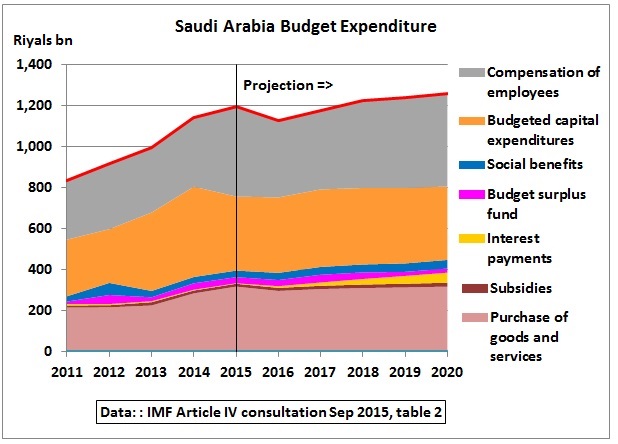
Fig1: Expenditure, Budgetary Central Government Operations
During the period of high oil prices until 2014, expenditure grew by 9-15% pa. In early 2015, King Salman disbursed a bonus of 50 bn Riyal to government employees, contributing to a 30% increase of the annual wage bill. Capital expenditure (transportation, health and education) includes the expansion works at Medina and Mecca.
Budget Balance
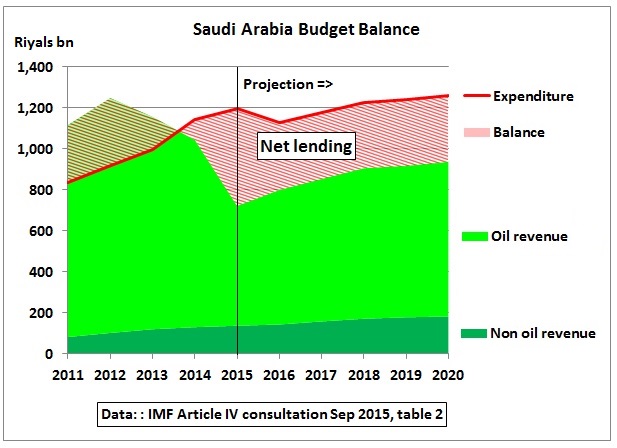
Fig 2: Budget revenue vs expenditure
Oil revenue dropped sharply, starting in 2013 and leading to a negative balance by 2014. It will get worse in 2015. It is clear that the pre 2015 trend cannot continue. The IMF proposes a budget adjustment scenario (ii, Fig 7) by initially reducing expenditure in 2016 and then increasing it moderately by 4% and later 1%. Oil revenue is assumed to grow along a recovery of oil prices. 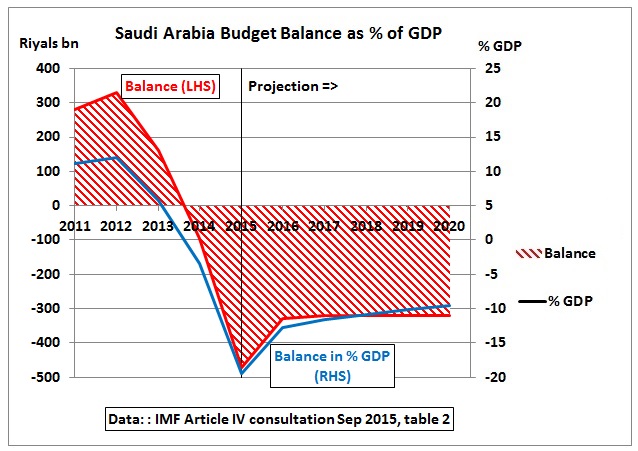
Fig 3: Budget balance as % of GDP
In Fig 3, we take the balance from Fig 2 and add a curve (blue) as percentage of GDP. In 2015, the deficit reaches 20% of GDP. For comparison: commodity dependent Australia had a budget deficit of -2.6% of GDP in 2014/15, the US estimate for 2015 is -2.7%.
Oil price assumptions
The underlying oil prices have been taken from the World Economic Outlook (WEO), assumed as follows: 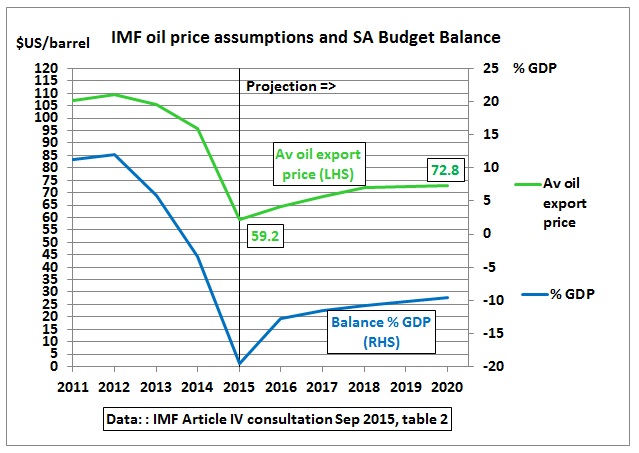
Fig 4: Oil price assumptions and Saudi budget balance
The IMF’s latest World Economic Outlook available at the time of the publication of the Article IV consultation was its July 2015 update:
|
9/7/2015 Oil Price Rebound Oil prices have rebounded more than expected in the second quarter of 2015, reflecting higher demand and expectations that oil production growth in the United States will slow faster than previously forecast. Nevertheless, the average annual oil price expected for 2015—US$59 a barrel—is in line with the oil price assumption in the April 2015 WEO, with a somewhat smaller increase forecast for 2016 and beyond, as global oil supply is running well above 2014 levels and global oil inventories are still rising. The reduction in oil investment may, however, lead to a somewhat weaker boost to activity in North America from lower oil prices than expected earlier. http://www.imf.org/external/pubs/ft/weo/2015/update/02/
|
This July 2015 update in turn was based on the WEO April 2015 as shown in the graph below: 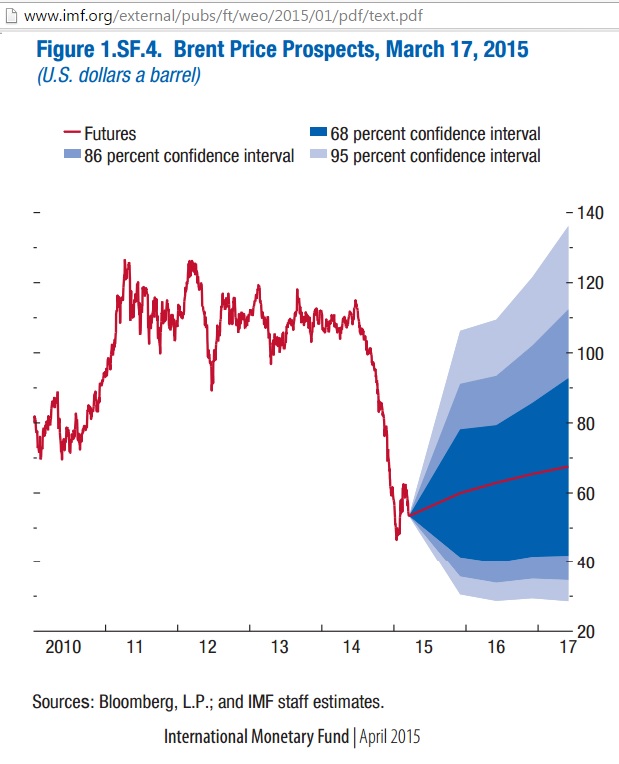
Fig 5: IMF Oil price scenarios in March 2015
http://www.imf.org/external/pubs/ft/weo/2015/01/pdf/text.pdf
The graph shows a huge variability in oil price assumptions for just the next 2 years.
Fiscal Break-even oil price
We have in every year 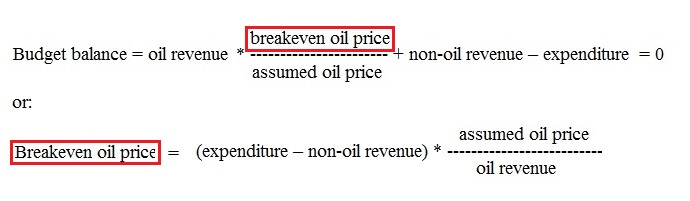 Whereby the oil revenue has been calculated on the basis of assumed oil production, oil exports and oil prices. Apart from these factors, the breakeven oil price mainly depends on expenditure and non-oil revenue.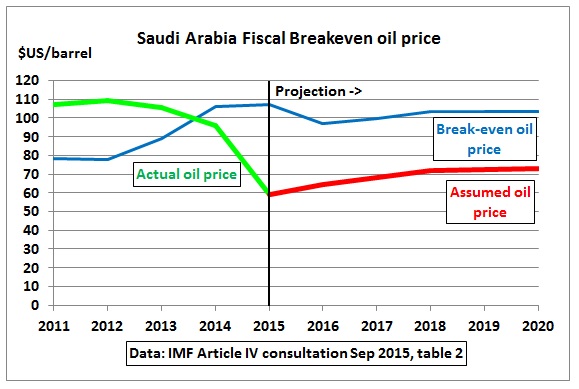
Fig 6: Fiscal breakeven oil price
We see that the fiscal breakeven oil price is around $US100 per barrel.
Fiscal scenarios and net financial wealth
The blue curves from Fig 3 and 4 can be found in the following IMF graph (bottom left panel) 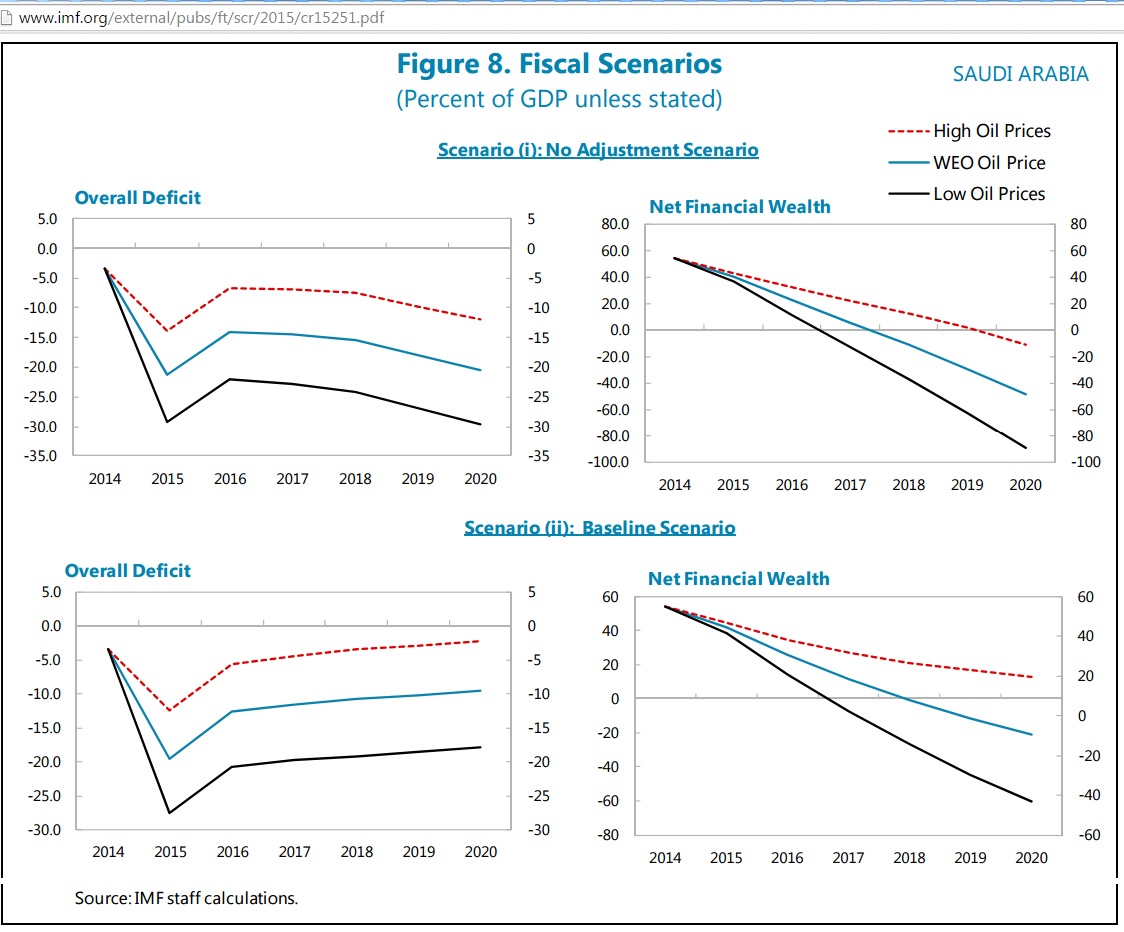
Fig 7 Fiscal scenarios for a range of oil prices
The top panels show the business as usual scenario, the bottom panels the budget adjustment scenario. High and low oil prices mean +- 25% from the WEO assumption. Financial wealth is defined as SAMA government deposits in the banking system less gross public debt. We can see in the bottom right panel that the baseline scenario (blue curve) crosses the zero wealth line in 2018. Let’s have a look at how this comes about: 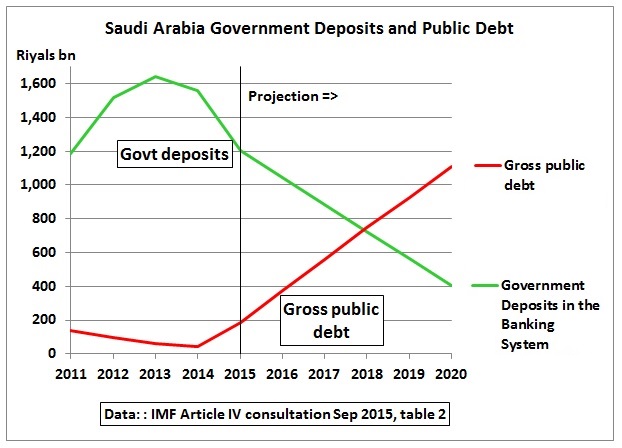
Fig 8: Government deposits and public debt
Government deposits already peaked in 2013 and are now estimated to steadily decline. Debt was very low in 2014 but is now increasing rapidly. The cross-over point is indeed in 2018. The net-wealth is the addition of these 2 curves.
External balance
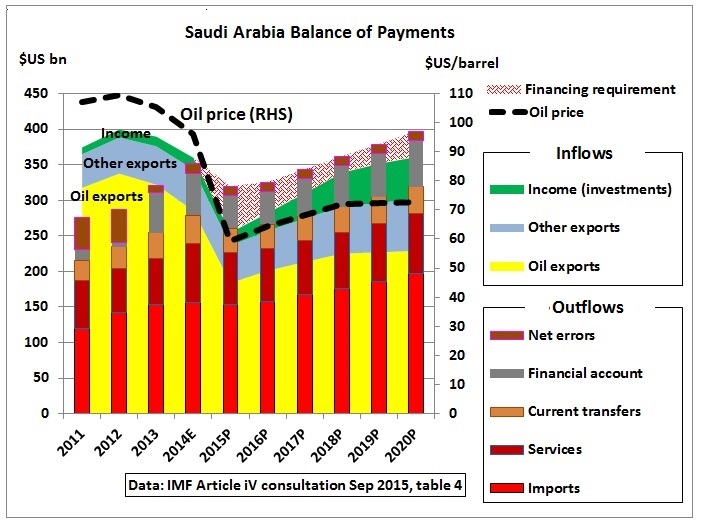
Fig 9: Balance of payments
The inflows are shown as areas and the outflows as columns. The main inflow is from exporting oil. After the oil price drop outflows exceed inflows. Around 80% of the value of oil exports is used for imports.
Breakeven oil price (external balance)
There is another type of breakeven oil price, which balances the current account. This condition can be formulated in following equation: 
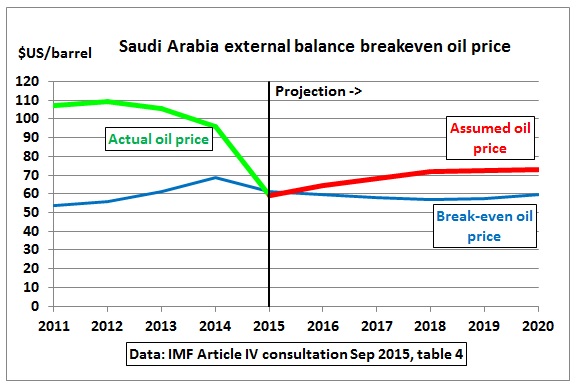
Fig 10: Breakeven oil price to bring current account to zero
We see that this breakeven oil price is much lower, at around $60 a barrel. The IMF report contains the following informative graph, bringing together both types of breakeven oil prices, for Saudi Arabia and neighbouring countries: 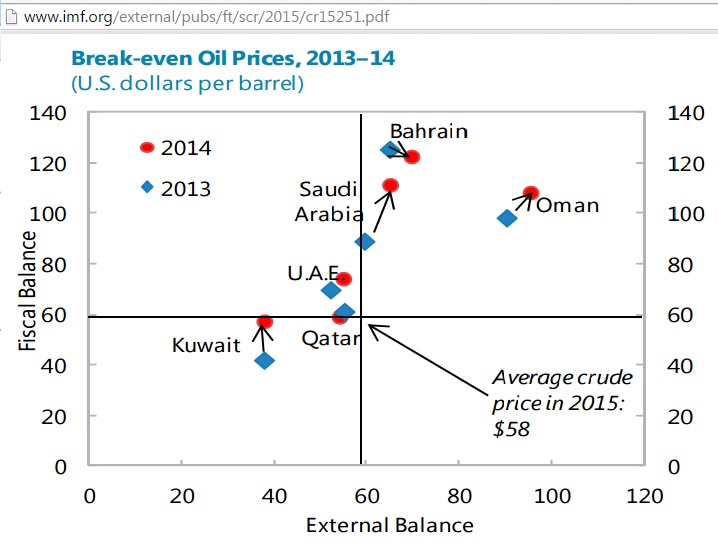
Fig 11: Breakeven oil prices for GCC countries
Net Foreign Assets
The financing requirements from Fig 9 reduce the net foreign assets of SAMA (Saudi Arabia Monetary Authority) as shown in this graph: 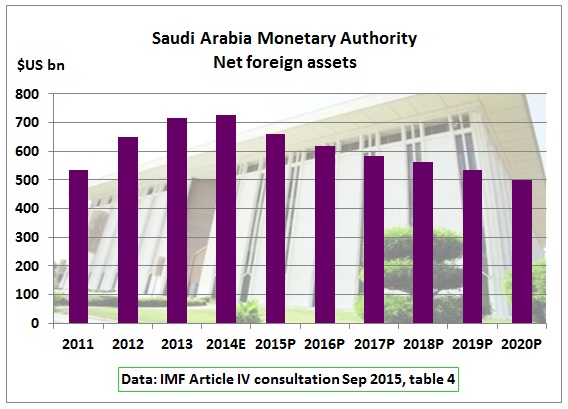
Fig 12: Saudi net foreign assets
Revised oil prices (October 2015)
Shortly after the publication of the Article IV consultation report a new World Economic Outlook was released with oil prices revised downwards, meaning the earlier report may have been too optimistic. WEO IMF Oct 2015 Oil prices are projected to increase gradually over the forecast horizon, from an average of $52 a barrel in 2015 to about $55 a barrel in 2017. 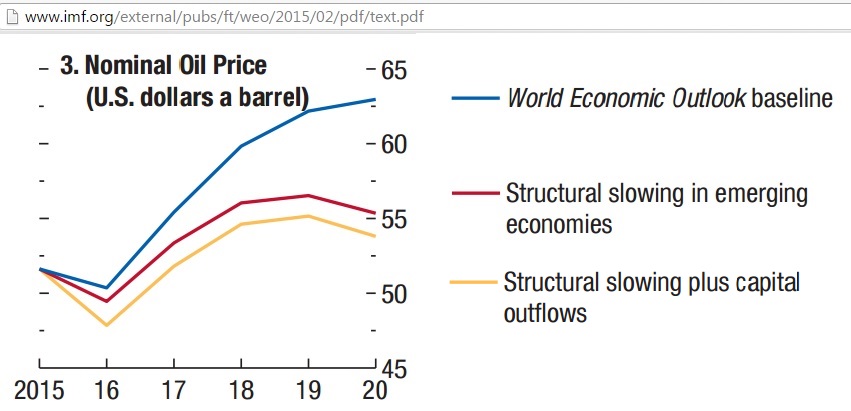
Fig 13: Nominal oil prices assumed by IMF in October 2015
http://www.imf.org/external/pubs/ft/weo/2015/02/pdf/text.pdf
Oil production and Export Assumptions
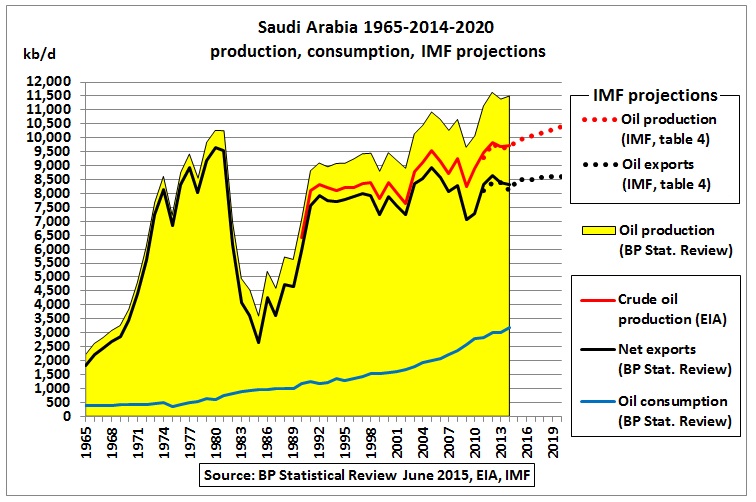
Fig 14: Saudi oil production and exports, actual and IMF assumptions
The IMF’s “oil production” in table 4 is crude oil, approximately in line with data from the EIA (International Energy Statistics), assumed to grow by another 700 kb/d to 10.4 mb/d by 2020. The IMF’s “oil exports” are similar to oil production (crude + NGLs) minus oil consumption from the BP Statistical Review. Exports are not assumed to increase. This implies that domestic consumption will increase by 700 kb/d over the next 5 years. Therefore, if the assumed production increase does not materialise, exports and therefore revenue will be lower than assumed
Conclusion
There are downside risks to the projections in the IMF Article IV report (September 2015). If oil prices remain lower than assumed and exports drop, the fiscal adjustment scenario would require to reduce expenditure further which will not be popular and may lead to domestic problems. Alternatively, the Saudi government would have to borrow more or draw additional funds from its foreign currency reserves. It is claimed that Saudi oil is geologically cheap to produce. What is clear is that it comes with a hidden price tag in the Saudi budget. The number on it is triple digit (Jeff Rubin) which is not good for an oil-dependent global economy as we have learned in 2011-2014. The only logical conclusion is that we have to make our economies less dependent on oil, as fast as possible.
Plantagenet on Sun, 18th Oct 2015 12:02 pm
KSA used to be the “swing producer.” When global oil production rose, KSA would cut their own output to keep global oil prices high. But starting in 2014 KSA changed the pya, and started producing full out. The result was a global oil glut.. KSA’s new policy of creating a global oil glut by pumping full out has backfired. Yes, they hurt Iran, Russia and the US by creating the oil glut, but they’ve also hurt themselves.
Cheers!
BobInget on Sun, 18th Oct 2015 12:05 pm
None of these excellent graphs or charts show us a dime of ‘defense’ expenditures.
Saudi Arabia is second only to its closest Allie, USA in military spending.
Now you say, what has military spending, ‘defense’ have anything to do with getting oil out of the ground and shipping it around the world?
Aramco, the Saudi oil company is 100% state owned. Chevron, Suncor, BP etc are ‘publicly owned’ and haven’t a ‘visible’ foreign policy.
Exxon can’t send bombers, launch missiles, if Exxon is angry with a competitor. Exxon, on its own can’t raise or lower oil prices (for longer then a few hours).
One needs to prorate the countless billions spent on tanks, planes, ordinance for KSA’s military and all the other hired guns in surrounding states. Fuel used to kill Muslim neighbors that otherwise could have been exported.
rockman on Sun, 18th Oct 2015 12:21 pm
And the same question: the “beak even price” of what: producing existing wells? Or drilling new exploration wells? Or drilling infield development wells?
First the cost to produce existing wells increases very slowly. And is a relatively low cost. But since the KSA will never release the details I can only quess: given they don’t have to deal with our EPA rules I’ll guess less then $15/bbl. Maybe a good bit less.
Second: The breal even price of drilling an exploratory well: no such metric exists. Ask yourself: what price is required to justify drilling a dry hole? Would you drill such a well if oil was selling for $299/bbl? That question itself is foolish since one doesn’t have the info until after drilling the well.
OK then what is the price needed go justify the risk/reward profile of a specific wildcat? Again there cannot be one set price: it depends on the level of risk and the size of the potential reward. For Prospect A that might be $90/bbl. For Prospect B it might be $15/bbl. And for Prospect C it could be $200/bbl.
And it isn’t even that simple: Company X might drill Prospect C but Company Y would’t because with their limited capex budget they can’t afford to risk drilling a dry hole no matter how big the reward.
As far as the KSA budget goes it has typically been a function of their revenue. Go back just 10 years and look at their budget: just a small fraction of the budgets they ran during the hihh priced oil years.
There is no one-price-fits-all scenario for the KSA or any other operator. Even for operators in the same theater each has their own pricibg requirements.
Simplistic short cut metrics such as a “break even price” might be convenient to use in brief generalizations. But that doesn’t change the fact they are meaningless. Always have been…always will be.
BobInget on Sun, 18th Oct 2015 1:48 pm
Rockman:
How much do ya suppose a 70 K CO/2 pipeline
costs to keep giants operating?
Uthmaniyah Fact Sheet: Pilot EOR using Anthropogenic Carbon Dioxide
Company/Alliance: Saudi Aramco
Location: Saudi Arabia
Start Date: Operational 2015
Size: 0.8 Mt/yr
CO2 Source: Hawiyah gas plant
Transportation: 70 Km onshore pipeline
Oil Field EOR Storage Site: Ghawar field
Injection Depth: N/A
Reservoir Type: Jurassic Carbonate limestones
Comments:
The objectives of the project are determination of incremental oil recovery (beyond water flooding), estimation of sequestered CO2, addressing the risks and uncertainties involved (including migration of CO2 within the reservoir), and identifying operational concerns. Specific CO2 monitoring objectives include developing a clear assessment of the CO2 potential (for both EOR and overall storage) and testing new technologies for CO2 monitoring.
Approximately 60–65% of all Saudi oil produced between 1948 and 2000 came from Ghawar. Cumulative production until April 2010 has exceeded 65 billion barrels. It was estimated that Ghawar produced about 5 million barrels of oil a day (6.25% of global production) in 2009. Ghawar also produces approximately 2 billion cubic feet of natural gas per day.
After 60 years of production, the field is depleted and Saudi Aramco is going to start CO2-EOR. The project will consist of 4 injection wells, 2 observation wells and 4 productions wells.
Project Link: Uthmaniyah Gas Plant webpage
Other Sources and Press Releases:
Saudi CO2-EOR project to be presented at CSLF meeting in Washington (October 2013)
CSLF endorses five new carbon capture projects (November 2013)
Date Modified August 12, 2015
Please send any comments, additions or corrections to csi@mit.edu
BobInget on Sun, 18th Oct 2015 4:36 pm
The oldest salesman joke:
Sure, we lose money on every item. But, we make it up with volume.
joe on Sun, 18th Oct 2015 5:22 pm
Problem is, every time oil goes up, so does production of tight oil, and then oversupply, so Saudi Arabias oil price dream of $100 without other entrants is a joke. Here’s a solution for world resource problems. CONDOMS!
green_achers on Sun, 18th Oct 2015 5:39 pm
Haw haw. Hey, kids, whenever you see a chart with real data on the left and projected data on the right, if there’s a major inflection or, even better, a complete change of direction right at the point the real data ends, you can safely ignore it.
makati1 on Sun, 18th Oct 2015 7:42 pm
So true, green. Lies are the only things in the news or articles these days. Propaganda to keep Western Capitalism alive for another day. And most people believe them because they want to. Denial is as high as the fake GDP and “growth” claimed by the countries around the world.
rockman on Sun, 18th Oct 2015 7:46 pm
Bob – The cost to operate such a pipeline isn’t typically that expensive. Once the infrastructure is in place it could be economical to run at $10/bbl…or less. But you probably mean the cost to build out such an EOR project. That could run into the hundreds of $millions if you include the CO2 sourcing. But from a economic evaluation standpoint such project are the least sensitive to current oil prices. They depend much more on long term price estimates then all other types of oil field projects. Most US EOR projects have been running for decades. That’s one reason so many overestimate their value with regards to oil production rates: the typical increase (if any at all) is small. Their real value is to slow or even stall depletion rates: can double+ the commercial life of a field. But that second life with typically a slow rate.
But your question brings up a better way to explain my point about the BS about these “break even prices” some folks are MAKING UP. Yes: making up numbers out of thin air. Consider the $106/bbl made up number. And we’ll just focus on one type of project…your example: CO2 EOR. Very simply is the economic value of the CO2 EOR project currently being built in Texas the same as your Saudi CO2 project: do they both require $106/bbl to break even? Do either require $106/bbl? There’s no way to estimate that number for the KSA project given their secrecy. But what about the Texas project with much details available: go ahead…make my day…just try. LOL. You can’t nor can anyone else: still not enough available data.
So lets stick with KSA EOR projects. They are planning a number of different EOR efforts. Do you or anyone else here thinks they all have identical costs and value? IOW at $X/bbl the economic value of each will vary widely. So how would the $106/bbl BEP be valid for each?
OK, now lets consider KSA exploration wells: is each going to have the same ROR at $106/bbl? Ridiculous for anyone to think so. How about infield horizontal wells in a number of different fields: same ROR for each at $106/bbl? What about 10 hz wells drilled just in the Ghawar reservoir: same ROR at $106/bbl? If anyone thinks so they obviously have no understanding of reservoir variability.
Now let’s jump to the N Sea: Is every proposed project out there today going to have the same ROR at $X/bbl? Now let’s jump to the Eagle Ford Shale play: is the potential ROR for those projects the same at $45/bbl? At $60/bbl? At $100/bbl? Obviously the answer to each question is No! IOW what is the identical BEP for each of those wells.
So exactly how can anyone say the BEP for all the projects in any play in any country is a set number? Even trying to represent it as an average price makes no sense: if one project requires $50/bbl and another requires $100/bbl is the average BEP price $75/bbl? Does that metric even make sense since at $75/bbl the project requiring $100/bbl won’t be done?
I hope at least a few folks are beginning to realize that all those “break even prices” for any set of projects makes no sense and are purely made up. They don’t even rate as wild ass guesses since there is no answer when speaking in general terms of a country, trend or even a specific field. Every oil/NG drilling, EOR, production, etc. effort has a unique ROR based on a specific price of oil/NG.
rockman on Sun, 18th Oct 2015 7:50 pm
Joe – “so Saudi Arabia’s oil price dream of $100 without other entrants is a joke.” Which should be a clue to anyone with common sense to realize that was never the motivation for the KSA not reducing production.
Walt Keating on Sun, 18th Oct 2015 9:17 pm
interesting
sherry on Sun, 18th Oct 2015 9:57 pm
greaqt
makati1 on Mon, 19th Oct 2015 6:52 am
Rockman, there is the same ignorance in my profession as construction estimator. It is about like asking how much a 2,000 sq.ft. home would cost. I would always answer, with a smile, “What do you want it to cost?” I had a form booklet I made up that listed the common options for every part of a house. There were 36 pages of choices with boxes that could be checked or filled out. For instance:
Master bedroom flooring –
Carpet? [ ] With [ ]or W/o [ ] pad? Cut? [ ] Loop? [ ] Shag? [ ] Color? _________ Pattern? _______ Textured?[ ] Wool? [ ] Synthetic? [ ]
Wood? [ ] Oak? [ ]Pine? [ ] Teak? [ ]Walnut? [ ] Other? _______ Stain? [ ] Natural? [ ] Tongue & Groove? [ ] Parquet? [ ] Plank? [ ]
Tile? [ ] Ceramic? [ ] Vinyl? [ ] Color? _______ Pattern? [ ]Marble? [ ] Granite? [ ]
That is one small part of one room and could vary in price from $2 to $200 per square foot easily.
It always shocked the client when I handed them the booklet and asked them to take it home and reschedule a meeting after the decisions had been mostly agreed upon by both of them. You may be surprised that some never rescheduled because they could not agree on enough of the hundreds of choices to settle on a design and a contracted cost. Sometimes the arguments started before they got to the parking lot. LOL
I understand the cost of drilling and recovering petroleum to have almost infinite possibilities.
rockman on Mon, 19th Oct 2015 9:39 am
mak – Mucho thanks. Your example might make it even clearer to some folks: it’s not that any answer to such questions is wrong but the question (like what is the break even price of oil that justifies drilling an Eagle Ford well) itself makes no sense. Even using an average of all the homes you built (say $150,000) makes no sense if they select a very upscale layout where your cost alone would be $200,000. You’re not going to build such a house for a $50,000 loss. And no one is going to drill an EFS well if they need $90/bbl to justify it today.