
Peak Oil is You
Donate Bitcoins ;-) or Paypal :-)


Page added on November 8, 2015

Saudi Arabia will not stop pumping
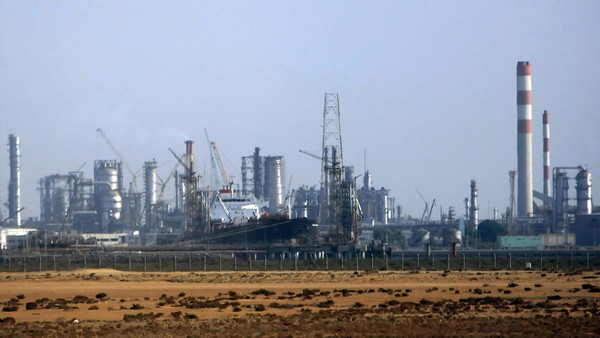
Saudi Arabia is determined to stick to its policy of pumping enough oil to protect its global market share, despite the financial pain inflicted on the kingdom’s economy.
Officials have told the Financial Times that the world’s largest exporter will produce enough oil to meet customer demand, indicating that the kingdom is in no mood to change tack ahead of the December 4 meeting in Vienna of the producers’ cartel Opec.
“The only thing to do now is to let the market do its job,” said Khalid al-Falih, chairman of the state-owned Saudi Arabian Oil Company (Saudi Aramco). “There have been no conversations here that say we should cut production now that we’ve seen the pain.”
Saudi Arabia rocked oil markets last November when Opec decided against production cuts, making clear that the kingdom was abandoning its policy of reducing supplies to stabilise the price.
Since then, the oil price has collapsed from a high of $115 a barrel last year to $50 a barrel.
Global oil companies, which have put hundreds of billions of dollars of investment on hold as a result of low prices, will be disappointed by the Kingdom’s stance.
The effect on business sentiment has sparked domestic criticism of the market share policy engineered by Ali al-Naimi, the oil minister, and agreed by both the late King Abdullah and the current King Salman, who was crown prince last year and ascended the throne in January.
Officials in Riyadh say their policy will be vindicated in one to two years when revived demand swallows the global oil glut and prices begin to recover.
They argue that in the past, Opec output cuts raised prices to levels where more expensive production, such as shale and deep-sea oil, could flourish. Moving ahead, Opec — led by Saudi Arabia — plans to pump as much as it can towards meeting global oil demand, leaving higher-cost producers to make up the remainder.
$100 oil was perceived as a guarantee of no risk for investment. Now, the insurance policy that’s been provided free of charge by Saudi Arabia does not exist any more– Khalid al-Falih, chairman of Saudi Aramco
For higher-cost producers, “$100 oil was perceived as a guarantee of no risk for investment”, said Mr Falih. “Now, the insurance policy that’s been provided free of charge by Saudi Arabia does not exist any more.”
Mr Falih, who is also health minister, forecast the market would come into balance in the new year, and then demand would start to suck up inventories and storage on oil tankers. “Hopefully, however, there will be enough investment to meet the needs beyond 2017.”
Other officials also estimated that it would probably take one to two years for the market to clear up the oil market glut, allowing prices to recover towards $70-$80 a barrel.
The fall in government revenues has pushed Saudi Arabia’s oil-dependent economy into a fiscal crunch. To fund this year’s budget deficit of 20 per cent of gross domestic product, the government is dipping into its massive financial reserves.
Officials are also working on a more sustainable strategy to curtail spending, which has ballooned in recent years.
Delaying infrastructure projects, such as the Riyadh underground, and enforcing a spending squeeze across government departments has brought a slowdown in the private sector.
Senior officials dismiss the domestic criticism of the oil policy, saying other producers would have quickly replaced any Saudi production cuts with new output.
Officials, however, acknowledge that the extent of the oil price slump has been deeper than initially envisaged.
“We knew that it was going to be painful but the extent of the pain went beyond our expectations,” said Mr Falih. “The market has overreacted as it typically does in such down-cycles.”
But oil producers are now cancelling projects outright, rather than just deferring them, raising concerns of a future jump in price if demand outpaces supply.
“Now everyone is running to the exit and projects are being cancelled,” said Mr Falih. “That’s necessary, but what will happen five to 10 years from now? Investment is needed.”
20 Comments on "Saudi Arabia will not stop pumping"
makati1 on Sun, 8th Nov 2015 7:29 pm
“Now everyone is running to the exit and projects are being cancelled,” said Mr Falih. “That’s necessary, but what will happen five to 10 years from now? Investment is needed.”
5-10 years from now, at our current rate of decline, there will not be a demand for more oil than they can produce with what is left of the sources. Personal cars will have disappeared for the most part. Plastic junk will also have gone the way of the Dodo. History. Necessities like food, shelter and clothing will be claiming most of the consumer’s income.
That is, IF we don’t have a nuke exchange before then. If we do, the survivors will be experiencing a nuclear winter while they suffer from their many cancers. Let’s hope for just the bad economy. The lessor of two evils.
Pennsyguy on Sun, 8th Nov 2015 7:45 pm
“Necessities like food,shelter…..” Well said Makati, but you forgot to factor in food shortages, floods, migrations, etc. due to climate change.
Plantagenet on Sun, 8th Nov 2015 7:56 pm
KSA may be able to carry on producing oil at these low prices, but higher priced producers like US TOS producers, Venezuela, deep water offshore, etc. can’t afford to operate at these low prices.
The end of the oil glut is in sight.
Boat on Sun, 8th Nov 2015 8:15 pm
Plant,
I think fracking will put a cap on oil prices. No more $100 oil. At $80 the drillers will be back in force.
Guess #2 $60 oil by end of February. $70 by August.
One way this forecast could be wrong is at what price will drilled wells that have not been fracked (DUC} hit the market. What price will they pick to finish the well and market the oil.
freak on Sun, 8th Nov 2015 9:19 pm
makati1,
A limited nuke exchange is going to be the globalist answer to blame collapse on and to retain control over the masses under one system.
Joel Skousen makes a great case why World War 3 is inevitable.
https://www.youtube.com/watch?v=9TACEt6RA9Q
makati1 on Sun, 8th Nov 2015 9:24 pm
freak, I see the same event considering how things are going now. Which side hits the red button first is still debatable. Cornered animals/governments can be savage and suicidal.
makati1 on Sun, 8th Nov 2015 9:29 pm
Pennsyguy, I didn’t forget, but they are more distant than a war or even collapse. Migrations will happen in a few places sooner, but most migrations, currently, are not caused by natural events, but by man made events.
The race is on to see which event will be the cause of human extinction. 2100 is going to see a totally different world in a most negative way. Glad I will not be here to witness it. Maybe no-one will be here?
Peak Oil Prognosticator on Sun, 8th Nov 2015 11:52 pm
The Saudis won’t stop pumping!
Except for they will because every country eventually will curtail their production. Saudi Arabia in terms of oil was no very different from America. America’s real honeymoon with growing oil resources was the 1930’s through the 1960’s. Man we though we would never peak in oil, but sure enough, we did.
Saudi Arabia has had it’s honeymoon from the time it bought out Aramco in 1980, re-naming it Saudi Aramco until now. That honeymoon is for all practical terms over. Saudi Arabia has recently gone into debt in order to finance their government. Similarly after the U.S. peaked in 1971 our debt has exploded on the world stage.
The main difference in our peaks is that America had other oil drenched nations to either bully or become friends with (like the Saudis). Who will the Saudis run too?
@Mak, yes I too think human extinction will occur, 2100 isn’t a bad date for it. Perhaps there will be isolated pockets of tribesman or some unfortunate cave-dwellers existing. But their existence will seem like the worst dystopia imaginable compared to the modern day conveniences.
makati1 on Mon, 9th Nov 2015 6:27 am
P.O.P., I think they will have very short, brutal lives. Worse than our hunter and gatherer ancestors. They will have no clean, unpolluted water, soil will be unable to grow much as it has either been leeched of all nutrients and/or radioactive. And most animals/fish/birds will be extinct. Not to mention weather.
After all, there are 400+ nuclear sites that likely will never be properly decommissioned and the spent fuels safely stored where they cannot be harmful. And thousands of nuclear bombs to add radioactivity, even if they are never used. Add in air pollution, high temps and it sounds more like hell than a place to live and raise a family.
rockman on Mon, 9th Nov 2015 6:44 am
Plant – “KSA may be able to carry on producing oil at these low prices, but higher priced producers like US TOS producers, Venezuela, deep water offshore, etc. can’t afford to operate at these low prices.” Once again such statements will confuse some folks. I have to keep pounding the point that the cost to producer existing wells is significantly less than the cost to develop new reserves. And the LOE (Lease Operating Expense) for many US operators (including many shale payers) isn’t any more than it is for the KSA. Some probably less…like the Rockman producing 400 bopd well in La that costs about $2/bbl to produce. Of course the cost to DRILL that well was significantly more than the cost to PRODUCE it.
And as far as that goes we don’t have enough documented data to prove that it would cost the KSA significantly less to develop NEW RESERVES than many US operators. IOW when was the last time you saw the KSA bring in a new big discovery? Seems all we’ve seen posted is here efforts to bring on fields that were discovered years if not decades ago. Think what those cost must be if they were fully developed when oil was bouncing around 4100/bbl. In fact when was the last time you saw the KSA announce the discovery of a NEW FIELD?
And if you think it will cost the KSA less to drill Deep Water wells in the Red Sea then a DW well in the GOM you are very wrong. For the last overseas DW well I worked on for Devon it cost $54 million to just move the rig from where it was to where we were going to drill. IOW before the well even spudded it had had already cost about $60 million.
shallow sand on Mon, 9th Nov 2015 6:58 am
I’d guess some Gulf oil is not as cheap to operate as they’d have us believe, also.
Steamfloods, water floods, CO2 floods all add costs. Rumors that Warfa is shut down not just because KSA/Kuwait disputes, but due to low oil prices.
Recently saw LOE for SACROC. $29 per BOE, $48 LOE plus CAPEX. That is non-operated, I’ll bet Kinder Morgan is hitting the non-ops hard on CO2 supply.
Not saying middle east that high, but doubt EOR there is $1-2 per barrel either.
rockman on Mon, 9th Nov 2015 8:34 am
shallow – Overall what’s a good ball park number for your costs per bbl to PRODUCE your oil wells?
paulo1 on Mon, 9th Nov 2015 9:08 am
Great comments!!!
Nice the pervert isn’t back with his ramblings about bodily functions, medical procedures, and his yen for sharing porn sites.
Was he banned? Shot?
Anyway…have a great day people.
shortonoil on Mon, 9th Nov 2015 10:16 am
“Saudi Arabia rocked oil markets last November when OPEC decided against production cuts, making clear that the kingdom was abandoning its policy of reducing supplies to stabilize the price.
Since then, the oil price has collapsed from a high of $115 a barrel last year to $50 a barrel.”
“Since then, the oil price has collapsed from a high of $115” totally uninformed, or downright disingenuous? The price began to decline in June of 2014, and by the time OPEC met in November it had fallen into the $60 range. OPEC never had a policy to stabilize price. Saudi Arabia did increase production to bring it down once, but since the 1980-1985 cut to raise prices they have merely responded to the market. Total goal seeking BS, and sell the Saudi Oil Boggy Man news!
By our calculation it would require at least a 4 mb/d cut to bring the price back to this curve, which is now about $68:
http://www.thehillsgroup.org/depletion2_022.htm
OPEC would not receive enough increase from the cut to compensate for the lost revenue. Only a cut by everyone would make economic sense. FT must think OPEC is run by a pack of idiots. It’s not!
http://www.thehillsgroup.org/
Boat on Mon, 9th Nov 2015 11:59 am
short,
By our calculation it would require at least a 4 mb/d cut to bring the price back to this curve, which is now about $68:
http://www.thehillsgroup.org/depletion2_022.htm
So are you now finally admitting that there is a glut? If OPEC or others did decide to drop 4 mb/d and prices did go to $68 the frackers would jump back in and put pressure on for further cuts.
So the final conclusion is there is simply to much oil to support $68. Your numbers. Lol So much for depletion problems.
bs on Mon, 9th Nov 2015 1:48 pm
In the Bakken, I believe the DUC backlog has already been used. If you take the # of active rigs and assume some percentage is used for workovers (I used 30%) then subtract the monthly completions, there are no more DUCs as of this month.
The depletion in the Bakken since April 2015 has been nonexistent from a high completion rate with much smaller rig counts.
shortonoil on Mon, 9th Nov 2015 2:10 pm
Once the banks find enough suckers to unload their high risk energy junk onto, $68 won’t be enough to buy a fracker a beer at the local pub. Anyway, until the FED decides to stop printing excess liquidity, also known as committing suicide, prices are not going back up.
rockman on Mon, 9th Nov 2015 3:31 pm
bs – Just my WAG but I would probably agree about the lack of DUC’s or at least a significantly reduced number. OTOH if the Bakken operators conduct business as they do in the Eagle Ford Shale, drilling rigs are not used to complete wells…we use much smaller/less expensive “workover rigs” to complete wells.
Using a w/o rig to complete a well doesn’t go thru the same process as getting a drill rig permit so they aren’t as easy to track. Also, depending on how the drill rig left the well they might not need a workover rig to do the frac.
Boat on Mon, 9th Nov 2015 4:40 pm
bs,
If well performance continues to increase (i.e. more proppant per well leading to higher initial production rates) for the wells currently under development, shale production will not decrease at the same pace as activity. Wells under development currently correspond to ~80% of the total spudded 2015 well count, as shown in Figure 3. The wells “under development” include drilled, not yet producing wells and not yet drilled wells. In fact, according to in-house research and analysis, ~43% of under development wells of 2015 are wells already drilled but pending completion (DUC). If the DUC wells are completed during 2016, shale production will increase during this year; if the DUC wells continues or increases during 2016, shale production can remain constant year-over-year. Hence, the DUC wells play a significant role when forecasting the 2016 North American shale production.
I just find the information, no clue if it is a spin or reality but there seems to be plenty of other news to support this view. Just one more thing to keep track of over the next year and see how it unfolds.
the link
http://www.rystadenergy.com/AboutUs/NewsCenter/Newsletters/UsArchive/shale-newsletter-september-2015
shallow sand on Mon, 9th Nov 2015 10:20 pm
ROCKMAN, more than above quoted SACROC LOE, less than above quoted SACROC LOE plus CAPEX.
I have noticed something around here, maybe you have experienced this.
The more debt an operator has, the lower he claims his LOE per bbl is.
We haven’t noticed the electric co-op cutting electricity rates, but apparently they have for some of our neighboring producers, LOL!
Seriously, though, $60 WTI would be a blessing for us. This ones long past gotten old.