
Peak Oil is You

Donate Bitcoins ;-) or Paypal :-)


Page added on January 4, 2015

Oil’s future hangs between the emirates and the shales of Eagle Ford
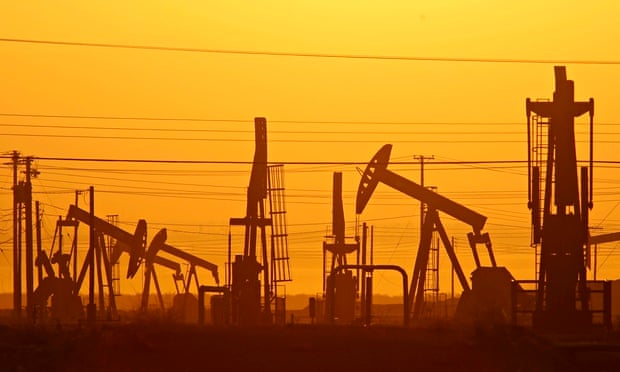
The decision by president Barack Obama to open the door to US oil exports seeped out of Washington in a low-key manner last week, but the impact could be as explosive as a New Year’s Eve firework display.
The ban – imposed after the Middle East oil embargoes in the 1970s – has made it close to impossible to ship abroad the fruits of America’s shale bonanza. It also long looked wrong-headed in the home of free trade.
The US department of commerce quietly overturned the four-decade-old policy by saying it had started to approve a backlog of requests to sell processed light oil to foreign buyers. The issue is tremendously sensitive, which is possibly why the announcement came out at a time of year when most policymakers were still at home enjoying the Christmas holidays with their families.
Many manufacturers and many domestic consumers are totally opposed to domestic oil or gas production being exported, on the grounds that it could bring an end to cheaper local energy supplies and competitive advantages. But prospectors from the shales in Eagle Ford, Texas and Marcellus, Pennsylvania have been campaigning in Washington for a change in the law for some time, their calls growing more urgent now that some face potential financial trouble as the price of oil plunges from $115 per barrel down to $56.
Meanwhile American oil sometimes sells at $15 per barrel less on the local market as supply exceeds demand: not good for the frackers already burdened by their relatively high-cost operations.
But by opening the door to exports – of slightly refined products – Washington has struck a more serious blow to its export rivals in Saudi Arabia, Russia and elsewhere. Ed Morse, global head of commodities research at Citigroup bank, had no trouble predicting that the move would “open up the floodgates to substantial increases in [US] exports by end 2015”.
Advertisement
The enormous growth in American production – alongside lower-than-expected world economic activity – has been a key trigger for the international crude price collapse. The planned issue of new US export licences is seen by many as another stake in the heart of the Opec organisation, which has been struggling to find a consensus among its members about what to do. The cartel has watched with concern as the value of oil has fallen over the last six months, but has so far refused to cut its own production targets in a bid to force an upturn.
Supplies of the US’s light, “sweet” crude will be a particular threat to Opec members such as Nigeria, which pumps a similar variety of oil. And although the changes from the department of commerce are couched in complex language and with plenty of caveats, many experts believe it could hasten the path to full crude oil exports from the US.
The introduction of the US to international markets can only be good for oil users, in that it broadens the supply sector and makes the commodity less vulnerable to geopolitical upheaval.
A very small number of savvy energy analysts had predicted the current price slump – they had long argued that the price of oil has been overvalued by at least $20 due to traders and speculators overemphasising the threats to global supplies due to events such as an upsurge in Iraqi violence or Russian political posturing.
The question now is whether Opec will be able to respond with a production cut in the spring. Some cartel members are facing real financial problems and are desperate to see more output constraint, but no one knows whether it’s the Saudi sheikhs or the Eagle Ford frackers who hold the winning hand.
Last week’s development threatens the balance of power in the oil world, but anything that heralds a more stable crude price is good news for consumers globally.
Britain, beware Greeks bearing snap general elections
It is not hard to imagine leaders in Madrid, Lisbon and Rome fearing the bitter general election that is due to shape Greece’s future and play a key role in setting the continent’s economic course this year. The snap poll, called following parliament’s failure to elect a new president, will bring added instability to a eurozone already mired in economic stagnation and internal wrangling.
Yet last week, even as the anti-euro party Syriza scented victory and made clear it was preparing for a fight with Brussels, the financial markets remained calm. The Italian government refinanced €3bn (£2.3bn) of sovereign debt at an average interest rate of 1.89%, its lowest on record. It seems the spreadsheets that control market thinking have already priced in the prospect of Greece being cut adrift by its brothers and sisters. If the results of the election on 25 January show that Greeks are prepared to quit the euro unless they can extract major concessions, then the message seems to be: let them walk.
But while Brussels has succeeded in persuading fund managers there is a financial firewall sufficient to protect them from the consequences of Syriza’s ascendancy, the situation cannot be seen just in terms of money. A victory for Syriza will be viewed as a triumph for people power and, in the short term at least, a successful rebellion against the intellectually bankrupt pursuit of neverending austerity. There will be many in Europe who will cheer. At the very least, another period of uncertainty will begin, delaying the much prayed-for recovery in the eurozone’s economic fortunes.
It may prompt the European Central Bank (ECB) to cut the cost of credit with a first round of quantitative easing. ECB president Mario Draghi has hinted as much in his latest press conferences and interviews. But this belated move might keep Italian debt-servicing costs at all-time lows, it will do little to resolve the austerity argument. The first impact could be felt by the UK, which will hold its general election soon after the Greeks have their turn. A wounded and weakened Europe will take centre stage, bolstering Eurosceptic parties and harming Britain’s prospects as a trading nation.
Some economists are more equal than others
Rock stars, those bastions of counterculture, are often co-opted by the powers they claim to undermine: Sir Mick Jagger being a case in point. So it is refreshing that Thomas Piketty, France’s economic rock star, has done the decent thing and turned down his country’s highest distinction – the Legion of Honour. The 43-year-old stoked the global debate over equality last year with his best-selling tome, Capital, so it is appropriate that Piketty slammed the award’s hegemonic symbolism. “I don’t believe it’s the role of the government to decide who is honourable,” he said. More importantly, Piketty’s message was: you cannot atone for social injustice by conferring gongs on those who draw attention to it. And, as he indicated, his message to François Hollande should not just be restricted to the Elysée. “They’d be better off concentrating on boosting growth in France and Europe.”
| The Guardian |
10 Comments on "Oil’s future hangs between the emirates and the shales of Eagle Ford"
penury on Sun, 4th Jan 2015 10:20 am
As the EURO expands into the Ea. Europe countries the financial backing of the currency becomes riskier by the day.Germany cannot support the entire EU. Goldman alumni who currently rule Europe are in for a rude shock trying to incorporate, Poland, Lithuania, Ukraine, and Moldova into the currency. Debts denominated in Dollars will destroy the economies of these nations which have a currency which is declining in value, while the debt is owed in a currency whose value is rising.
Perk Earl on Sun, 4th Jan 2015 3:18 pm
“Many manufacturers and many domestic consumers are totally opposed to domestic oil or gas production being exported, on the grounds that it could bring an end to cheaper local energy supplies and competitive advantages.”
Let’s use some logic here; if US domestic oil producers make more by selling it abroad, then US consumers will pay more.
Since all decisions made in DC seek to appease big business BEFORE any consideration for its citizens, then exportation is assured.
tahoe1780 on Sun, 4th Jan 2015 5:22 pm
Penury – http://www.zerohedge.com/news/2015-01-04/russias-startling-proposal-europe-dump-us-join-eurasian-economic-union
Bob Owens on Sun, 4th Jan 2015 6:55 pm
Oil’s future does NOT hang between SA and shale oil. What you are seeing is the law of supply & demand in action. 5 years of high prices have finally driven the world into recession, deflation, lower wages and reduced oil demand. This malaise will probably continue for the next 5 years.
Go Speed Racer on Sun, 4th Jan 2015 11:40 pm
There is something sinister and twisted about this article. Since we are a net importer, the real issue is exporting one grade, but importing a different grade.
Its written to throw red meat to the worshippers of Fox News, who think we are a net oil producer if only Obam wasn’t president. In reality, there is something wrong with the grade of oil from USA Shale.
So we export the crummy stuff, import the good stuff, because we are a net oil importer. The faithful of Fox News do not wish to hear ‘net oil importer’. They only want to hear ‘USA is oil exporter’.
Dredd on Mon, 5th Jan 2015 6:25 am
Reminds me of surgeons talking about the price of poison as a solution to the thousands who poison themselves each year.
westexas on Mon, 5th Jan 2015 7:21 am
Meanwhile, the most recent short term EIA data show that US net total liquids imports increased from 4.8 mbpd at the end of October to 5.9 mbpd at the end of December (four week running average data), and the US remains reliant on net crude oil imports for 44% of the crude oil processed daily in US refineries.
rockman on Mon, 5th Jan 2015 7:29 am
“The ban – imposed after the Middle East oil embargoes in the 1970s – has made it close to impossible to ship abroad the fruits of America’s shale bonanza.” More complete bullsh*t. In fact, if the writer truly does know something about the oil biz this falls in to the category of a big fat lie.
First, in the last week of Dec 2014, according to the EIA, the US was exporting oil, along with the “fruits of our shale bonanza”, at the rate of 141 MILLION BBLS OF OIL PER YEAR. Oil exports from the U.S. have risen to the highest level in 15 years as Canadian refineries replaced more expensive imports from Europe and West Africa with shale oil from North Dakota and Texas.
But that’s not even the big story. As pointed out many times before the US current exports refined products (for which there is no ban) made from about 3 million bbls of oil per day. So what’s the practical difference between exporting 1.2 BILLION BBLS OF OIL PER YEAR and exporting the refined products made from 1.2 BILLION BBLS OF OIL PER YEAR?
Just utter bullsh*t meant to confuse the sheeple and distract them from the reality of PO IMHO.
GregT on Mon, 5th Jan 2015 8:55 am
The articles coming out of the MSM just keep getting more and more ridiculous. I can’t help but wonder if it is some kind of a conspiracy to keep the sheep complacent, of if these people are genuinely this stupid? Maybe a little of both?
ghung on Mon, 5th Jan 2015 8:58 am
Go Speed Racer: “Since we are a net importer, the real issue is exporting one grade, but importing a different grade…”
I left a comment at the original article covering that often ignored fact. Not sure why others from this forum don’t do the same rather than preaching to the PO choir.
“Its written to throw red meat to the worshippers of Fox News…”
I doubt Fox News viewers read the Guardian (UK) much. Not even sure how many Fox viewers can comprehend/read so well at all.