
Peak Oil is You

Donate Bitcoins ;-) or Paypal :-)


Page added on May 15, 2011

Israel gas deal sparks attacks in Egypt
Flames shot into the sky in the northern Sinai desert, close to Egypt’s border with Israel. It was the second attack this year on the al-Sabil gas terminal – and the third attempt to sabotage a network of pipelines that supplies Israel with natural gas.
It’s not clear who carried out the attack on April 27 – but it once more drew attention to a controversial deal to supply natural gas to Israel – a deal that allegedly involved the ousted President, Hosni Mubarak, his family and close associates.
In 2005, Egypt’s Eastern Mediterranean Gas Company agreed to sell gas to Israel’s Electric Corporation. The exports began three years later and amount to some 1.5 billion cubic meters.
It was never a popular deal in a country where animosity to Israel is still common, even 30 years after a peace accord was signed. Egypt’s opposition says it is “illegal” and that ousted Egyptian President Hosni Mubarak’s government kept negotiations secret. They also claim the 15-year gas deal is “unethical” and “insulting” to the Palestinians across the border in Gaza.
One of the most active opponents of the deal is Talaat Sadat, the nephew of assassinated Egyptian president Anwar Sadat, who signed the Camp David Peace Treaty with Israel in 1979. Other opponents launched a legal challenge to the deal; and in February 2010 a court in Cairo ordered a halt to gas exports to Israel. The government appealed, saying the contract was valid and must be honored.
Some oppose the deal because it exports energy supplies that Egypt badly needs. “By exporting natural gas we run the risk of not securing our energy needs. This is serious,” commented Ayman Jaheen, general manager of the Egyptian Natural Gas Holding Company.
But many more reject it because of the alleged graft involved.
“There is great corruption in this agreement. They are neglecting a final court decision and they will have to pay for that,” said energy consultant Ibrahim Zahran, who brought the case against the government.
“Under Mubarak’s regime the gas was sold to Israel for approximately 75 cents per million BTUs (British Thermal Units). The going market price at the time of the deal was around 6 dollars per million BTUs,” says Zahran.
The general prosecutor’s office in Cairo is pursuing officials who allegedly profited from the contract. Last month it issued charges against former Oil Minister Sameh Fahmy and six of his assistants. They were accused of squandering public funds and are imprisoned while investigations proceed. Egyptian media quote Fahmy as saying that the deal had been the responsibility of former President Mubarak, and he had nothing to do with it.
The prosecutor has also sent investigators to the resort of Sharm El Sheikh to question Mubarak who has been detained in hospital due to illness. Accounts in the Egyptian press say Mubarak insisted “the responsible committees submitted a report to me saying the price Israel was offering was in accordance with world prices.”
Mubarak’s sons, Gamal and Ala’a, who are currently detained in Cairo’s Tura Prison, have also been questioned about the gas deal – and specifically about commissions they may have received. The Mubaraks’ attorney, Farid El Deeb, refused to comment on the case.
The deal appears to have involved others close to the Mubaraks, including billionaire Hussein Salem, a close confidant of Hosni Mubarak. The prosecutors’ office has asked for help from Interpol in apprehending Salem, who is accused of paying Mubarak a commission in return for a monopoly on the sale of natural gas to Israel and remains a shareholder in Eastern Mediterranean Gas.
The whereabouts of 77-year old Salem are unknown. According to Egyptian Justice Minister Mohamed Al-Guindy, Salem fled the country immediately after Mubarak stepped down. Al-Guindy told CNN Interpol was co-operating with efforts to apprehend both Hussein Salem and Yousef Boutros Ghali, the former minister of finance.
Al-Guindy also said that the Oil Ministry had “negotiated a new price for the gas exports to Israel up to global standards and I believe this is sufficient.”
The Israelis have also responded to the controversy. Uzi Landau, the Infrastructure Minister said reports that Israel received gas at subsidized rated were unfounded. “We pay twice as much as what Jordan pays,” he said.
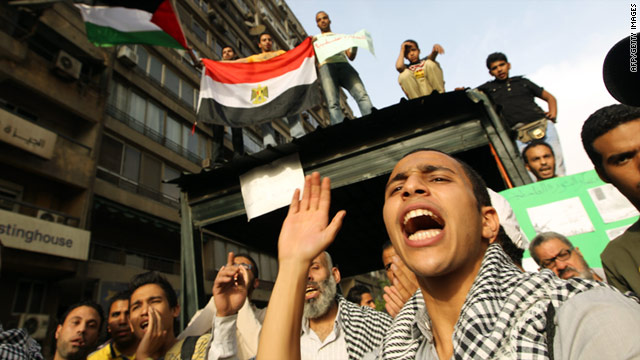
The issue has become a touchstone for anti-Israeli sentiment in Egypt. Protests outside the Israeli embassy in Cairo and the public burning of Israeli flags have become weekly events, with demonstrators demanding an end to the peace treaty with Israel and recognition of an independent Palestinian state.
One Comment on "Israel gas deal sparks attacks in Egypt"
notbob on Sun, 15th May 2011 2:11 pm
good on them. the faster that parasite of a country Israel is eliminated, the closer the world will be to peace.