



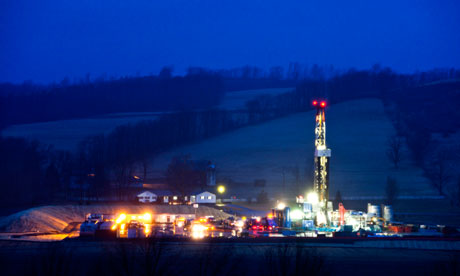
Shale gas is reshaping America’s economy, environment and politics in still surprising ways. It was an unpredicted phenomenon, but shale gas, now more than a decade old, accounts for 40% of the natural gas in the US. The success of shale production, that has reached large areas of America where no gas development previously existed, birthed the largest environmental movement since the anti-nuclear power protests of the Three Mile Island era. The “fracking wars” have come to America and the world, with the recently fired French energy and environment minister saying shale gas supporters wanted her scalp.
The massive supply of shale gas crashed the price of gas from $13 for a thousand cubic feet in July 2008 to below $4, delivering heating and electricity savings of $1,000 per year to many US consumers and helping to fend off further recession in 2011 and 2012. These large price reductions in heat and power – necessities of life – are especially vital for those living in poverty, and a welcome turn of luck for median-income households.
As a result of shale gas, fortune has smiled as well on millions of Americans who have lease their land to the drilling industry. They receive payments and royalty checks that total tens of billions of dollars. Hundreds of thousands more get a paycheck from jobs created directly or indirectly by the shale gas boom and chemical manufacturing associated with it.
Shale gas in the US is no Ponzi scheme, resting on sketchy reserves, as some have recklessly asserted, but a durable economic bonanza that could return energy intensive manufacturing jobs to many communities. In fact, the new gas volumes are so real and enormous that they threaten coal, oil, nuclear and renewable energy.
So far, shale gas is co-existing with solar and wind, whose capacity skyrocketed respectively 14 and 2 times since 2008, but is in mortal combat with coal. Cheap natural gas is coal’s market nemesis, plunging coal electricity to only 37% of the market in 2012 from 48% in 2008 and causing investors to pull the plug on 150 planned coal-fired power plants. Though Republicans reflexively charge President Obama with a war on coal, Adam Smith’s market forces caused coal to lose market share at a rapid pace.
Since burning gas emits no lethal soot or sickening toxic metals and about 50% less carbon dioxide than coal, the displacement of coal generation by natural gas slashes the amounts of major air pollutants like mercury, lead, arsenic, soot, and carbon dioxide. America’s carbon emissions have dropped 800 million tons since 2007 and are back to 1995 levels, with gas displacing coal and some oil responsible for about half of the total reduction. The carbon benefits of gas will increase as methane rates are cut by increasing green completions and other practices reducing leakage that the US Environmental Protection Agency has mandated in rules taking effect in 2014.
One of the major concerns about natural gas is what happens at the local level. Shale gas production is an industrial activity that brings to local areas drilling rigs, hydraulic fracturing pumps, trucks, and pipelines as well as lease payments, royalty checks, jobs, and cheap energy. It often creates new local sources of diesel air emissions and drilling waste water whose storage in deep caverns caused an earthquake felt at the surface in Youngstown, Ohio. During the first year of development of any shale well, shale gas is not a quiet, good neighbor, and it brings lasting challenges.
I saw the issues first-hand when I was Pennsylvania‘s environmental secretary as the state’s Marcellus Shale drilling took off. Mistakes in the casing and cementing of gas wells caused methane to migrate to 18 water wells in Dimock, Pennsylvania, and five compressor stations have erupted in fire in Pennsylvania just since 2011. Gas drilling must be strongly regulated and reasonably taxed. Rules must be strong, regulatory staff big enough to enforce them, and political leaders must tell their regulators to enforce fully the rules. Excellent regulation can help minimize impacts and maximize benefits, but regulation of gas and energy production is too often poor.
Even with the best regulation, gas production cannot be done with no impact on the environment, no trucks, accidents, leaks, spills, land disturbance. Yet, no form of energy production can meet that standard.
Virtually all of our energy choices have big safety and environmental risks or significant weaknesses. There is no perfect or excellent energy source that has no environmental impact, is low-cost, and operates continuously. Indeed, especially in terms of the environment, our energy choices today are mostly ugly.
Coal production involves blowing up mountains, tearing apart land, burying streams with spoil, discharging acidic waste water that destroys aquatic life, and disposal of gargantuan volumes of ash after combustion. The burning of coal releases big volumes of air pollutants – mercury, lead, arsenic, carbon dioxide, sulfur dioxide, nitrogen oxide, and soot. Soot pollution that comes from coal and diesel can be lethal, and is estimated to cause 34,000 premature deaths per year just in America.
Oil leaks and spills everyday, fouling streams and groundwater. It’s burning releases soot and huge amounts of carbon dioxide as well as other air pollutants. Nuclear power creates the world’s most toxic waste stream, until it has a bad day, and then nightmares come true. After Fukushima, more than 1% of the nuclear plants built in the world have melted down, with radiation released at Chernobyl alone responsible for the deaths of about 4,000 people.
The two biggest renewable energy sources – corn ethanol and large hydro – pollute and damage as well. Big dams devastate fish migrations around America. Nitrogen and phosphorus run-off from corn fields that feed ethanol plants pollute rivers and cause big dead zones in the Gulf of Mexico. Though growing rapidly, wind and solar provide just 2% of America’s total energy, but even wind that causes zero air and water pollution has passionate opponents who hate its visual impacts or loath any bird kills.
So which energy source is winning the battle for market share around the world? Oil remains the world’s biggest energy source, but coal is closing the gap and could become the world’s top fuel. Indeed, last year, coal reached its highest market share of the world’s energy in more than 40 years. China, the second biggest and fastest growing economy, gets 70% of its total energy from coal and just 5% from natural gas. Only in America is coal struggling, because the shale gas revolution has made gas cheap and is displacing it here.
Coal and oil already provide about 63% of the world’s total energy. Their consumption is increasing and is the prime reason why atmospheric carbon concentrations exceed 400 ppm, why air pollution harms millions, and why energy usage pollutes water. In that real world of ugly energy, more energy efficiency, renewable energy, nuclear power, and natural gas – imperfect as they are – offer big public health benefits. Moreover, in some parts of the world like the US, natural gas is uniquely able to displace quickly and economically huge amounts of coal and oil.
GregT on Mon, 8th Jul 2013 4:36 pm
“If you care about the environment, you should welcome natural gas fracking”
Huh?????
“heat and power – necessities of life”
Huh?????
“Even with the best regulation, gas production cannot be done with no impact on the environment”
Please see title of this article.
“Virtually all of our energy choices have big safety and environmental risks….”
Please see title of this article.
“In that real world of ugly energy, more energy efficiency, renewable energy, nuclear power, and natural gas – imperfect as they are – offer big public health benefits.”
Continuing to degrade the environment, is continuing to degrade the environment, period. Degradation of the environment does not equate to big public health benefits.
The author of this piece is one very confused individual.
shortonoil on Mon, 8th Jul 2013 4:54 pm
A 60% annual decline rate on these “Fracked” gas wells, and it’s not a PONZI scheme? Amazing how some people have trouble with 3’rd grade math!
Satori on Mon, 8th Jul 2013 7:04 pm
who paid for that article
the fracking industry ???
probably wrote it too
the author neglects to mention the thousands of injection wells where the toxic witches brew of chemicals leftover from the fracking operation is injected into the ground
none of that will ever contaminate the ground water
right ???
the hell it won’t
why is such obvious foolishness even posted on this site ???
bobinget on Mon, 8th Jul 2013 7:22 pm
How’s that ark your building in Florida preparing for the second great flood? If your using hand tools, give a thought to switching to power. Now, think for a second how FP&L generates that power, gets it to that winking faceplate in your wall. If your pro-nuke power you may care that “Turkey Point” plant should have closed years ago.When it does, what fuel would you prefer? Did you spend on those solar panels like you promised? No?
You best get back working on the Ark.
EVERY energy source has serious side effects.
But then, if the doc offers another few semi healthy years despite near term serious ‘side effects’, will you take the medication? Your anti GMO as all get out.
But, a white coated lady tells you we have an experimental drug tailored to YOUR genetic make-up that might shrink you tumor, accept or deny?
You all heard it before. Natty Gas is Our Bridge Fuel.
If we need to get a fossil fuel monkey off our back we need to get shaking now. But, again, get ready to feel those side effects.
Juan Pueblo on Mon, 8th Jul 2013 7:53 pm
I simply couldn’t get past that very ignorant title. I’ll let people with more time read the article and focus on the comments.
efsome on Mon, 8th Jul 2013 9:31 pm
Tis sad to see that humanity is ready to burn/pillage/desecrate every inch of earth for its short term “benefits”-long term disaster.
GregT on Mon, 8th Jul 2013 10:03 pm
If your doctor told you that your inoperative tumor left you with 3 months to live, but there was a new drug that would allow you to live for an extra 3 months, which only side effect was the near term death of all of your children and your grandchildren. What would you do? Would you suck it up for the future good of your family, or would you take the medicine knowing that you would kill off your offspring. That is the moral dilemma that we face.
Bob Owens on Mon, 8th Jul 2013 11:30 pm
Gosh, I really don’t know where to start with this. How about taking all that money going to fracking and invest it in wind power? That would get us really clean power with no pollution and no fuel costs. We would get lots of jobs and drive down the cost of wind power below that of coal. What’s not to like? Is fracking with thousands of wells and polluting our water really better? Get real America! Don’t be stupid.
Mike on Tue, 9th Jul 2013 1:37 am
CANCER INDUSTRY LOVES THIS.
BillT on Tue, 9th Jul 2013 4:02 am
GregT, I bet some here never even felt that 2×4 in the face. Numb to thought beyond their own personal, pathetic lives.