
Peak Oil is You

Donate Bitcoins ;-) or Paypal :-)


Page added on May 13, 2014

Eagle Ford Output and Texas Condensate and Natural Gas

This is a brief update on Eagle Ford Crude plus Condensate (C+C) output through February 2014. February Eagle Ford C+C output was about 1200 kb/d by my estimate.
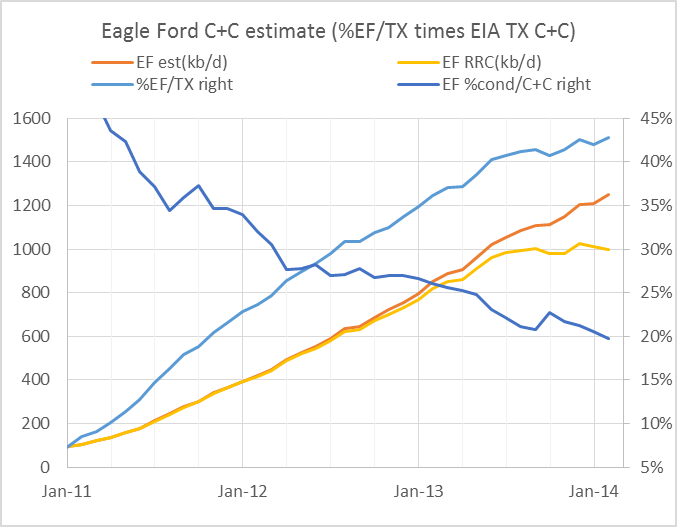
Figure 1- RRC Data provided by Kevin Carter
I have used my usual method of estimation where I find the percentage of total Texas(TX) C+C output that is from the Eagle Ford(EF) play (%EF/TX is the label that I use) and multiply this by the EIA’s estimate of TX C+C output. The chart shows the Railroad Commission of Texas (RRC) Eagle Ford estimate (EF RRC) in thousands of barrels per day (kb/d), the EF est (kb/d) as described above, the percentage of EF C+C that is condensate (EF %cond/C+C), and the %EF/TX also described above.
As before I would like to thank Kevin Carter who created a method to simplify gathering the Eagle Ford data.
I have done estimates of Eagle Ford output several times before (April 2014 and August 2013) and I would like to take a look back at those previous estimates to see how they compare with my most recent estimate.
Keep in mind that the initial RRC estimates (most recent 12 months) are not very accurate and for that reason the %EF/TX estimate for the Mar 2013 to Feb 2014 period are just a rough estimate with the most recent months having the greatest error.
My assumption is that if the overall TX estimate is 20% too low, that the EF estimate will also be low by about 20%, if that is correct then the %EF/TX estimate may be close to correct. One possible problem is that because the percentage of TX C+C output from the EF play has been growing, the lag in accurate data may cause the %EF/TX estimate to be too low.
On the other hand when EF output growth begins to slow down, the EIA estimates of TX C+C will tend to be too high because the EIA has assumed for the past 12 months that TX output has been increasing by about 48 kb each month.
These two effects may have balanced each other over the past 9 months or so, but it looks like Eagle Ford growth in output may be slowing down, if so the present estimate may be too high.
Note that in the chart below the upper set of lines are the %EF/TX and are read off the right vertical axis (22% in Jan 2012 and 42% in Feb 2014).

Figure 2- Chart by Dennis Coyne (with help from Kevin Carter)
Over the period from August 2013 to May 2014 my method for estimating Eagle Ford output has tended to give an estimate that was slightly on the low side, so the method may be conservative.
Note that the estimates from August 2013 and January 2014 did not use the full Eagle Ford data set, but the Fields assessed account for about 99% of Eagle Ford C+C output in those earlier estimates. The April 2014 and May 2014 estimates include all Eagle Ford output reported by the RRC.
Texas Condensate and Natural Gas
Jeffrey Brown has done an estimate of worldwide condensate output based in part on Texas C+C data so I decided to investigate how Texas condensate output has changed over time (June 1993 to Feb 2014).
In order to see how condensate output has changed we need to consider the output of natural gas in Texas as the condensate is a byproduct of natural gas production. There are two types of natural gas reported by the RRC of TX, natural gas from gas wells (called GW gas by the RRC) and associated gas from oil wells (called “casinghead” gas by the RRC).
I combine these two types of natural gas and call it “all gas” and then look at how the percentage of casinghead gas to all gas (%casing/all) has changed over time. It has varied from 24% in 1993 to 8% in 2008 and rose back to 22% in 2014. These values are read from the right vertical axis in the chart below.
I also report all TX natural gas output (all gas) in billions of cubic feet per day (BCF/d). In addition I look at the barrels of condensate produced per million cubic feet of GW gas produced [cond/GWgas(b/MMcf)], which has increased from 7 b/MMcf in 2009 to about 20 b/MMcf in 2014.
Lastly I considered the %cond/C+C for all of TX (I had looked at this only for the Eagle Ford above), this has increased steadily from 7% in 1995 to 15% in 2013 (this started well before Eagle Ford output took off in 2009) and has now fallen back to 13% in 2014. These values are read from the right vertical axis.
Figure 3
Aside from Texas and OPEC we have little data worldwide on condensate output.
Output of C+C from OPEC and Texas accounted for about 45% of world C+C output in 2013 (EIA data), if the rest of the World has condensate output in similar proportions to OPEC and TX, then it is possible that the increase in world C+C output since 2005 has been all condensate and that crude output has not increased.
The problem is that we lack the data to verify this, so in my view the focus should remain on crude plus condensate output.
peak oil climate and sustainability
Leave a Reply