
Peak Oil is You

Donate Bitcoins ;-) or Paypal :-)


Page added on February 10, 2015

Are the Saudis Scared to Cut Oil Production?

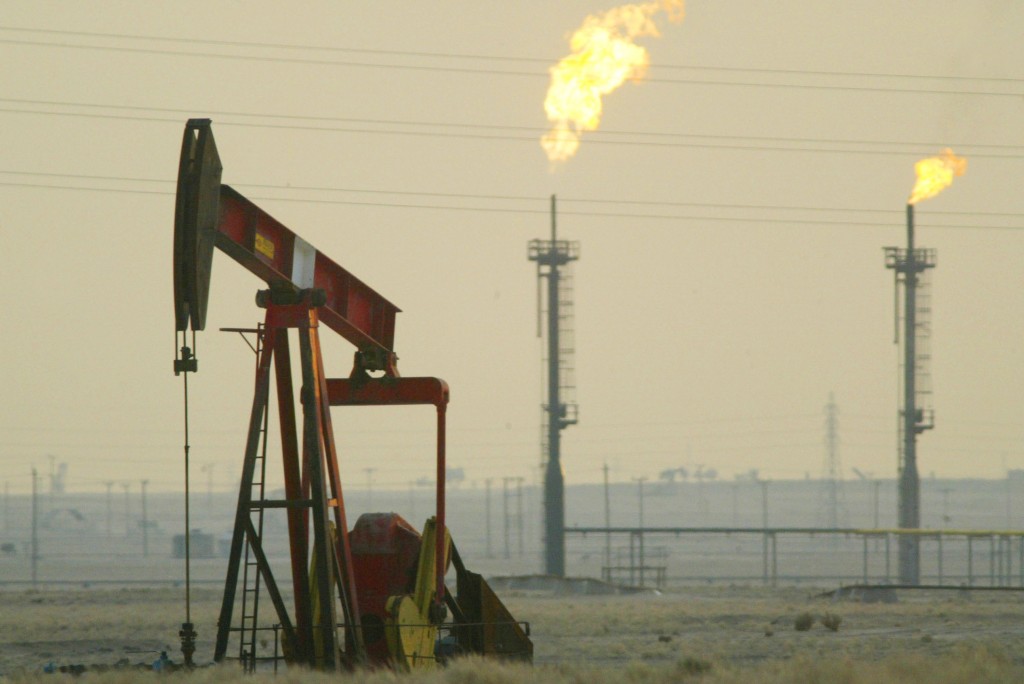
With the global oil market currently oversupplied to the tune of an estimated 2 million barrels per day, oil producer group Opec has struggled to formulate an effective strategy aside from “let the market sort it out.” For decades Opec played a price-setting role by increasing production to boost supply when prices were deemed too high. And the producers throttled output back to constrain supply and thus add price support during periods of oil price decline.
But things are different now. At a basic level, the current supply of oil exceeds demand by such a wide margin – due in large part to the US oil production boom – that Opec producers would need to drastically cut their output in order to balance the market. Additionally, de facto Opec leader Saudi Arabia would be forced to do most of the heavy lifting because they maintain the greatest spare production capacity in the group, meaning they can quickly ramp production up and down. It is widely believed Saudi Arabia has the ability to produce over 12 million b/d.
Analysts at Energy Intelligence’s Research & Advisory Group estimate a cut of 4.7 million b/d or more would be required to bring supply and demand into closer balance which would support oil prices. Several Opec nations like Venezuela, Nigeria and Libya face domestic unrest that constrains their ability to make substantial oil production cuts given government reliance on oil export revenue.
That leaves the Saudis to bear the brunt of any oil production cut burden, and with Saudi production currently estimated at around 9.8 million b/d, cutting some 4 million b/d could simply be too technically challenging and financially painful. The Saudis made a major production cut in the 1980’s and it took decades to regain the market share lost as a result.
The Saudi government has over $700 billion in net foreign currency reserves and almost no debt, which gives them some breathing room to wait out lower oil prices, but other Opec members with weaker balance sheets will increasingly ratchet up pressure to defend prices as long as bear market conditions persist.
The new Saudi Arabian King Salman recently made extensive cabinet leadership changes, but has thus far left Ali al Naimi in charge of the oil ministry. However, al Naimi is nearing retirement and it is widely expected a new oil minister could be appointed in the coming months. If oil prices remain depressed, a new oil minister could be forced to alter Saudi policy, even if that means cutting production despite the near-term pain it would cause. At some point, “letting the market sort it out” may prove untenable.
13 Comments on "Are the Saudis Scared to Cut Oil Production?"
Ted Wilson on Tue, 10th Feb 2015 6:42 am
Yes Saudis are afraid to cut supply because China is not only buying more Russian crude, but also rapidly increasing the sales of Electric Vehicles.
They don’t want over-reliance on Oil.
shortonoil on Tue, 10th Feb 2015 7:02 am
We posted this yesterday under “There Is No Peak Oil–But We Are Approaching Peak Low-Cost Oil” It seems pertinent to the present discussion.
Can you explain that? Because i’ve always that that the two are separate i.e. production/supply could be down but demand could be thru the roof.
At the present time it takes about half of the energy content of a unit of oil (barrel, gallon, etc) to extract, process, and distribute the product. It takes half of the energy from oil to produce it, therefore it takes half of the production. Producing petroleum, and its products creates a demand for petroleum!
Here is the 2012 energy breakdown for the “average” barrel:
Extraction………618,870 BTU/barrel
Processing…….2,053,800
Distribution…….267,330
Total……………..2,940,000
The energy content (exergy) of 37.5 deg. crude is 5.88 million BTU/barrel:
http://www.thehillsgroup.org/depletion2_011.htm
That is 50%
As production goes down demand will go down by half.
That percentage is changing with time; for example in 1980 it took 931,500 BTU/barrel to extract, process, and distribute the average barrel. 16% of the energy content of a 35.7 deg. crude. A 1 mb/d drop in production in 1980 reduced demand by 160,000 b/d. In 2012 a 1 mb/d drop would have reduced demand by 500,000 b/d.
This commonly ignored fact makes predictions for the supply/demand balance inaccurate. It will take a production cut of at least 3.0 mb/d to bring the markets’ excess of 1.5 mb/d back in line.
Actually, we are estimating a 4 mb/d reduction will be necessary because of end user demand decline from a slowing global economy. The strong demand that has been seen in the last few years has been largely due to petroleum production itself. This is especially true of shale production which is at best a net zero energy product.
It seems likely that OPEC is aware of this phenomena, and that would explain their reluctance to cut production to raise prices. Production cuts could never be offset by sufficient enough price increases to compensate for their fall in revenue. For OPEC it would be like pushing on a string. For them cutting production would only mean a greater loss of revenue.
http://www.thehillsgroup.org/
rockman on Tue, 10th Feb 2015 7:07 am
More ridiculous hyperbole IMHO. How much pressure is there on the Saudis to cut production when, at current prices, they are producing $180 billion/year in revenue compared to $180 billion/year (inflation adjusted) in 2009? Yes they were generating more yearly revenue during 2009 – 2014. But compare their current revenue of $180 billion/yr with their 2002 revenue of $90 billion/yr…a 100% increase. A current revenue that some call a “give away”.
When I see the Saudi oil sales, at the current price, being twice as large as it was not that long ago a vision of the Saudis huddled together scared to cut production just doesn’t materialize in my mind. OTOH sitting back sucking on a hookah pipe and smiling about the $180 billion coming in this year with almost 4X that amount sitting in cash reserves? That’s not such a difficult vision to contemplate.
farmlad on Tue, 10th Feb 2015 8:15 am
I’m just imagining; If it takes close to the same amount of btu’s to extract, process and deliver an average barrel of tight oil, as the btu’s delivered to the end consumer.
If the frackers loose their access to credit, By the end of the year we could just see all the drilling and fracking come to a standstill, which would take away a tremendous amount of demand for petroleum products, but the wells are still producing say at 50%.
So demand drops but production drops less. And plant will still be talking about the glut while the US may be producing 15% less than it is today.
What I just can’t wait to see is, The day, ethanol plants shut down for good.
As an FYI (according to the local seedcorn farmers) Monsanto and Pioneer is cutting back, their seedcorn acreages by 60%, this year. This was quite a shocker for the farmers that raise the seedcorn for them, and now they will have, to plant their acreages to something else. “Something else ” not as lucrative.
Apneaman on Tue, 10th Feb 2015 10:15 am
More shameless industry propaganda and whining. Where is all the swagger from a few years ago? The implication is that the Saudis need to or should cut production. It’s not even up for debate and I’m hearing an or else under tone. Americans throwing hissy fits when others won’t do what they want. Why not sanction the Saudis until you get what you want? No more white whores and whiskey for the royals until they cut cut cut.
Fred's Horseradish on Tue, 10th Feb 2015 1:30 pm
About the dumbest thing the current regime has done is put sanctions on Russia! Or maybe they agreed behind the scenes to play that game.
shortonoil on Tue, 10th Feb 2015 1:41 pm
The Saudis are in the oil business, and they are very good at it. They will do what ever it takes to maximize their revenue. Why any one would think that they would convert to some sort of international welfare agency boggles the mind. The media either has a very twisted agenda, or they are dumber than a box of rocks! Or both!
bobinget on Tue, 10th Feb 2015 6:44 pm
Shortonoil, not only did KSA break cartel rules,
Saudi Arabia injected the politics of oil into ongoing
religious conflict and long running violent situation.
ie: Syria’s ‘civil’ war.
With his most recent post shortonoil exposes himself in an unguarded moment, I’m sure.
Beginning with ‘cartel’ OPEC:
•A cartel is a group of firms which get together to make decisions regarding output levels and pricing of a certain product within the market.
•Cartels tend to arise within markets where there are few firms which each hold a significant share of the market, these markets are called Oligopolistic markets.
•The working together of the cartel members allows them to behave like monopolists.
•Cartels are renowned for being unstable, this is due to the fact that each member of a cartel is able to gain greater profit by breaking the agreement of the cartels. Although if all members broke the agreements than they would all be worse off.
•Weather a member of the cartel cheats or not is generally dependant on whether the short term returns on cheating outweigh the long term losses of the potential breakdown of the cartel.
•The incentive to cheat is the reason why cartels need strict regulations. Example of a cartel.
•OPEC, ‘The Organization Of The Petroleum Exporting Countries’. Is a Cartel who’s mission is to secure potential returns to oil producing nations alongside an economic supply of oil to consumers.
•The OPEC Cartel was created at the Bagdad conference in 1960. Back then it consisted of only 5 nations, today the OPEC consists of 12 nations including founding members such as Iraq, Iran, Kuwait, and Venezuela.
•The OPEC Cartel members meet and partake in conferences. Generally speaking, the conferences occur twice a year, in march and September. In extraordinary situations they may also meet. The conferences operate on the principle of unanimity and that each member has one vote. Formation: •The working together of the cartel members allows them to behave like monopolists. Therefore prices can be created because there is ‘no competition’. Therefore demand is price inelastic. They are able to set output at ‘MR = MC’. This is shown in the graph to the right where output is at ‘QM’ and price ‘PM’. International competition authorities generally forbid cartels, Looking more closely at laws from a few nations:
•USA: Since 1890 in the united states, the Sherman Antitrust Act outlawed all contracts, combinations and conspiracies that unreasonably restrain interstate and foreign trade. This includes cartel violations such as price fixing, bid rigging, and customer allocation. Sherman Act violations involving agreements between competitors are usually punishable as federal crimes.
•EU Nations: Heavy fines are imposed but the European Commission on companies involved in cartels within the EU, this is due to EU Competition Law. •The incentive for the formation of cartels between various firms is the ability to increase each firm’s profit. This is accomplished via using the monopolistic strategy of decreasing output and increasing price.
•Video to the right gives a simplistic yet extremely understandable account of why cartels actually form. Regulations: Laws On cartels Supernormal Profit Deadweight
loss OPEC History Timeline:
1960 – founded by Iran, Iraq, Kuwait, Saudi Arabia and Venezuela
1965 – Moves from Switzerland to new headquarters in Vienna, Austria
1973 – Opec embargo causes oil price shock
1990 – Iraq’s anger at Kuwaiti over-production sparks Gulf War
1998 – World oil price drops to $10 a barrel
2000 – Opec introduces $22-$28 a barrel price band
2005- Price band abandoned
2008- Indonesia leaves Opec •Control around 40% of the world’s total oil output, and posses more than three quarters of the worlds total proven crude oil reserves.
•From the graph above this domination of world oil production is shown. It can be seen that the OPEC nations produce a significantly larger proportion of oil than the Persian gulf, OAPEC, and the US. OPEC Influential factors for cartel monitor and regulation:
Numbers of members : fewer = easier to manage.
Product of the cartel: homogenous = more stable cartel, as technologies andcustomer range are similar,
Product price/ quantity sold: firms can cheat to make short-term gain by selling diferent than cartel aggrement.
Behaviour of demand= If the industry within the cartel is characterized by varying demand it is more difficult for firms in the cartel to detect whether changes in their sales are due to cheating by a cartel member or more simply the natural fluctuation in demand.
•The issue regarding regulation of cartels is the fact that since they are illegal, they generally are very difficult to detect, as members of the cartels work in secrecy leaving little trails of evidence.
•Due to the difficulty to detect cartels the Leniency Policy was introduced in order to encourage companies to hand over inside evidence of cartels to the European Commission. The first company within the cartel to give such evidence does not have to pay a fine.
•UK: The Competition Act of 1998 prohibited anti-competitive behaviour. Anti-competitive agreements between businesses are prohibited. Any Business found to infringe any of the anti-competitive laws is liable to face financial penalties up to 10% of their total turnover. Cartels are a particularly damaging form of anti-competitive activity. Cartels also have a damaging effect on the wider economy as they remove the incentive for businesses to operate efficiently and to innovate. Regualtions on cartels. Characteristics Of A Cartel:
•High prices
•Restricted supply
•Price Fixing
•Homogenous Good (As prices/quantity are easily negotiated as oppose to differentiated) Characteristics Of A Cartel: The Life cycle of A Cartel •Various firms within a market competing on price & quantity as an oligopoly. There is incentive for each firm to compete in price for maximum revenue. •together they can all financially benefit from colluding and setting up a Cartel. By colluding and setting up the cartel they:
• manipulate the information from the consumer.
• Increase prices to a point where profit is maximised (MC=MR)
•manupulate supply. Firms now will gain bigger profit as they can set price and quantity to maximise the profit. At this point they could be referred as a big monopoly of the market. One firm within the cartel may decide to be ‘greedy’ and seek to increase their profits. This is achieved by breaking the agreement between the cartel nations and increasing their supply. By doing this the cartel will break down and firms can no longer behave like monopolists. The cheater must evaluate the short term gains achieved compared to the long term losses of the cartel breaking down in order to make an informed decision. References: •Bishop, Simon and Mike Walker (1999): The Economics of EC Competition Law. Sweet and Maxwell.
•Connor, John M. (2008): Global Price Fixing: 2nd Paperback Edition. Heidelberg: Springer.
•Liefmann, Robert: Cartels, Concerns and Trusts, Ontario 2001 [London 1932]
•http://www.opec.org/opec_web/en/
•http://www.investopedia.com/terms/o/opec.asp
•Microeconomics 8th Edition, Pindyck and Rubinfeld Example of cartel
More presentations by Tùng Bùi
Untitled Prezi
bobinget on Tue, 10th Feb 2015 7:19 pm
Draw your attention to the FACT that two of the cartel’s founding members, Iran and Venezuela are being profoundly harmed by Saudi actions.
Saudi Arabia placed OPEC’s future on the line.
Indeed,. upending an entire chain of supply and demand that has been OPEC’s raison d’être.
This destructive policy has yet to play out. I’ve predicted Russia, in close cooperation with Venezuela, Ecuador, Algeria, Iran and Iraq will emerge as the world’s ‘swing’ producers. B,WTFDIK.
Like a metaphor of rapidly melting glaciers;
(flooding now, drought later). Incalculable damage
to Western economies will result from genuine
oil shortages, break-the-bank prices.
Serious famines, religious wars between nuclear
armed states, in point of fact, Syria multiplied.
Millions more ‘faithful’ will die never realizing
how little Saudi Arabia valued their lives.
The best kept secret in today’s oil markets is exactly when KSA covers and goes long.
rockman on Tue, 10th Feb 2015 9:05 pm
Farmlad – “If it takes close to the same amount of btu’s to extract, process and deliver an average barrel of tight oil, as the btu’s delivered to the end consumer.” Actually hasn’t happened and never will. Folks grossly over estimate how much fossil fuel it takes to drill a well. The actual direct energy input (mostly diesel)used to drill a well is typically 15% of the total cost. Long before energy impute kills a drilling program the economics will. Which isn’t to say the credit overhang in the oil patch isn’t coming home to roost with the collapse of the oil price. As far as the embedded energy in the equipment it can be argued both ways. Yes, took fossil fuels to build rigs, etc. OTOH it’s a sunk energy cost that would exist even if that rig never drilled a ingle well.
Tom on Tue, 10th Feb 2015 10:22 pm
Rockman – The real energy cost of the oil is much higher than the fuel and electricity used at the well site and the embedded cost of the drilling rig. Just as in an economic analysis, all the costs must be considered to determine if the project will fly. Included should be the energy cost of exploration, the energy cost of supporting the lifestyles of the workers at all levels of the enterprise (houses, SUVs, boats, vacation homes, educations, etc). The prorated energy cost of the pipelines, refineries, distribution, and marketing components both embodied energy costs and energy maintenance cost. All these need to be included before one can determine the net energy yield of oil drilling. If these are not to be included, why not? And if not, where should they be accounted for? I do find it hard to believe that half of the energy flowing from the well must be used before those external to the oil production system get a shot at what is left over. The issue raised though is real. The net energy ratio for hard to get oil is much, much lower than in times past.
Ralph on Wed, 11th Feb 2015 5:21 am
Rock,
If 15% of the cost of drilling a well is mostly diesel, does that include the energy in fracking? Many shale wells are very light, more condensate than oil. Condensate generates a small distillate fraction at the refinery, sometimes as low as 20%. Could it be that many fracked wells consume more diesel than they generate?
Given that diesl is the premium oil product, the one that is hardest to substitute, could fracking be accelerating the POD?
Davy on Wed, 11th Feb 2015 5:22 am
Tommy, it is true we need some accepted figures for the various energy inputs to different activities of all sorts both business and non-business. My point is related to descent. We need bench marks for all kinds for BAU activities so we can triage the unproductive activities and lifestyles out of our society when a society shaking crisis comes in just a few years. That is something good for the useless econ 101 college classes to research.
I know there are sports fans here. I like baseball but I am not much into sports. Large participant based sports are going to be too expensive to support at least as they are organized now as an example. I wonder if we will be like Rome and have expensive games in our hundreds of coliseums to the bitter end.
Now is a critical time if we are going to make some rational decisions in a crisis situation what needs to go and what needs to stay. I estimate almost all energy intensive BAU leisure must go by necessity. We know what those activities are. Hollywood needs to go. Bass boats driven to fare off lakes have a shelf life. There are so many examples but we need numbers to compare in a fair and balanced way. Anyway tommy off subject but you did spark a side discussion concerning macro descent prep.