
Peak Oil is You

Donate Bitcoins ;-) or Paypal :-)


Page added on January 28, 2011

Where the oil is: 6 huge untapped fields
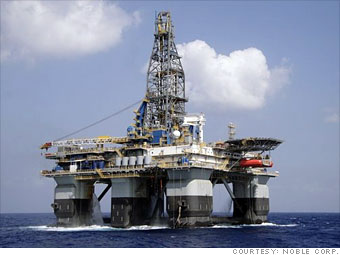
Alarms about peak oil are still sounding in certain circles, but the world, for now, is still awash in petroleum.
There are many oil reserves around the globe that remain untapped, and explorers continue to discover new fields deep beneath the earth’s surface. Depending on how the controversy surrounding the Arctic National Wildlife Refuge turns out, the U.S. could exploit oil reserves in the area, despite potentially grave environmental consequences. And to the North, Canada’s tar sands are one of the largest oil reserves yet to be produced, holding the majority of the country’s 178 billion barrels of oil resources.
Elsewhere there are even more reserves, but they’re often in places that are either geologically or politically difficult to access. Some of them come with dangerous security risks to drilling.
Indeed, the oil squeeze has everything to do with access, and very little to do with the sheer volume of untapped oil left in the earth.
The U.S. gets about a third of the crude it produces from drilling in the Gulf of Mexico. U.S. offshore territory will keep producing for some time, but there are also major untapped reserves on the Mexican side of the Gulf.
They’re owned by the national oil company Petróleos Mexicanos, or PEMEX. Some of the most promising plays are northeast of Mexico City and off the coast of Campeche and onshore in the Choncotepec region.
But no one besides PEMEX can really access them. Ever since Mexico kicked out foreign oil investors in 1938, the government has controlled all exploration in the country. That’s been lucrative, since traditionally, the Mexican government has taken 60% of PEMEX’s profits. But Mexico’s oil production has slowed from near 3.4 million barrels per day in 2004 to under 2.6 million barrels per day during the beginning of 2010, squeezing those profit margins.
Mexico is starting to change the rules, but slowly. The country started offering incentives for foreign explorers and drillers to extract more oil out of its mature fields. In 2012, Mexico is expected to open up some of its newer plays to foreigners.
But while there’s probably plenty of untapped oil in Mexico, the country’s stringent rules about keeping all of the profits could still deter many of the majors.
Venezuela has a long history of oil production, but it has yet to fully exploit a huge chunk of reserves inland, in a stretch of about 20,000 square miles that follows the Orinoco River, called the Orinoco Basin.
The country estimates a substantial jump in production from the area, claiming that the Orinoco will add another 400,000 barrels per day to its production by 2016.
There’s some debate over whether they’ll make that goal — and even over how much oil Venezuela currently produces. Venezuela claims that its national oil company Petróleos de Venezuela SA produces 2.96 million barrels per day. U.S. estimates are generally lower, around 2.09 million barrels per day.
U.S. relations with Venezuela have been tense. But production in Venezuela is scheduled to ramp up soon. The country has partnered with Italian company Eni and Chinese company Sinopec to develop Orinoco. Turkey is interested in two blocks as well, and multinational giant Chevron has a 34% stake in a block of Orinoco.
Even with all those big players in the pot, Orinoco still holds much more undeveloped opportunity
Brazilian national oil companies have established themselves as global experts in offshore drilling, namely because the country has such a wealth of resources off of its own coast.
East of Rio de Janiero, Brazil’s Santos and Campos Basins contain tremendous oil reserves in something called a pre-salt layer. The oil and other petrochemicals are trapped under about two miles of salt and rock layers, which starts about a mile deep in the Atlantic Ocean.
New studies have shown that there’s probably more oil in these pre-salt plays than anyone guessed. The area could contain up to 123 billion barrels of oil, blowing away the earlier 50 billion barrel estimate from studies conducted by the Brazilian government.
Currently, Brazilian company Petrobras will legally operate all new exploration licenses in the pre-salt area, but the company plans to sell off rights to drill in portions of the region. There could be up to 60 new fields, averaging about 2.2 billion barrels each, studies estimate.
In 2009, Iraq produced 2.4 million barrels per day of crude oil, but the country has a total of 115 billion barrels of proven reserves, and that’s based on a 2001 estimate. Iraq probably has much more oil, including up to 100 billion barrels in its relatively unexplored western and southern deserts.
Among the country’s many energy resources are nine fields classified as “super giants,” which means that each could produce over five billion barrels. Now, the majority of oil produced in Iraq comes from only three fields.
Oil is a key part of Iraq’s energy portfolio, about 94% of its energy needs met with oil.
The problem with Iraqi oil production is in the refining process. Right now there aren’t enough refineries with capacity to process so much crude. There’s also a paucity of fresh water in the region–a key resource for petrochemical processing.
Iraq has opened production to international oil companies including Shell and ExxonMobil, but the majors are having some trouble facing the refining bottleneck. Companies in the area also face security problems, due to political tension in the Middle East.
Kazakhstan is relatively new to the energy game. It only created national oil company Kazmunaigaz in 2002 to give the country control over oil and gas production in its territory. Now, the company holds a majority stake in all joint ventures.
As of 2009, Kazakhstan already produced 1.54 million barrels per day, 94% of which was crude oil. The country has an estimated 30 billion barrels of oil reserves–half of which are onshore, and half of which are off the coast in the Caspian Sea. Those oil fields, called the Kashagan and Kurmangazy fields, are estimated to hold at least 14 billion barrels of oil.
Offshore Kazakhstan is tricky to develop. The oil is sulphurous, and it’s combined with a high quantity of high-pressure natural gas. Also, drilling platforms have to be incredibly sturdy to weather the harsh conditions in the Caspian Sea.
But Shell, ConocoPhillips, Total and ExxonMobil are already in the Kashagan play and areas close to it. Production from the area should come online by 2013.
There’s more to be explored. ConocoPhilips just struck a big find in the Caspian Sea in another block. Based on estimates from the exploration well, the new find could hold up to 4.6 billion barrels of oil — 2 billion of which could be produced. It’s then the biggest find since the Kashagan in 2000.
Jubilee started producing oil commercially this past December, and could ultimately produce a total of 1.8 billion barrels worth of oil. But many foreign investors and explorers are still cautious, with good reason.
British company Tullow Oil discovered Jubilee in 2007, and it now shares ownership of it with an international independent that focuses on West Africa called Kosmos Energy, as well as American independent Anadarko.
In August, Kosmos tried to sell its stake in Jubilee, which could have been worth up to $4 billion, to ExxonMobil. The deal fell through because Ghana didn’t have proper rules on the books to monitor the sale.
Ghanaian officials were worried that failed deal would tarnish relationships with the U.S. and other foreign investors. The government is now trying to renegotiate regulations to be friendlier to outside drillers, while still keeping the benefits, such as tax revenues from production.
10 Comments on "Where the oil is: 6 huge untapped fields"
Gilles Fecteau on Fri, 28th Jan 2011 9:23 pm
Only a fraction of these fields are recoverable with current technology.
All also have significant environmental problems in addition to cost.
Once you price this oil to its true cost, you are likely to find cleaner alternative at lower cost.
James A. Hellams on Fri, 28th Jan 2011 11:32 pm
If you think these huge oil fields are going to spare us from the reality of peak oil, I suggest you review your conclusion.
The fact of the matter is that these huge oil fields are not going to spare us from the ravages of peak oil.
The total number of barrels of oil that can be produced from these fields is 759 billion barrels. However, the total annual consumption of oil, at peak production (which we passed in 2006), was 30 billion barrels annually. At most, all the oil fields combined in this article; would last only 25.9 years at the peak oil consumption of 30 billion barrels annually.
These oilfields will not spare us from the ravages of peak oil. They will only be stop-gaps until the ravages of peak oil destroy us!
Rick on Sat, 29th Jan 2011 12:11 am
The more Peak Oil alarms going off, the more you hear about these new claims. It’s all hype and desperate acts from the oil companies and Peak Oil deniers.
Kenz300 on Sat, 29th Jan 2011 12:35 am
Alternative energy is the future. The sooner we move to transition our energy to alternative sources the better off we will be.
Our economic security and national security will depend on our ability to transition to wind, solar, wave energy, geothermal and second generation biofuels.
Don S on Sat, 29th Jan 2011 3:03 am
If a 1.8 billion barrel field now qualifies as “huge,” then we’re in deep trouble…
Keith on Sat, 29th Jan 2011 4:22 am
She doesn’t make a distinction between “technically recoverable” and “economically recoverable” reserves.
The latter has been expanding as a result of skyrocketing price.
Mike999 on Sat, 29th Jan 2011 5:48 am
Wind Power is now As Cheap as Natural Gas, with none of the Cancer and Fresh Water Resource Destruction.
It’s a New Age.
kiwichick on Sat, 29th Jan 2011 6:46 am
fortune dribble
enough said
DC on Sat, 29th Jan 2011 8:48 am
Isnt Orinoco Tar Sands like in Alberta, and “developing” it, would litterally destroy a vast area there, just like it will evenetually destroy Alberta. This article leaves out that minor detail, (implying) its regular oil.
Crazy_Dad on Sat, 29th Jan 2011 7:46 pm
When we have reduced the land to something that resembles the landscape in The Road. We will realise our mistake.
Tar sands should be untappable. It is vandalism. A crime. We need to stop population growth and stop the destruction of our ecosphere, or we will perish, some will persih wearing rolex watches.