
Peak Oil is You

Donate Bitcoins ;-) or Paypal :-)


Page added on April 1, 2014

Why we will never run out of oil: an interview with professor Ugo Bardi
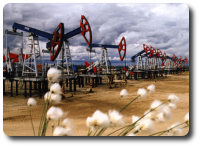
– First of all, professor Bardi, thank you for accepting to speak to Ronkonkoma Radio.
– It is a pleasure.
– So, before going on with the interview, a brief presentation for our listeners. Professor Ugo Bardi teaches at the university of Florence, in Italy, and he is well known for his studies on mineral resources and in particular on crude oil. About his work, we came to know that he recently obtained a major research grant from a large oil company. Is it true, professor?
– Yes, I can confirm that I received a grant, although I cannot disclose the name of the company.
– So, congratulations, professor. Do I understand correctly that this grant allowed you to make a major discovery in the field of oil production trends?
– It is correct. It is a new model that I developed on the basis of some highly sophisticated mathematical methods to describe the future production of crude oil.
– And it led to you to the conclusion that we will never run out of oil?
– Basically, yes.
– I understand that the mathematics involved in the model is very complex, but could you describe your results in a simple way to our listeners?
– I think I can. So, think about this: before you run out of all of the oil you have, you have to use half of it, right?
– Yes.
– Now, if you have used half of your oil, it means that you are left with half of it. Is it right?
– Of course.
– Then, before you consume that half which is left, you have to consume half of that half, right?
– I think I can follow your logic, professor……
– And then, there will be another half, and then another, and so on…..
– That means we’ll never run of oil, I guess.
– You have it.
– You know, professor, your model reminds me of something I studied in high school, something that involved a turtle and someone running after it; I don’t remember his name.
– Oh, well, it is a remote origin of this model. Indeed, sometimes my students call it the “Achilles and the Turtle” model.
– But, professor, there is something that bothers me about all this. I understand your point, but as we divide our oil in half over and over, doesn’t that mean we’ll have less and less of it?
– No…. not at all.
– But why?
– Well, you should understand the mathematics of the model but, again, I can explain it in a simple way for our listeners. Let me go back to what I was saying. You have this oil, think of dividing it in two equal parts. Then you go on and you use the first half. You follow me?
– Yes.
– Then you are left with the other half, correct?
– Correct.
– So, it makes no difference: you have the same amount of oil as before. Then, what’s the problem?
– You know, professor, your logic is overwhelming, but I must confess that am a little confused.
– Well, I understand that, the mathematics involved is highly complex, indeed. But the end result is simple. You always have oil and you can produce as much of it as you like. There is just a little detail to consider. You have to invest more in extraction as you have less of it.
– Doesn’t that mean we have to pay more for oil?
– Yes, you have this minor inconvenience.
– I see….. Professor, something made me think again of that grant from an oil company. Could you tell us the amount of money your received?
– I am sorry, I cannot disclose that.
– So, thank you very much, professor Bardi, for being with us for this interview with radio Ronkonkoma, New York. Now a little break.
EXTRACTED
8 Comments on "Why we will never run out of oil: an interview with professor Ugo Bardi"
dolanbaker on Tue, 1st Apr 2014 8:37 pm
Check the date!
Tuesday, April 1, 2014
rockman on Tue, 1st Apr 2014 8:53 pm
Sadly, it’s true. We are producing more oil on the planet then ever before. That isn’t the problem. The problem is that it costs around $100/bbl. There will be lots of oil left (in the ground) once prices get high enough. In fact, a never ending supply…as long as it’s too expensive to produce. LOL.
Arthur on Tue, 1st Apr 2014 9:38 pm
http://en.wikipedia.org/wiki/Zeno's_paradoxes#Achilles_and_the_tortoise
The solution of the ‘paradox’ is in differential calculus, showing that it is possible to add an infinite number of numbers and yet arrive at a finite result.
It is unlikely this ‘interview with Ugo Bardi’ ever took place.
clif14 on Wed, 2nd Apr 2014 12:10 am
Tongue in cheek? wink, wink
steveo on Wed, 2nd Apr 2014 12:04 pm
Worthy of “the Onion”
ronpatterson on Wed, 2nd Apr 2014 12:29 pm
It’s called “Zeno’s Paradox”.
http://en.wikipedia.org/wiki/Zeno's_paradoxes
And of course this is all a joke.
shortonoil on Wed, 2nd Apr 2014 1:07 pm
As Ron said this is Zeno’s Paradox that has perplexed mathematicians for 3000 years. The paradox was solved by a young man in Australia (Peter Lyds??) several years ago. What Lyds determined was that the paradox assumes a point in time, and that there is no exact point in time. Just a fuzzy, and fuzzier definition of it. Anyway, this has nothing to do with petroleum production. Bardi, who is a scholar of some standing, certainly didn’t make this claim. It is a joke, and a bad one!
http://www.thehillsgroup.org
Davy, Hermann, MO on Wed, 2nd Apr 2014 2:30 pm
Well short:
A paradoxical trick is actually a sophism, or a conscious paradox, it often alerts the listener to an intention to convey an elusive meaning. Sophisms such as Zeno’s are clever manipulations that are false and have knowingly committed but true: As such it may lead the listener to a disquieting conclusion or absurd conclusion, but it is not a fallacious.