
Peak Oil is You

Donate Bitcoins ;-) or Paypal :-)


Page added on January 21, 2016

When Trucks Stop Running, So Does Civilization. Energy and the Future of Transportation.
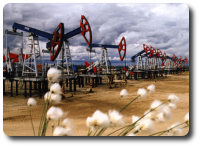
When Trucks Stop Running, So Does Civilization. Energy and the Future of Transportation.
January 16, 2016 by Alice Friedemann www.energyskeptic.com
Also see: When Trucks Stop Running: Table of Contents, Preface, References at www.energyskeptic.com
Virtually everything in our homes, everything in our stores, got there on a truck. Prior to that, 90 percent of those items were transported on a ship and/or a train. If trucks, trains, and ships stopped running, our global economy and way of life would stop too.
The impact of peak oil on commercial transportation has been of great interest to me after a 22-year career at American President Lines, where I developed computer systems to keep cargo seamlessly moving around the globe and just-in-time between ships, rail, trucks, and customers.
So I was thrilled when Charles Hall invited me to write a book on energy and transportation for his Springer Energy series, a book that has just been published: When Trucks Stop Running: Energy and the Future of Transportation.
Ships, trucks, and trains are the backbone of civilization, hauling the goods that fulfill our every need and desire. Their powerful, highly-efficient diesel combustion engines are exquisitely fine-tuned to burn petroleum-based diesel fuel. These engines and the fuels that fire them have been among the most transformative yet disruptive technologies on the planet. This is a dependency we take for granted.
Since oil reserves are finite, one day supplies will be diminished to where the cost of moving freight and goods with our present oil-fueled fleet will not pencil out. We have an oil glut in 2016 and a corresponding lack of urgency. Yet, inevitably the day will come when oil supplies decline. What will we do? What are our options? That is the sobering reality my book explores.
Consider just how dependent we are on abundant and affordable oil, which fuels commercial transportation: Grocery stores, service stations, hospitals, pharmacies, restaurants, construction sites, manufacturers, and many other businesses receive several deliveries a day. Since they keep very little inventory, most would run out of goods within a week. When trucks stop, over 685,000 tons of garbage piles up every day in the U.S., sewage treatment ends as storage tanks fill up, and in two to four weeks water supplies would be imperiled as purification chemicals were no longer delivered. That is just the tip of the iceberg.
Although ships move roughly 90% of cargo and made globalization possible, it is hard to think of a single thing that isn’t transported on a truck at some point, if only for the last mile. Equally important are other kinds of “trucks” and equipment used in farming, logging, mining, construction, garbage, and countless human endeavors. Certainly it would be better to deliver goods by rail, which are four times more fuel efficient than trucks, or by ship, which can be up to 80 times more efficient than trucks. But there are only 95,000 route miles of railroad track, and 25,000 miles of inland and coastal waterways in the U.S. That’s compared to over 4 million miles of U.S. roads. Just why we are so reliant on trucks and under-utilize more efficient ships and trains is explored in my book.
Renewable electricity – solar and wind — is ramping up, but in our optimism over the renewable revolution, we collectively forget that our trucks, ships, and freight trains don’t run on electricity. Although I’d often thought about Robert Hirsch’s saying that peak oil was best framed as a liquid fuels transportation crisis, I had never fully researched the details of what this meant. After all, vehicles potentially could run on coal-to-liquid fuel, natural gas, biofuels, hydrogen, or be electrified.
So for the past two years I’ve researched the evolution and future of commercial transportation, the technologies and energy resources available now or in the next decade that ships, locomotives, and trucks could run on. The ideal fuel would be a “drop-in” fuel so that we didn’t have to toss out over $1 trillion of vehicles and their engines and $4.6 trillion of transportation infrastructure that comprises 12% of all the wealth in the U.S.
Since fossil fuels are finite, ultimately we will have no choice but to run commercial transportation on renewable energy. The electric grid would have to play a role, so I look at what we would be involved to electrify trucks and locomotives via batteries or overhead wires. This seemingly inevitable future scenario requires understanding the challenges of getting to an electric grid that is 80 to 100% powered by renewables, utility-scale energy storage systems, and understanding how much energy storage is needed to cope with the intermittency and seasonality of wind and solar power.
The co-dependencies of electricity and computers make our transportation system even more fragile and vulnerable to failure. Electricity outages or software/equipment failures prevent ships, rail, and trucks from loading or unloading, since dozens of financial, tariff, manifest, bill of lading, and other documents are required to keep cargo moving.
What I have attempted to do in the book is to investigate every technical and energy option foreseeable for the movement of goods and services. In the process, there is no avoiding an eyes-wide-open look at the challenges. These include renewable liquid fuels, climate change, the financial system, and corrosion.
Politics may be one of the most insurmountable challenges. To understand the evolution of U.S. energy policy and what, if any, plans are being made for the future of transportation, I read the transcripts of hundreds of congressional hearings in the U.S. House and Senate. If the global freight transportation system so central to our era of abundance has any hope of being sustained as oil declines, then political leadership, long term planning, and massive funding are essential. Some may liken this challenge to a technical “moon shot.” Right now, mobilizing for this change looks more like a long shot.
“When Trucks Stop Running: Energy and the Future of Transportation” is available in print and eBook at Springer, Amazon, and Barnes & Noble.
32 Comments on "When Trucks Stop Running, So Does Civilization. Energy and the Future of Transportation."
makati1 on Thu, 21st Jan 2016 6:23 am
When the oil collapse comes, there will be nothing to ship. Or any money to purchase anything if it was. But no one wants to go down that road.
Again, the dream is more electric. No one mentions where this electric is coming from or how it is going to be distributed over antique,failing power systems. Just stick a huge battery in whatever and magic happens.
LMAO
More BS from the ‘BAU in some form’ crowd. Denial is becoming rampant.
Dredd on Thu, 21st Jan 2016 6:40 am
Trucks not running is a choice that can be made or not.
Seaports not running is a difference and more important case (The Extinction of Robust Sea Ports – 3).
Davy on Thu, 21st Jan 2016 7:35 am
The politics is insurmountable until a crisis and a crisis may be too late. What must be done first is secure a basic food delivery system plan. Part of this would need to be a global effort. So many vital resources are global including oil that make up our food chain. Many monocultures that are part of our staples are regional or global. Changing to localism quickly will not happen. We are talking a decade of effort for areas that are even capable of localism.
We can’t get along now globally will we manage in a crisis? Consumerism and leisure are going to be far down the list of essentials. I have a report somewhere in my notes concerning what a 10% reduction in oil supply would do to an economy and it is not good. Off the top of my head I am thinking the numbers were a 10% reduction equates into a 50% reduction in discretionary consumption. This is because vital services must be maintained. Imagine that type of event on the retailers and the tourist of the world. We are going to see some really big adjustments in the not too distant future. If you are in one of these industries you may want to reconsider your options just as location should be a concern in the coming rebalance.
ghung on Thu, 21st Jan 2016 8:24 am
Our just-in-time long supply chain system will revert back to local and regional supply chains and variety will be greatly reduced. Super stores and competition will be curtailed/eliminated, and goods will become more basic. People had better get used to baking their own bread; things like that. A sack of flour lasts a lot longer than 50 loaves of nicely wrapped Wonder Bread, and takes up less space.
The storm forecast for the US Eastern seaboard already has store shelves picked clean of basics, looking much like shelves will look when the weekly truck doesn’t arrive to your neighborhood.
curlyq3 on Thu, 21st Jan 2016 8:55 am
Hi Davy … all is well here in Kanab … just got the wood stove up and running and a couple cord of cedar … I did not realize there was so much wood (Utah Juniper,cedar) available in this area … regarding your post about food supplies and monoculture …I suspect that you do not believe there is a way to provide for more than half the global population … we have reached the point of expansion that our available resources will allow and like all carbon based life forms, we will have forced environmental reduction … strip away all the philosophy and value systems we use to attempt to make our existence different than all other life on earth and you can see humans as just part of the ecosystem … our purpose in life is simply the results of our actions we take to survive and reproduce … the analogy of yeast in a petri dish is appropriate … all life forms will seek and consume resources in their environment to the maximum extent that those resources are available to provide the energy for their metabolic functions … when the environmental resources are extinguished in the petri dish the yeast colony dies off … such is their purpose to exist as is all life … our purpose to exist is defined by the results of our actions … all of us will choose to live in such a manner that gives us another day of consciousness … I wish you well and always enjoy your posts here … please do not allow my reductionism to inhibit your contributions here! Ha Ha
curlyq3
curlyq3 on Thu, 21st Jan 2016 9:16 am
Hi again Davy … thought you might enjoy this fellows work … you said how much you appreciate this corner of the world … RC FPV happens to be one of my hobbies so I can say from my experience that he is an accomplished pilot … it is a great way to see the world … enjoy
https://www.youtube.com/playlist?list=PLyvPCYQMsAg49GmhJPij8T_TuvdcY73jt
curlyq3
Satori on Thu, 21st Jan 2016 9:40 am
When Trucks Stop,America Stops
http://files.meetup.com/1702773/When%20Trucks%20Stop%20America%20Stops.pdf
it won’t take long for virtually everything to unravel
Kenz300 on Thu, 21st Jan 2016 9:46 am
Car are moving to electric power and as battery technology continues to improve trucks will follow.
100% electric transportation and 100% solar by 2030 – AltCars Expo
https://www.youtube.com/watch?v=RBkND76J91k
Davy on Thu, 21st Jan 2016 11:34 am
Thanks Curly, on a road trip out to Kansas to get some Kiko goats. I will check it out tonight in the motel.
energyskeptic on Thu, 21st Jan 2016 12:34 pm
Makati, there is nothing BAU about my book whatsoever — it even depressed Charlie Hall. Kenz300, after reading my book, I would like some peer-reviewed citations (otherwise what you write is just an opinion) of how batteries could be used to power rail or trucks, when presently a truck battery in a long-haul e-truck takes up roughly 90% or more of the max cargo weight, 25% of the cargo space? And there are many other issues with the current stage of development of batteries for cars, their cost, charging time, and so on. It is not at all clear we could ever get to an 80 to 100% renewable electric grid. Not that it matters – if you don’t have trucks you can’t even begin to build or deliver a renewable contraption and the transmission lines. Can anyone come up with what fuel could possibly replace diesel, which is nearly 100% of the fuel used by heavy-duty rail, trucks, and ships engines? Diesel engines can last 40 years and go a million miles (see Vaclav Smil’s “Prime movers of globalization. The history and impact of diesel engines and gas turbines”). And if not a diesel replacement, then we’ll need to replace our massive distribution system of thousands of miles of oil and natural gas pipelines. Cars are a distraction from the real problem. Have you noticed there are zero articles about electric trucks, which our lives depend on? If you want more clues to what’s in the book rather than guessing, I have the chapters, preface, and references at this link: http://energyskeptic.com/2016/when-trucks-stop-running-table-of-contents-preface-references/
jjhman on Thu, 21st Jan 2016 12:56 pm
This isn’t news exactly. I have on my bookshelf a title from 1971 “The Great American Motion Sickness (or why you can’t get there from here)” by John Burby.
Burby covers much of the same ground as Energy Skeptic. The good news is the problems are well defined. The bad news is we are soooo unlikely to solve them.
PracticalMaina on Thu, 21st Jan 2016 1:42 pm
Why not just have an overhead power source for electric rail? Maybe some battery storage recapturing braking momentum, but I would think you could just feed it back into an overhead high tension line. Low speed heavy rail travel seems highly efficient to me, right now big rigs able to move the weight of more than 20 of my vehicles with a fuel efficiency of about 1/5 of the mileage of my vehicle. But there is huge room for improvement in the efficiency of shipping as we currently ship a lot of pointless things at es fast as possible in carbon intensive manors, air for example.
penury on Thu, 21st Jan 2016 2:56 pm
It would appear that everyone has their own vision of “how to keep BAU going”. Really people you need to think outside the box. Just imagine “there will be no BAU”If this thought “scares” you, think what reality will do.
Go Speed Racer on Thu, 21st Jan 2016 4:04 pm
The correct technology solution would be to synthesize hydrocarbons using the CO2 in the air as a feedstock. This would take a massive thermal power input. By using the Thorium fuel cycle, in a nuclear reactor, we would have enough power to do it.
Fortunately since all politicians are evil, and all US citizens are fat and stupid, then we won’t do any of those things and we wil run out of fuel. The fat people at Wal Mart won’t have anything to eat. Booo book hooo
MaxData21000 on Thu, 21st Jan 2016 6:15 pm
LOL. Another Moron doesn’t know about hybrid and Electric Trucks.
No One Needs Oil.
energyskeptic on Thu, 21st Jan 2016 6:17 pm
jjhman There is very little in common with Burby’s book and mine (compare my chapters and references to what his book is about at https://www.kirkusreviews.com/book-reviews/john-burby/the-great-american-motion-sickness-or-why-you-c/ . And he is so out of date! Things have changed a lot since 1971. His book is not concerned with energy resources, EROEI, electrification, the electric grid, energy storage, etc.
PracticalMaina, here’s an early version of my chapter on electrification of U.S. freight rail which should answer your questions: http://energyskeptic.com/2014/electrification-of-freight-rail/
makati1 on Thu, 21st Jan 2016 6:17 pm
penury, you can see their scared faces when they even read your comment. For some of us, it will just be returning to the days of our youth when things were much simpler and easier. For others, of much younger years, it will seem like hell on earth and many cannot even think about it. Denial will rule their thoughts until the 2X4 smacks them in the face with reality. Then it will be too late to adjust.
Apneaman on Thu, 21st Jan 2016 6:34 pm
MaxData21000, what percentage of freight are they moving?
Go Speed Racer on Thu, 21st Jan 2016 7:17 pm
Thanks for the jump-start, Apneaman. I just did not know how to respond to Max Data.
I don’t think we will see electric trucks (or trains) anytime soon because the electric battery would be just too big.
In many ways if we could synthesize the fuel oil, drawing CO2 out of the atmosphere, and turning it back into fuel, that is best. It could be a ‘permanent’ long-term solution and allow us to keep all the vehicles.
However I don’t see any intelligent forces at work, to cause such a solution.
Davy on Thu, 21st Jan 2016 7:32 pm
Electric trucks are a joke if for no other reason try putting a price tag on it and make it pay for itself. There are many people on this board that have never run a business so they don’t realize that many businesses run on C-hair sized margins.
Rick Bronson on Thu, 21st Jan 2016 7:37 pm
Neither trucks will stop running, nor society will stop, there are always alternative fuel vehicles and World can survive without Oil.
China is rapidly accelerating the adoption of EVs and they are even running their commercial vehicles like Buses & Trucks on batteries.
http://insideevs.com/china-reports-331092-new-energy-vehicles-sold-in-2015-excluding-imports/#comment-784427
antaris on Thu, 21st Jan 2016 9:05 pm
Yes the world can survive without oil. But the question is, how many humans wil remain when oil is gone.
Boat on Thu, 21st Jan 2016 9:09 pm
Davy,
Your right except mucho tech has it’s tipping point day when it makes sense and money. Did I mention getting to scale?
Rick Bronson on Thu, 21st Jan 2016 9:20 pm
antaris
There are plenty of sources like Solar, Wind, Hydro, Wave, Bio & Geo.
And also Nuclear power. We can live without fossil fuels.
makati1 on Thu, 21st Jan 2016 9:31 pm
Rick, do your even read what you write?
Where does nuclear fuel come from? How do you make solar panels, windmills, etc. without hydrocarbon fuel at many points along the way? How do you repair bridges and roads? Run factories? Transport ALL of that stuff from point to point?
You seem to be a typical dreamer in deep denial, not a progressive thinker.
antaris on Thu, 21st Jan 2016 10:36 pm
Rick I can tell you are new to this energy thing. You need too do lots of reading, ( but not the MSM ) to educate yourself.
antaris on Thu, 21st Jan 2016 10:42 pm
Take away the deisel and you cannot run solar, wind, hydro, wave, bio, geo or nuclear. You would even have a hard time feeding a horse without deisel today. Never mind feeding yourself.
Apneaman on Fri, 22nd Jan 2016 12:34 am
Commercial fishing stops too. It’s almost over anyway. Sea food provides about 1/3 of ape protein if I remember correctly. Fuck, between the fishing, plastic, acidafication and die offs from AGW consequences and agriculture runoff it wont be all that long before apes are looking for fresh protein. Mmmmm ape nuggets.
PASS THE DOGFISH NUGGETS? SEAFOOD INDUSTRY REBRANDS ‘TRASH’
“Ipswich Shellfish, of Massachusetts, for which Bartholomew oversees sales, is offering that product – nuggets of dogfish coated in a gluten-free, allergen-friendly crust. Bartholomew, who believes so-called “trash fish” such as dogfish are part of the new wave in New England seafood, already has a couple of colleges on board.
Bartholomew’s fondness for dogfish – a species of shark that East Coast fishermen catch millions of pounds of every year and sell for just pennies at the dock – is part of a growing trend in fish markets around the country. The industry is putting more emphasis on fish that have traditionally lacked market appeal or economic value as old staples – such as cod, tuna, haddock and shrimp – decline or become the subject of tougher fishing quotas.”
http://hosted.ap.org/dynamic/stories/U/US_TRASH_FISH?SITE=AP&SECTION=HOME&TEMPLATE=DEFAULT
Catch reconstructions reveal that global marine fisheries catches are higher than reported and declining
http://www.nature.com/ncomms/2016/160119/ncomms10244/full/ncomms10244.html
World’s oceans facing biggest coral die-off in history, scientists warn
http://www.theguardian.com/environment/2015/oct/08/worlds-oceans-facing-biggest-coral-die-off-in-history-scientists-warn
Kenz300 on Fri, 22nd Jan 2016 10:07 am
Fossil fuels are the past………wind and solar are the future…
100% electric transportation and 100% solar by 2030 – AltCars Expo
https://www.youtube.com/watch?v=RBkND76J91k
———
How Is Climate Change Affecting the Philippines?
http://ecowatch.com/2016/01/22/climate-change-affecting-the-philippines/?utm_source=EcoWatch+List&utm_campaign=da3a287be1-Top_News_1_22_2016&utm_medium=email&utm_term=0_49c7d43dc9-da3a287be1-86023917
BC_EE on Fri, 22nd Jan 2016 11:40 am
There is a two part problem with supplying the diesel transportation system. Diesel runs on low sulphur oil. Mainly because the yields are much better per barrel of oil and most refineries are configured in this manner. The exception are the refineries designed to handle heavy crude such as Venezuela’s. The significant problem is the light sweet (low sulphur) is the stuff that IS RUNNING out and is one of the pillars of the Peak Oil phenomena.
That gets lost in the numbers. There are replacements such as DME but these are much lower Net Energy and stop-gap at best.
There is a method to electrify the rail system without building overhead catenary systems. This is being proposed in Canada and will become public knowledge this year. It uses renewable energy and energy storage systems. Rail efficiency and operations are greatly improved in the process.
We expect the road transport system will conform to the infrastructure topology and become somewhat of a hybrid. In a hybrid state there is a chance of making the phase change. Another benefit is greatly reduced urban pollution from both trucks and trains.
Go figure…
wilma on Wed, 20th Aug 2025 2:29 am
I once realized how true it is that when trucks stop running, so does civilization. Every store shelf, fuel station, and delivery depends on reliable transportation. During a move, I saw firsthand how critical this system is, and Aleks Moving reminded me how much we rely on trucks to keep daily life flowing smoothly for everyone.
ALL OG ELITE supertard president supremes MUZZ-19 themselves with reckless abandonment PROMPTLY DEPARTED FOR SAINT PETERS on Wed, 20th Aug 2025 4:09 am
DROPOUT-19 mixes MUZZ-19 in his basement using empty paint buckets it has his semen in it. It’s demonic