
Peak Oil is You

Donate Bitcoins ;-) or Paypal :-)


Page added on March 19, 2011

What Happens in Japan Stays in Japan –NOT

An economic chain ties us all together.
Take your calendar and circle March 11th.
The Day the World Changed
That was the day your life began changing no matter where you live.
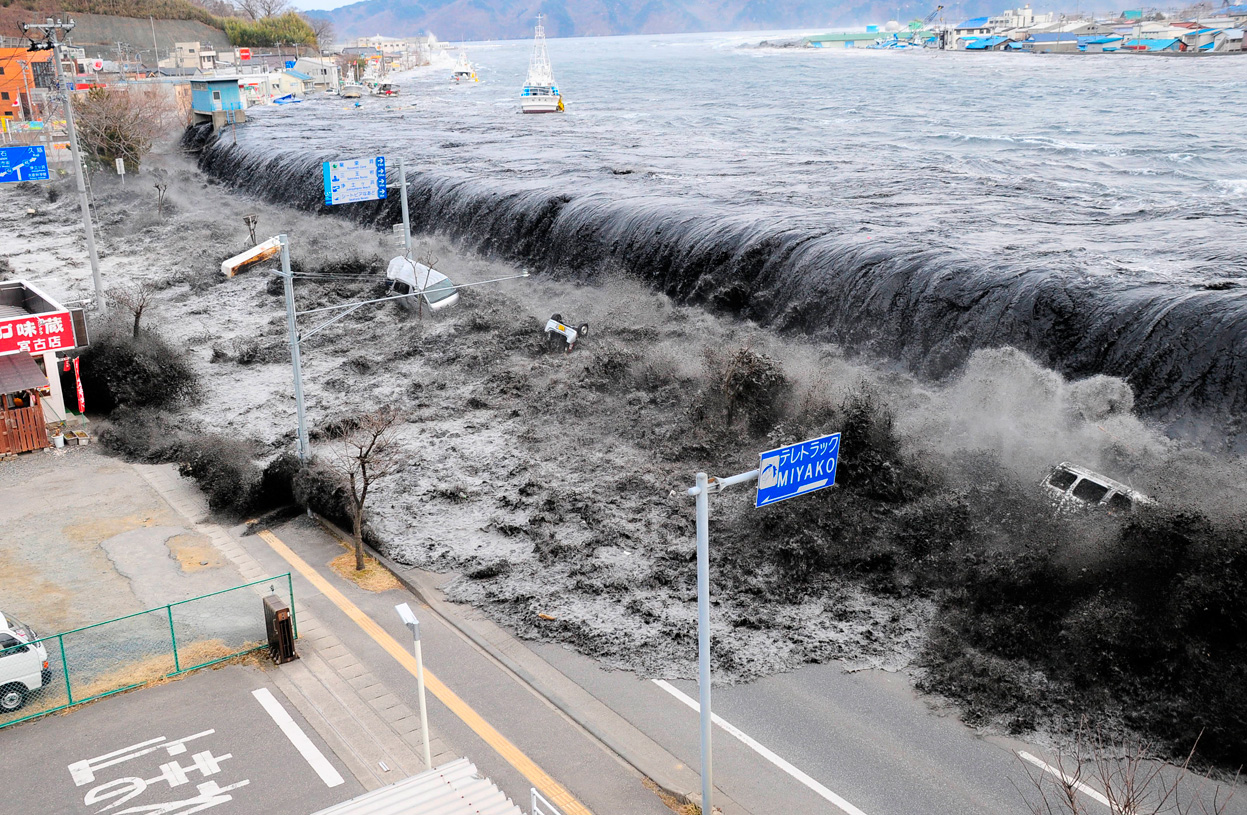
You probably didn’t notice any change then, other than the pain and horror of watching this triple disaster unfold on the news, but make no mistake change will arrive on your doorstep sometime soon. And I’m not talking about the unfolding nuclear radiation disaster specifically. So if it isn’t radioactive fallout, what are our big worries?
There will be several kinds of fallout from Japan’s crisis. One hit your 401k or your investments this morning. It is the economic fallout. Japan is the world’s third largest economy, and the third largest holder of US government debt. Right now Japan’s economy is on the ropes from the triple disasters that befell it on March 11. Their economy will recover some, but it will be a long time before they return to the good old days of March 10th. An economic chain ties us all together. It will take hundreds of billions of dollar equivalents to begin to restore what the Japanese lost in a matter of moments. Those are the obvious losses.
Less apparent are the hidden losses from factories and businesses that have had to shut down due to insufficient electricity to operate their facilities. No production, no exports, no incoming money. No one has had the time yet to even hazard a guess as to how big a hit that will be, or how long it will last.

We can see the effects of that economic chain on our stock markets this morning (Mar 15). Depending of the severity and length of the economic turmoil in Japan, we could see severe turmoil in our own stock markets. And if Japan has to cash out some of those US Treasuries to finance their recovery, what does that do to our economy? I’m afraid that the destabilization of Japan’s economy will have long lasting and very negative effects on all of the world’s economies, and especially that of the USA.
The next fallout will emerge in the petroleum sector. Today the price of oil has fallen almost $4 a barrel. For consumers that would normally signal a good thing. It struck me today that the sudden drop of the oil price was like the sudden drop of the water level just before a tsunami reaches shore. Conventional wisdom is thinking that since this will depress Japan’s economy, their oil usage also will drop significantly. And if everything were humming along as normal in Japan, that would be a reasonable assumption. But everything is totally abnormal as it exists there now. In order to rebuild their economy to some semblance of recovery, they will have to have electricity to replace that lost from the earthquake zone. The severity of this earthquake means that the 5 major power plants that were shut down at the first shaking, the ones that escaped a nuclear incident, will have to have a thorough, inch by inch examination before they can be returned to service. That could take many months if not years to accomplish. The nuclear power plants that have had reactor problems will likely never be repaired nor restarted. So where does Japan find excess electricity that can brought into service quickly? It will have to be from large diesel and gas turbine generators, that suck up petroleum like there is no tomorrow. As soon as the markets realize that this arrangement will have to supply some of Japan’s electricity needs for perhaps years, oil prices will quickly rise. Japan’s oil demand may quickly dwarf its daily usage on March 10th.
Secondly, Japan lost several large petroleum refineries due to the effects of the earthquake and tsunami. Those may be out of service for many months while repairs are made. Japan has a very large petroleum reserve, but now they have lost some of the refining capacity to process it to meet their demands. That refined petroleum product will have to come from elsewhere, for many months or even years. Knock knock! Could we borrow a tanker or two of diesel? What does that do to our availability and costs?
Another fallout will be a tsunami of price increases on everything else for everybody. Japan has few natural resources. Rebuilding will require immense amounts of cement,
asphalt, lumber, iron ore, and copper to start. All will have to be imported. Medicines and plastics all rely on chemicals derived from petroleum. Diminished refining capacity means needed chemicals will have to be imported from somewhere else until those refineries are back online. The old supply and demand laws kick in, and prices will rise.
At the moment, we are watching from front row seats, a country dealing with the effects of “powering down,” trying to come to grips of the complexities of what to do next to try to restore to a March 10, 2011 world.
This is no spectator sport though, because we will soon be on the field ourselves.
Chuck Willis
One Comment on "What Happens in Japan Stays in Japan –NOT"
Lampert Scratch on Sun, 20th Mar 2011 1:24 am
If you’re going to mark March 11 on the calendar as “the day your life began to change” you may as well mark Sept 11, 2001, and the day the U.S. invaded Iraq, and the day Egypt revolted, and the day New Orleans flooded, and hell, even today. Life is a succession of change.