
Peak Oil is You

Donate Bitcoins ;-) or Paypal :-)


Page added on December 20, 2015

The Key to Human History: Ultrasociality?

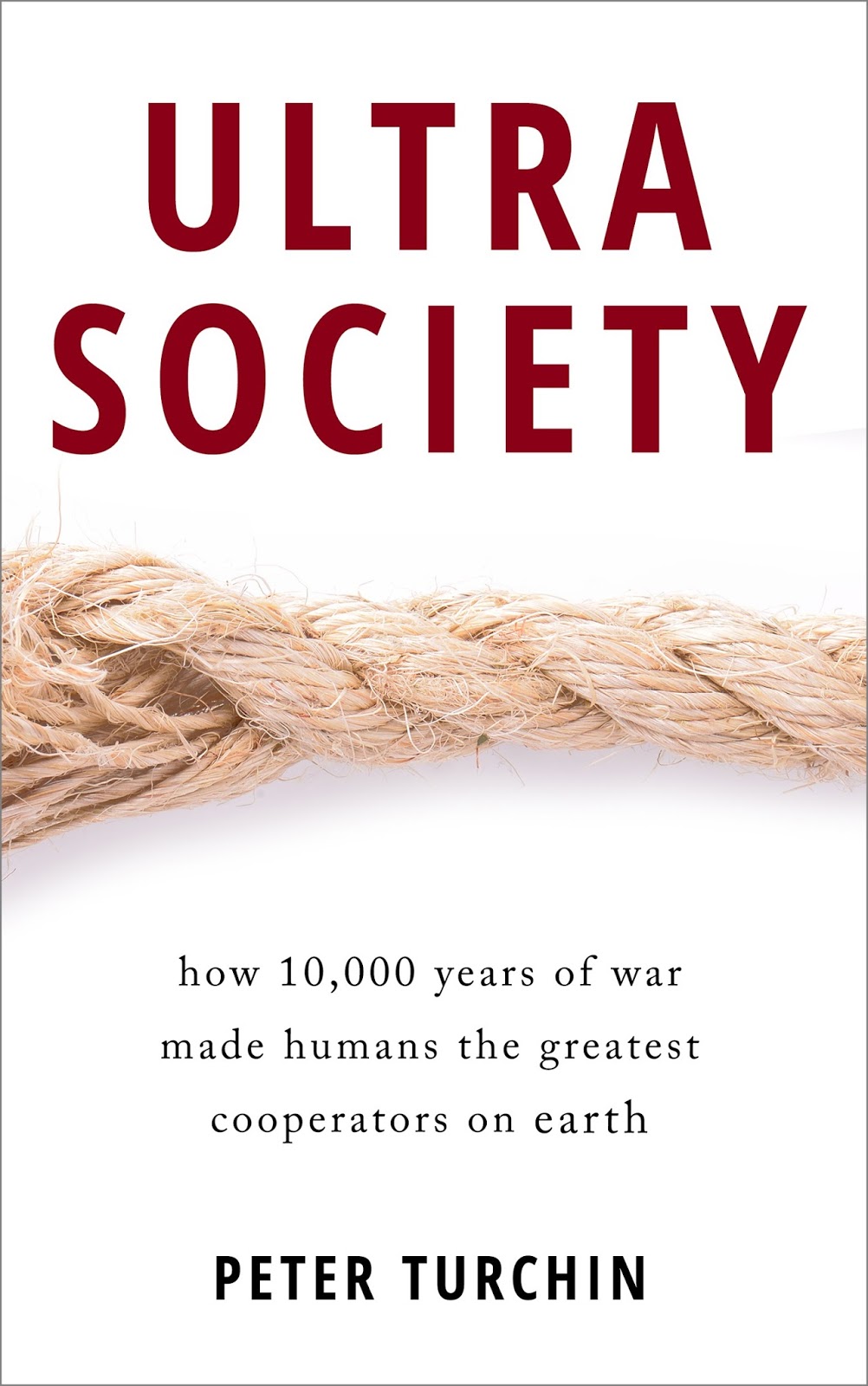
The concept of “ultrasociality” is becoming increasing popular as a tool to understand the characteristics and the evolution of human society. It is a concept taken from evolutionary biology that describes how some species attain evolutionary success by means of collaboration among individuals. The extreme implementation of this idea is found with social insects, ants and bees, whose behavior is usually termed “eusociality” (“the good sociality”). Humans don’t arrive to the degree of hyperspecialization of some insect societies, but they are more socially specialized than most mammals, hence the term “ultrasociality”.
The idea that collaboration is a fundamental factor in evolution is becoming more and more popular in biology. We are seeing the decline of some rather restrictive concepts that described evolution strictly as the result of individual competition alone. In the past, these concepts led to the idea that life was royal battle of everyone against everyone else and the idea spread from biology to other economics and to politics. The consequence was a series of egregious disasters, for instance the development of a style of management that encourages people in engaging in cutthroat competition with their coworkers. An example of how disastrous this idea can be is that of the management of Enron by Jeff Skilling, presently in jail for various felony charges (as described in Turchin’s book) .
Examining history in terms of ultrasociality, as Turchin does, turns out to be very rewarding in terms of what we can learn. Indeed, the evolution of human societies can be seen as the result of a competition among societies, where victory goes to those whose members can collaborate better. So, cooperation among humans is good and Turchin notes that, over history, human societies have been increasing the level of collaboration among members, just as they have increased in size and complexity. One of the results has been a remarkable reduction of their level of internal violence. It is becoming clear that the image of the “good savage”, still popular in many quarters, is deeply wrong. Life in ancient society was much more dangerous than it is nowadays in our world, despite our fascination with the idea that all problems can be solved by carpet bombing someone.
Collaboration allows to create and manage more and more complex social structures. But that has a cost, as Tainter noted in his book “The collapse of complex societies”. If this cost is worth being paid, there must be some returns from the deal. Turchin’s thesis in his book is that it is mainly military competition that favor the larger size and complexity of a society. Turchin notes that a large army will normally defeat a smaller army and, evidently, a larger society can field larger armies and, therefore, will tend to gobble smaller neighbors, one by one. Villages beat foraging bands. Cities beat villages. States beat cities. Large states beat small states. Empires beat large states, and so on. (Cases such as the battle of Agincourt and the St Crispin’s day speech are to be taken as exceptions that confirm the rule.)
There is no doubt that Turchin’s point about the importance of military factors is fundamental, and often underestimated in our times. We live in a largely demilitarized society and it is difficult for us to understand how war and military structures were permeating the life of our ancestors, of even just a century ago. But they were extremely important and, for most of human history there has been no such thing as “pacifism” on record. Pacifist societies, if they existed, were wiped out of the map by less pacifist societies.
Yet, no matter how important war may be in the evolution of human society, putting war at the center of the model, as Turchin does, misses something even more fundamental. Yes, war is important, but, just like complexity, war has a cost. And if the cost of war is to be paid, there has to be a return. What kind of return does war bring? Here, I think we must emphasize that most wars, if not all, are for the control of economic resources. And we we start thinking in terms of resources, we see that war is important, but just a facet of the whole system.
Thee key point of this idea, I think, is that societies become ultrasocial not just because they can grow bigger and hence have bigger armies. No, they go ultrasocial because they need a certain size and complexity in order to optimize the exploitation of the resources they use. Let me explain this point.
Think of a band of foragers in a hunting and gathering society. The optimal size of such a group is probably around 50-100 people; a dimension honed to perfection by hundreds of thousands of years of testing: there has never been an empire of hunters and gatherers! Of course, bands may make war against each other and, in this case, size is surely an advantage, but, as Tainter taught to us, there are diminishing return to complexity. There will be a band size over which the military advantages of size are overcome by the growing inefficiency in foraging. A group of foragers that’s too big will simply split in two.
Think, instead, of an agricultural society. In this case, the optimal size needed to exploit agricultural land, is much larger than that of a foraging band. An agricultural society needs specialized people: priests, kings, armies, craftsmen, and so on. And these people need to be housed, fed, and organized. That, in turn, leads to the appearance of the structures we call “cities”.
The optimal size of a purely agricultural city may go from villages of a few hundreds of individuals to relatively large cities of 10,000-20,000 inhabitants. These cities may fight for the control of the land and, obviously, larger cities may triumph over smaller ones. Again, however, we have limits to the size that an agricultural city can attain because of the increasing costs of transporting sufficient food from the surrounding fields. Agricultural cities may form federations, but the fundamental social unit for a purely agricultural society remains the city-state as, for example, it was the case in ancient Greece.
The coalescence of cities into truly organic states requires different resources than those provided by a purely agricultural economy. In particular, states and empires seem to be the result of the exploitation of mineral resources, which are highly localized and need specific military and political organizations to be exploited. Mineral resources also generate commerce and a network of exchanges that favor the formation of a corresponding political and military network. In a sense, most empires of history have been mineral and commercial empires. The best example is probably that of the Roman Empire that grew on the exploitation of its gold mines and its structure was based on the use of gold to create a powerful military structure. The modern empire that we call “globalization” is built on the exploitation of fossil fuels; its whole military and political structure is geared for this purpose. The complexity of our modern world is in large part the result of the complexity of the worldwide mining system that provides the world’s economy with all the elements of the periodic table, packed and shipped to destination, something that the ancient couldn’t even dream to have.
The most interesting result of this kind of view is that it can be used to understand, at least in general terms, what could be the future evolution of our society. We are, clearly, the most complex ultrasocial society ever having existed in human history. But, if complexity is the result of the availability of mineral resources, then it will follow the cycle of mineral resource exploitation; a grand cycle that started millennia in the past, that is now at its peak and that is likely to start winding down slowly in the near future.
With the gradual depletion of the cheap, high grade mineral ores, the flow of mineral resources to the world’s economy is destined to diminish. In the long run, on a planet where high grade mineral ores have mostly disappeared, there won’t be need any longer for large organizations dedicated to exploiting them. We seem to be seeing the start of this phenomenon right now, in front of our eyes, with the globalized empire facing increasing troubles in maintaining the control of the mineral resources that created it.
We may speculate on what could be the long term results of this process. One could simply be the return to a purely agricultural society and to the size of social groups to the level of city-states. That’s already happened when the Roman Empire turned itself into medieval Europe.
But that’s not necessarily the case. Imagine a society based on solar energy produced by photovoltaic panels manufactured using common and abundant silicon and aluminum. It would not need to exploit high grade mineral resources in order to have abundant energy available. It would have electricity and, as such, long distance data transmission and some kind of cheap, long range, transportation system. At the same time, it wouldn’t need militarized structures in order to control the sources of its wealth. So, what would it be? An empire or a federation of city states? How complex and “ultrasocial” would it be? That is, of course, impossible to say, but we can say that over the long term, human history doesn’t repeat itself but, rather, evolves into different and more complex forms. This is the fascination of history as a guide for the future.
Cassandra’s legacy by Ugo Bardi
5 Comments on "The Key to Human History: Ultrasociality?"
curlyq3 on Sun, 20th Dec 2015 11:29 am
“We live in a largely demilitarized society and it is difficult for us to understand how war and military structures were permeating the life of our ancestors, of even just a century ago.”
Anyone else have a problem with this statement?
curlyq3
onlooker on Sun, 20th Dec 2015 11:45 am
Yes I have a problem with this as the 20th century had more internecine conflict than at any time in history in terms of number of people involved and number of conflicts. I do tend to agree with one aspect of this article and that is the influence of group dynamics (Ultrasociality) in human evolution. Group dynamics while internally favoring cooperation externally can lead to conflicts with other groups.
Apneaman on Sun, 20th Dec 2015 12:39 pm
War with Gwynne Dyer, a 1983 8 part documentary series. I recently rewatched this excellent series (7 of 8) and it stands the test of time. It is different than any other series on War.
“In the early 1980s, the National Film Board of Canada commissioned journalist Gwynne Dyer to create the miniseries War, echoing concerns expressed by the decade’s peace movement about the threat of nuclear war. Dyer had previous military experience, and he filmed the miniseries in ten countries and featured six national armies.[1] He approached the Pentagon for permission to film the United States military, which it granted except for conducting interviews with prominent policymakers. Dyer was able to film Marines in boot camp, the United States Sixth Fleet, and U.S. Air Force bases in Germany. The New York Times wrote, “The Pentagon’s hesitancy was understandable, considering that the subtitle of War is: A Commentary by Gwynne Dyer. Mr. Dyer holds strong antiwar opinions, happens to know a great deal about the military, and speaks up on camera and in writing.”[2]
The miniseries examined warfare, how it had evolved, and what its consequences were. It also examined the challenge of armies’ roles in face of total war.[1] Military leaders involved with NATO and the Warsaw Pact were featured in interviews, many of them speaking to Western media for the first time. Officers from different countries talked about how nuclear technology affected their profession and how a conflict between superpowers would likely lead to all-out nuclear war. Dyer argued that this war could only be avoided by eliminating nuclear arsenals.[3]
The miniseries received “great acclaim” globally but was controversial in Canada. One of the episodes, “The Profession of Arms”, was nominated for an Academy Award.[1] The series was broadcast to 45 countries.”
https://en.wikipedia.org/wiki/War_(miniseries)
“War” with Gwynne Dyer (Complete Series)
https://www.youtube.com/playlist?list=PLR8X5I0C1LF5kaxAE2z_pPy6RMSr89tBx
curlyq3 on Sun, 20th Dec 2015 2:18 pm
Ugo Bardi does good analysis of complex systems … if you replace the word demilitarized with compartmentalized it would work better for me … I think he means that the part or compartment of society which is not responsible for our defense or resource procurement is not fully aware of the degree of destruction that will take place … the consequences of splitting atoms will not be avoided … carbon based life can not exist in the presence of these materials.
Compartmentalization is an unconscious psychological defense mechanism used to avoid cognitive dissonance, or the mental discomfort and anxiety caused by a person’s having conflicting values, cognitions, emotions, beliefs, etc. within themselves.
makati1 on Sun, 20th Dec 2015 7:55 pm
Dumbing down of the American population was necessary to allow the current conditions to exist. A fast growing police state facilitated by a new “opium war” on the American people*. Allowing every support to crumble.
That most of them now have no idea what is happening outside of their mini ‘electronic neighborhood’ of selfies, texts and tweets, is obvious. I have seen few positive articles about the US in the last 20 years. At least, not any from sources not owned by the big six corporations. The Us is in the shitter and the handle is about to be turned and they don’t even rise up and revolt. There is nothing left of America but the shell.
*http://journal-neo.org/2015/12/19/the-us-officials-are-pushing-society-to-narcotic-intoxication/
Too bad. The US had every opportunity to create a beautiful world but never got close to “ultrasociality”, except in making war.