
Peak Oil is You

Donate Bitcoins ;-) or Paypal :-)


Page added on April 1, 2013

The Great Shale Oil Swindle
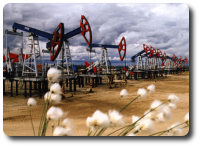
Recent headlines in the US press about the coming economic boom heralded by the shale gas revolution would lead you to think we are literally swimming in oil. A spate of reports last year, in particular the International Energy Agency’s (IEA)World Energy Outlook (WEO) in November 2012, forecast that the US will outstrip Saudi Arabia as the world’s largest oil producer by 2017, becoming, as Reuters put it, “all but self-sufficient in net terms” in energy production. According to the IEA, the projected increase in oil production from 84 mbpd (million barrels per day) in 2011 to 97 mbpd in 2035 will come “entirely from natural gas liquids and unconventional sources” — largely shale oil and gas — while conventional oil output will begin to fall from 2013.
These resources can only be mined at the cost of massive environmental pollution: their extraction involves hydraulic fracturing (“fracking”; pressurised injection of a mixture of water, sand and detergents to create new cracks in the rock to force out the gas), using the technique of horizontal drilling (1). But their exploitation in the US has brought about the creation of hundreds of thousands of jobs and offers the advantage of cheap and abundant energy. Exxon Mobil’s 2013 Energy Outlook says the shale gas revolution will make the US a net exporter by 2025. But is the shale revolution all it’s fracked up to be? The ongoing fragility of the global economy should give pause for thought. Spain’s once-flourishing economy — the Eurozone’s fourth largest in 2008 — is now in dire straits as its supposedly unstoppable property bubble burst unexpectedly that same year, with house prices dropping by a third. But policymakers have learnt few lessons from the 2008 crash, and may be on course to repeat similar mistakes in the petroleum sector.
A New York Times investigation first unearthed major cracks in the “shale boom” narrative in June 2011, finding that state geologists, industry lawyers and market analysts “privately” questioned “whether companies are intentionally, and even illegally, overstating the productivity of their wells and the size of their reserves” (2). According to the paper, “the gas may not be as easy and cheap to extract from shale formations deep underground as the companies are saying, according to hundreds of industry e-mails and internal documents and an analysis of data from thousands of wells.”
In early 2012, two US energy consultants, writing in the flagship British energy industry journal Petroleum Review, sounded the alarm. They noted a strong “basis for reasonable doubts about the reliability and durability of US shale gas reserves” which have been “inflated” under new Security and Exchange Commission (SEC) rules introduced in 2009 (3). The new rules allow gas companies to claim reserve sizes without any independent third party audit.
Dodgy economics of fracking
The overestimation of reserve sizes is being used by oil industry majors to obscure the dodgy economics of fracking. Apart from the harmful effects on the environment, the problem is one of production rates, which start high but fall fast. In Nature, former UK chief government scientist Sir David King, co-writing with scientists from his Oxford Smith School of Enterprise & the Environment, noted that production at wells drops off by as much as 60-90% within the first year (4).
Such a rapid decline has made shale gas distinctly unprofitable. As production declines, operators are forced to drill new wells to sustain production levels and service debt. Rocketing production at inception, combined with the economic slowdown, drove US natural gas prices from about $7-8 per million cubic feet in 2008 down to less than $3 per million cubic feet in 2012.
Finance specialists have not been taken in. “The economics of fracking are horrid,” writes US financial journalist Wolf Richter in Business Insider (5). “Drilling is destroying capital at an astonishing rate, and drillers are left with a mountain of debt just when decline rates are starting to wreak their havoc.
 To keep the decline rates from mucking up income statements, companies had to drill more and more, with new wells making up for the declining production of old wells. Alas, the scheme hit a wall, namely reality.”
Arthur Berman, a petroleum geologist who worked with Amoco (before its merger with BP) says that “the decline rates [of the] shale reservoirs experience … are incredibly high” (6). Citing the Eagle Ford shale site in Texas (the “mother of all shale oil plays”), he points out that the “annual decline rate is higher than 42%.” Just to keep production flat, they will have to drill “almost 1,000 wells in the Eagle Ford shale, every year… Just for one play, we’re talking about $10bn or $12bn a year just to replace supply. I add all these things up and it starts to approach the amount of money needed to bail out the banking industry. Where is that money going to come from?”
‘It’s all in the red’
Last year saw some of the biggest energy companies suffer due to the bubble economics of the shale gas boom. ExxonMobil’s CEO, Rex Tillerson, complained that the lower prices due to the US natural gas glut, although reducing energy costs for consumers, were depressing prices and were thus often insufficient to cover production costs resulting in dramatically decreased profits. Although, in shareholder and annual meetings, the company had officially insisted it was not losing money on gas, Tillerson candidly told a meeting at the Council on Foreign Relations: “We are all losing our shirts today. We’re making no money. It’s all in the red” (7).
The British BG Group was forced “to take a $1.3bn writedown in its US natural gas assets” due to the gas supply glut, “leading to a sharp fall in quarterly and interim profits” (8). By November 2012, after Royal Dutch Shell saw its earnings fall for the third consecutive quarter by “24% on the year”, Dow Jones reported the “negative effects in their earnings”, underscoring “how disruptive the shale boom of the past few years has been to the sector.”
Even Chesapeake Energy — billed as America’s shale pioneer — found itself in a crisis, forcing it to sell assets to meet its obligations. “Staggering under high debt,” reported The Washington Post, Chesapeake said “it would sell $6.9bn of gas fields and pipelines — another step in shrinking the company whose brash chief executive had made it a leader in the country’s shale gas revolution” (9).
How has this been allowed to happen? Analyst John Dizard pointed out in theFinancial Times (6 May 2012) that shale gas producers have spent “two, three, four and even five times their operating cash flow to fund their land, drilling and completion programmes.” To sustain this “deficit financing”, too much money “was borrowed, on complex and demanding terms. Wall Street should have provided reality checks to the shale gas people; instead, they just provided cashier’s cheques with lots of zeroes at the end.” But according to Dizard, the bubble will continue growing due to increasing US dependency on gas-fired power. “Given the steep decline rates of shale gas wells, compared to conventional wells, drilling will have to continue. Prices will have to adjust upwards, a lot, to cover not only past debts but realistic costs of production.”
Worst-case scenario
Nonetheless, it is not ruled out that several large oil companies could find themselves facing financial distress simultaneously. If that happens, according to Berman, “you may have a couple of big bankruptcies or takeovers and everybody pulls back, all the money evaporates, all the capital goes away. That’s the worst-case scenario.”
In other words, the premise of “peak oil” — the point at which geological constraints and economic factors will combine to make the black stuff more difficult and expensive to produce — is far from undermined by the shale gas boom. Several independent scientific studies released over the last year — largely ignored by the media — vindicate this conclusion.
In a study in Energy Policy, Sir David King and his Oxford team concluded that the oil industry had overstated world reserves by about a third, and estimates should be downgraded from 1,150-1,350 billion barrels to 850-900 billion barrels. “While there are certainly vast amounts of fossil fuel resources left in the ground, the volume of oil that can be commercially exploited at prices the global economy has become accustomed to is limited and will soon decline” (10).
King and co, in their Nature paper, found that despite reported increases in unconventional oil and gas production by fracking, depletion of the world’s existing fields is still running at 4.5-6.7% a year. They categorically dismissed notions that a shale gas boom would avert an energy crisis. And US financial risk analyst Gail Tverberg found that since 2005 “world [conventional] oil supply has not increased”, that this was “a primary cause of the 2008-2009 recession” and the “expected impact of reduced [conventional] oil supply” will mean the “financial crisis may eventually worsen” (11). That is not all: a new report from the New Economics Foundation warned that the arrival of “economic peak oil” — when the cost of supply “exceeds the price economies can pay without significantly disrupting economic activity” — will occur around 2014/15 (12).
Following a hugely successful industry PR offensive, journalists and policymakers have largely ignored these studies. But the upshot is simple: Rather than ushering in a new wave of lasting prosperity, the eventual consequence of the gas glut is likely to be an unsustainable shale bubble, fuelling a temporary recovery that masks deeper structural instabilities. When the bubble bursts under the weight of its own debt obligations, there will be a collapse in supply and a spike in prices, with serious economic consequences.
9 Comments on "The Great Shale Oil Swindle"
Kenz300 on Mon, 1st Apr 2013 10:50 am
One more reason to to speed up the transition to safe, clean alternative energy sources.
Wind, solar, wave energy, geothermal and second generation biofuels made from algae, cellulose and waste are the future.
Quote from article below:
“Commercial-sized cellulosic plants are relatively new, but already about 70 projects are under construction in the United States. Two plants, including the DuPont one, are being built in the nation’s leading corn-producing state, and will use the leaves, stalks and cobs of the corn plant.
http://www.chron.com/business/energy/article/USDA-DuPont-pair-up-on-corn-stover-guidelines-4394407.php
sunweb on Mon, 1st Apr 2013 12:17 pm
It is wishful thinking that there is a replacement for fossil fuels. Solar and wind energy capturing devices as well as nuclear are not alternative energy sources. They are extensions of the fossil fuel supply system. There is an illusion of looking at the trees and not the forest in the “Renewable” energy world. Not seeing the systems, machineries, fossil fuel uses and environmental degradation that create the devices to capture the sun, wind and biofuels allows myopia and false claims of renewable, clean, green and sustainable.
These “renewables” cannot replace themselves like a horse or an oak tree.
Energy Return on Energy Invested (ERoEI) is only a part of the equation. There is a massive infrastructure of mining, processing, manufacturing, fabricating, installation, transportation and the associated environmental assaults. Each of these processes and machines may only add a miniscule amount of energy to the final component of solar or wind devices yet the devices cannot arise without them. There would be no devices with out this infrastructure.
A story in pictures and diagrams:
From Machines making machines making machines
http://sunweber.blogspot.com/2011/12/machines-making-machines-making.html
BillT on Mon, 1st Apr 2013 1:23 pm
Sunweb, I keep hammering that FACT into some of their heads, but it just bounces off. They don’t want to realize that the current energy system was built with cheap plentiful energy, and is maintained with cheap plentiful energy. That when energy is not cheap or plentiful, all of that is going to melt away. And few will even look at your website because they know deep down that you are correct.
It’s not the efficiency of the panel, it is the NET energy needed to make the panel. And it cannot come from the solar panel it makes. Renewables cannot renew themselves. They need oil power to do that.
Beery on Mon, 1st Apr 2013 2:37 pm
So Counterpunch finally gets it. It’s about time. Since 2005, they’ve been toeing the cornucopian line.
They didn’t get it in 2008:
http://www.counterpunch.org/2008/10/01/the-recurring-myth-of-peak-oil/
They didn’t get it in 2012:
http://www.counterpunch.org/2012/03/29/the-myth-of-peak-oil/
But now they’ve seen the light. It would have been nice if they’d done a bit more digging while the cornucopians were gleefully turning math into myth. It strikes me that their change of heart is too little too late.
J-Gav on Mon, 1st Apr 2013 2:48 pm
Kind of a shame but Sunweb and BillT are right: believing some combination of ‘renewables’ will someday replace fossil fuels is a pipedream without the pipes. Of course, that doesn’t mean that all wind, solar, geothermal, wave power etc projects should be moth-balled, just that the wild expectations attached to them need to adjust to the real world.
Concerning the article above, I’ll say only that I’ve often found Wolf Richter and Art Berman to be reliable commentators.
MikeE on Mon, 1st Apr 2013 2:50 pm
I am ready to believe the comment from BillT, that oil power is needed to make the renewables, and have sometimes said it. What I don’t have, and need, is detailed technical support for that position. Where do I find the report with the necessary calculations?
doug nicodemus on Mon, 1st Apr 2013 4:29 pm
lets say oil and gas and coal ran out tomorrow…guess what the wind, and solar and geothermal resources would continue to create power for 25 years…what you don’t think that we can create more green power sources by then with the current available…the experts that come here and comment amaze me…
econ101 on Mon, 1st Apr 2013 5:20 pm
These resources can only be mined at the cost of massive environmental pollution: their extraction involves hydraulic fracturing (“fracking”; pressurised injection of a mixture of water, sand and detergents to create new cracks in the rock to force out the gas), using the technique of horizontal drilling
……………………………………..
Absolutely a false statement discrediting this author. I think the author refers to themselve as counterpunch? If so some might say this person projects violence toward the people.
The earths resources are abundant beyond belief. The lie that these resources are limited is just that. The shale boom is real. It was, in a large part caused by peak oil politics that served to close most of americas federal lands to development. That pushed technology to find a way to make the known deposits on accessible lands give up their bountiful yield of energy for the people.
Dont forget those almost unlimited federal supplies are still out there PLUS we have this huge shale development going on world wide. This is the peoples energy!
Anyone is welcome to drive the peoples elcetric car or use a windmill. You can have all the solar energy you want if you can get the rest of us to pay you in the form of huge governement subsidies and special tax loopholes. Use those alternative energy tax loopholes for the good of the people!
DC on Mon, 1st Apr 2013 7:20 pm
SoS, it will be cold day in July when you start giving a $hit about ‘the people’. And as Im sure you know SoS, ‘counterpunch’ is not a person, there are many contributors, and none of them advocate violence against ‘the people’, unlike the oil corporations whose huge government subsidies and special tax loopholes you work so hard to ignore. People are being hurt by the oil+gas corporations and its thug enforcers, the US\UK military.
No, one is being hurt by public support for wind and solar-grow up.