
Peak Oil is You
Donate Bitcoins ;-) or Paypal :-)


Page added on December 16, 2016

The case for optimism
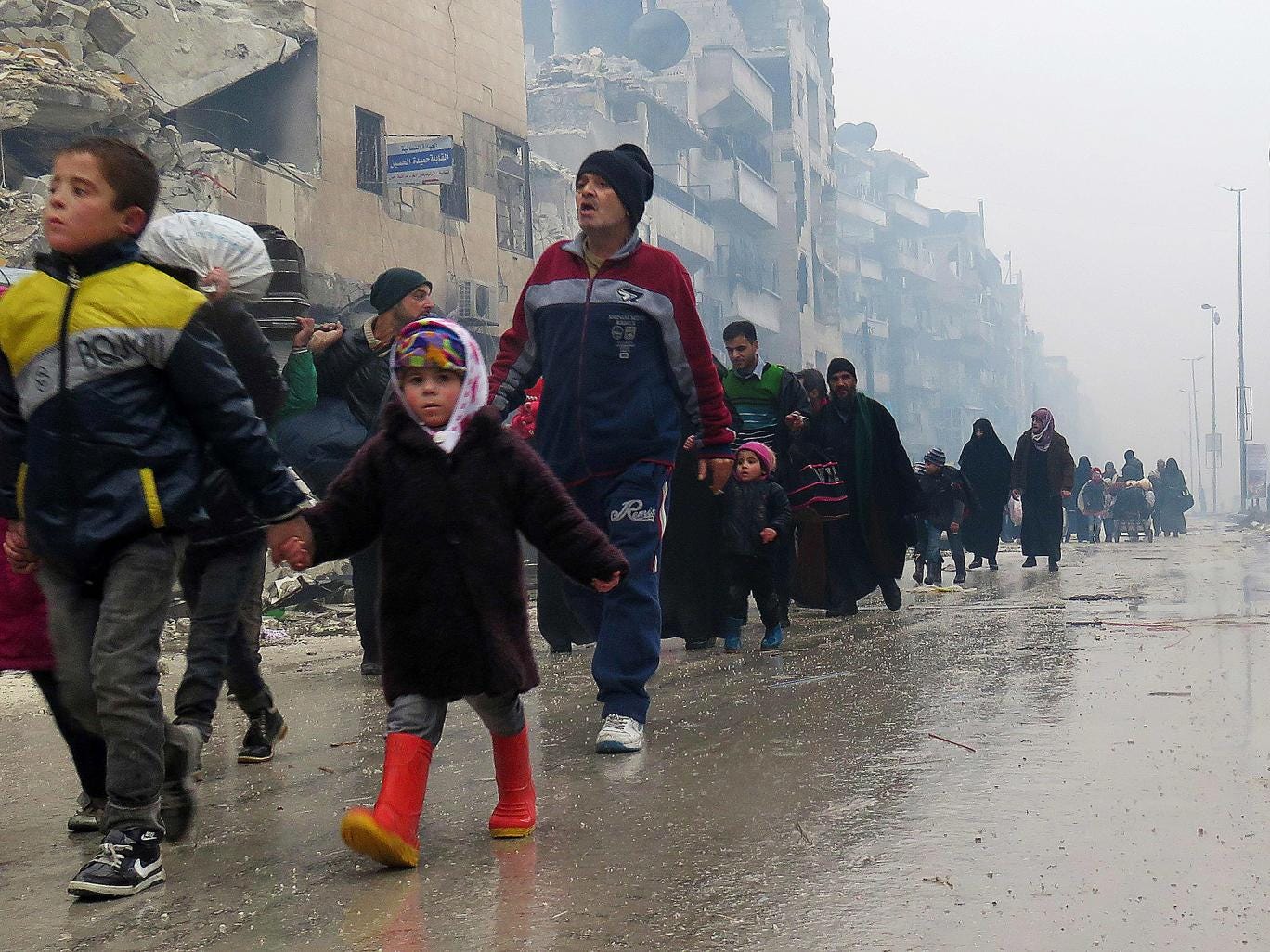
A quick glance at the headlines over the past year would be enough to give anyone a grim outlook on the future of our world – but there are good reasons to be hopeful. David Rothkopf makes the case for why the fate of future generations is far from doomed
The average person, looking around the world today, might say things are very grim. It’s understandable. Headlines from Syria reveal devastation and human tragedy on an unimaginable scale. Billions of people suffer with too little, lacking basic necessities such as access to food, water, sanitation, or electricity. Terrorists wage their asymmetric wars not just against states but within our psyches. In the United States and Europe, right-wing leaders sell a tale of decline and civilizations at risk-and plenty of voters are buying it. Look no further than Donald Trump’s ascent to the White House on a wave of hateful sentiment.
It is the worst of times. And yet, reflecting on the 2016 campaign in his newest book – and in many ways his most personal and provocative yet – New York Times columnist and 2013 Global Thinker Thomas Friedman begins with a quote from Marie Curie: “Nothing in life is to be feared, it is only to be understood. Now is the time to understand more, so that we may fear less.”
Friedman, who is a friend, goes further. His book is titled Thank You for Being Late: An Optimist’s Guide to Thriving in the Age of Accelerations. So here is a guy who has covered the Middle East and the tribulations of the world for 30 years, and three Pulitzer Prizes later, he is embracing optimism. Why?

The title of the book gives a clue. “Thank you for being late” refers to the degree to which Friedman found himself grateful for the quiet moments each day that he was granted when people with whom he was to meet were delayed by the press of daily life, giving him time to reflect. The book represents an effort to look at what has happened in the world and, in particular, on the “accelerations” that have transformed it and left so many people run ragged, bewildered, and unable to process the meaning of recent changes.
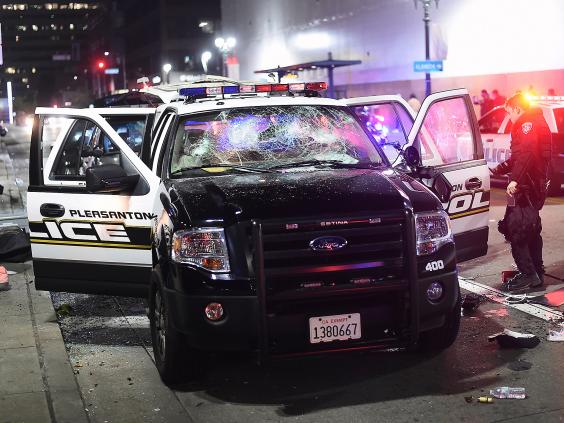
Violent riots broke out in Oakland, California in November following the election of Donald Trump (Reuters)
Those accelerations – in technological advancement, climate change, and globalisation – have reordered the planet from top to bottom, and Friedman spent three and a half years exploring how and looking for meaning. The search brings him back to his hometown in Minnesota to contemplate how the shifting tectonics of modern civilization have altered that which seemed most familiar to him as a child.
The book is written with Friedman’s typically probing search for greater meaning, for big ideas, and for organising principles. And, in the end, it leaves one with the feeling that while the changes that are remaking the planet pose great challenges – notably in the area of climate change – they really do offer even greater opportunities for the lives of everyone in virtually every corner of the world.
This raises a couple of questions. First, do the facts bear out the idea that things are really improving broadly and not just in terms of the gadgets or technologies we have at our disposal? Second, does history offer any clues about the nature and sustainability of step changes of the type Friedman’s book so engagingly focuses on?

Sir David Attenborough thinks about his own mortality every day
To answer those questions, consider that Friedman is not the first to embrace optimism. Indeed, while declinists of every stripe sometimes seem to have greater access to the media, there has been a bit of a groundswell recently of people making the case that the present has a lot to recommend it and that the future looks even better. Furthermore, the current crop of optimists has not based views on the age-old triumph of hope over experience. Rather, to the contrary, their views are arrived at the old-fashioned way – through research, based on data. In fact, I count myself among them because, in my view, optimism is the most logical, sound, and defensible position to arrive at after a rigorous study of history.
We do not live in a perfect world. But we live in a perfectible one. History shows that, over the long run, we collectively have made progress work.

National Guard troops have been sent to Ferguson during ongoing protests and riots sparked by the fatal police shooting of Michael Brown (Getty)
Steven Pinker of Harvard University blindsided a world weary of war stories and the fear of terrorism in 2011 with the publication of his book, The Better Angels of Our Nature. In it, he argued and demonstrated through an analysis of available data that violence in human societies has dropped markedly throughout history and that we live in one of the most peaceful and safe times ever
Pinker writes, “Believe it or not … violence has declined over long stretches of time, and today we may be living in the most peaceable era of our species’ existence.” If you lived in what he described as the “pre-state” era, you had a 1-in-6 chance of dying in conflict. In the last century, for all its horrific violence, that number fell to just a 3 per cent chance. And the current period is the most violence-free in history. Pinker offers six major civilising factors, ranging from the rise of institutions and the rule of law to our current respite from global conflicts, to help explain why.

England fans throw bottles and clash with police ahead of a game against Russia in June (Getty)
Other data supports this. Between 500,000 and 900,000 people died in battle in 1950. By 2008, according to PolitiFact, this number was down to 30,000. Independent researchers associated with the Human Security Project at Simon Fraser University have concluded: “Today there is broad agreement within the research community that the number and deadliness of interstate wars has declined dramatically since the end of World War II, and the incidence of civil wars has declined substantially since the end of the Cold War.”
They found that the average number of interstate wars falling from six per year in the 1950s to just one per year now is significant because such conflicts usually are deadlier than civil wars. It also does not take a very sophisticated analysis to conclude that the threats we face today from the likes of the Islamic State, while real, are much, much smaller than the risk of global thermonuclear war or of world wars.
Other positive changes are equally clear. Nothing is more basic to quality of life than its duration. In the pre-modern world, life expectancy was about 30 years. Since the start of the Industrial Revolution, with its huge leaps forward in public health and scientific progress, life expectancy has increased substantially, aided most notably by declines in child mortality rates. Average expectancy worldwide has more than doubled since 1900, and no country in the world today has a lower life expectancy than the countries in the world with the highest life expectancies in 1800.
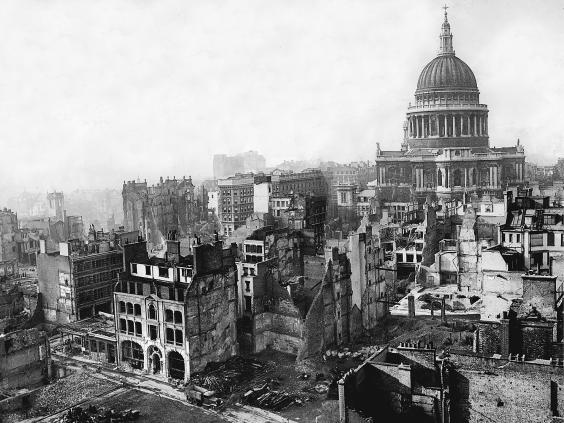
St. Paul’s Cathedral remains intact after an air raid during World War Two (Rex)
The Industrial Revolution produced other massive changes in quality of life. Modern indoor plumbing was introduced to the rich in the United States only in the mid-19th century. In the US, today, virtually every home has it. Worldwide, only 76 per cent of people had access to improved water sources in 1990; that number is now around 91 per cent. Only 1 per cent of US homes had indoor plumbing and electricity in 1920. Today, almost all do. Worldwide, while no one had access to electricity before the late 19th century, around 83 per cent of the population does today.
In 1850, almost everyone in the world lived in an autocracy or a colony. Even the few democracies around were very unrepresentative. Today, the majority of the world’s people live in countries ruled by democratic regimes – more than 4.1 billion people – and only 1.7 billion live in autocracies.
In 1800, almost nine out of 10 people were illiterate. Today, nearly the same proportion can read (Creative Commons)
Real gross domestic product per capita held steady at around $400 to $600 a year for most people in most places for most of the last millennium. It started to change in the developed world as the Industrial Revolution hit. But the real breakthrough came about as globalisation gained traction about 50 years ago. According to the World Bank, it rose from a global adjusted average of $449.63 in 1960 to over $10,000 in 2015. The result is that the share of the world’s population living in poverty has fallen from 94 per cent in 1820 to under 10 percent today.
In 1800, almost nine out of 10 people were illiterate. Today, almost the same proportion can read. In 1970, only 6 per cent of the world’s people had a landline phone. In 2014, we passed the point where there were more cellular devices than people on the planet. According to the World Bank, by the following year, the average rate of cellular subscriptions per 100 people was 98.6.
History, then, offers an encouraging story. It is one of the reasons that those who study it and analyse current change anticipate that, while huge tests confront us now, great progress will continue. Dislocations of workers by new technologies pose a real challenge, note Andrew McAfee and Erik Brynjolfsson in their important works, Race Against the Machine and The Second Machine Age. But they also point to the prospect of less backbreaking labour, shorter workweeks, and longer work lives. AARP has analysed this in the US and sees a change few could have expected or gleaned from the tenor of public debate just a few years ago: the older members of society, rather than being a burden, are likely to become a boon. Retirement is a concept that will have to be rethought as companies are able to tap into their most experienced workers for much longer, thanks to information technologies that enable them to remain relevant, active, and engaged in creating value.

-
Read more
Happiness dictated by health and love not money, major new study finds
Estimates today are that, effectively, the entire world will have internet access be linked together in a man-made system for the very first time in history-sometime between 2020 and 2030. We are beating cancer, with deaths down 23 per cent in a generation. A cure may be far off, but as Otis Brawley, chief medical officer of the American Cancer Society, has acknowledged, it’s possible that more people “are going to live [for a] prolonged high-quality time in peaceful coexistence with their disease.”
Progress like this has made benchmarks such as the UN Sustainable Development Goals, which were adopted in 2015, seem not only achievable, but achievable in the near future. These include ending poverty, eradicating hunger, ensuring that, within a decade and a half, all girls and boys can complete primary and secondary education for free, ensuring clean water for all, and guaranteeing that everyone has access to affordable, sustainable, and reliable energy.

As many as 70 per cent of millennials say they view the world as being ‘full of opportunities’ (Getty)
Perhaps this is why a recent study among 26,000 millennials by the World Economic Forum reveals something quite different from the snark and cynicism of political debates, which is often erroneously associated with young people. When they look at the world around them, 70 per cent see it as full of opportunities, versus only 30 per cent who see it as full of struggles; 86 per cent see technology creating jobs, while only 14 per cent see it destroying them.
Millennials are hopeful. They are hopeful for the same reason that Friedman and Pinker and the technolophiliacs of Silicon Valley are hopeful. They are hopeful because the story of human history is one of continuous progress, and we don’t just live in a moment in which this is ongoing – we live in a moment when progress is inexorably accelerating. Indeed, when you consider that living in one global community and in one single cultural ecosystem promises better understanding of one another, ubiquitous sensing, unlimited data storage, big-data analytics, and the ever-increasing capacity to connect the world’s best and most creative minds, the prospect of seeing the world in detail as it is and as it might be seems possible for the very first time. Optimism is not outlandish – it is required. Realism equals optimism.
68 Comments on "The case for optimism"
onlooker on Fri, 16th Dec 2016 2:44 pm
Sorry to say this article encapsulates quite well, why I for one am NOT optimistic. I hear this same stream of thought again and again. Of the wonders of technology, of a world where modernity has incorporated more and more people and how we are defeating diseases and prolonging life. Well guess, what in the long run that is NOT good. Just like some of our technology has turned out to be at best mal adaptive. Because at the root of the reason for Pessimism is that we collectively as a species cannot accept and admit that we are in serious overshoot of Earth’s sustaining capacities for our huge numbers and for the type of machines and technology we have at our disposal and employ. So, we refuse to accept the dead end we are headed for. All these articles do is remind me and others how blatantly obvious it is because we pursue a misplaced and counterproductive “progress”. Our numbers, our impacts on this planet from what we do and how we do it must come to an end or else, Earth will find a way to rid itself of us.
bug on Fri, 16th Dec 2016 4:43 pm
I am optomistic that this whole house of cards will collapse, and will enjoy the show.
Go Speed Racer on Fri, 16th Dec 2016 5:28 pm
I could use a case of optimism.
Do I order that on Amazon?
Apneaman on Fri, 16th Dec 2016 5:42 pm
GSR, try a case of Molson Canadian – that’ll cheer you up.
https://www.youtube.com/watch?v=Y09YOkVmGg0
makati1 on Fri, 16th Dec 2016 6:16 pm
We have to soon reach peak optimism, or is it peak desperation?
The gazelle, on the African plain, does not worry about the next day, just today and now. The lion is always close by.
Humans are blessed (cursed?) with an understanding of life and death but it has done us no good. We have managed to use our brain to find excuses and denials for the unpleasant parts of life and then are surprised when the lion of reality takes us down.
The above article is proof of that statement. Denial is rampant. The few of us who recognize the ‘lions’ of life have the advantage of being able to put the rest of the herd between ourselves and the lion. The question is: Are you the herd or the smart gazelle that is prepared for the lion’s charge?
eugene on Fri, 16th Dec 2016 8:02 pm
Only the save, secure and making a good living can afford optimism. When one is living with drought, hunger, no money, no health care, etc, optimism seems, and is, ridiculous. Lot of ridiculousness around.
Apneaman on Fri, 16th Dec 2016 8:12 pm
Rapid population decline among vertebrates began with industrialization
https://www.sciencedaily.com/releases/2016/12/161216115600.htm
solarity on Fri, 16th Dec 2016 9:47 pm
Anyone who reads the NYT regularly knows what a crack-pot Friedman is. The fact that he found himself “grateful … when people with whom he was to meet were delayed,” tells me he gets the type of the respect he deserves: very little.
Sissyfuss on Fri, 16th Dec 2016 11:10 pm
Tom’s right. The sixth mass extinction isn’t a problem, it’s an opportunity.
makati1 on Sat, 17th Dec 2016 12:11 am
solarity, any one who reads the New York Times is wasting his life on bullshit propaganda. I wouldn’t even use it in the cats litter box.
Apneaman on Sat, 17th Dec 2016 1:21 am
“Millennials are hopeful.”
Because they have spent K to 12 shielded from reality in their PC positive psychology indoctrination camps. AKA, public school. Indoctrinated to be magical thinkers by a culture obsessed with positivism and terrified with “negative emotions”. Everybody is a winner and gets a first place trophy. Even if you were at home sick that day. Kids if something seems upsetting just think positive thoughts and all your problems will cease to exist. That’s what us adults do. Like with AGW, income inequality and our mass extinction, We just think happy thoughts until we feel better then go shopping and jetting away on vacation. A close loved one died? Well here’s some pills so you don’t have to experience the sadness and pain of the normal, lengthy and necessary grieving process that we all must endure. “There’s no place like home. There’s no place like home. There’s no place like home”
The Tyranny of Positive Thinking
http://www.resilience.org/stories/2010-03-05/tyranny-positive-thinking
Barbara Ehrenreich, breast cancer sufferer & author of “Bright-Sided: How the Relentless Promotion of Positive Thinking Has Undermined America”
https://www.youtube.com/watch?v=CWURND_5cNw
“Why, three centuries after the Enlightenment, is American culture so bewitched by magical thinking, elevating feelings and intuition and hope over preparation, information and science? Why do so many of us seem so willing to discount reality in favor of vague wishes, dreams and secrets? And has this gospel of good times delivered us not into a life of ease but instead into a worldwide economic meltdown?”
http://www.washingtonpost.com/wp-dyn/content/article/2009/11/13/AR2009111301392.html
Apneaman on Sat, 17th Dec 2016 1:27 am
LECTURE @THE SCHOOL OF LIFE: Finding fault with the optimistic temper of the times, philosopher Alain de Botton believes that we should all learn to be a bit more pessimistic.
https://www.youtube.com/watch?v=Aw1oLtuJOXQ
Apneaman on Sat, 17th Dec 2016 1:30 am
Rust Cohle – Philosophy of Pessimism (True Detective)
https://www.youtube.com/watch?v=9oX2xFo7JA4
makati1 on Sat, 17th Dec 2016 2:51 am
Ap, I am going to especially enjoy watching the “snowflakes” melt as the real world forces itself into their “secure spaces”. The generation that has never been told “NO!”. And, yes, some of them are my grand kids. I tried to open their eyes, but…
Go Speed Racer on Sat, 17th Dec 2016 3:14 am
Hi Sleep Apneaman,
Thx the video. What I really need is that
25″ Curtis Mathes console TV over on the right!
I’m a 70’s mentality. Back when the pistons were teh size of coffee cans.
Those color consoles were great when they were new… but let 20 yrs go by and they all break down and go to landfill.
* sigh *
Dredd on Sat, 17th Dec 2016 6:38 am
Optimism is a feeling (When You Are Governed By Psychopaths – 6).
Kenz300 on Sat, 17th Dec 2016 7:40 am
Too many people… too few jobs…..
Yet the world adds 80 million more people to feed, clothe, house and provide jobs for every yer.
Endless population growth is not sustainable. It only leads to more poverty, suffering and despair.
Sissyfuss on Sat, 17th Dec 2016 8:46 am
Ape, like the Post article says, the corporations push the positivism mantra so that the masses will continue to consume like there’s no tomorrow. Til they consume tomorrow as well.
penury on Sat, 17th Dec 2016 10:51 am
“consume like there is no tomorrow” in an metaphorical way, they are correct. There is no tomorrow for those expecting tomorrow to be like or better than today, the die has been cast, Depletion, deflation, disease and despair are coming. It may take 50 years or 50 months but the direction is towards less not more.
Cloggie on Sat, 17th Dec 2016 12:24 pm
Meet the most likely First Lady: daughter Ivanka, not wife Melania:
http://www.spiegel.de/politik/ausland/ivanka-trump-koennte-rolle-als-first-lady-uebernehmen-a-1126386.html
Trump is keen to have her as close as possible to himself and the Oval Office as adviser.
It is btw the best looking first family since JFK, see pictures.
It is already clear that Trump’s daughter could very well be a future Republican presidential candidate. Poor Hillary.
[snicker]
Boat on Sat, 17th Dec 2016 12:42 pm
For most of the developed world consumerism is just a replacement of products. Most are more energy efficient to use and are made more efficiently than the older product. To survive as a company this trend is inevitable. The promise of capitalism is alive and well.
California is regulating energy requirements for computers. Why vampire electricity loss for electronics has not been addressed yet is but more low hanging fruit waiting for legislation.
Sissyfuss on Sat, 17th Dec 2016 12:53 pm
Wrong Boatard, the Chinese crap you’re consuming takes planned obsolescence to the acme of waste. Capitalists figured out that the way to higher profits it to sell more inferior products. It is so obvious that only a total dips#%t could miss it.
Boat on Sat, 17th Dec 2016 1:43 pm
Speak for yourself ya sissy. My house is American made, car, furniture, energy. Dumbass. Read that in a book?
GregT on Sat, 17th Dec 2016 1:45 pm
“Most are more energy efficient to use and are made more efficiently than the older product.”
Right Boat. That’s why we’re using so much less energy per capita today, then we were 50 years ago, and products last so much longer now than they did back then.
It is so obvious that only a total dipshit could miss it.
GregT on Sat, 17th Dec 2016 1:49 pm
“My house is American made”
Houses built in Europe 300 years ago, will still be standing long after your disposable ‘mercian’ made home has long since rotted back into the ground..
Hubert on Sat, 17th Dec 2016 3:16 pm
Average America Idiot is DOA.I’m not too sure Europe is any different.
99.9% of the population dosed not understand Peak Oil (Peak Everything).
There is no Future…
Hubert on Sat, 17th Dec 2016 3:17 pm
Still No edit function on this website. 🙁
Apneaman on Sat, 17th Dec 2016 3:40 pm
Boat, you mean your vehicle was assembled in America right?
“CARS.COM — Cars with at least 75 percent domestic content are becoming an endangered species, and for the first time in the American-Made Index’s nine-year history, the list has fewer than 10 cars.”
https://www.cars.com/articles/the-2015-american-made-index-1420680649381/
You own one of these 75%ers?
Apneaman on Sat, 17th Dec 2016 4:02 pm
6 million Americans have stopped paying their car loans, and it’s becoming a ‘significant concern’
http://www.businessinsider.com/auto-loan-delinquency-numbers-from-ny-fed-2016-11
More Than 40% of Student Borrowers Aren’t Making Payments
New figure raises worries that millions of them may never repay more than $2
http://www.wsj.com/articles/more-than-40-of-student-borrowers-arent-making-payments-1459971348
US households now have over $16,000 in credit-card debt
“ndebted households today have credit card balances averaging $16,061 — just shy of 2008’s high, according to a new NerdWallet report, based on data from the Federal Reserve Bank of New York and the Census Bureau.
And total household debt, including mortgages, has ballooned to $132,529, up from $88,063 in 2002, when NerdWallet started tracking the data. While household income has grown by 28 percent in the past 13 years, it lags the the cost of living, which increased 30 percent during the period.
Medical expenses jumped the most, up 57 percent since 2003, while the cost of food rose 36 percent and housing increased 32 percent.”
http://www.cnbc.com/2016/12/13/us-households-now-have-over-16k-in-credit-card-debt.html
Intra-governmental holdings stood at $5.35 trillion, giving a combined total public debt of $19.19 trillion. U.S. GDP for the previous 12 months was approximately $18.15 trillion, for a total debt to GDP ratio of approximately 106%.
http://www.usdebtclock.org/
Just capitalism right boat? Ya, except when I was young, this current debt bombs situation would have been laughed at and shouted down as fucking retarded, but now you accept it as just capitalism even though it was considered insane just a few decades ago. The shit in that big shit sandwich you keep eating is so damn thick now I’m suprised you can still fit it in your mouth. The things people do for their religion. Boat????? How come you never ever respond back when I bring up the 2008 crash and needed bailout to save capitalism? By the rules of capitalism are we not supposed to let the weak company’s sink or swim on their own? Banking, car makers, airlines, banking cartels oil every big industry is subsidized to the max and bailed out after they fuck up. That’s how it really works. Not capitalism. The whole fucking system is a BIG GOVERNMENT managed system that protects and bails out useless eaters all the time. It’s a feature, not a bug. Not capitalism at all.
Just a matter of time until one of these ever expanding bubbles goes POP. Next time you and your investments may get bailed in to save the financial criminals and the system. Maybe it will be beyond saving this time.
Boat on Sat, 17th Dec 2016 4:13 pm
greggiet,
Yea in 1960 a much larger part of the population had lousy furnaces and many homes didn’t have homes with insulation. The poor had no ac and swealtered the summers. Homes lacked construction regulation and many were built like shyt. The cars were much bigger and heavier and ran at 10 mph. The choices in the supermarket were fewer especially healthy choices. There was much less mobility, fewer cars, trains, planes. Yea, the good o’l 60’s. Elvis swung his hips and was considered the devil.
Boat on Sat, 17th Dec 2016 5:29 pm
Ape,
I have responded several times over the years to the bailouts. You don’t have much memory. The bailouts have long since been paid back with 10’s of billions paid back in interest. Your google efforts continue to be disappointing and your book selection sucks or you would know this.
penury on Sat, 17th Dec 2016 5:36 pm
Yes Boat, 1960 was so long ago I suppose you never met anyone who lived in those shacks built in the 60s, Well I lived in one, so did millions of others. Cars ran at 10 mi an hour? People ran at 10. Trust me your level of understanding of the past reveals the level of education which you received,
makati1 on Sat, 17th Dec 2016 6:22 pm
Penury, Boat is a poor joke, but a good example of the dumbed down, brainwashed American masses.
He also has no idea that the best time to live in America existed BEFORE he was born and he never got to to experience it. What he has now is just the worn-out, polluted, semi-police state, debt ridden remains of a once great land.
My 56 Ford could do 110 mph and go from 0 to 06 in 20 seconds. My 65 Chevy SS 396 could do even better. And that was a street car, not a racer. The first commercial jets were in the 50s (1952). And on and on. We enjoyed real freedom then. Now freedom in America is a joke, just like Boat.
Apneaman on Sat, 17th Dec 2016 6:50 pm
Boat paid it back huh? What about getting charged with a crime and going to trial? Oh yeah, that was the old capitalism. You don’t remembers the savings and loan scum fucks who got caught doing the same type of crimes eh?
Boat here is some more of your beloved capitalisms record breaking hits 2016
“Total economic losses from natural and man-made disasters in 2016 were at least US$158 billion, 68% higher than the US$94 billion losses in 2015”
http://www.canadianunderwriter.ca/catastrophes/total-economic-losses-nat-man-made-disasters-2016-least-us158-billion-swiss-re-sigma-estimates-1004105512/
Hooray for the cancer!!!!!! Hooray for suicidal capitalism!!!! Humanity is driving itself extinct, but it’s ok as long as my ideology is intact then who gives a fuck. Anything, but admit that it is a failure. That would rob you of all meaning. If my cultural indoctrination was based on lies and is a suicidal death cult then does that mean my entire life is a lie because I bought into it heart & sole? No it don’t boat, but continuing to cling and will only make it worse. The amount of effort y’all put in too pretending and denying is monumental. Cognitive dissonance is stressful and the humans will go to almost any length to protect themselves from it. It’s your life boat, but you do you want to end up like Trump and his cancer crew and rabid supporters? They are full of hate and in a fury because everything they have believed in is coming apart. Death threats to scientists? Mccarthy like lists – a fucking witch hunt. Anyone who presents any evidence that challenges their beliefs must be silenced. How many times has the world seen that reaction in the late stages of failing societies? Intimidate, jail, kill the truth tellers to protect the fantasy. Just watch. The harder they push, the faster the end will come.
DEATH TO THE CLIMATE ALARMISTS!!!!!!!!!!!!!!!!!
Here’s what Gatlinburg looked like before and after the fire
http://www.cnn.com/2016/12/02/us/gatlinburg-fire-pictures-before-after/
What’s new: Cost of Gatlinburg fire damage at least $500m
http://www.knoxnews.com/story/news/local/tennessee/2016/12/14/whats-new-cost-gatlinburg-fire-damage-least-500m/95399402/
Louisiana’s Historic August Flooding Cost More Than $8 Billion, Officials Say
https://weather.com/news/weather/news/historic-august-louisiana-flooding-billion-dollar-disaster
Apneaman on Sat, 17th Dec 2016 6:59 pm
KILL!!!!! CANADIAN CLIMATE ALARMISTS!!!!!!!!!!!!!!!!!!!!
Alberta floods costliest natural disaster in Canadian history
http://www.cbc.ca/news/canada/calgary/alberta-floods-costliest-natural-disaster-in-canadian-history-1.1864599
Province boosts cost of Alberta floods to $6 billion
http://www.calgaryherald.com/news/Province+boosts+cost+Alberta+floods+billion/8952392/story.html
Fort McMurray wildfires to cost insurers $3.6-billion
http://www.theglobeandmail.com/report-on-business/fort-mcmurray-wildfire-damage-to-cost-36-billion-insurance-bureau/article30788517/
Jaw-dropping images of Fort McMurray before and after the fire Satellite images show the extent of the devastation
http://www.cbc.ca/news/canada/edmonton/jaw-dropping-images-of-fort-mcmurray-before-and-after-the-fire-1.3575947
I’m only in it for the grant money.
GregT on Sat, 17th Dec 2016 8:23 pm
“Yea in 1960 a much larger part of the population had lousy furnaces and many homes didn’t have homes with insulation.”
The home that I owned two houses ago Boat, was built in 1952. Old growth fir, full 2×4 construction, with 3/4 inch shiplap exterior walls instead of 7/16″ particle board. The original oil burning furnace was replaced in 1971, with one that ran on nat gas. That furnace is still going strong.
“The poor had no ac and swealtered the summers.”
The poor, for the most part, still do not have A/C Boat. Especially the vast majority of the world’s population who happen to live much closer to the equator than you do. Living in Tex-ass, you don’t need A/C. It is a complete waste of resources, and of fossil fuels based energy.
“Homes lacked construction regulation and many were built like shyt.”
Homes today are built like shit Kevin. They are not built to last like they were back in the 50s. Just like everything else.
“The cars were much bigger and heavier and ran at 10 mph.”
Of course they were bigger, heavier, and much less fuel efficient. Energy was cheap back then. It only required one income to feed, clothe, and shelter a family of five. And they ran much faster than 10 mph.
“The choices in the supermarket were fewer especially healthy choices.”
Now that’s funny Kevin. As per usual, not a fucking clue.
“There was much less mobility, fewer cars, trains, planes.”
My last ‘plane’ Boat, was manufactured in 1956. There has been very little advancement in private aviation technology since then.
“Yea, the good o’l 60’s. Elvis swung his hips and was considered the devil.”
More Boat nonsense.
Boat on Sat, 17th Dec 2016 8:59 pm
ape,
I have time and interest to read one out of 50 of your links. However that is more than from any other poster. As I have told you many times I think climate change is a major problem and will continue to get worse. Your preaching to the choir.
Our difference is on timing and the resilience of humans. Think of the crashed economies during and after WWII and how quickly they came back. All this will play out over time.
I don’t claim to know wether climate change or electric cars will cause the last peak of oil production. Like I don’t claim to know if storms will end world trade.
You like to believe humans and read others spin. I like data and think for myself. Human opinions suck. Lol It is stupid to sit around and dream of asteroids,WWIII, depletion and other such clarity.
Destruction by climate will be a drawn out process that may take decades or it may come on faster than I anticipate. Every year we will have more information to analyze. In the meantime the stock market is kicking some ass. Following my own instincts is working for me for decades.
Sissyfuss on Sat, 17th Dec 2016 9:06 pm
Thank you Boatski for bringing out the best in all of us. Merry Kissmyass.
Anonymous on Sat, 17th Dec 2016 9:10 pm
LoL, boat gets some of his , ahem ‘data’ from random google searches. The rest, is mostly ass-pulls.
The rests of your post is as rambling, unfocused and incoherent as usual.
GregT on Sat, 17th Dec 2016 9:11 pm
“I have time and interest to read one out of 50 of your links.”
Perhaps if you payed more attention Boat, there might be the remote possibility that you could remove your head from your asshole.
“Our difference is on timing and the resilience of humans. Think of the crashed economies during and after WWII and how quickly they came back.”
Humans aren’t in charge of the natural biosphere Boat, and the crashed economies after WWII came back quickly due to cheap fossil fuels.
“I like data and think for myself.”
You are incapable of rational thought Kevin. You have completely ignored all of the data that has been provided for you for the last year and a half, at least. See what you wrote above:
“I have time and interest to read one out of 50 of your links.”
“In the meantime the stock market is kicking some ass. Following my own instincts is working for me for decades.”
That would be why you are living with roommates at 60 years of age, you haven’t been able to retire yet, and you still do not even own your own home.
You’re an idiot Kevin, and as most retards go, you don’t have the slightest idea as to why.
Boat on Sat, 17th Dec 2016 9:13 pm
greggiet,
Is your 1960 solar still working for you. How about your cell and computer. So cars were heavy because gas was cheap. Lol I know you hate it but most of your shyt has changed and more efficient because of tech.
GregT on Sat, 17th Dec 2016 9:36 pm
I will admit Boat, that I completely enjoy the internet. Cells phones, OTOH, are a complete pain in the ass, except in cases of emergency.
I am sure that I am far more of a technophile than you could ever possibly dream of being Boat. The reality of the matter is however, that tech is far more efficient at destroying our collective one and only planet, than it ever will be at advancing the human experience. All of the things that really matter the most in life Kevin, are being decimated by human tech. That would also include the future of our species,and all other species of life on this planet.
makati1 on Sat, 17th Dec 2016 9:56 pm
Boat is why I am glad I live 8,000+ miles from the U$. He typifies the majority of Americans these days. No clue or else in deep denial. He sees what he wants to see, not what really exists. I suspect he is either scared shitless or is on some really heavy drugs or both. I hope he has a means for quick suicide when his fantasy world evaporates as he will not be prepared to handle it.
antaris on Sat, 17th Dec 2016 10:26 pm
Trolls don’t need feeding but I must say that my business Is very tech dependant. I very much expect the tech of my business to break down. So I try to make the tech redundant. And one day when the SHTF I will ride home with a bycicle. At that point efficeincy won’t matter worth a shit.
Apneaman on Sat, 17th Dec 2016 10:37 pm
Thanks fer saying Boat. I would not expect you to read all my links or anyone for that matter. That would make you freaky like me. I know the humans are resilient and tough when it comes down to it. It’s just that we evolved under a certain environmental conditions and with other species we depend on for survival. We have and are wiping them out and it’s now estimated to be upwards of 200 species a day and the normal background rate was 25 extinctions a day which was sorta balanced out because more or less that many new species would come into existence (speciation). Many conditions are now new to human existence, like the level of atmospheric CO2 which has a lag time until the full warming and humans are still adding more. Half of all industrial emissions have come in the last 30 years. So we are experiencing warming from the emissions from the beginning of the industrial revolution up to the mid 1980’s. Just wait until the 30 years of globalization emissions lag time is up. It could change and come faster too. Many things have come faster than previously expected. Predictions from 20 years ago suggested that today’s arctic would not be seen until I was long gone…..Whoops. Many others and that’s why the precautionary principle was suggested. A few more degrees warming and all cereal crops are in jeopardy of their proteins denaturing from what will then be regular high temperature days. We have already killed of many pollinators and many more will go. So little or no cereal crops or any plant that needs pollination. We are not the only species that depends on other species to survive. It’s that whole web thing. AGW is but one predicament it’s a mass extinction. Not in the future. It’s started and mass extinction means a minimum of 75% of species gone. According to the fossil record no apex predators survived and in fact went early. Hardly any big terrestrial creatures survived. Nothing over 100 lbs in some instances. What will the humans eat? Are we going to air condition the live stock? What will they eat? Corn be gone. Water polluted to shit and it takes a number of other species to purify and filter much of our water. The list of connection goes on and on and the field is far from making all the connections. Web of life – not tree. Forget about climate scientists. They are not the experts on biologly. Read what those folks are saying if you want some nightmares. Some have already said we have gone to far and are going bye bye. That’s what got my attention and got me hitting the books.
Oh and at the end of WWII there were only 2 billion humans and plenty of low hanging fruit. Not the same world. Not even close. The humans have altered this planet at a speed it has never seen before and life forms cannot adjust fast enough. The other mass extinctions took place with changes that happened over tens of thousands of years to hundreds of thousands of years and that still wiped out most life. We are doing it in hundreds of years – 250 years of industrialization so far. That’s it. If you think much life can adjust to that you do not understand biologly. The dinosaurs were already dieback for millions of years before the asteroid hit and it still took something like another 30,000 years after the hit before they were finished off. The new/rearranged world we have created will be good for microbes though. They are already making a big comeback. The only reason we are here now is because of a fluke. Agriculture and civilization were only possible under one of the most stable climatic conditions known. There is some evidence that the climate remained stable and warmed just a little because of early agriculture – burning forests and clearing land and irrigation. So put that one in your pipe and smoke it too. What are the odds we would ever come into being? All the conditions met? Better odds of winning the lotto jack pot everyday for a century. Humans – Bahahaha
antaris on Sat, 17th Dec 2016 10:51 pm
So that’s why SETI never finds anything ! Our 250 years never jives with some other planets 250 years.
Apneaman on Sat, 17th Dec 2016 11:06 pm
antaris, we all alone.
https://www.youtube.com/watch?v=hkkjzmuEBbo
GregT on Sat, 17th Dec 2016 11:11 pm
“So that’s why SETI never finds anything !”
Maybe they don’t want to be found antaris. Can you blame them?
GregT on Sat, 17th Dec 2016 11:19 pm
Thanks for another chuckle Apnea. Never seen that one before.
antaris on Sun, 18th Dec 2016 12:04 am
Thanks Ap , that was good .