
Peak Oil is You
Donate Bitcoins ;-) or Paypal :-)


Page added on March 7, 2012

The best of all possible worlds has no use for peak oil
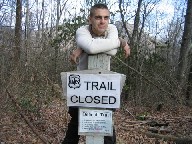
 Are things really looking up? Photo: Wesley Fryer via Flickr.
Panglossian Disorder? What on earth is that? And how does it apply to peak oil?
Inspired by the eternal optimist Dr. Pangloss from Voltaire’s Candide, psychologist Kathy McMahon, who calls herself the “peak shrink,” explains on Peak Moment TV (episode 199) that she invented Panglossian Disorder. It’s a condition of people who view the post peak oil future with unrealistic and even pathological optimism, the kind that is usually a front for deep fear, effectively shutting off to the realities of possible major future changes.
“So I think it’s not just optimism,” clarifies McMahon “because people can be optimistic, and they can be pro-social, they can do positive things. But when I talk about Panglossian Disorder, I’m talking about it as a defence. They’re acting like they’re positive, but it’s only as a defence against really contemplating negative things that they can’t handle, because they’re overwhelmed.”
Don’t be a downer
People who react in a Panglossian way can make it very difficult for people who, upon learning about peak oil, don’t view it through those blinkers, and want to warn others and discuss practical solutions.
As McMahon explains, “I think that one of the most upsetting things to people when they first find out about peak oil is the fact that when they tell other people about it, other people are not receptive to it. And they meet them with statements like, ‘That can’t be right,’ ‘Maybe it’ll be bad, but it won’t be as bad as you say it is,’ and all of these sorts of batting back of the information without even looking into it, without even being curious about it.”
Her interest in how people react psychologically to finding out about peak oil stemmed from her own reactions, which seemed so crazy to her. She wanted to find out what was normal, what did people do differently and how did their lives change. So she started her blog Peak Oil Blues, and four years later she has amassed a great deal of information from people who contributed to her research project
McMahon warns people against the impulse to make big changes within the first couple of years after finding out about peak oil. “Don’t make any huge changes.” she says “Do the things that you think are important where you are, but don’t panic and do something dramatic. Let it sink in.” If you act from an urgent “had to do it all yesterday” perspective, you may end up doing things that won’t serve you in the long term.
She also has concerns about health professionals pathologizing people who have emotionally disturbing reactions to finding out about peak oil. She feels people need reassurance that their reactions are normal for the circumstances, and a chance to talk their feelings through, not to be labelled as suffering Post-Petroleum Stress Disorder.
“I don’t want anyone to say that the reaction to peak oil is itself a pathology, because it isn’t,” McMahon says. “The emotional distress that people are feeling, the shock, the anger, the sense of overwhelm — all of these things are completely understandable. And we need to start normalizing them. Because, paradoxically, the more we actually normalize those upsetting reactions, we then begin to calm down.”
Love thy neighbor
When faced with the overwhelming impact of the whole situation, McMahon points out that what we need to focus on is our own small community. Draw a radius around your house, and think to yourself that these people are your neighbors.
“And really have some meaning to the word neighbor,” she says. “The old meaning of the word neighbor is, when they needed something, you were there to give it to them. When you needed something, you called on them. There was a give and a take situation.”
McMahon discusses her concerns for the loss of social skills and isolation present in our current society and how rapidly this decline has occurred. People spending so much time in front of entertainment devices or children who know how to play video games, but not how to engage in imaginative play, or interact properly with other children.
One of the advantages McMahon sees to a future with less fossil fuel is that we are all going to have to become more human and part of that challenge will be becoming more comfortable around other flawed human beings.
“So one of the things I talk about is, we’re all bozos on this bus. Let’s get away from the idea that we have to be some high-level, perfect leader, high-level visionary, and let’s accept the fact that people are annoying. And that’s not a problem that people are annoying. The problem is that we expect they shouldn’t be.”
I asked Peak Moment host Janaia Donaldson about her recollections of Dr. McMahon. “Kathy has a wonderful sense of humor, which provides a welcome leavening to the dark news around peak oil, climate change, ecosystem collapse. She’s especially tuned to the challenge of partners (usually husband and wife) who have differing responses to the peak oil challenge.”
McMahon has also written “I Can’t Believe You Actually Think That!”: A Couple’s Guide to Finding Common Ground about Peak Oil, Climate Catastrophe, and Economic Hard Times, forthcoming in print and available now as an e-book. You can download it and find more fascinating reading on her blog Peak Oil Blues.
– Anthea Hudson, Transition Voice
3 Comments on "The best of all possible worlds has no use for peak oil"
BillT on Wed, 7th Mar 2012 12:30 pm
Much of the ‘undeveloped’ part of the world will not have much of a problem to adjusting to the loss of petroleum and coal and natural gas as they had little or none anyway. The Western ‘developed’ countries will have mass withdrawal pains that some few will be able to handle, but the majority will not. There will be bloody riots and all kinds of disorder and Police State actions, especially in the spoiled country called the US of A.
Anvil on Wed, 7th Mar 2012 8:51 pm
What about the fact that most of the third world relies on hydrocarbon food.
The third world will be just as screwed as the first and you all probably know this deep down in your thick skulls.
Food riots anyone?
tubaplayer on Wed, 7th Mar 2012 10:07 pm
““And really have some meaning to the word neighbor,” she says. “The old meaning of the word neighbor is, when they needed something, you were there to give it to them. When you needed something, you called on them. There was a give and a take situation.””
Being an outsider on a foreign community I can really appreciate Anthea’s article. I give what I can to my little village. They give much more back.