
Peak Oil is You
Donate Bitcoins ;-) or Paypal :-)


Page added on February 22, 2009

Swans Commentary: Blips #81
…WHICH BRINGS ME BACK to the Doomsters. Some welcome the chaos in the making in the name of the famed “socialist revolution,” but others, often located in the U.S. — people who have made a business (often profitable) of predicting doom and gloom — lend a hand to the repressive times ahead. People like James Howard Kunstler, Jay Hanson of dieoff.org fame, Jan Lunberg of “Cultural Change,” Dale Allen Pfeiffer of Surviving Peak Oil, conspiracy theorist Michael Ruppert of From the Wilderness, Matt Savinar of Life After the Oil Crash, are just a small sample of that notorious crowd.
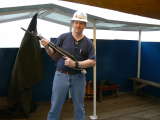
ONE TO PARTICULARLY ENJOY is Dmitry Orlov, who for years predicted the collapse of the former Soviet Union and is now predicting the same outcome for the U.S. Orlov’s recent speech given on February 13, 2009, at the Long Now Foundation — a bunch of new/old-age do-gooders — in which he claimed “that all the [support] systems and institutions that are keeping us alive [are crashing].” Says Orlov: “Forget ‘growth,’ forget ‘jobs,’ forget ‘financial stability.’ What should their [the policy makers] realistic new objectives be? Well, here they are: food, shelter, transportation, and security.” Orlov goes on with a mind-numbing rant that includes getting a tiny chunk of land to grow food and an AK-47 for security. Notice that health care and education are not a part of his program… One should read the entire diatribe, “Social collapse best practices,” to get a clear picture of today’s face of reaction. Gloom and doom, it actually is — and utterly socially irresponsible.
HARALD WELZER, a German psychosociologist (yes, that species does exist too) and researcher at the Kulturwissenschaftlichen Institute in Essen, Germany, posits that societies are unable to apprehend an unfolding crisis. Their members are stuck into their daily chores, the maintenance of governing institutions and the leaders that know best, the dependence on the media that channels the messages from the “leaders.” Additionally, people believe that nothing really catastrophic can happen. The post office works; planes take off; shelves in stores are restocked; traffic on the roads remain unperturbed; gridlock is a daily experience; weekend car races and other sports are on schedule; Christmas decorations adorn the neighborhoods and local stores and businesses, whatever the experienced tougher times. Normality, that condition which we’ve known forever — the good old times — carries on. Willful ignorance trumps careful understanding and assessment of a dire situation. Life, in spite of some impediments, goes on as it always has, even if it is simultaneously crashing within total obliviousness. Only, in retrospect and hindsight, historians can decipher the letdowns of cognitive dissonance.
Leave a Reply