
Peak Oil is You

Donate Bitcoins ;-) or Paypal :-)


Page added on April 6, 2011

Steep oil decline or slow oil decline?
This is basically the difference between (1) assuming that the only issue is geological decline in oil supply, and the economy and everything else can go on as usual and assuming (2) the real issue is Liebig’s Law of the Minimum, and declining EROEI, as oil supplies decline. As a result, the economy is very much affected.
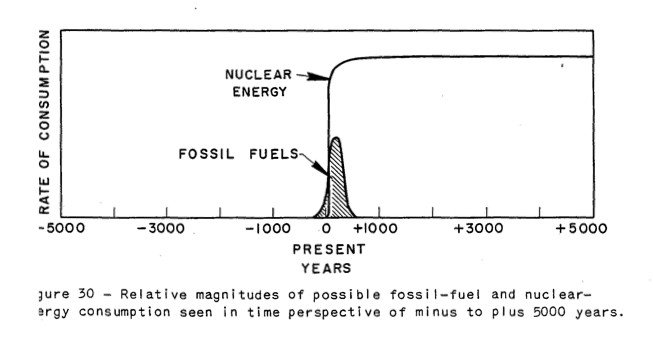 Figure 1. Image from Hubbert’s 1956 paper, Nuclear Energy and the Fossil Fuels
If we believed as Hubbert, that there would be an almost infinite supply of cheap nuclear energy to take over even before fossil fuel supplies ran low, then it might be possible for geology to be the major issue, because the extra energy from nuclear could be used to keep society going, as in the past. But we know now that this really has not come to pass. In fact, with the Fukushima accident, nuclear generation of electricity is likely to start back-tracking, adding to our energy problems.
In order to forecast the future, one really needs to look at a model such as used in Limits to Growth (probably with more variables than Limits to Growth–Limits to Growth didn’t consider the fact that a lot of capital is borrowed capital, and this would be affected early on, by a reduction in the level of economic growth). In this way, one can apply Liebig’s Law of the Minimum better, but still not perfectly. If one considers declining EROEI and Liebig’s Law of the Minimum, the decline is likely sharp.
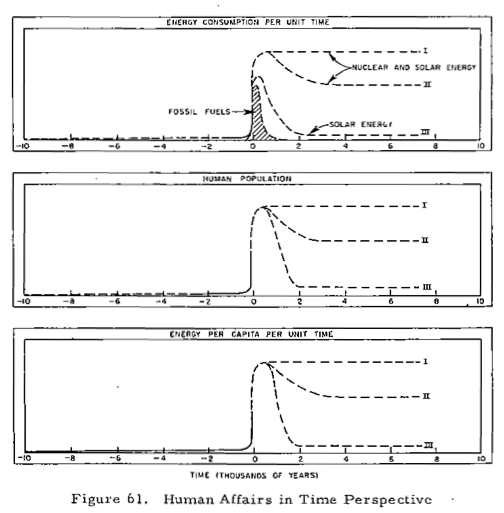 Figure 2. Figure from Hubbert’s 1956 paper, Nuclear Energy and the Fossil Fuels.
In Hubbert’s 1956 paper, Nuclear Energy and the Fossil Fuels, Hubbert shows how he would expect the greater use of nuclear to play out, as well as the role of solar energy. By solar energy, Hubbert would seem to mean solar, wind, tidal, wood, biofuels, and other energy we get on a day-to-day basis, indirectly from the sun. His figure seems to suggest that solar energy would basically act as a fossil fuel extender, and would not last beyond the time fossil fuels last. The primary source of energy would be nuclear.
In Hubbert’s 1962 paper, Energy Resources – A Report to the Committee on Natural Resources, Hubbert writes about the possibility of having so much cheap energy that is it possible to essentially reverse combustion–combine lots of energy, plus carbon dioxide and water, to produce new types of fuel plus water. If we could do this, we could solve much of the world’s problems–fix our high CO2 levels and produce lots of fuel for our current vehicles, even without fossil fuels. Limits to Growth would come at a much higher level than without huge almost-free energy resources.
 Figure 3. Updated version of figure shown in Figure 2, from Hubbert’s 1976 speech, Exponential Growth as a Transient Phenomenon of Human History
In an updated version of Figure 2, shown as Figure 3 (this time from his 1976 speech, Exponential Growth as a Transient Phenomenon in Human History), Hubbert adds captions along the y-axis showing amounts. He indicates three possible steady state economies–one at a world population of about 15 billion, on at a world population of about 7 billion, and one with a very low world population, similar to that before fossil fuels began. In order for high populations to be possible, we would have to have some source of energy, other than fossil fuels, to keep energy levels high.
To me, the fact that we are not on track for Hubbert’s Scenarios I or II is what is concerning. If Scenarios I or II don’t happen, Hubbert shows a different steady state economy is also possible–that of Scenario III. This would not be nearly as good. This is the scenario I write about in my post, There is No Steady State Economy (except at a very basic level).
There seem to be quite a few people who still believe that a steady state at quite a high level is possible, but at this point, we have not developed energy sources that are more than fossil fuel “extenders”–they depend on fossil fuels for their production and maintenance. Once fossil fuels become too expensive (low EROEI) for us to use, it looks as though we will need to go back to using pretty much the solar resources as they are provided to us. If this happens, standards of livings and population are likely to drop, as Hubbert showed in Scenario III.
There are still many details to be worked out–for example how deep is the downslope, and are there mitigations that can be done, like putting together a new world financial system, that is more resilient.
I hope these thoughts are helpful. The fact that this is a very concerning situation keeps people from writing about these issues.
Best regards,
Gail Tverberg (also known as “Gail the Actuary”)
One Comment on "Steep oil decline or slow oil decline?"
Rick on Wed, 6th Apr 2011 9:28 am
Faster than most people think. Though most American’s have never heard of Peak Oil.
Can’t wait to gas prices in the US hit $8 or more. That will be on par with Europe, and most American’s will just go ape shit – it will kill them.