
Peak Oil is You

Donate Bitcoins ;-) or Paypal :-)


Page added on April 17, 2013

Robert Rapier: Test Your Oil IQ
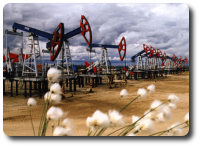
As a result of the hydraulic fracturing (fracking) revolution, US oil and natural gas production have been rising for several years. According to the Energy Information Administration (EIA), US oil production has risen by 27% over the past 5 years.
In reviewing the data for individual states, I came across some interesting trivia. So I decided to put together a little quiz. The data source is the EIA. A table showing the Top 15 states with the highest percentage increases in oil production follows the quiz. Answers are at the end.
1. Which state had the largest percentage increase in oil production over the past 5 years?
a. Texas
b. North Dakota
c. Colorado
d. Oklahoma
2. Which state had the largest volume increase in oil production over the past 5 years?
a. Texas
b. North Dakota
c. Alaska
d. Oklahoma
3. Which of the following states reported no oil production over the past 5 years?
a. Arizona
b. New York
c. Florida
d. Tennessee
4. Which state had the largest percentage decline in oil production over the past 5 years?
a. Louisiana
b. California
c. Montana
d. Alaska
5. Which of the following states had the highest average oil production over the past 5 years?
a. North Dakota
b. California
c. Louisiana
d. Oklahoma
Here are the Top 15 percentage increases in oil production from 2007 to 2012.
 Oil Production Increases in US States from 2007 to 2012 (Source: Energy Information Administration).
Answers
1. North Dakota’s oil production increased by a whopping 435% between 2007 and 2012. Colorado ranked second with an 86% increase over the 5-year period.
2. North Dakota gets the most press due to the oil boom there, but Texas has increased oil production by 900,000 barrels per day (bpd) over the past 5 years, versus 540,000 bpd for North Dakota.
3. Arizona is the only one of these states that reported no oil production over the past 5 years. Production in the other 3 states was modest, but New York, Florida, and Tennessee all reported some oil production in each of the past 5 years.
4. While all 4 of these states saw declines in their oil production over the past 5 years, Alaska’s 27% decline was the largest decline among all 50 states.
5. Although California’s oil production has been declining, it actually averaged a higher level of production than North Dakota, Louisiana, or Oklahoma over the previous 5-year period. California’s 554,000 bpd of average daily production over the past 5 years trailed only Texas’ 1.4 million bpd and Alaska’s 603,000 bpd. However, as of 2012 California had slipped behind North Dakota, but was slightly ahead of Alaska.
7 Comments on "Robert Rapier: Test Your Oil IQ"
BillT on Wed, 17th Apr 2013 12:15 pm
And the good news is? So a 27% increase of 1/3 (the amount of oil we produce domestically vs what we use) = ~ 9% of our oil consumption added. Divide that by 5 years and you get an average increase of ~2%. Now to be totally import free at current use, it will only take (drum roll) about 50 years to be oil independent.
Of course,we will be a 3rd world country by then and our oil use will be maybe 5% of what it is now so we WILL reach our independence goal way before 2063. That should make econ/SOS happy.
mo on Wed, 17th Apr 2013 1:50 pm
Gee it seems our oil production topped in 1970 43 years ago. Whoop dee do!!!
DC on Wed, 17th Apr 2013 2:26 pm
Dont criticize this silly ‘IQ’ test, or you’ll branded an ‘anonymous internet coward’, everyone. Those ‘increases’ were working for the most part, from a decreased base figure to start with. But that aside, the larger question of what does it really mean remain un-asked.
Like, is continued destructive FF extraction a desirable thing? Can it be sustained for very long? Will it ever provide the illusory ‘energy independence’ amerikas corporate rulers seem to think is just around the corner?
To use an example, ‘production’ in the AB tar-sands is way up from say, a decade ago. That fact has not prevented large numbers of people wanting to see it shut down permanently.
Plantagenet on Wed, 17th Apr 2013 3:51 pm
Nice discussion of changes in US oil production over the last five years—surprising to see California oil production is still so robust.
shortonoil on Wed, 17th Apr 2013 5:29 pm
Crude oil is the fraction of hydrocarbons that lay between an API of 10 – 45. The majority of what has been produced since 1900 has been crude with an API of 30 – 45. According to EOG 70% of what came out of the Eagle Ford last year (and probably the Bakken) was condensate, not crude. Condensate has an API greater than 45, and lacks the C7+ molecules necessary for distillate production (diesel, kerosene, fuel oil, etc.). A very large portion of it is shipped to the tar sand fields as a diluent for bitumen. It is then piped to Gulf refineries where it is separated out and shipped back to Canada. Much of it never sees a fuel tank.
If we are going to discuss US oil production, we should be talking about oil. The commodity that drives the world’s economy, not high grade paint thinner!
The Hill’s Group
Bor on Wed, 17th Apr 2013 8:32 pm
High API is associated with a light crude.
Low API is associated with a heavy crude.
—-
Generally speaking, oil with an API gravity between 40 and 45 commands the highest prices. Above 45 degrees the molecular chains become shorter and less valuable to refineries.
Crude oil is classified as light, medium or heavy, according to its measured API gravity.
Light crude oil is defined as having an API gravity higher than 31.1 °API (less than 870 kg/m3)
Medium oil is defined as having an API gravity between 22.3 °API and 31.1 °API (870 to 920 kg/m3)
Heavy crude oil is defined as having an API gravity below 22.3 °API (920 to 1000 kg/m3)
Extra heavy oil is defined with API gravity below 10.0 °API (greater than 1000 kg/m3)
BillT on Thu, 18th Apr 2013 1:41 am
You can debate it all you want, but the end line is that oil is getting more and more expensive and delivering lower and lower EROEI. Define it all you like, but look around and see the effects it is having on the economy and YOUR life. Everything you buy is more expensive than before. Prices are doubling about every 12 years lately. Some things you need to live are going up even faster.
At some point, the consumer will not be able to consume oil products and the game will end. Wells will shut down and the Age of Petro will be over. When? 2030? 2040? Or 2020? The only sure thing is that it will happen before 2050 and possibly in this decade.