
Peak Oil is You
Donate Bitcoins ;-) or Paypal :-)


Page added on June 3, 2013

Robert Hirsch: Reflections on the Conference on “Peak Oil: Challenges and Opportunities for the GCC Countries”
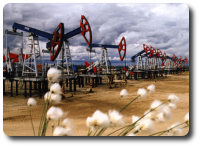
I was fortunate to be among the few westerners invited to attend and speak at this first-of-its kind “peak oil” (PO) conference in a Middle East. The fact that a major Middle East oil exporter would hold such a conference on what has long been a verboten subject was quite remarkable and a dramatic change from decades of PO denial. The two and a half day meeting was well attended by people from the GCC as well as other regional countries.
The going-in assumption was that “peak oil” will occur in the near future. The timing of the impending onset of world oil decline was not an issue at the conference, rather the main focus was what the GCC countries should do soon to ensure a prosperous, long-term future. To many of us who have long suffered the vociferous denial of PO by GCC-OPEC countries, this conference represented a major change. In the words of Kjell Aleklett, who summarized highlights of the conference, the meeting was “an historic event.”
While many PO aficionados have been focused on the impacts and the mitigation of “peak oil” in the importing countries, most attendees at this conference were concerned with the impact that finite oil and gas reserves will have on the long-term future of their own exporting countries. They see the depletion of their large-but-limited reserves as affording their countries a period of time in which they either develop their countries into sustainable entities able to continue into the long term future or they lapse back into the poor, nomadic circumstances that existed prior to the discovery of oil/gas. Accordingly, much of the conference focus was on how the GCC countries might use their current and near-term largesse to build sustainable economic and government futures.
A flavor of the conference can be gotten from the following loosely translated, random quotations:
- This is a groundbreaking conference.
- The organizers were brave to organize this conference.
- Peak oil provides an incentive to consider important national and regional issues. The GCC is currently working new problems with old solutions.
- Oil revenue represents about 93% of the Saudi budget. Everything is now imported — foreign expertise and most labor. Saudi can’t continue on the current track, because it would lead to a “bad future.” We need radical change.
- After peak oil, will there be great cities, or will Middle East cities end up like the gold mining ghost towns of the old U.S. west?
- So far we have wasted our opportunity.
- Shale oil in the U.S. is so much foolishness and does not invalidate peak oil. We definitely must worry about peak oil.
- Political reforms have failed to properly address our lack of democracy and accountability.
- When people are excluded from politics, they get unruly.
- Citizens in the Middle East prefer public sector jobs because they pay better than private sector jobs.
- Foreigners are the majority of our populations, typically 80%.
- Schools are teaching children “old stuff.” Schools are a disaster.
- The current culture is one of waste.
- There are job vacancies in Saudi but local people are not prepared to fill them. Saudi’s go abroad to get advanced degrees but don’t qualify for Saudi jobs, so Saudi must import foreign labor. Aramco did a good job of training Saudi nationals.
- The GCC must educate women and give them greater rights and equality.
- In many countries absolute rulers get the incomes and revenues and not much is left for the people. A selfish dictator does not develop his country.
- Globalization is being broadly viewed more negatively now. When peak oil comes, it will be extremely difficult to maintain.
- High oil prices will impact the world even before the onset of peak oil.
- The Arab legal system is in bad shape and needs attention.
- Peak oil is the most important question in this part of the world.
- People read religious literature when they should be reading technical literature.
- The region has wealthy, wealthy persons and poor, poor people.
- Rulers must understand that the people must be part of the future.
- Future generations must have rights.
In closing, I want to express my appreciation to our Qatari hosts. They were hospitable, warm, friendly, and showed the kind of quiet determination important to making their country a better place. Doha is a remarkably beautiful city. Finally, from what I could see, the Emir is taking very positive, aggressive steps to build a vigorous enlightened future for his country.
Robert L. Hirsch is a former senior energy program adviser for Science Applications International Corporation and is a Senior Energy Advisor at MISI and a consultant in energy, technology, and management. Hirsch has served on numerous advisory committees related to energy development, and he is the principal author of the report Peaking of World Oil Production: Impacts, Mitigation, and Risk Management, which was written for the United States Department of Energy.
One Comment on "Robert Hirsch: Reflections on the Conference on “Peak Oil: Challenges and Opportunities for the GCC Countries”"
Arthur on Mon, 3rd Jun 2013 2:48 pm
“After peak oil, will there be great cities, or will Middle East cities end up like the gold mining ghost towns of the old U.S. west?”
The latter.
“Shale oil in the U.S. is so much foolishness and does not invalidate peak oil. We definitely must worry about peak oil.”
True. Best guess: 6-11 years postponing execution (of industrial society as we know it), unless new technology breakthroughs will allow for kicking the can down the road even further, which cannot entirely be ruled out (unfortunately one is inclined to say).
“Political reforms have failed to properly address our lack of democracy and accountability.”
Democracy only has meaning within the context of European industrial civilization. Do not worry about the future of democracy.
“The GCC must educate women and give them greater rights and equality.”
Did the women ask for that? Are they ready for a life without or broken family, like in the ‘fantastic West’, mr Hirsch?
“In many countries absolute rulers get the incomes and revenues and not much is left for the people. A selfish dictator does not develop his country.”
Kadaffi and Assad were examples of dictators that did develop their nations, unlike Saudi US satraps. Why topple them anyway?
“Globalization is being broadly viewed more negatively now. When peak oil comes, it will be extremely difficult to maintain.”
Exactly right. The summit of globalisation was the Stalin-Roosevelt handshake in Yalta, when the world was divided between liberals and communists, both globalist ideologies. But the turning point was the Shi’ite revolution under Khomeiny in Iran in 1979 and the collapse of communism in 1991. The restauration of the Ottoman empire will be next. Globalist multiculturalism is already branded ‘a failure’ by regular elected leaders in Europe (Merkel and Sarkozy), after the population already rejected it.
“The Arab legal system is in bad shape and needs attention.”
Well, maybe in your modernist eyes, mr Hirsch. But Sharia was, is and is going to remain Arabia’s legal system, whether you like it or not.
“People read religious literature when they should be reading technical literature.”
Not everybody has the same IQ as you, mr Hirsch. Certainly not those in Arabia. You need an average IQ of 90 at least to have a modest industrial civilization. Only the natural leader of Islam, Turkey, satisfies that condition.
http://en.wikipedia.org/wiki/Nations_and_intelligence